



惯性聚合 高效追踪和阅读你感兴趣的博客、新闻、科技资讯
阅读原文 在惯性聚合中打开

推荐订阅源

T
The Exploit Database - CXSecurity.com
S
Schneier on Security
Google Online Security Blog
The Hacker News
The Hacker News
T
Threatpost
C
CERT Recently Published Vulnerability Notes
Help Net Security
Help Net Security
D
Darknet – Hacking Tools, Hacker News & Cyber Security
The Last Watchdog
The Last Watchdog
AI
AI
Exploit-DB.com RSS Feed
cs.AI updates on arXiv.org
Cyberwarzone
Cyberwarzone
T
Threat Research - Cisco Blogs
G
GRAHAM CLULEY
L
LINUX DO - 热门话题
cs.CV updates on arXiv.org
Spread Privacy
Spread Privacy
Scott Helme
Scott Helme
阮一峰的网络日志
阮一峰的网络日志
V
V2EX
Know Your Adversary
Know Your Adversary
WordPress大学
WordPress大学
AWS News Blog
AWS News Blog
T
Troy Hunt's Blog
Microsoft Azure Blog
钛媒体:引领未来商业与生活新知
钛媒体:引领未来商业与生活新知
Hacker News: Ask HN
Hacker News: Ask HN
小众软件
小众软件
Cisco Talos Blog
Cisco Talos Blog
有赞技术团队
有赞技术团队
H
Heimdal Security Blog
U
Unit 42
cs.CL updates on arXiv.org
大猫的无限游戏
大猫的无限游戏
F
Fortinet All Blogs
C
CXSECURITY Database RSS Feed - CXSecurity.com
S
SegmentFault 最新的问题
Forbes - Security
Forbes - Security
Security Latest
Security Latest
腾讯CDC
Security Archives - TechRepublic
I
Intezer
Threat Intelligence Blog | Flashpoint
P
Proofpoint News Feed
A
Arctic Wolf
L
LINUX DO - 最新话题
Engineering at Meta
Engineering at Meta
C
Cisco Blogs
Recent Announcements

Space - CBSNews.com

Full interview: NASA administrator Jared Isaacman on moon base plans, Artemis III, more Space station crew briefly moves to "safe haven" amid concerns over leaks Sun erupts with 3 huge solar flares, increasing chances of northern lights across U.S. NASA declares end of mission for long-lasting Mars orbiter Blue Origin vows to resume New Glenn launches before end of year in wake of massive explosion NASA taps 2 companies to develop buggies for its moon base program A look at lunar rovers for NASA's planned Moon Base Blue Origin explosion sparks space race concerns Blue Origin explosion could impact space race position against China Blue Origin explosion threatens to delay NASA's moon program Blue Origin rocket explodes in spectacular fireball A rare blue micromoon arrives this weekend and won't be back until December 2028. Here's what to expect. NASA's moon base plans include landers, buggies and drones for 2028 mission China launches Shenzhou 23 spacecraft carrying 3 astronauts, including 1 set to remain in space for a year SpaceX launches revamped Super Heavy-Starship rocket ahead of IPO SpaceX launches more powerful Super Heavy-Starship rocket on test flight Musk's SpaceX scrubs latest test launch of massive Starship rocket SpaceX launch of more powerful Super Heavy-Starship rocket scrubbed at last minute over technical issue SpaceX plans to explore "the true nature of the universe" as it preps for mega IPO SpaceX launches Dragon cargo ship on unpiloted flight to space station NASA maps show Earth's brightest and darkest regions at night NASA spacecraft to fly past Mars this week, on voyage to rare metal asteroid UFO files reveal Apollo 17 crew saw mysterious objects, lights during 1972 mission: Pentagon begins releasing new UFO files, unveiling dozens of photos, videos and documents The government Mysterious world beyond Pluto may have an atmosphere, astronomers say Inspiring and funny moments from Artemis II astronauts' town hall CBS News Things That Matter: A Town Hall with the Artemis Astronauts Artemis II crew gives 5-year-old aspiring astronaut Commander Jack a new spacesuit: "It says NASA!" What's next for the Artemis missions and potential return to the moon Astronaut Christina Koch details broken toilet ordeal, "great" showers in space 5-year-old boy gets special gift; Artemis astronauts reveal if you can burp in space Bill Nye demonstrates experiments that break down Artemis II mission Victor Glover opens up about being first person of color to fly to or around moon Artemis astronauts talk "bird bath" showers, space exploration dream and more Watch: Artemis II crew surprises 5-year-old aspiring astronaut with new spacesuit Artemis astronauts reveal hopes for space exploration and if they would go back again Ron Howard, Artemis astronauts joke about bathrooms while recalling "Apollo 13" film's impact Reid Wiseman's advice to students: "Find your gift and share that with the world" Artemis astronauts talk food on mission and what they couldn't eat Christina Koch describes how Artemis mission was different from going to the ISS Artemis II crew reveals what they ate right after splashdown: "I got some peanut M&Ms, anybody want some?" Artemis II astronauts talk mission toilet troubles: "We made do" Artemis astronauts reveal the candy they ate immediately after splashdown Artemis II crew addresses toilet malfunction during spaceflight Astronaut Jeremy Hansen says "it's not that we never fail" but "we never stop there" "Apollo 13" director Ron Howard to Artemis crew: "What you accomplished was extraordinary" Artemis astronauts asked about most memorable moment, toughest decision made on moon mission 5-year-old aspiring astronaut Jack says "it was fun" to watch historic Artemis launch Artemis astronauts describe "spectacular" moon mission, eating peanut M&M's after splashdown Artemis commander Reid Wiseman describes "dramatic and important warning" while on mission Artemis astronaut Jeremy Hansen on what he missed about gravity: "Nothing" Artemis' Christina Koch says real heroes are "people on the ground" working on mission Artemis crew tells kids at town hall, moon flight was "the best roller coaster ride you've ever been on" Artemis' Victor Glover says seeing Earth in "one glance" is "very special perspective" Artemis astronauts on readjusting to gravity, capturing photos from space: "It's spectacular" Artemis astronaut Victor Glover describes his thoughts in final seconds before liftoff SpaceX launches high-power ViaSat internet satellite in rare flight of Falcon Heavy rocket Amanda Nguyen on her decision to bring the hospital band from her sexual assault to space Mars rover carries out chemistry experiment never done beyond Earth, discovers more building blocks of life In its third flight, a Blue Origin New Glenn rocket puts satellite payload into wrong orbit The youngest man to walk on the moon reflects on U.S. space exploration Artemis astronaut says "we can do amazing things" as he reflects on how mission united humanity Artemis II crew on historic moon mission and what it means for Earth: "We can do amazing things" Artemis II astronaut describes "the most unique thing" he saw on the far side of the moon Artemis II astronauts still awed by moonshot experience: "It was otherworldly" Artemis II reentry image raises questions online about heat shield "God of chaos" asteroid will pass close to Earth in 3 years, NASA says Artemis II astronauts reflect on historic mission around far side of the moon Recapping the historic Artemis II mission around the moon Artemis II astronauts welcomed home to Houston after historic moonshot Artemis II crew returns to Houston after successful mission What's next for space exploration after successful Artemis II mission Artemis II crew successfully splashes down in Pacific, ending historic moon mission Artemis II crew set for splashdown after historic journey around the moon NASA drops Artemis II moon mission playlist. These are the astronauts' wake-up songs. Artemis II crew splashes down near San Diego after historic moon mission 9 highlights from Artemis II's epic journey around the moon How an 8-year-old designed a zero-gravity indicator for Artemis II NASA crew on any concerns about Artemis II reentry: "We've done our homework" Artemis II crew talks about trip's highlights as they head toward Earth: "Quite an impressive sight" Artemis II astronauts reflect on historic flight as they wrap up moon mission NASA releases more dazzling photos, moonshots from Artemis II See stunning images taken by the Artemis II crew as they looped around far side of the moon Stunning photos from Artemis II show Earth, moon, eclipse from space Artemis II crew headed back to Earth after lunar flyby Artemis II crew completes record-breaking trip around the moon and sees "unreal" solar eclipse Artemis II travels around far side of the moon How Artemis II astronauts prepared to study the moon during the lunar flyby Artemis II set to make historic loop around the moon Artemis II astronauts find hidden eggs on Easter Sunday as they close in on the moon Artemis II crew capture new photo of far side of the moon Artemis II crew stunned by views as they ready to loop around far side of moon Artemis II astronauts speak during historic lunar mission Moon-bound Artemis II crew reflects on wonder of deep space experience: "You are special in all of this emptiness" Artemis II astronauts share message for the planet: "You're on a spaceship called Earth" What astronauts are eating on the Artemis II mission Artemis II crew passes halfway point to moon, shares new photos of Earth NASA shares first photos of Earth taken by Artemis II: "Hello, World" Moon-bound Artemis II astronauts enjoy a relaxed day in space, spectacular Earth views
As Artemis II heads back to Earth, crew stakes their lives on the heat shield
2026-04-10 · via Space - CBSNews.com

By

/ CBS News

Add CBS News on Google

Update: The Artemis II crew splashed down to end its mission successfully on Friday, April 10. Follow the latest here.

When the Artemis II Orion crew capsule returns to Earth on Friday after flying around the moon, it will hit the discernible atmosphere some 75 miles above the Pacific Ocean at a blistering 24,000 mph — fast enough to fly from Los Angeles to New York in about 6 minutes.  

Within seconds, temperatures across its 16.5-foot-wide heat shield will climb to some 5,000 degrees — half as hot as the visible surface of the sun — as the ship rapidly slows in an electrically charged fireball of atmospheric friction. 

The four astronauts on board — commander Reid Wiseman, Victor Glover, Christina Koch and Canadian astronaut Jeremy Hansen — are counting on the heat shield to keep them safe, in a comfortable environment, all the way through the peak heating zone to a parachute-assisted splashdown in the Pacific off the coast of California. 

"We have high confidence in the system, in the heat shield and the parachutes and the recovery systems we put together," Amit Kshatriya, NASA's associate administrator, said Thursday. "The engineering supports it, the Artemis I flight data supports it. All of our ground tests support it, our analysis supports it, and tomorrow the crew is going to put their lives behind that confidence."
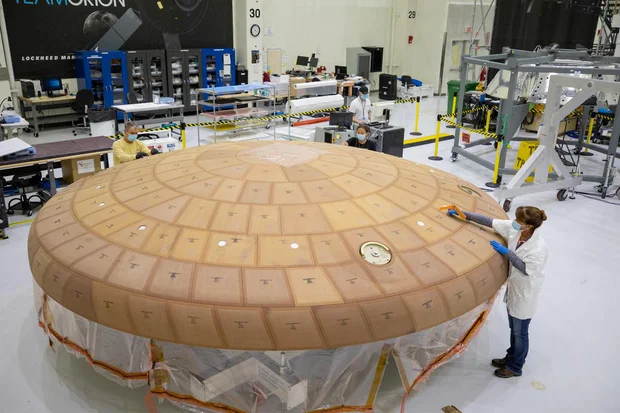
heat-shield-assembly.jpg
The Artemis II heat shield during its assembly. The 16.5-foot-wide heat shield is required to protect the Orion capsule and its crew from the 5,000-degree heat of the ship's high-speed plunge back into the atmosphere. NASA

The crew and mission managers are confident, they say, despite major problems with the heat shield that was used during the unpiloted Artemis I test flight in 2022, when the Avcoat material making up the shield developed sub-surface cracks and gas pockets that blew away chunks of the protective barrier's outer "char" layer. 

Based on nearly two years of tests and analysis, engineers were surprised to discover the damage was most likely caused by the Avcoat material's lack of permeability during a specific phase of the reentry when the shield was experiencing lower external temperatures while internal layers were still extremely high, generating gas that could not escape.

Agency managers decided to order a different heat shield design for downstream Artemis missions. But the heat shield for the Artemis II flight, identical to the one used with Artemis I, was already installed. Replacing it with a new design would have delayed the mission by 18 months or more. 
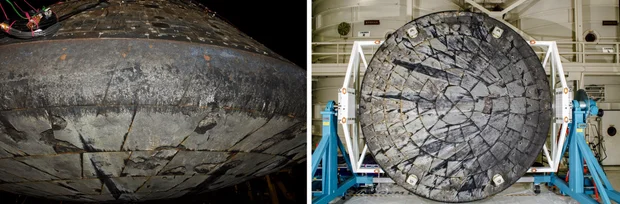
heat-shield-damage.jpg
The 16.5-foot-wide heat shield protecting the Orion capsule during an unpiloted test flight in 2022 was seriously damaged during reentry. NASA

Instead, NASA managers opted to launch Artemis II "as is" based on test data and an exhaustive analysis that indicated the shield would work properly if the reentry trajectory was modified to eliminate the temperature and pressure swings that contributed to the damage seen after the Artemis I flight. 

"They did a tremendous amount of research, a lot of groundbreaking research in some facilities that we had not used before, and they discovered the root cause," Wiseman said.

"They did wind tunnel testing and laser testing and hyper-velocity testing, and they determined that if we come in with this lofted profile ... that this heat shield will be safe for us to go fly.

"So I think all that points in the direction of goodness," he said. "And I think if you, as a human being who was about to board this rocket, had sat in the meetings that we sat in and listened to the experts and gone through the data with them, you would have the same comfort."

What went wrong with Artemis I?

During the Artemis I mission, the unpiloted capsule followed a planned "skip" trajectory, similar in concept to skipping a flat stone across still water. After an initial dip into the upper atmosphere, the Artemis I capsule skipped back out again before making its final descent to splashdown. The skip reentry helps reduce the spacecraft's velocity while offering NASA a wider range of splashdown options in case bad weather makes a targeted landing site problematic.
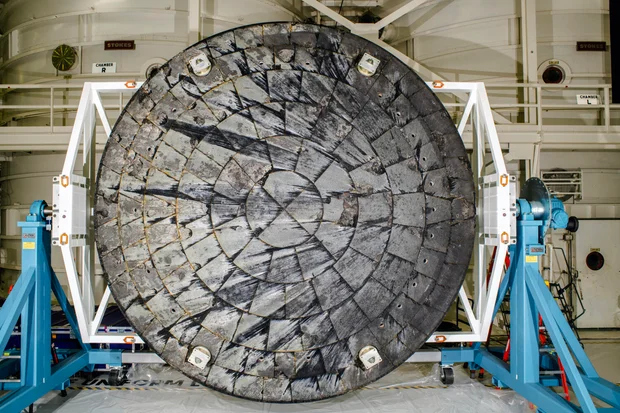
heat-shield-1.jpg
The Artemis I heat shield after its return to Earth in 2022. Regions of the shield suffered unexpected damage that did not match computer modeling, kicking off months of detailed tests and analysis. NASA

Despite the heat shield damage seen after the flight, the Artemis I reentry was successful. The capsule landed on target, and officials said that had any astronauts been aboard, they would have had no problems. But the damage triggered alarm at NASA. 

"NASA identified more than 100 locations where ablative thermal protective material from Orion's heat shield wore away differently than expected during reentry into Earth's atmosphere," NASA's Office of Inspector General wrote. 

"While the heat shield successfully protected the Crew Module and its systems during the Artemis I mission, upon inspection after Orion's recovery, engineers noted unexpected variations in the appearance of the heat shield Avcoat — the ablative material that helps protect the capsule from the heat of reentry.

"Specifically, portions of the char layer wore away differently than NASA engineers predicted, cracking and breaking off the spacecraft in fragments that created a trail of debris rather than melting away as designed," the office said. "The unexpected behavior of the Avcoat creates a risk that the heat shield may not sufficiently protect the capsule's systems and crew from the extreme heat of reentry on future missions." 
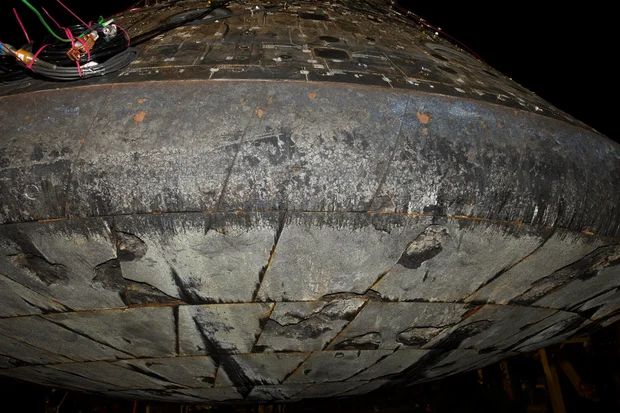
heat-shield-2.jpg
Another look at the Artemis I heat shield showing areas where major damage was observed. NASA

Testing revealed the damage was related to the heat shield's permeability, or rather, its lack thereof. After the initial, relatively deep dive into the atmosphere, the Avcoat material making up the shield was unable to properly dissipate the heat that remained in its lower layers during the skip back out of the atmosphere. 

Entry heating is what makes the Avcoat's outer char layer permeable enough to allow gas to escape. The Artemis I heat shield worked normally during its initial descent into the atmosphere. But when it climbed back out, reentry heating eased and the outer char layer became much less permeable. 

The underlying material was still extremely hot, undergoing a process known as pyrolysis — combustion without oxygen — and generating gas that had no way to escape. Those buildups eventually blew chunks of the heat shield's outer layers away.

"They go back up from that first entry, they're still hot, they're still off-gassing," said an engineer familiar with the investigation. "The fact that the material itself isn't permeable enough is causing that gas pressure to build up now, very rapidly, because they're still hot. But the char layer has paused."
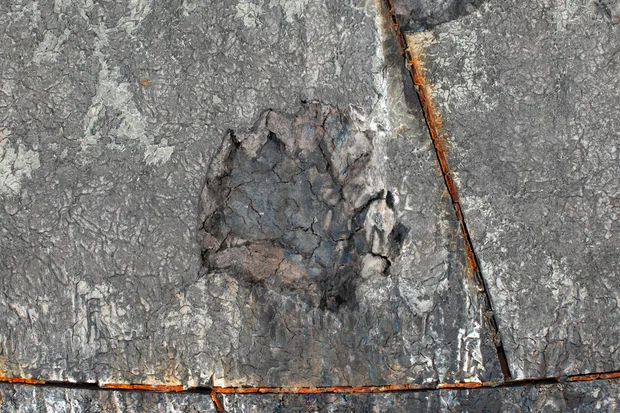
heat-shield-char-loss-2-foia.jpg
A closeup of the Artemis I heat shield shows an area where a chunk of the outer layer was blown off during entry in 2022. NASA

The outer char layer is "the only part of the Artemis I and Artemis II heat shield that actually allows it to breathe, or allows it to off-gas. So once it stops, now there's no mechanism in the deeper parts of the heat shield for that gas to escape," he said.

"So the pressure built up, and as the capsule came back down and started reheating, the pressure was already there.

"All those cracks, the pockets had already formed. And now, bang, bang, bang, pop. Avcoat started sloughing off during that second entry," the engineer said. 

A modified reentry trajectory should solve the problem

Engineers verified in lab tests that a modified skip-entry trajectory — one with an initial dip into the upper atmosphere followed by a shorter-duration climb back out — would allow the Avcoat to "breathe" throughout, preventing the formation of cracks and trapped gas. An independent review team agreed with those conclusions.
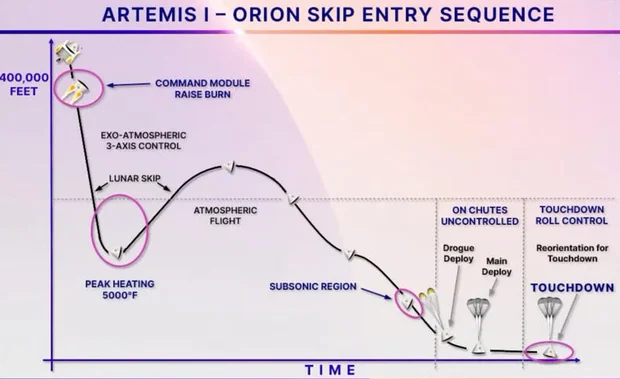
skip-entry.jpg
The unpiloted Artemis I flight used a "skip" reentry trajectory in which the Orion crew capsule dipped into the atmosphere, skipped back up, and then made its final descent. NASA

Interestingly, Apollo engineers were aware of the Avcoat permeability issue and designed that program's heat shields accordingly. Apollo capsules also used skip reentry trajectories and had no problems. But the Avcoat used in the Artemis heat shields was reformulated slightly, and that ended up affecting its permeability. 

In any case, the downside to the modified reentry trajectory for Artemis II will reduce the distance the Orion capsule can fly to avoid bad weather in the planned splashdown zone. It will also result in higher sustained heating during the descent, but engineers say that is exactly what is needed to maintain permeability in the outer char layer and ensure good performance. 

Former astronaut Charles Camarda disagreed, strongly criticizing the "fly as is" decision. He argues that engineers do not fully understand the root cause of the Artemis I heat shield damage and cannot accurately predict how the Artemis II heat shield will perform or whether the revised entry trajectory might have unintended consequences. 

In a letter to the NASA administrator, Camarda wrote that "history shows accidents occur when organizations convince themselves they understand problems they do not." 

Like Wiseman, Glover says he trusts the analysis of the Artemis I problem, saying critics "haven't been in these meetings from day one and met the team and looked them in the eye and shook their hands at the ends of these meetings."

That said, he added, "I don't want to discount the things that they've said. Any time you talk about fire, any time you talk about entry and heat shields, talk about parachutes, these are high-risk things that ... don't have fault tolerance built in. They have to work."

"And so I appreciate all of that nudging and poking and prodding that they've caused," Glover said. "They have made us sharpen our pencils and put more due diligence, more vigilance into that process. But I think we've done that. And so I think the crew is comfortable because of that team."

In: