




By
/ CBS News
Despite ongoing toilet trouble, the Artemis II astronauts said Saturday they were awestruck by the sight of Earth receding behind them, and the moon growing larger ahead, a perspective only a handful of humans have ever shared.
Pilot Victor Glover said approaching the moon over an Easter weekend made him marvel at "the beauty of creation," saying the view made him appreciate the "oasis" of planet Earth in the vast emptiness of the cosmos.
"You guys are talking to us because we're in a spaceship really far from Earth, but you're on a spaceship called Earth that was created to give us a place to live in the universe," Glover said in an interview with CBS News Saturday. "...Maybe the distance we are from you makes you think what we're doing is special. But we're the same distance from you, and I'm trying to tell you, just trust me, you are special in all of this emptiness. This is a whole bunch of nothing, this thing we call the universe, the cosmos."
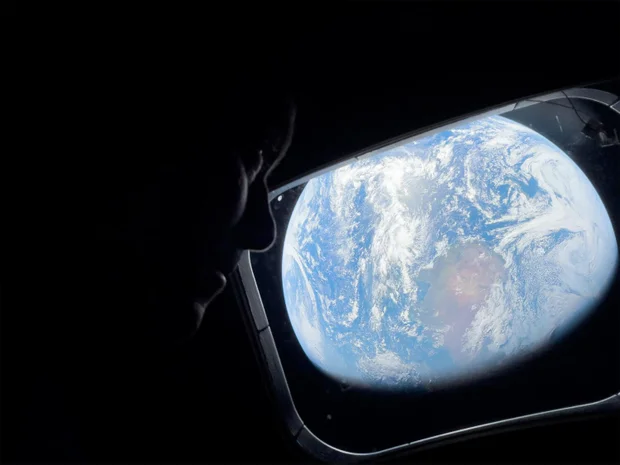
He continued: "You have this oasis, this beautiful place that we get to exist (on) together. As we go into Easter Sunday, thinking about all the cultures all around the world, whether you celebrate it or not, whether you believe in God or not, this is an opportunity for us to remember where we are, who we are, and that...we've got to get through this together."
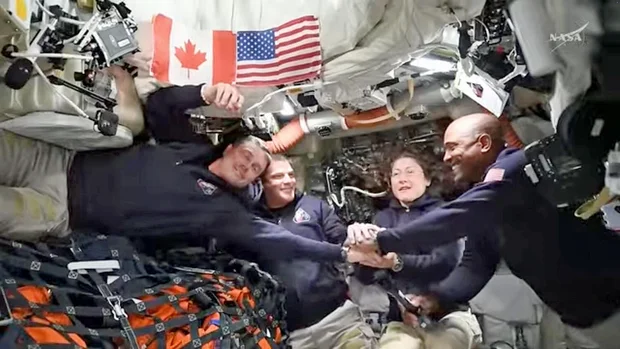
With that, Glover, Artemis II commander Reid Wiseman, Christina Koch and Canadian astronaut Jeremy Hansen clasped hands together, sharing the moment as they continued hurtling toward the moon.
"In the end, for me it leads back to gratitude, gratitude that out of this huge universe, we get to live together on planet Earth, and what an anomaly is," Koch told CBS News. "When I saw Earth for the first time on its own out the window, I was struck by the blackness around it."
The crew will loop around the dark side of the moon Monday evening before beginning the long trek back to Earth.
Early Saturday, spacecraft communicator Jacki Mahaffey at the Johnson Space Center called up the crew to let them know "as of 30 seconds ago, you are now closer to the moon than you are to us on Earth."
"Wow, Jacki, thank you for sharing that with us," replied Koch. "We all kind of had a collective, I guess, expression of joy at that. It's hard to imagine, but we can see here on our (instrumentation) that we are at 118,000 nautical miles (from the moon). So yeah, you can do the math."
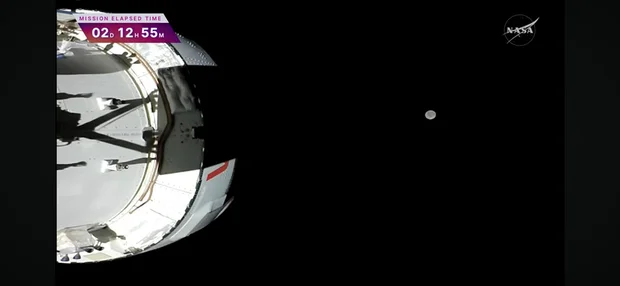
She said the crew was enjoying views of the moon through Orion's docking hatch window.
"It is a beautiful sight," Koch said. "We're seeing more and more of the far side, and it's just a thrill to be here."
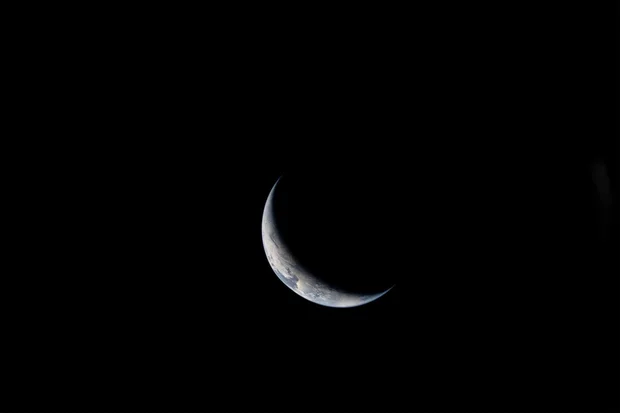
Wiseman agreed, telling mission control later, "we have got the sun beaming in all the windows, morale is high on board and looking out window three, you can see a beautiful crescent Earth with the sunlight glinting off of the ocean and the swirling clouds. It's just a truly remarkable sight."
The crew has had intermittent problems with their space toilet since launch on Wednesday, occasionally being told to avoid its use in favor of "contingency collapsible urinals," or CCUs, plastic containers used for urine collection that can be vented to space later. Each crew member has two of the devices.
Early Saturday, as the crew was preparing for bed, flight controllers were unable to dump the toilet's stored urine overboard as needed, possibly because of a frozen vent line. The astronauts were told, once again, to use their CCUs until the problem was resolved.
Later in the day, after crew wakeup, flight controllers re-oriented the Orion capsule to allow sunlight to warm up the waste water vent line in hopes of thawing any frozen material. The "bake out" was partially successful, but the tank did not empty fully.
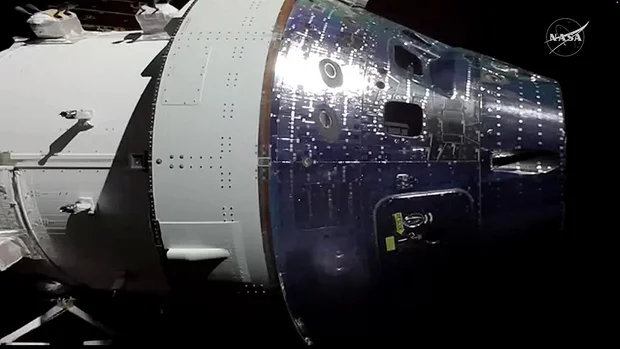
"Technically (the toilet) will work with number one right now, but we just want to keep the tanks half full until we figure out what's going on with the vent line," said Flight Director Judd Frieling. "It's still go for number two."
Asked about public and media interest in the toilet trouble, Mission Management Team Chairman John Honeycutt said he thought the "fixation on the toilet is kind of human nature, right? I mean, everybody knows how important that is to us here on Earth, and it's harder to manage in space."
"I know we're in a good state right now, but I would really like for it to be in the best state that it can be, for the crew's sake. ... But you know, they're okay, and they train to manage through the situation."
Veteran astronaut Don Pettit said in a post on the social media platform X that a CCU is "essentially an open container (reusable, sealable and drainable) that controls the urine-air interface using capillary forces like my Space Cup does coffee," he said, referring to a cup he designed for drinking coffee in weightlessness.
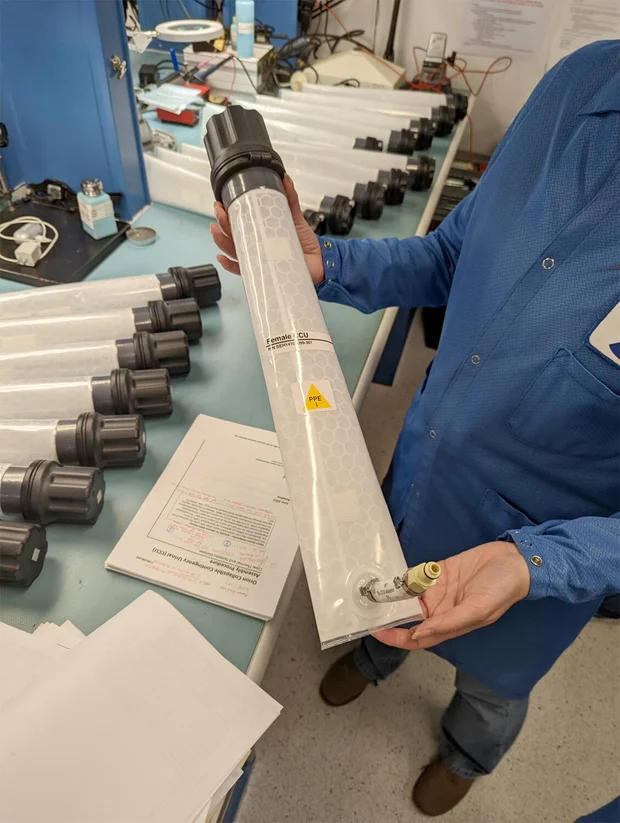
"When you are in cislunar space with a broken toilet, you need contingencies and the CCU replaces the need for about 25 pounds of diapers."
Otherwise, Orion was performing well with only a few minor hiccups along the way. For the second day in a row, a planned trajectory correction thruster firing was called off after analysis showed the spacecraft was still on a near-perfect trajectory.
Later Saturday, Wiseman and Glover planned to take a turn at manually piloting the Orion capsule to help engineers better understand how the spacecraft performs in flight and to provide hands-on feedback for future Artemis astronauts.
All four crew members were expected to spend time late in the day reviewing their plans for video and camera mapping of the lunar surface when they pass behind the moon on Monday. Close approach on the far side, at an altitude of about 4,100 miles, is expected at 7:03 p.m. EDT.
The moon has been observed in great detail by satellites at lower altitudes, but the Artemis II crew will have a unique chance to observe features on the lunar far side that no human has ever directly experienced.
"The crew has spent many, many months training in a variety of different environments to make these really scientifically impactful observations," said Kelsey Young, a lunar researcher based at NASA's Goddard Space Flight Center.
"And so we're really excited as we're getting closer to the moon for all this really wonderful lunar science that we're going to be able to do."
In: