


/ CBS News
The destruction of Blue Origin's unmanned New Glenn rocket in a catastrophic launchpad explosion, along with apparently severe damage to the company's only launch pad, sent shock waves through the U.S. space community Friday. The company could now be facing flight delays stretching months — if not longer — and could cause serious delays in NASA's moon mission plans.
Blue Origin, owned by Amazon founder Jeff Bezos, has not yet revealed what recorded telemetry and launchpad video might show about the cause of the Thursday night explosion at the Cape Canaveral Space Force Station. As always with such tests, the area had been evacuated and no injuries were reported.
"It's too early to know the root cause but we're already working to find it," Bezos said in a post on X. "Very rough day, but we'll rebuild whatever needs rebuilding and get back to flying. It's worth it."
The titanic blast could be seen across a wide swath of Florida, shaking nearby homes and rattling windows as roiling clouds of flame billowed into the sky framed by arcing streaks of debris flying in all directions.
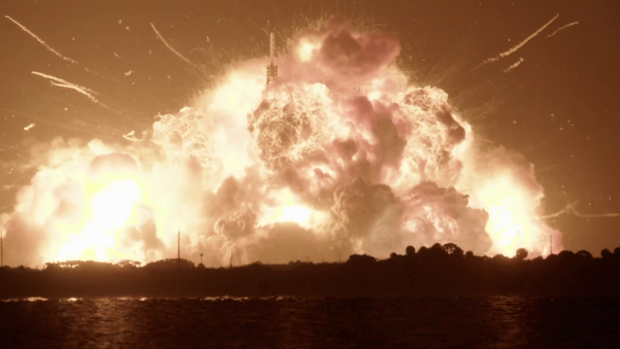
Early Friday, Space Launch Delta 45 warned the public: "Debris from the anomaly could wash ashore along publicly accessible areas over the coming days and weeks. It is critical to report sightings to 911 for proper removal and mitigation. The debris could be hazardous and direct contact could pose health risks."
The hot-fire test was being carried out in preparation for the New Glenn's launch in early June on a flight to deploy 48 Amazon-owned internet satellites. The satellites were not on board the rocket for the engine firing and were not damaged in the mishap.
While the cause of the explosion was not immediately known, it appeared to originate at or near the base of the rocket's first stage as its seven methane-burning BE-4 engines were igniting for the planned test.
The engines generate a combined 4.5 million pounds of thrust at full power and if one or more BE-4s was to blame, the mishap almost certainly will affect United Launch Alliance, which uses the Blue Origin engines in the first stage of its new Vulcan rocket.
The explosion could have been triggered by a ruptured fuel line, a ground system or some other malfunction unrelated to the engines.
Delays to moon missions
Whatever the cause, the explosion marked a potentially serious blow to NASA's Artemis moon program.
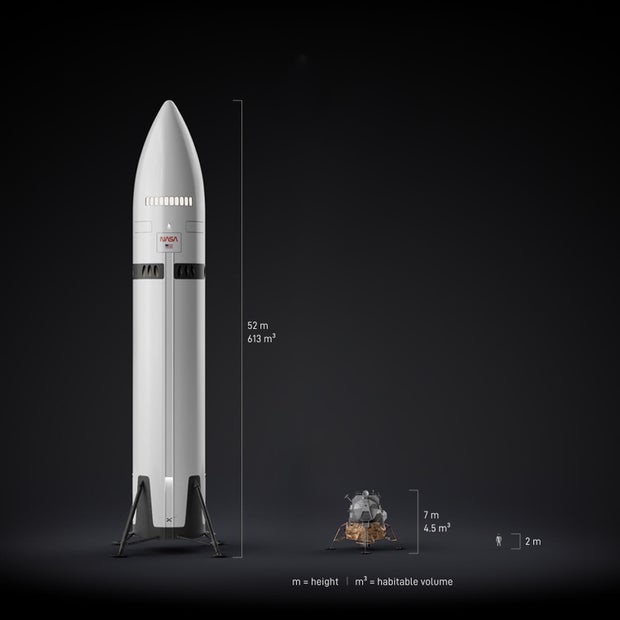
The space agency is counting on Blue Origin and SpaceX to launch Artemis moon landers next year to rendezvous and possibly dock with an Orion capsule launched atop NASA's Space Launch System rocket. NASA plans to announce the four astronauts who will fly on that mission — Artemis III — on June 9.
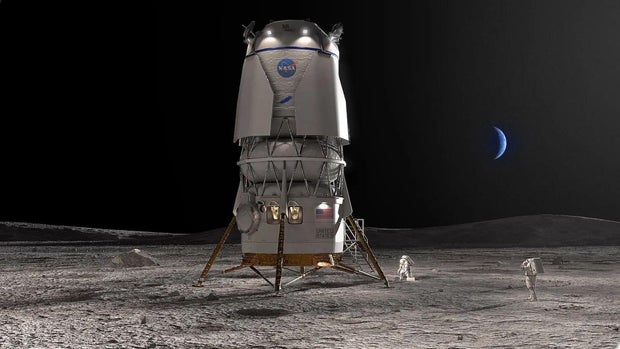
The idea is to test rendezvous and docking procedures in Earth orbit before pressing ahead with one and possibly two astronaut moon landing missions in 2028. In addition, NASA expects Blue Origin to launch two unpiloted lunar cargo ships in the near future to carry prototype rovers to the lunar surface. An initial test flight was expected later this year.
Blue Origin's landers are designed to launch atop New Glenn rockets and it now seems unlikely any such launch will be possible for many months, maybe not before the end of 2027.
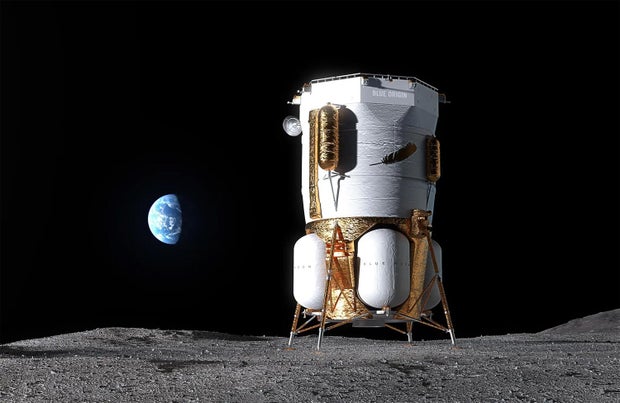
Depending on how long it takes for the company to return to flight, the Artemis III mission could be delayed into 2028, possibly pushing the planned moon landing flights into 2029, or NASA could be forced to carry out the Artemis III mission next year with just the SpaceX lander.
But that assumes SpaceX can be ready in time. The company's Starship rocket is currently grounded because of engine failures in a recent test flight and it's not clear when the Starship lander will be ready to fly again.
As for Blue Origin, initial damage assessments, especially those from afar, are often overly pessimistic and given Bezos' resources, Blue Origin many be able to return to flight faster than expected, depending on what a detailed damage assessment reveals.
NASA will be paying close attention.
"NASA is aware of the anomaly that occurred tonight at Launch Complex 36 involving Blue Origin's New Glenn rocket at Cape Canaveral Space Force Station," NASA Administrator Jared Isaacman said late Thursday on X.
"Spaceflight is unforgiving, and developing new heavy-lift launch capability is extraordinarily difficult," he continued. "We will work with our partners to support a thorough investigation of this anomaly, assess near-term mission impacts, and get back to launching rockets."
Case of dêjà vu
In a similar mishap in September 2016, a SpaceX Falcon 9 exploded on pad 40, nearby Thursday's explosion, destroying the rocket and an Israeli satellite and severely damaging the launchpad.
The failure happened in the final minutes before a hot-fire test when the Falcon 9, like the New Glenn, was fully loaded with explosive propellants. The SpaceX failure was blamed on a ruptured high-pressure helium tank inside the upper stage's liquid oxygen tank.
SpaceX was able to resume flights 3 1/2 months later, but it took the company nearly 15 months to return pad 40 to operational status. In the meantime, the company was able to use two other pads, one at the Kennedy Space Center and the other at Vandenberg Space Force Base in California, to keep flying.
That option isn't available to Blue Origin. While the company plans to build a second pad at Cape Canaveral and another at Vandenberg, those projects have yet to get underway.
"Thinking about the entire team at Blue," Kiko Dontchev, SpaceX vice president of launch operations, posted on X. "We've been there before and there are very few things worse than losing a vehicle on the pad.
"Remember @blueorigin, it's the darkest before the dawn and you will be measured not by this anomaly, but by how you respond," he said. "We are all rooting for you to get safely back to flight as soon as possible!"
SpaceX, meanwhile, launched a Falcon 9 rocket early Friday from pad 40 carrying another batch of Starlink internet satellites. United Launch Alliance, after making sure no debris from the New Glenn explosion affected their systems at nearby pad 41, planned to launch a set of Amazon Leo internet satellites Friday evening.
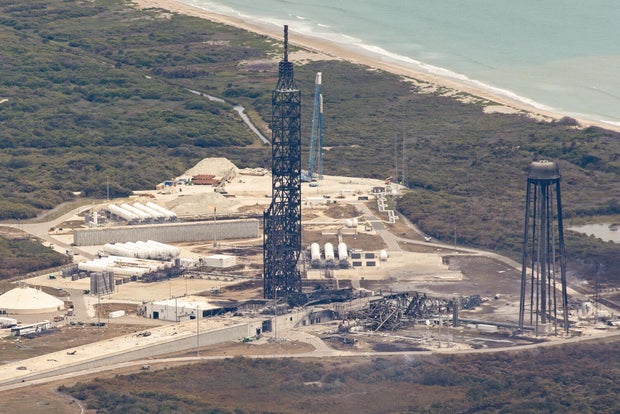
Helicopter views early Friday showed Blue Origin's standalone lightning tower had been destroyed, along with the New Glenn transporter-erector used to haul the rocket from a hangar to the pad and then to rotate it vertical for launch. Both were visible Friday morning as charred piles of mangled debris.
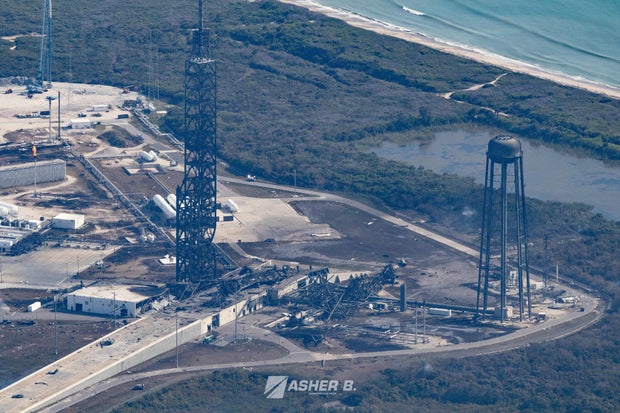
Other signs of blast damage were apparent, but it was not clear if the pad's propellant tanks, feed lines, sound-suppression water system or the New Glenn processing hangar were severely damaged.
Because the hot-fire test was not an actual launch and posed no threat to public safety or air travel, both the Federal Aviation Administration and the National Transportation Safety Board had no plans to oversee Blue Origin's failure analysis.
In: