


Africa Centres for Disease Control and Prevention is working with the Democratic Republic of Congo to speed overdue payments to striking Ebola responders as the labour dispute threatens efforts to contain the world’s fastest-growing outbreak of the deadly disease.
Health workers in Bunia, the capital of Ituri province, and neighboring Rwampara remain on strike over unpaid benefits and deteriorating working conditions, Congo’s National Institute of Public Health said in a report Thursday, noting that continuity of essential health services has been compromised.
Almost 300 new cases have been recorded over the past week, with 151 people admitted to treatment centers on Wednesday alone, bringing the total to 1,792 confirmed infections and 625 deaths. More than 90% of cases remain concentrated in Ituri, where the strike is taking place.
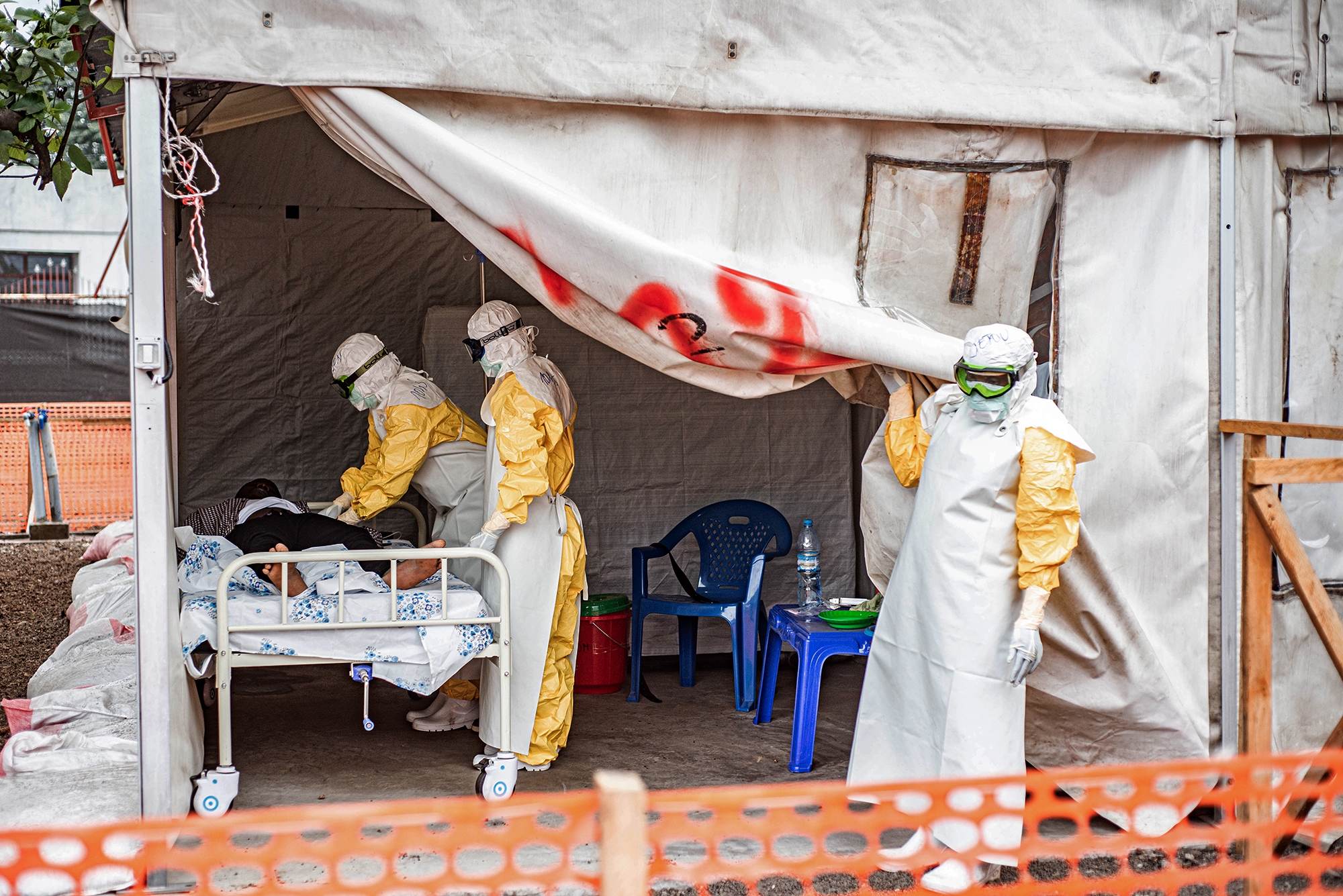
Workers wearing protective equipment visit a patient in an isolation unit at an Ebola treatment center in Monigi, Congo on June 2.
“We need a decent work environment for our frontline healthcare workers that are fighting this growing Ebola outbreak,” Wessam Mankoula, an Africa CDC epidemiologist, told reporters Thursday. Some 112 health workers have contracted the virus and 35 have died, he said.
ADVERTISEMENT
CONTINUE READING BELOW
The strike compounds wider pressures on a health system already weakened by conflict, displacement and chronic underfunding.
Security threats
The response has also been hampered by mounting attacks on health workers. At least 76 security incidents targeting Ebola responders and other aid workers have been recorded since the outbreak was declared in mid-May, injuring at least 45 people, the United Nations Office for the Coordination of Humanitarian Affairs said Wednesday. On Monday, attackers raided an Ebola treatment center in Butembo, a city in North Kivu province, setting fire to part of the facility.
Africa CDC has already provided about $2 million to support the broader response, with authorities able to use some of that money to settle delayed payments, Mankoula said. “This is very important to keep the morale of the healthcare workers,” he added.
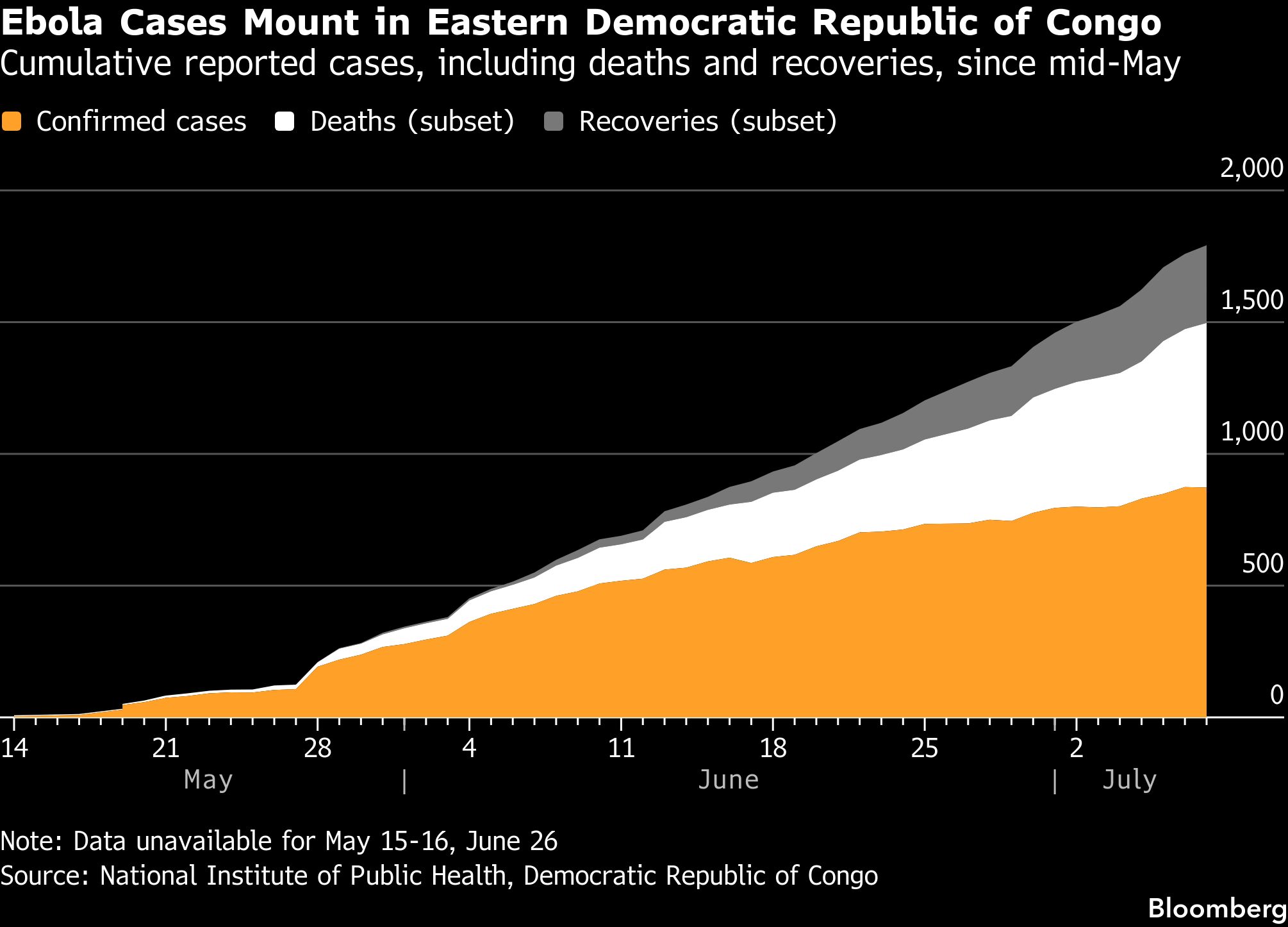
The outbreak, caused by the rare Bundibugyo strain, has spread faster than any previous Ebola epidemic, surpassing 1,000 confirmed cases within 40 days. The 2018 outbreak in Congo’s North Kivu province took about 235 days to reach the same milestone.
ADVERTISEMENT:
CONTINUE READING BELOW
Currently, every 10 Ebola cases generate about 14 new infections, and fewer than a third of new cases occur among people already identified as contacts of an Ebola patient, Mankoula said.
Crisis situation
“We need to move faster to break the back of Ebola,” said Tom Fletcher, the United Nations under-secretary general for humanitarian affairs and emergency relief coordinator, in a statement Thursday. The epidemic is unfolding amid “one of the world’s most complex humanitarian crises,” he said.
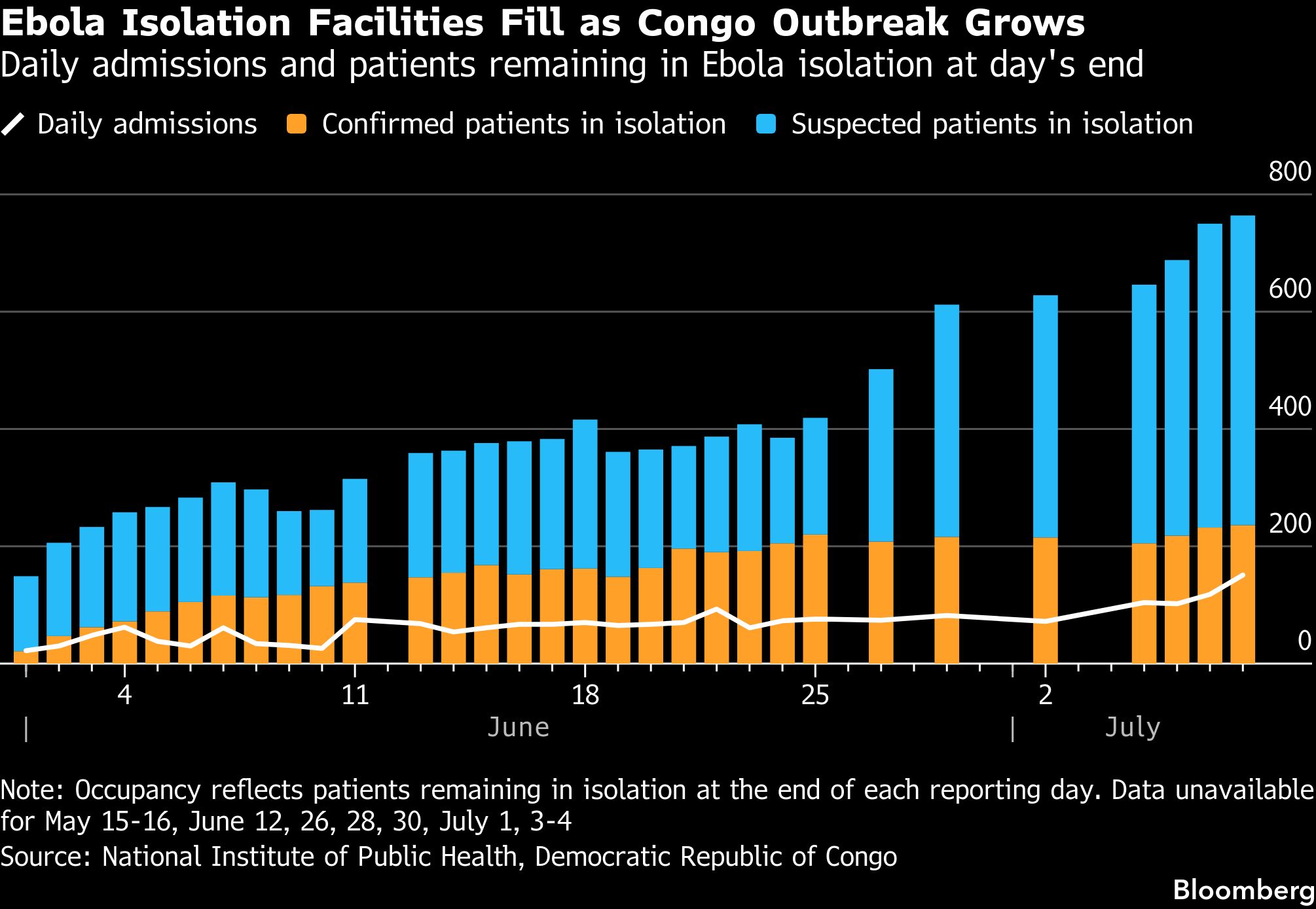
Government figures show 764 patients are being treated or isolated, with treatment centers operating at more than 95% occupancy nationally and facilities in North Kivu province exceeding capacity. The number of available beds must increase by at least 50% to keep pace with rising admissions and isolate patients before they infect others, Mankoula said.
Almost 12,000 contacts are under follow-up, though only 79% were actually seen, below the level considered necessary to reliably interrupt transmission.
ADVERTISEMENT:
CONTINUE READING BELOW
Recruitment into the WHO-backed trial evaluating Gilead Sciences Inc.’s remdesivir and Mapp Biopharmaceutical Inc.’s antibody therapy MBP134 is “steadily increasing,” according to Africa CDC. The study began at one treatment center and is expected to expand to four sites before eventually reaching 10.
A study testing whether Gilead’s antiviral pill obeldesivir can prevent Ebola after exposure is scheduled to begin early next week and aims to enroll about 800 participants.
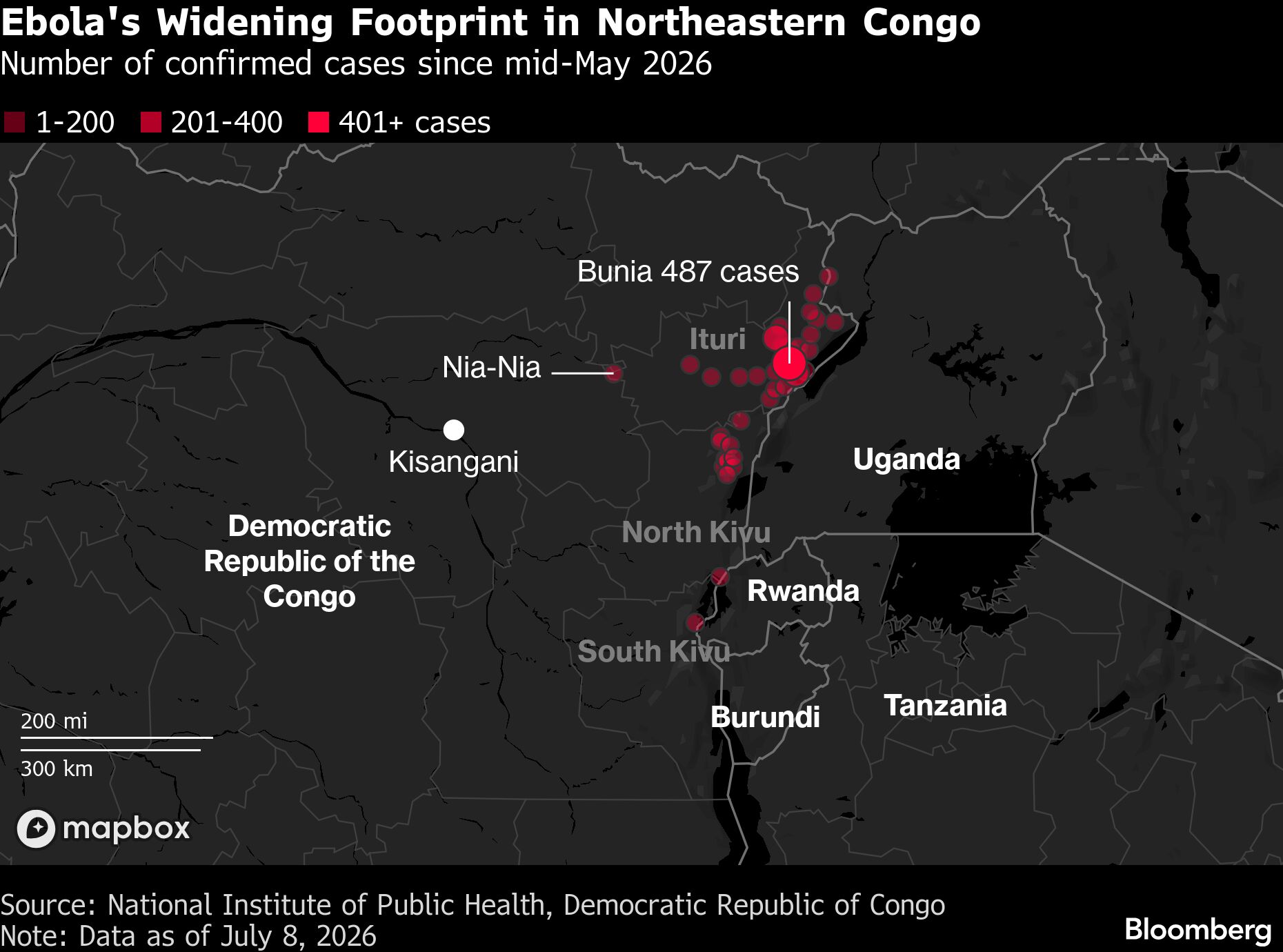
Authorities are also continuing to investigate two Ebola cases detected in Kisangani, including one linked to the outbreak in Nia-Nia. The country’s officially affected provinces remain unchanged at three, indicating investigators haven’t concluded the virus is spreading independently in the city, about 700 kilometers (435 miles) west of the main outbreak zone.
© 2026 Bloomberg