


惯性聚合 高效追踪和阅读你感兴趣的博客、新闻、科技资讯
阅读原文 在惯性聚合中打开

推荐订阅源

P
Proofpoint News Feed
The Last Watchdog
The Last Watchdog
Security Latest
Security Latest
P
Privacy International News Feed
T
Threat Research - Cisco Blogs
H
Help Net Security
T
The Exploit Database - CXSecurity.com
Know Your Adversary
Know Your Adversary
博客园_首页
S
Securelist
S
Schneier on Security
G
GRAHAM CLULEY
Cisco Talos Blog
Cisco Talos Blog
V
Visual Studio Blog
博客园 - 叶小钗
C
Cybersecurity and Infrastructure Security Agency CISA
有赞技术团队
有赞技术团队
Recent Announcements
OSCHINA 社区最新新闻
OSCHINA 社区最新新闻
奇客Solidot–传递最新科技情报
奇客Solidot–传递最新科技情报
Microsoft Azure Blog
A
About on SuperTechFans
博客园 - 三生石上(FineUI控件)
Stack Overflow Blog
Stack Overflow Blog
量子位
L
Lohrmann on Cybersecurity
Hugging Face - Blog
Hugging Face - Blog
Engineering at Meta
Engineering at Meta
让小产品的独立变现更简单 - ezindie.com
C
CXSECURITY Database RSS Feed - CXSecurity.com
A
Arctic Wolf
P
Privacy & Cybersecurity Law Blog
Simon Willison's Weblog
S
SegmentFault 最新的问题
The Hacker News
The Hacker News
罗磊的独立博客
博客园 - 司徒正美
D
Darknet – Hacking Tools, Hacker News & Cyber Security
博客园 - 【当耐特】
Microsoft Security Blog
K
Kaspersky official blog
人人都是产品经理
人人都是产品经理
博客园 - 聂微东
L
LINUX DO - 热门话题
Threat Intelligence Blog | Flashpoint
V
V2EX
V
Vulnerabilities – Threatpost
AWS News Blog
AWS News Blog
小众软件
小众软件
Project Zero
Project Zero

Blog | Orca Security

Langflow RCE Actively Exploited to Deploy Cryptominers on AI Infrastructure Orca MCP: When Text Stops Scaling Kubernetes Compliance Tools: Automating CIS Benchmarks Risk-Based Vulnerability Management for the Cloud: A 2026 Guide Private Cloud Security: Top Risks and Best Practices (2026) What Is Generative AI in Cybersecurity? Best Vulnerability Management Tools and Software in 2026 2026 State of Application Security Report Recap: What the Data Says and What Security Teams Should Do About It AI Security for Sensitive Data: Best Practices and Guidelines Best AI Code Security Solutions 2026: How to Secure AI-Generated Code From Platform to Program: How to Ensure Your Cloud Security Solution Delivers Best AI Cybersecurity Providers 2026: A Buyer's Guide to AI-Powered Security Platforms Join Orca Security at Black Hat USA 2026 CNAPP Tools That Reduce Security Tool Sprawl: CNAPP vs. Dedicated Solutions What Is Container Runtime Security? A Practical Guide 2026 What Is Application Security Testing? Tools and Types What Is Managed Cloud Security? A Practical Guide What Is SaaS Security Posture Management? SSPM Guide Top 10 Cloud Security Standards for Compliance What is the MIT License? Compliance and Comparisons AI Agents vs. Agentless Security vs. Agent-based Security 144 Mastra npm Packages Compromised via Supply Chain Attack The Complete Guide to LLM Security: Risks, Best Practices, and Solutions Cloud Security LIVE 2026: Top 10 Takeaways Practitioners Can Use Now Cloud Security LIVE 2026: Top 10 Takeaways CISOs Can Use Now (and What to Do Next) How Orca Traced an nginx Flaw to 1.45 Million Tengine Servers All Running Vulnerable Code What to Look for in Container Security Tools Cloud Application Security Best Practices for DevSecOps Cloud Security Tools: 10 Types Explained for Teams What Is NIST CSF? Framework 2.0 Explained 7 Open Source Incident Response Tools by Category Critical Langflow Path Traversal Flaw Exploited for Unauthenticated RCE Critical PhpSpreadsheet RCE Patch Bypass Puts Millions at Risk Critical Splunk Enterprise Vulnerabilities Allow Unauthenticated File Operations and Remote Code Execution 16 Best Open Source Application Security Tools 2026 What Is Containerization? Security and Best Practices 8 Container Security Best Practices for 2026 Close the Cloud Identity Gap with Orca and AWS IAM Access Analyzer The 5-Step Context-Aware Cloud Vulnerability Prioritization Framework Critical Jupyter Enterprise Gateway Vulnerabilities Enable Full Kubernetes Cluster Takeover AI Security Best Practices for Regulated Industries Massive PyPI Supply Chain Attack Harvests Cloud Credentials via Python Startup Hooks SAST vs SCA: Key Differences for AppSec Teams What Is Cloud Security Architecture? Principles, Layers, and Frameworks What Is ASPM? A Guide to Application Security Posture Management What Is SaaS Security? A Practical Guide 2026 What Is a Man-in-the-Middle Attack? A Cloud Security Guide What Is Open Policy Agent? Best Practices and Use Cases 11 Best Open-Source DevSecOps Tools for 2026 How to Secure AI Workloads in Multi-Cloud Environments: A Complete Framework Critical WordPress Plugin Vulnerability Allows Unauthenticated Admin Takeover on 150K Sites What Is Kubernetes as a Service? KaaS Explained Critical Netlogon RCE Flaw Actively Exploited Against Windows Domain Controllers Your FedRAMP Continuous Monitoring Strategy Has a Gap. We Built Something to Fix It. How to Simplify Multi-Cloud Compliance Reporting: The 2026 Checklist Red Hat npm Packages Compromised in Supply-Chain Attack Spreading Credential-Stealing Worm Critical RCE in LiquidJS Lets Attackers Execute Arbitrary Commands on Unpatched Hosts Securing Shadow AI: How to Detect Unapproved LLMs in Your Cloud Data Security Posture Management (DSPM) for AI Gitea Container Registry Exposes Private Images to Unauthenticated Attackers Critical Unauthenticated RCE in Kopia Backup via SSH ProxyCommand Injection Best Palo Alto Networks Cortex (Prisma Cloud) Alternatives in 2026 7 Enterprise AI Security Risks to Manage Critical Pre-Auth RCE in ChromaDB Threatens AI Infrastructure Critical Coder Signature Bypass Exposes Developer Keys and Tokens New “PoolSlip” NGINX Exploit Revives Unpatched Remote Code Execution Risk Critical Drupal SQL Injection Exposes PostgreSQL-Backed Sites to Remote Code Execution AI Security Tools: How to Evaluate Them Across Every ML Attack Phase Massive npm Supply Chain Attack Compromises AntV Ecosystem, Steals CI/CD Secrets at Scale NIST AI Risk Management Framework (AI RMF) Explained: What It Is and How Organizations Use It The AI Data You Forgot to Lock: How Exposed Vector Databases Put Organizations at Risk GenAI Risks in Cloud Environments: What Security Teams Are Actually Missing in 2026 What Is Multi-Cloud Security? What Is Cloud Detection and Response (CDR)? Linux kernel vulnerability enables local theft of SSH host keys and /etc/shadow 18-Year-Old NGINX Rewrite Module Flaw Enables Unauthenticated DoS and Potential RCE Announcing Cloud Security Agent Skills for Orca’s MCP Server TanStack and 160+ npm/PyPI Packages Compromised in Supply Chain Worm Attack Dirty Frag: Linux Kernel Vulnerability Chain Enables Local Privilege Escalation to Root Critical Apache HTTP Server HTTP/2 Vulnerability Could Enable Remote Code Execution Skill Issues: How We Discovered Supply Chain Attack Vectors in an AI Agent Skills Marketplace What Is an Incident Response Plan? What Is Cloud Data Security? Risks, Challenges, and 12 Best Practices Remote Code Execution in GitHub Enterprise Server via Git Push Injection (CVE-2026-3854) Linux Kernel Bug (Copy.Fail) Enables Local Privilege Escalation to Root (CVE-2026-31431) Xinference PyPI package compromise leads to full environment takeover What is Application Security? When AI Accelerates the Offense, Coverage Gaps Become Catastrophic Orca Security Recognized in the 2026 TAG Enterprise AI Security Handbook Navigating Cloud Security in 2026: Join Cloud Security LIVE Anthropic’s Project Glasswing Is a Positive Step Toward Cleaner, Safer Production Kyverno SSRF: Breaking Kubernetes Namespace Isolation (CVE-2026-4789) Streamline Compliance Reporting with Orca and Drata’s Integrated Vulnerability Management CVE-2026-23226: How a Missing Lock in ksmbd’s Channel List Exposes Your Linux SMB3 Server 2026 State of AppSec: When Development Velocity Outpaces Security AI Is Entering Your Infrastructure. Now what? Orca Security Featured in SACR’s 2026 Unified Agentic Defense Platforms Report Supply Chain Attack on Axios Delivers Cross-Platform RAT via Compromised npm Account Credential‑Stealing Malware in LiteLLM Supply Chain Attack The Orca Approach to Runtime AI Security
Mission Accomplished: Orchestrate Your Remediation Strategy With Orca Missions
2026-03-25 · via Blog | Orca Security

In the ever-evolving landscape of cloud security, security teams are constantly battling a deluge of alerts and operational friction. This often leads to a dispersed effort, with teams reacting to individual findings rather than collaborating on root causes and driving meaningful risk reduction. Consequently, this dispersed effort yields outcomes that are often unmeasurable, stalling progress toward meaningful risk reduction.

The Problem: Alert Fatigue and Disconnected Efforts

Today’s security teams face an uphill battle. The sheer volume of security alerts from various tools can be overwhelming, making it difficult to prioritize, understand the true impact, and effectively remediate risks. This “findings overload” often results in:

  • Dispersed and Reactive Effort: Teams jumping from one alert to another without a cohesive strategy or ‘Done’ state
  • Organizational Friction: Lack of clear ownership and collaboration on remediation.
  • Contextless Risk Reduction: Difficulty in demonstrating tangible improvements in the security posture.

The Solution: Organized, Outcome-Driven Security with Orca Missions

Orca Security is proud to announce Orca Missions. Orca Missions are a transformative approach designed to shift security triage from a reactive, finding-by-finding task into an organized outcome-driven workflow. 
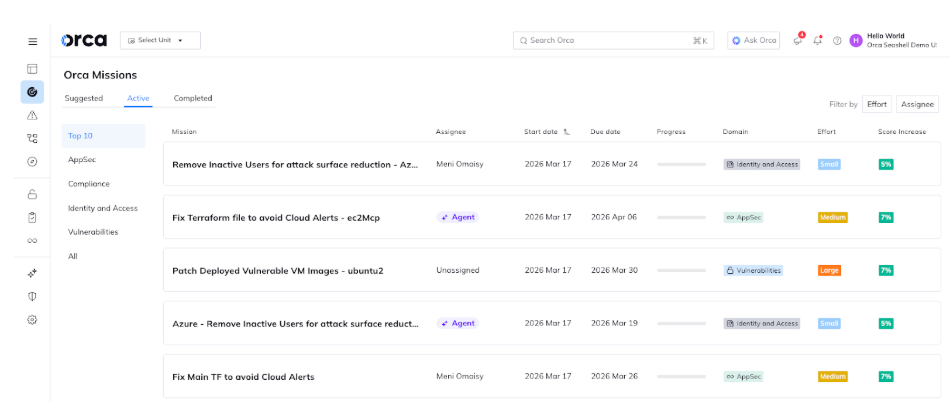
Orca Missions dashboard displaying active security remediation tasks categorized by domain, effort level, and projected security score increase.

Each mission represents a specific, actionable, and achievable initiative that groups related findings into one clear, focused objective by providing unparalleled measurability from initial identification through remediation. Mission success empowers you to monitor security effectiveness with precision, guaranteeing your goals are met and validated at every step.
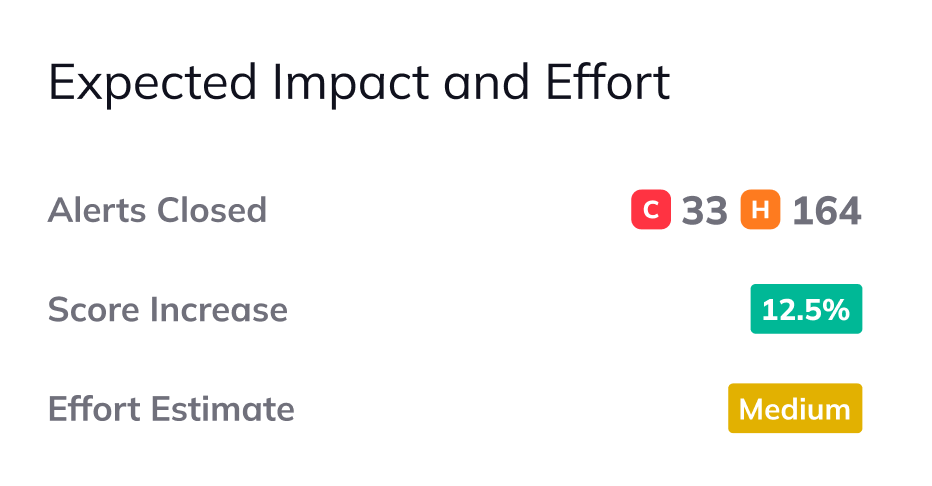
Expected impact and effort summary showing 197 alerts closed (33 critical, 164 high), a 12.5% security score increase, and medium effort.

Orca Missions lead with predictable ROI: before a mission is even initiated, the mission hub clearly shows you the recommended actions, alerts that will be resolved, the estimated effort, and the expected Score Increase to your security posture. This crucial context allows you to calculate the exact return on investment for your team’s time.

How Orca Missions Work–A Closer Look

At its core, each mission is built from a Template, a high-level strategic blueprint. This blueprint contextually groups related items, such as alerts and vulnerabilities, based on factors like risk severity and remediation effort. This specialized logic is crucial as it cuts through the noise, ensuring your team’s efforts are concentrated on the most impactful opportunity areas.
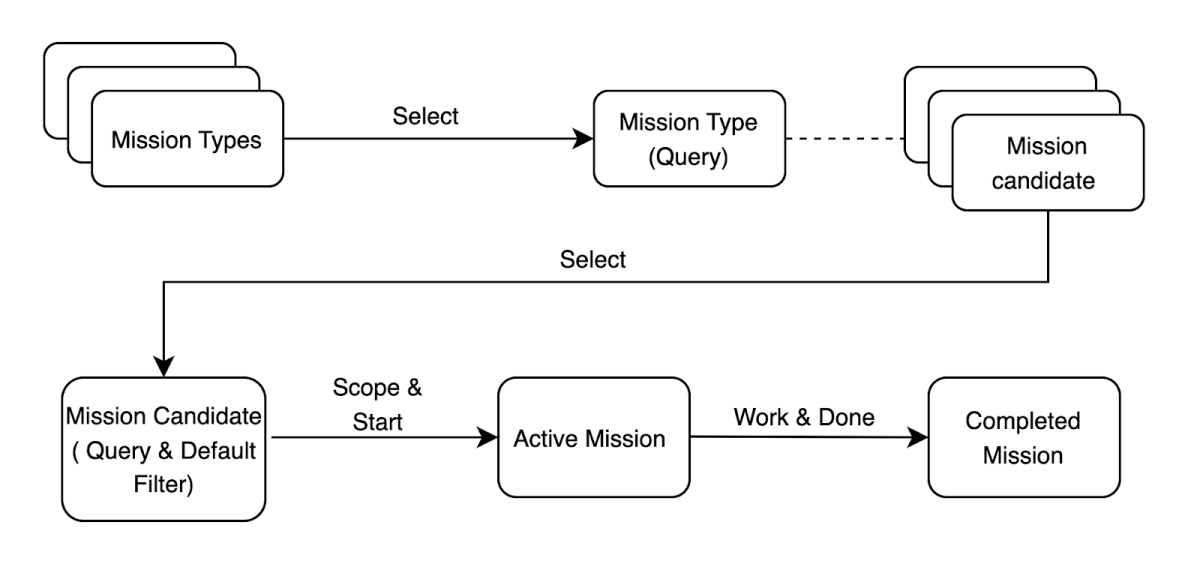
Workflow diagram illustrating the Orca Missions lifecycle from initial selection of mission types and candidates to active scoping and final completion.

With this Template, you get a powerful birds-eye view of a single risk vector across your entire resource, ensuring you have the full context to treat the systemic risk rather than singular, reactive alerts. 
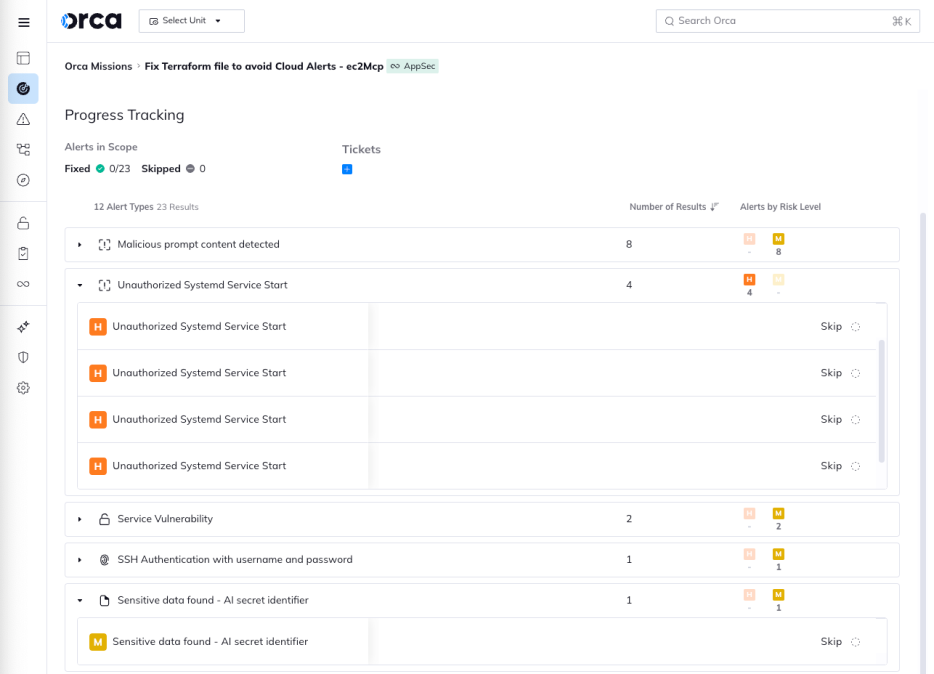
Orca Missions progress tracking for a Terraform remediation mission, highlighting high and medium-risk alerts like unauthorized system starts.

Missions were designed from the ground up to be a reportable and efficient orchestration of your workflow, giving you back hours spent on manual alert triage. The journey begins with an initial query that populates a foundational alert scope. Security analysts can refine this scope, gaining granular control over underlying remediation items to ensure the mission aligns with your organization’s security strategy.
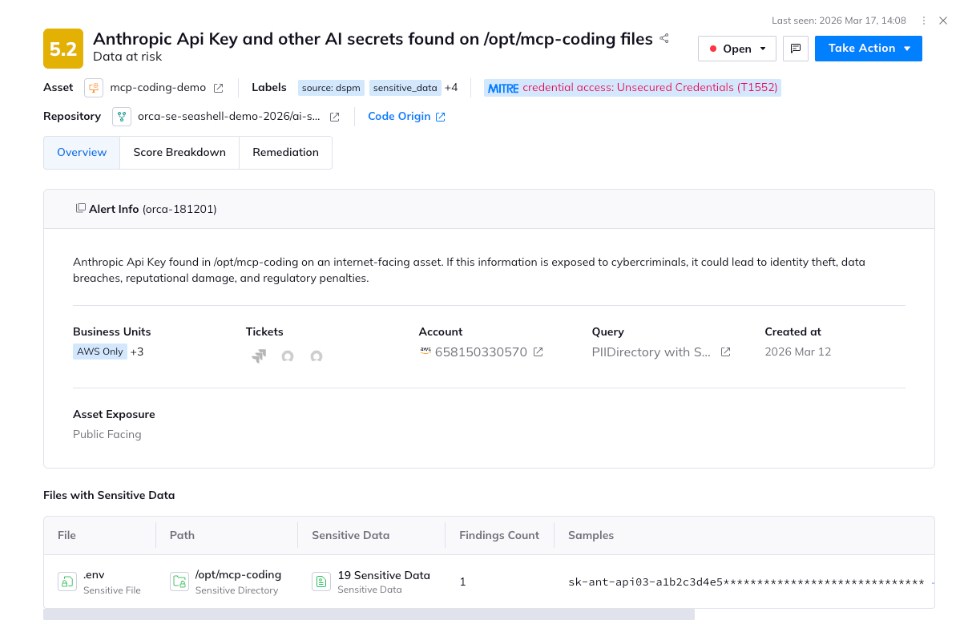
Orca Security platform alert detailing an exposed Anthropic API key and sensitive data found in an internet-facing environment.

Mission progress is tracked from a centralized hub. From here, you get the full context on misconfigurations, impacted assets, and outstanding actions, allowing analysts to initiate and assign the appropriate tickets for remediation. This centralized, context-rich coordination ensures the sizing and delegation is validated upfront, rather than post-hoc.
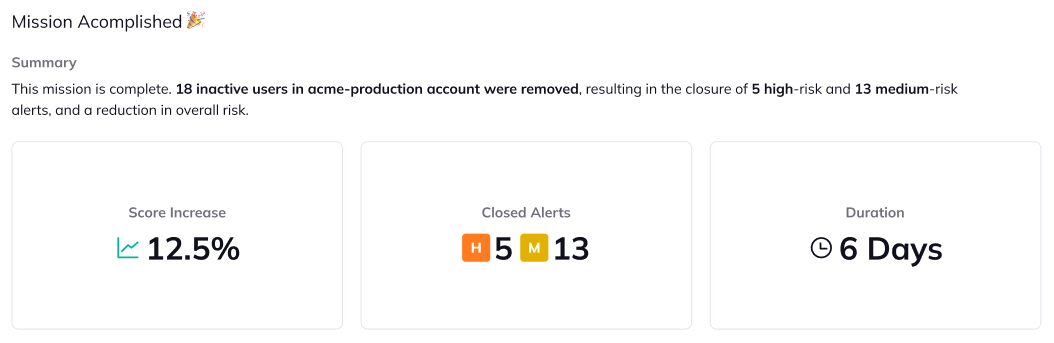
Orca Security mission summary for inactive user removal, showing a 12.5% score increase and 18 alerts closed over 6 days.

Orca Missions are focused on a single, verifiable goal: the Definition of Done (DoD). This clear objective signals mission completion (e.g., all outstanding assets are resolved or skipped), transforming your remediation strategy into a “Mission Accomplished” rather than just “Alerts Cleared.” The result is a reportable source of truth for measuring your team’s impact, enabling the precise evaluation of effort and progress towards achieving your security goals.

To illustrate Orca Missions in action, let’s jump in and review a few real-world scenarios to see how missions can organize and accelerate your remediation workflows.

1. Fix Terraform File to Avoid Cloud Alerts

Imagine you are a security analyst and you have just received a critical alert: an Anthropic API Key and 18 other AI-related secrets have been found in a plain-text .env file on an internet-facing EC2 instance. You have to open a high-priority ticket, but then the “handoff shuffle” starts. You need to coordinate with the DevOps team to find the resource owner and the AI team to rotate the keys—all while trying to identify exactly which Terraform module originally deployed this insecure configuration.

This workflow exists as just one of many daily fires fighting for your team’s attention in a dashboard or creating noise in a Slack channel. Valuable analyst time that should be spent on critical issues is reappropriated to administration, negotiation, and discovery. While this may seem like routine vulnerability management, consider the following:

  • The alert flagged the API keys, but do you have the time or mechanisms to investigate all relevant risk vectors?
  • Is this a one off alert or does this represent a larger systemic issue in your IaC?
  • Are you just “plugging a leak” on one file, or are you leading a campaign that actually hardens the organization’s entire AI infrastructure? 
  • Are you able to prove the organization is actually safer after fixing 1, 10, or even 100 similar alerts?

This is where Orca Missions can help. When you use the Orca Mission, all vulnerabilities tied to the resource are identified and logically aggregated. This frictionless orchestration moves your team beyond investigating one-dimensional alerts to addressing the entire hierarchy of risk implications across the resource.
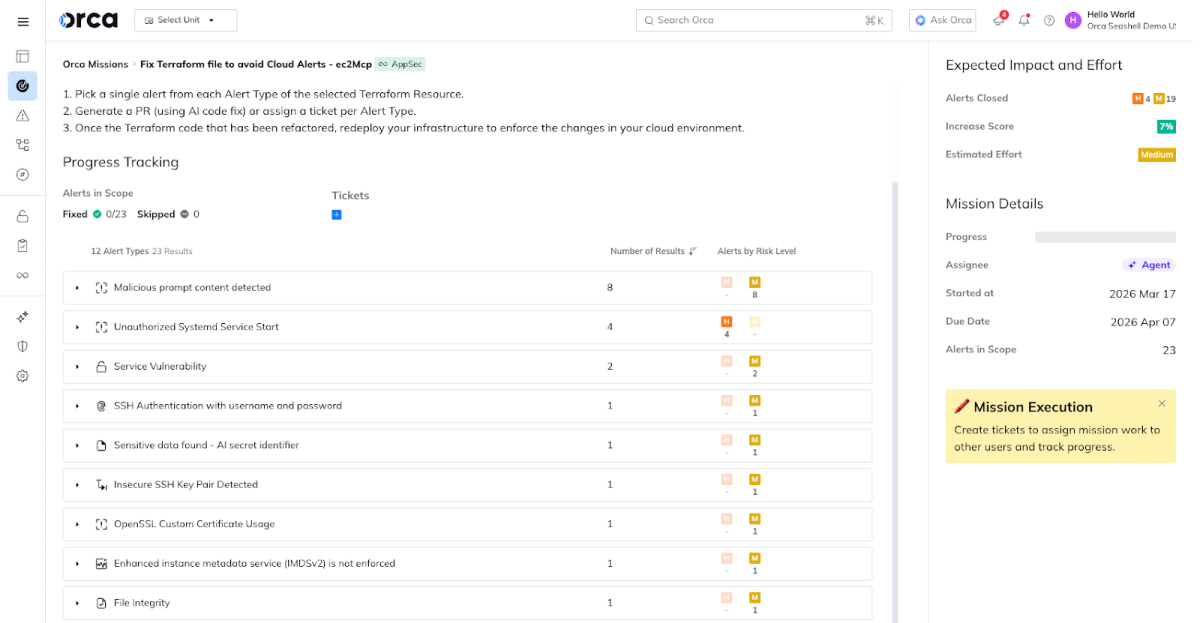
Orca Missions dashboard displaying progress tracking and expected impact for a Terraform remediation mission with 23 scoped alerts.

Instead of just seeing a notification for an exposed secret, analysts gain immediate visibility into the technical layers that weave a single alert into a heuristic threat investigation. In this mission, Orca looks at the broader exposure context, grouping 12 distinct alert types, allowing teams to investigate and assign owners across the full breadth of risk in a single dashboard.
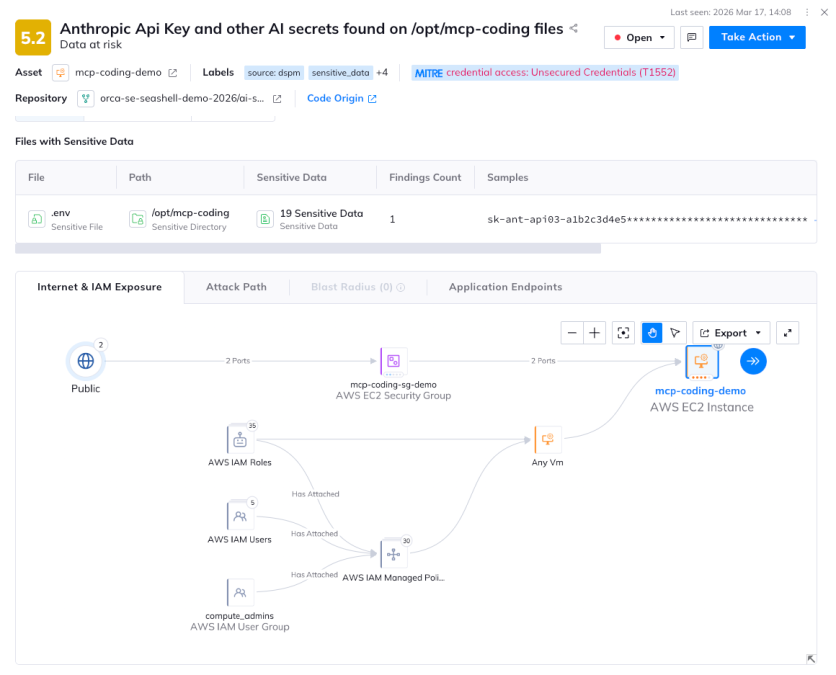
Orca Security platform alert detailing an exposed Anthropic API key and a visual graph of internet and IAM exposure paths to the affected AWS asset.

Rather than directing a single engineer to spend hours hunting for the specific module responsible for each of the 23 unique alerts types, you can easily delegate alerts by group or by mission tasks to your team with a clear path to resolution. 

2. Remove Inactive Users for Attack Surface Reduction

Let’s say your identity management system flagged an alert for an inactive user. After plugging the hole you realize it’s probably safest to go through and verify all inactive accounts. But as a multi-cloud organization, manually identifying and de-provisioning inactive users across multiple cloud accounts (AWS, Azure, GCP, etc.) is often a tedious, repetitive, and neglected task. Each account needs to be checked, usage logs analyzed creating a high level of operational friction at the expense of risk. This is especially prevalent if you don’t have a process or automation in place to enforce user lifecycle governance evenly across your organization. There are a few glaring questions that arise when you are tasked with user account review and de-provisioning.

  • How often are you manually auditing every single account across your entire cloud estate for inactivity?
  • Are you sure you’ve caught every user across every platform, or are unused accounts creating silent security blind spots?
  • Do you know the privileges of each inactive user, and is your team prioritizing the highest-risk accounts for removal?

With Orca Missions, all users not active in the last 90 days are aggregated in a powerful, orchestrated sweep of your entire multi-cloud estate. It aggregates these identity risks into a single tracker, allowing you to see the collective risk these “ghost” users pose to your organization.
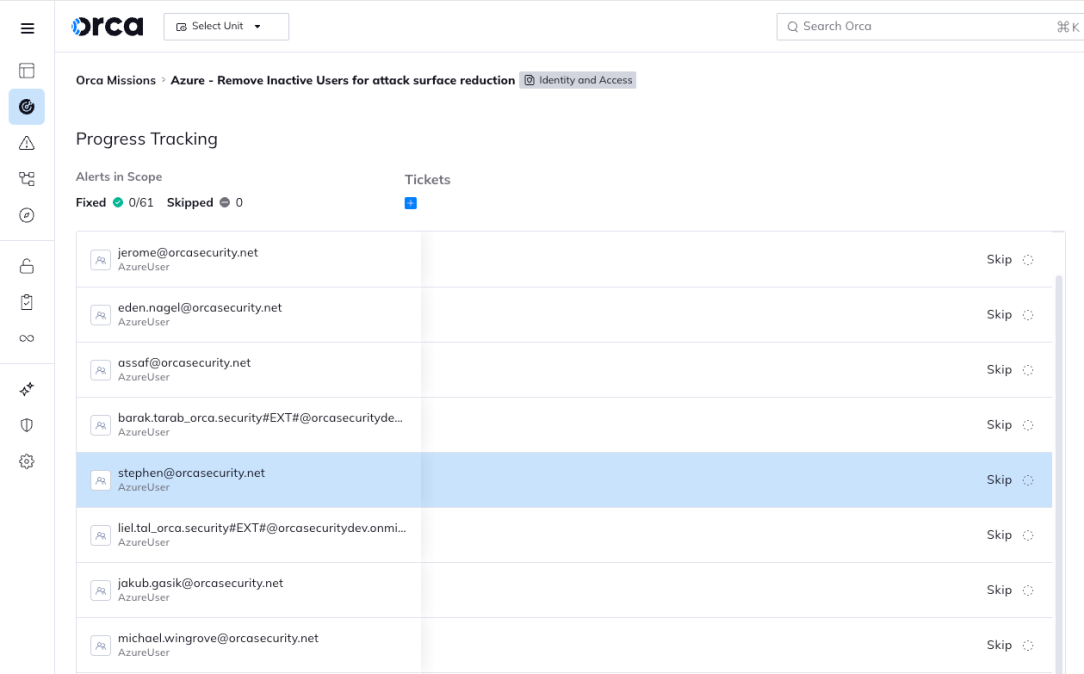
Orca Missions dashboard showing progress tracking for an Azure identity remediation task aimed at removing inactive users.

By centralizing the remediation, skips past questioning individual accounts and focuses on executing a bulk cleanup. Whether you choose to delete the users or rotate credentials to bring them back to “Active” status, the mission tracks the effort from start to finish. This creates a clear audit trail that shows exactly how much you’ve shrunk your organization’s attack surface in one coordinated effort.

3. Gain Compliance Score Lift for a Framework

You’re a Compliance Officer looking at a looming audit. Your dashboard shows you are at 82% compliance for SOC2 or NIST, but getting to 90% feels like an insurmountable climb. Under the traditional model, you’d have to dive into dozens of different control categories, each with its own set of disparate alerts. You might spend hours fixing a complex networking issue only to see your total score move by a fraction of a percent.

This “bottom-up” approach to compliance is exhausting and inefficient. Without a clear view of which actions yield the highest ROI, teams often:

  • Fix high-effort, low-impact issues while easy “wins” remain buried.
  • Lose track of which specific alerts are preventing a control from passing.
  • Struggle to communicate progress to stakeholders because the “score” feels disconnected from daily tasks.

For GRC teams, Orca Missions provides a top-down strategy with tailored remediation actions across any of Orca’s 200+ included compliance frameworks. The Compliance Score Lift Mission identifies the “low-hanging fruit”—controls that are failing due to only one or two associated alerts. By focusing your energy here, you achieve the maximum possible score increase with the least amount of engineering effort.
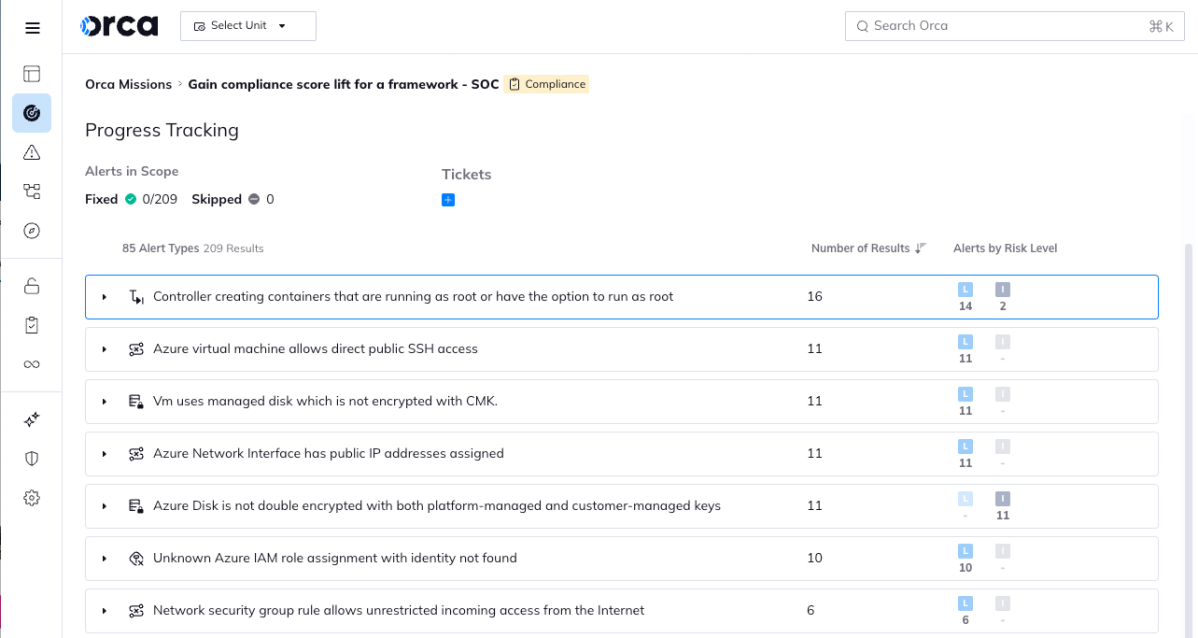
Orca Missions dashboard displaying progress tracking for a SOC compliance mission, identifying 209 alerts across 85 types for remediation.

The mission guides you through the remediation of these specific blockers, offering direct suggestions to resolve or dismiss alerts. Instead of guessing which task will satisfy an auditor, you are given a clear path to “Done.” This turns compliance from a static checklist into a dynamic, achievable goal, allowing you to report a significantly improved security posture to leadership in a fraction of the time.

4. Patch Deployed Vulnerable VM Images

As a Cloud Engineer, you’re drowning in vulnerability reports. Your scanner shows hundreds of instances of a high-risk vulnerability across your fleet. Traditionally, you might try to patch these live, instance by instance—a “band-aid” approach that is both time-consuming and prone to configuration drift. Even worse, the next time your auto-scaling group fires up a new instance, it uses the same flawed base image, and the vulnerability reappears like a ghost.

This manual, reactive cycle highlights a few compounding effects from this operational friction:

  • Patching the same bug 50 times across 50 VMs instead of fixing it once at the source.
  • New workloads inherit risks because the parent image is outdated.
  • Coordinating reboots and redeployments without a centralized plan often leads to downtime or missed assets.

Orca Missions stop the cycle and refocus your team on the cure rather than the symptoms. In this mission example, vulnerable VMs are identified and tied back to the specific source images (AMIs, Golden Images, etc.) responsible for the majority of your high-risk alerts. Impacted assets and their associated downstream risks are organized and investigated.
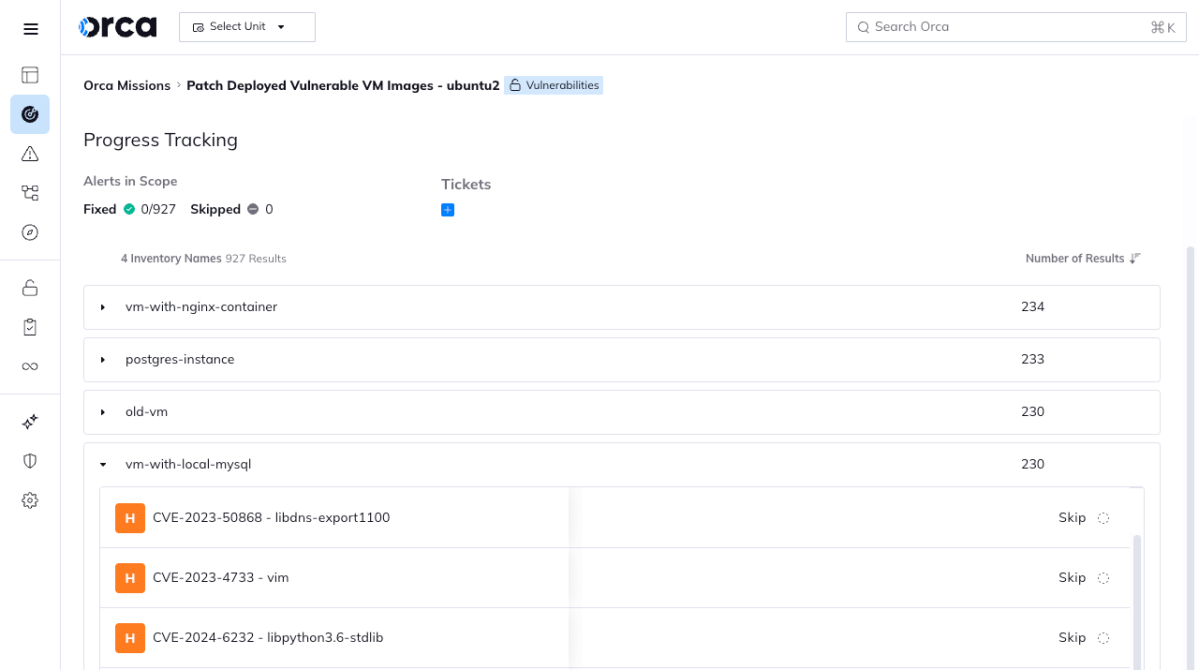
Orca Missions dashboard tracking progress for patching vulnerable VM images, detailing high-risk CVEs across inventory assets.

Instead of manually sifting through 500+ separate tickets, the mission gives you the evidence and plan to address the underlying packages in a single orchestrated workflow. By patching the source image and triggering a coordinated rebuild/redeploy, every dependent asset inherits the fix automatically. In a few steps, you can achieve a massive reduction in your vulnerability backlog through a singular, scalable action.

One Mission, One Intelligent Plan

By using Orca Missions, we handle the signals and create a tailored remediation plan based upon Orca’s intelligence and findings. Rather than addressing one alert, one asset, one vulnerability at a time, Missions allows you to get a birds-eye view of the entire risk vector and create a context-rich execution strategy. Now you can focus your attention on the right resources with a direct explanation of the effort required and impact to your organization; giving you back hours spent triaging alerts and remediating risks in siloes. With Orca, you equip your organization with a clear, measurable throughline all the way from identification to remediation.

Command Your Cloud With Orca

Orca offers a unified and comprehensive cloud security platform that identifies, prioritizes, and remediates security risks and compliance issues across AWS, Azure, Google Cloud, Oracle Cloud, Alibaba Cloud, and Kubernetes. The Orca Cloud Security Platform leverages Orca’s patented SideScanning™ technology to provide complete coverage and comprehensive risk detection. 

Learn more

Interested in seeing how the Orca Platform can help you command your cloud? Schedule a personalized 1:1 demo.