


Why enterprise AI platforms must evolve beyond workflow automation toward reasoning, governance, observability, and trustworthy autonomous operations.
Enterprise AI has entered a new phase.
Success is no longer determined solely by increasingly capable language models, but but by the platforms that operate them securely, govern their behavior, observe their decisions, and earn organizational trust.
The next generation of enterprise AI requires more than automation.
It requires trustworthy autonomous operations.
Artificial Intelligence is reshaping enterprise technology at an unprecedented pace. Organizations across every industry are integrating large language models, AI assistants, autonomous agents, and intelligent workflows into business operations. Yet despite rapid advances in AI models, many enterprise platforms continue to operate on infrastructure designed for an earlier generation of automation.
Over the past year, while designing enterprise AI infrastructure and demonstrating autonomous operational use cases, one observation became increasingly clear to me:
The challenge is no longer deploying AI models—it is operating AI systems responsibly at enterprise scale.
Traditional automation has served organizations exceptionally well. It automates repetitive tasks, standardizes operational procedures, and reduces manual effort through deterministic workflows. However, enterprise AI introduces an entirely different class of operational challenges.
Modern AI systems reason over dynamic information, collaborate with external tools, retrieve organizational knowledge, interact with multiple services, and continuously adapt to changing operational contexts. These systems make recommendations, invoke APIs, coordinate workflows, and increasingly participate in decision-making processes that extend beyond predefined scripts.
Operating these intelligent systems requires more than automation.
It requires platforms capable of combining AI reasoning with security, governance, observability, resilience, and human oversight.
This transition represents one of the most significant architectural shifts since organizations adopted cloud-native platforms and Kubernetes. Just as cloud computing transformed infrastructure management, autonomous AI systems are redefining how enterprise operations are designed and executed.
In this article, I explore why traditional automation is reaching its practical limits, examine the emergence of autonomous operations, and present a reference architecture for building trustworthy AI infrastructure capable of supporting enterprise-scale autonomous systems.
For more than two decades, automation has been one of the defining pillars of enterprise IT. Organizations have successfully automated server provisioning, software deployment, infrastructure management, compliance validation, security response, monitoring, and countless operational processes using scripting, orchestration engines, Infrastructure as Code (IaC), and event-driven workflows.
Automation has delivered enormous business value by reducing operational effort, minimizing human error, and enabling consistent execution across increasingly complex environments.
However, automation remains fundamentally deterministic.
Every automated workflow depends on predefined rules established by engineers who anticipate specific conditions and define corresponding actions. While this approach works exceptionally well for structured operational processes, it becomes increasingly difficult to manage systems operating in unpredictable environments where context continually changes.
Enterprise AI fundamentally changes that assumption.
Unlike traditional applications, AI systems process ambiguous inputs, retrieve external knowledge, collaborate with multiple services, invoke specialized tools, and often generate responses that cannot be predicted through static decision trees. Intelligent agents may evaluate competing options, adapt plans dynamically, or revise earlier conclusions as new information becomes available.
This fundamentally changes operational expectations.
Consider a traditional infrastructure alert.
An automation workflow might evaluate a CPU threshold, restart a service, create an incident, or notify an engineer.
Now consider an AI-powered operations platform.
Instead of responding to a single metric, an autonomous platform may simultaneously evaluate infrastructure telemetry, application traces, historical incidents, recent deployment activity, security events, organizational policies, and business priorities before determining an appropriate response.
This requires reasoning rather than execution alone.
Automation continues to play an essential role—but increasingly as the execution layer beneath higher-level autonomous decision-making systems.
Automation executes predefined workflows. Autonomous operations determine what should be executed, when execution should occur, and whether execution is appropriate under current operational conditions.
The future of enterprise operations is therefore not about replacing automation.
It is about augmenting automation with intelligence.
The evolution of enterprise operations over the past two decades illustrates why autonomous operations represent the next logical progression rather than a replacement for automation.
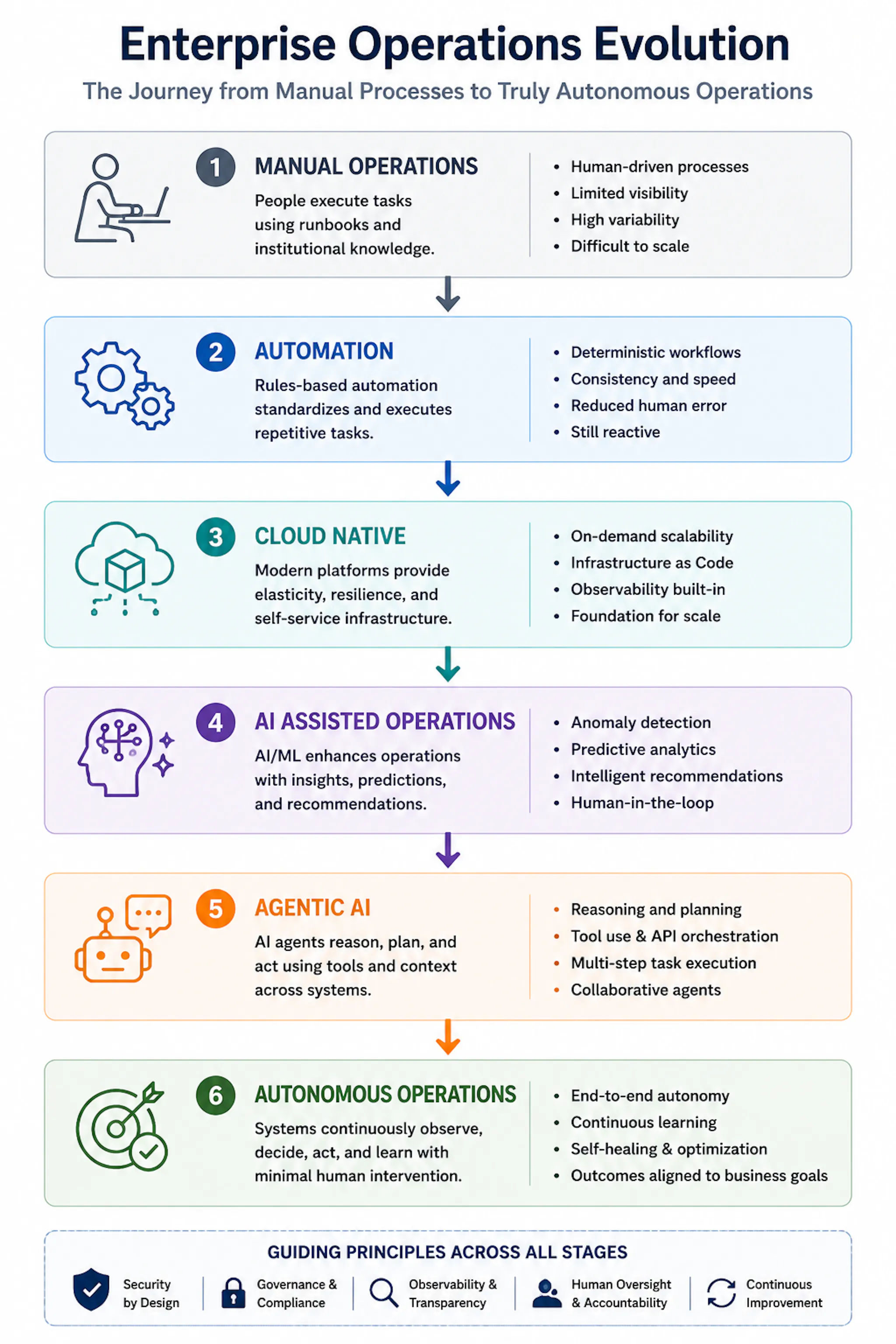 Figure 1. Evolution of Enterprise Operations
The evolution of enterprise operations from manual processes to trustworthy autonomous operations, driven by advances in automation, cloud-native computing, and enterprise AI.
Enterprise operations have evolved through several distinct generations over the past two decades. Each generation has reduced operational complexity while increasing the scale at which organizations can deliver digital services.
The first generation relied almost entirely on manual operations. Infrastructure provisioning, software deployment, incident response, and system maintenance depended heavily on experienced engineers executing documented procedures. While effective, this model was difficult to scale and introduced significant operational variability.
The second generation introduced automation. Infrastructure as Code, configuration management, CI/CD pipelines, and orchestration platforms enabled organizations to standardize repetitive operational tasks. Automation dramatically improved consistency, reduced human error, and accelerated service delivery. For many organizations, this represented one of the most significant transformations in modern IT.
Today, enterprise AI is driving the next evolution.
Unlike traditional automation, autonomous operations are not limited to executing predefined workflows. They continuously observe system behavior, interpret operational context, reason about multiple possible actions, and coordinate responses within established governance boundaries.
Rather than replacing automation, autonomous operations build upon it.
Automation remains responsible for reliable execution. Autonomous intelligence determines **what should be executed, when execution should occur, and whether execution is appropriate under current business and operational conditions.
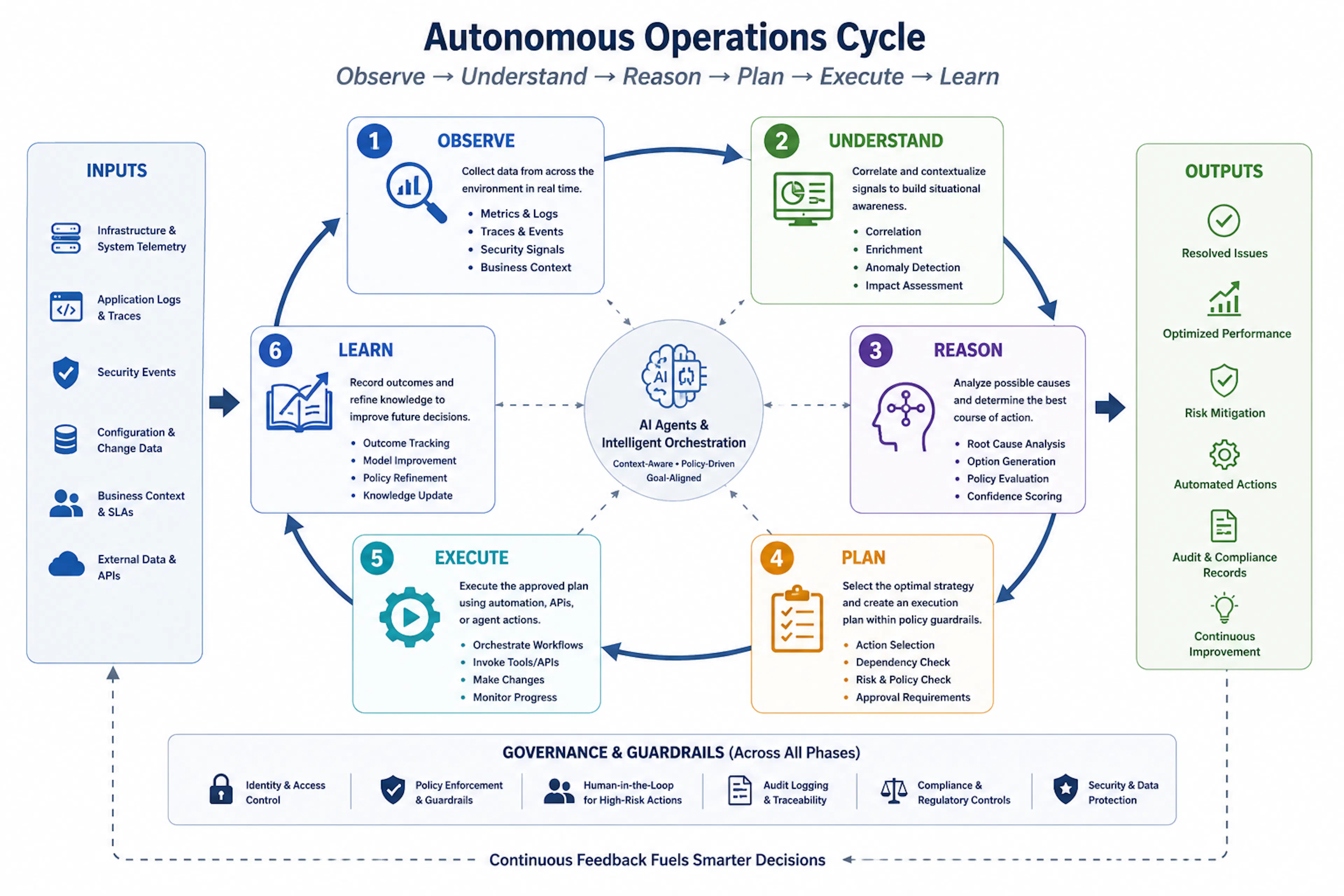 Figure 2. Autonomous Operations Decision Cycle
Enterprise AI platforms continuously Observe, Understand, Reason, Plan, Execute, and Learn while operating within governance boundaries.
A mature autonomous platform continuously performs an operational decision cycle:
This Observe → Understand → Reason → Plan → Execute → Learn cycle represents the operational foundation of trustworthy autonomous systems.
Importantly, autonomy should never be confused with unrestricted decision-making. Enterprise platforms must always operate within clearly defined governance boundaries that determine which actions may be executed autonomously and which require human review or approval.
The objective is not autonomous control.
The objective is trustworthy autonomous assistance.
Architectural concepts become easier to understand when viewed through practical operational scenarios.
Consider a production Kubernetes environment supporting several business-critical AI services.
During normal business operations, the platform begins experiencing increased response latency for one of its AI inference services. Traditional monitoring systems detect elevated latency and trigger an alert indicating that application performance has degraded beyond an established threshold.
In a conventional automation model, a predefined workflow might immediately restart affected pods, scale additional replicas, or generate an incident ticket based solely on static threshold values.
While these actions may restore service, they do not answer several important questions:
An autonomous platform approaches the situation differently.
Instead of reacting to a single alert, it begins by collecting information from multiple sources simultaneously.
It retrieves infrastructure telemetry from Kubernetes clusters, GPU utilization metrics, distributed traces, application logs, deployment history, storage performance data, recent configuration changes, security events, and historical incident records.
The platform correlates this information to build operational context.
Its reasoning process determines that application latency increased immediately following a storage configuration change introduced during an earlier infrastructure maintenance window. GPU utilization remains healthy, application containers are functioning normally, and no software deployment occurred during the observed period.
Rather than restarting workloads unnecessarily, the platform identifies configuration drift within the storage layer as the most probable root cause.
Before initiating corrective action, governance policies are evaluated.
The proposed remediation affects a production storage configuration classified as a high-impact operational change. Organizational policy therefore requires human approval before execution.
The platform automatically prepares a recommendation containing:
An operations engineer reviews the recommendation through the platform's operational dashboard, approves the proposed remediation, and the platform executes the approved workflow through its existing automation framework.
Throughout the entire process, every observation, reasoning step, policy evaluation, approval decision, and execution activity is recorded for operational auditing and future analysis.
This example illustrates an important distinction.
Traditional automation focuses primarily on execution.
Autonomous operations focus on understanding, reasoning, and responsible execution.
Understanding precedes execution. Enterprise AI must reason before it acts.
Automation performs the work.
Autonomous intelligence determines how the work should be performed while maintaining governance, transparency, and human accountability.
Enterprise AI is often introduced through the capabilities of large language models, intelligent agents, or conversational interfaces. While these technologies attract significant attention, they represent only one component of a much larger ecosystem.
Deploying an AI model does not automatically create an enterprise AI platform.
Enterprise AI platforms must operate reliably within complex environments where infrastructure, applications, security controls, governance policies, compliance requirements, and business processes intersect. Success depends not only on model accuracy but also on the platform's ability to deliver secure, observable, resilient, and governed AI services throughout their operational lifecycle.
In many organizations, AI initiatives initially focus on selecting foundation models or deploying inference endpoints. As adoption grows, engineering teams quickly discover that sustainable AI operations require capabilities extending far beyond model hosting.
Questions begin to emerge that traditional infrastructure was never designed to answer.
These questions shift the architectural conversation from models to platforms.
A trustworthy enterprise AI platform should therefore provide a comprehensive operational foundation that enables intelligent systems to function safely within enterprise environments. Such a platform should demonstrate several essential characteristics:
These capabilities cannot simply be added after deployment. They must be incorporated into the platform architecture from the beginning.
The objective is not merely to deploy intelligent software.
The objective is to build systems that organizations are willing to trust in production.
Trust becomes the architectural principle that connects infrastructure, AI models, operational processes, governance, and human decision making into a unified enterprise platform.
As enterprise AI platforms continue to mature, I believe they can be understood through six complementary architectural layers. Each layer addresses a different aspect of autonomous operations while collectively establishing a foundation for trustworthy enterprise AI.
Rather than viewing AI as a collection of independent applications, this layered approach treats AI as an operational platform where infrastructure, intelligence, governance, and human collaboration evolve together.
The six layers are illustrated below.
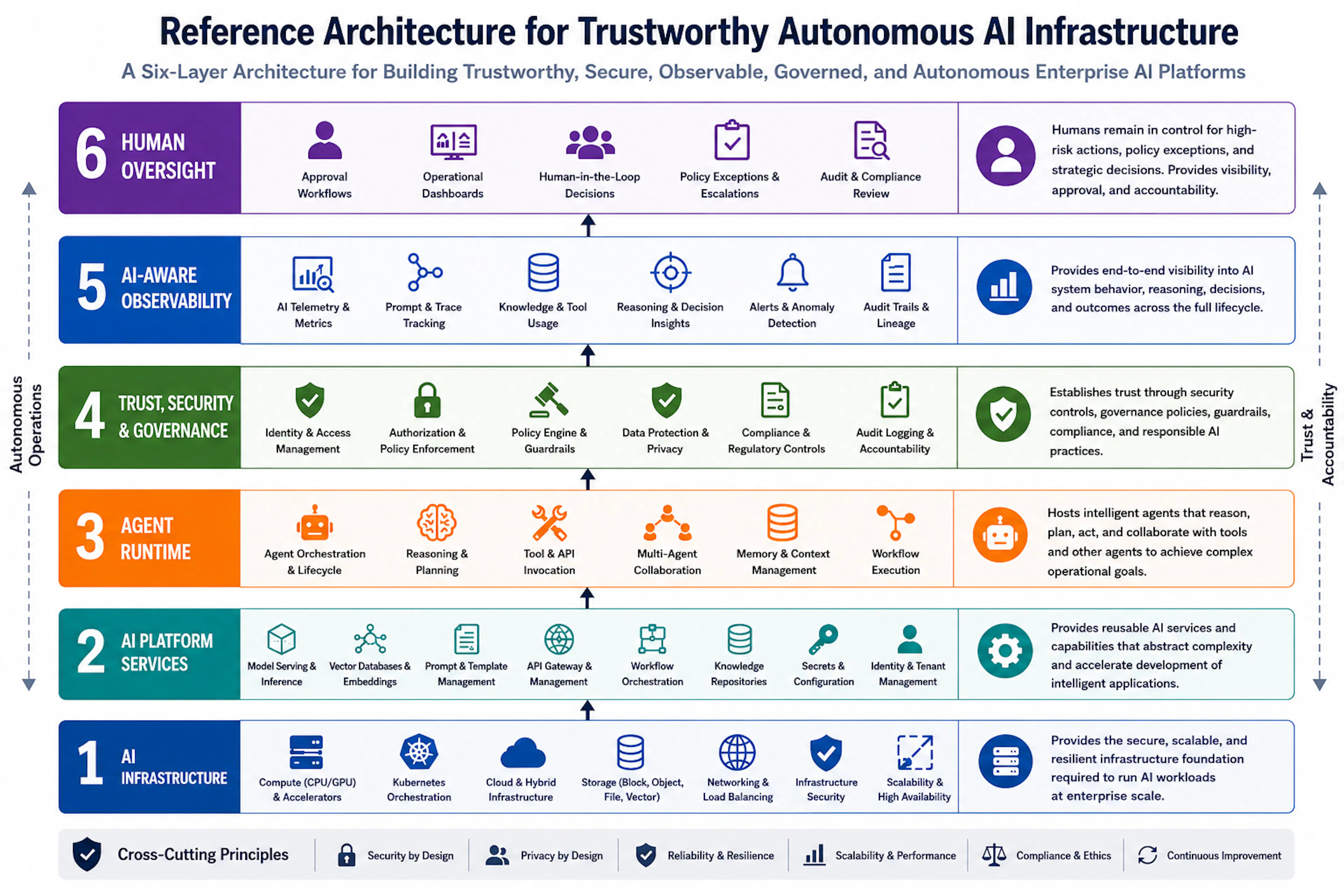 Figure 3. Reference Architecture for Trustworthy Autonomous AI Infrastructure
A six-layer architecture illustrating the foundational capabilities required to build secure, observable, governed, and autonomous enterprise AI platforms.
Every autonomous platform begins with reliable infrastructure.
This layer provides the computational foundation required to support enterprise AI workloads, including GPU clusters, Kubernetes platforms, cloud infrastructure, networking, storage systems, virtualization, and high-performance computing resources.
Unlike traditional enterprise applications, AI workloads introduce unique infrastructure characteristics. Large models require accelerated computing, efficient scheduling, distributed storage, high-throughput networking, and dynamic resource allocation across multiple environments.
Modern infrastructure must therefore provide:
Without a stable infrastructure foundation, higher-level autonomous capabilities cannot operate reliably.
Infrastructure remains the platform upon which every intelligent decision ultimately depends.
Above the infrastructure resides a collection of shared AI platform services that enable development teams to build intelligent applications without repeatedly solving common operational problems.
Typical platform capabilities include:
These services abstract infrastructure complexity while providing standardized building blocks for AI application development.
As organizations expand AI adoption across multiple business units, platform services become increasingly important because they promote consistency, governance, operational efficiency, and reuse.
Rather than deploying isolated AI solutions, organizations begin operating a unified AI platform capable of supporting many independent applications.
This layer represents the operational intelligence of the platform.
Rather than simply exposing language models through APIs, the runtime hosts intelligent agents capable of reasoning, planning, memory retrieval, tool invocation, workflow coordination, and collaboration with other agents.
An enterprise agent may:
Unlike deterministic automation, agents continuously adapt their behavior based on changing operational context.
This flexibility enables enterprise AI systems to solve increasingly complex problems while maintaining structured operational workflows.
The runtime therefore transforms individual AI models into collaborative operational systems.
As autonomy increases, governance becomes increasingly important.
Enterprise AI platforms must ensure that intelligent systems operate within clearly defined organizational boundaries.
This layer establishes those boundaries through security controls, governance policies, regulatory compliance, identity management, authorization frameworks, and responsible AI practices.
Core capabilities include:
Rather than restricting innovation, governance enables organizations to confidently deploy AI into production by ensuring that autonomous behavior remains aligned with business objectives and regulatory obligations.
Trust cannot exist without governance.
Traditional observability focuses on applications and infrastructure.
Autonomous systems require observability of reasoning itself.
Engineering teams increasingly need visibility into questions that conventional monitoring cannot answer:
Answering these questions requires AI-aware observability.
This operational visibility becomes the foundation for trustworthy autonomous operations and is explored in greater detail in the following section.
Autonomous operations should never eliminate human accountability.
Instead, they should enable engineers to make better decisions by providing richer operational context, intelligent recommendations, and transparent reasoning.
Human oversight remains essential for:
Approval workflows, operational dashboards, policy enforcement, and audit mechanisms ensure that humans remain responsible for decisions requiring judgment while allowing autonomous systems to handle repetitive operational tasks.
The objective is not human replacement.
It is human augmentation.
The strongest enterprise AI platforms will always combine intelligent automation with experienced engineering judgment.
These six architectural layers provide more than a technical reference model.
Together, they establish the operational foundation required to build AI systems that organizations can confidently deploy into production.
However, architecture alone is insufficient.
To operate responsibly at enterprise scale, autonomous platforms must also provide visibility into how decisions are made, why actions are taken, and whether those actions remain aligned with organizational policies.
This is where AI-aware observability becomes one of the most important capabilities of modern enterprise AI platforms.
The six-layer architecture introduces AI-aware observability as a core platform capability. In practice, this capability extends traditional infrastructure monitoring by providing visibility into how AI systems reason, collaborate, evaluate policies, and arrive at operational decisions.
The remainder of this article explores how AI-aware observability extends traditional operational monitoring into a foundation for trustworthy autonomous enterprise AI.
Traditional observability remains essential for understanding infrastructure health, application performance, and distributed systems. However, autonomous AI platforms introduce a new operational challenge: understanding not only what happened, but how and why an intelligent system reached a particular decision.
Conventional observability answers questions such as:
These questions remain important, but they represent only part of the operational picture.
Enterprise AI introduces additional questions that become equally important:
Traditional telemetry cannot answer these questions because AI systems are no longer deterministic applications.
They are reasoning systems.
Understanding how an autonomous platform reached a decision becomes just as important as determining whether the underlying infrastructure is healthy.
For this reason, I believe enterprise AI platforms require a new operational discipline that I refer to as AI-aware observability.
AI-aware observability extends traditional monitoring by incorporating AI-specific telemetry into operational workflows. Rather than focusing solely on infrastructure and applications, it captures the complete lifecycle of autonomous decision-making.
This includes:
By correlating these signals with conventional infrastructure telemetry, engineering teams gain a far more complete understanding of system behavior.
The objective is not simply to observe AI systems.
The objective is to understand them.
Traditional dashboards explain operational state. AI-aware observability extends this by reconstructing the complete decision lifecycle—capturing why a decision was made, how it was reasoned, which policies influenced it, whether governance was respected, and whether the same decision would be made again under similar conditions.
AI-aware observability should also answer:
These questions introduce an entirely new operational dimension that combines infrastructure monitoring with reasoning transparency.
As organizations deploy larger numbers of AI agents across production environments, the ability to reconstruct autonomous decisions will become increasingly important for security investigations, regulatory compliance, operational troubleshooting, and continuous improvement.
Decision intelligence becomes the natural evolution of operational intelligence.
AI-aware observability is not another monitoring dashboard—it is an enterprise capability that correlates infrastructure telemetry, application signals, AI reasoning, governance policies, and human approvals into a unified operational view.
Bringing these sources together enables engineering teams to move beyond isolated alerts and toward comprehensive operational understanding.
Rather than investigating individual failures, operators gain visibility into the complete lifecycle of autonomous execution.
This broader perspective improves incident response, simplifies governance, strengthens compliance, and builds organizational confidence in AI-driven operations.
One of the greatest barriers to enterprise AI adoption is not model performance.
It is trust.
Business leaders are understandably cautious about allowing autonomous systems to influence production environments when they cannot easily understand how decisions are made.
Transparency therefore becomes a technical requirement rather than simply a governance objective.
When engineers can visualize prompts, reasoning paths, policy evaluations, supporting evidence, execution history, and human approvals within a single operational view, AI systems become significantly easier to validate, troubleshoot, and improve.
Transparency transforms AI from a perceived black box into an observable operational platform.
Trust follows visibility.
As AI systems become increasingly capable, governance must evolve alongside them.
Autonomous operations should never be interpreted as unrestricted autonomy.
Enterprise environments operate within legal obligations, security requirements, organizational policies, regulatory frameworks, and business objectives that intelligent systems must consistently respect.
Governance establishes the operational boundaries within which autonomous systems are permitted to operate.
Rather than limiting innovation, governance provides the confidence necessary to deploy AI into production responsibly.
Effective governance extends well beyond access control.
A mature enterprise AI platform should incorporate:
These capabilities enable organizations to manage autonomous systems with the same rigor traditionally applied to enterprise infrastructure.
Governance therefore becomes an operational capability embedded throughout the platform rather than an isolated compliance activity.
One misconception surrounding autonomous AI is the assumption that greater autonomy inevitably reduces the importance of human expertise.
In practice, the opposite is often true.
As systems become more capable, the quality of human oversight becomes increasingly important.
Certain operational decisions should always remain subject to human review.
Examples include:
Rather than removing engineers from operational workflows, autonomous platforms should elevate their role.
Routine analysis, data correlation, and repetitive operational tasks can be performed autonomously, allowing engineers to focus on strategic decision-making, architectural improvements, policy refinement, and exception handling.
The objective is therefore not autonomous replacement.
It is an intelligent collaboration between humans and AI.
The strongest enterprise AI platforms will combine machine intelligence with experienced engineering judgment to produce outcomes that neither could consistently achieve independently.
Enterprise AI adoption has accelerated rapidly over the past several years, yet one lesson continues to emerge across organizations of every size:
Building AI systems is significantly easier than operating them.
Several architectural principles consistently prove valuable.
Infrastructure remains strategic.
Reliable GPU platforms, Kubernetes orchestration, cloud-native architecture, storage performance, and resilient networking directly influence the effectiveness of AI workloads.
Governance must be designed—not added later.
Organizations that integrate governance into their architecture from the beginning are better positioned to scale AI safely and confidently.
Observability must evolve alongside intelligence.
Traditional monitoring remains essential, but understanding reasoning, policy decisions, and autonomous workflows has become equally important.
Trust determines adoption.
Organizations adopt autonomous capabilities only when engineering teams, security leaders, and business stakeholders understand how decisions are made and retain confidence in platform behavior.
Ultimately, enterprise AI success depends not only on advances in language models but on the maturity of the operational platforms that surround them.
Enterprise computing has evolved through a series of transformational shifts—from physical infrastructure to virtualization, from cloud computing to cloud-native platforms, and now toward autonomous AI.
Each transition has required new operational models, new architectural patterns, and new engineering disciplines.
Autonomous operations represent the next stage of that evolution.
Future enterprise platforms will likely orchestrate thousands of specialized AI agents collaborating across infrastructure, security, software delivery, customer experience, and business operations.
These systems will increasingly reason over vast quantities of operational data, coordinate complex workflows, and assist engineers in solving problems that would previously have required significant manual effort.
The organizations that succeed will not necessarily be those deploying the largest foundation models.
They will be the organizations that build trustworthy platforms capable of supporting intelligent systems securely, transparently, and responsibly.
Infrastructure, governance, observability, and human expertise will become competitive advantages rather than operational necessities.
The future of enterprise AI will not be defined solely by model intelligence.
It will be defined by the trustworthiness of the platforms that enable autonomous operations.
Artificial intelligence is changing enterprise computing at a pace few technologies have achieved before.
Yet the long-term success of enterprise AI will depend on far more than increasingly capable models.
Organizations must build platforms that combine intelligent reasoning with resilient infrastructure, strong governance, comprehensive observability, and meaningful human oversight.
Automation remains indispensable, but its role is evolving.
Rather than serving as the highest level of operational intelligence, automation becomes the reliable execution engine beneath autonomous systems capable of observing, understanding, reasoning, planning, and acting within clearly defined governance boundaries.
This shift represents more than another technology trend.
It marks a fundamental evolution in how enterprise platforms are designed, operated, and trusted.
The future of enterprise AI will not be determined solely by increasingly capable models.
It will be determined by the trustworthiness of the platforms that enable them.
Organizations that invest today in secure infrastructure, transparent observability, strong governance, and meaningful human oversight will be best positioned to transition from automation to truly autonomous operations.
Building trustworthy AI infrastructure is no longer simply a technology initiative—it is becoming a strategic capability that will define the next generation of enterprise innovation.
此内容由惯性聚合(RSS阅读器)自动聚合整理,仅供阅读参考。 原文来自 — 版权归原作者所有。