


By
Tucker Reals
Editor
Tucker Reals is CBSNews.com's foreign editor, based in the CBS News London bureau. He has worked for CBS News since 2006, prior to which he worked for The Associated Press in Washington, D.C., and London.
/ CBS News
London — Number 10 Downing Street in London, with its famous glossy black door, has had its fair share of occupants in its nearly 300-year history as the official home of Britain's prime minister.
The building was home to Winston Churchill for a total of nine years; and then the "Iron Lady" Margaret Thatcher for nearly 12, spanning the 1980s. Tony Blair lived there for a decade, from 1997 until 2007.
But over the last 10 years, British leaders have barely had time to unpack their boxes before making way for the next occupant. Six prime ministers have inhabited the official residence since 2016 — including four over the last four years alone.
How British leaders are chosen
Voters in the United Kingdom do not directly elect their prime minister in the same way Americans elect a president.
Instead, voters elect members of the British Parliament's lower House of Commons to represent their local constituencies, and the leader of the party that wins a majority of the seats in the house generally becomes the prime minister.
Political parties can, through internal elections, replace their leaders at any time — even if that person is the prime minister — if they lose the confidence of sufficient members. If a sitting party leader resigns from that position or is toppled, they will also cede the premiership.
The system means a British prime minister can be replaced without a general election, but that the party in control of the government will remain in charge until that wider vote is held. Under U.K. law, a general election must be held every five years at the most, but one can be called sooner by the government in power. That will often happen if a government believes it can increase its mandate by gaining seats in parliament — or if it feels pressure, due to unpopularity, to give voters a fresh chance to reshape the makeup of the House of Commons.
Over the last decade, that has happened a lot, making some degree of political chaos the new norm.
So what's changed?
A messy divorce from the European Union
It may all have started with Brexit.
Britain's controversial public referendum in 2016 saw voters narrowly back a withdrawal from the European Union. It kicked off a deep political realignment, and the consequences are still being felt today.
The Conservative Party, under then-Prime Minister David Cameron, had been in power for six years. As part of his 2015 re-election campaign, Cameron promised to hold the referendum on EU membership if he kept his job.
The Conservatives won the election, so Cameron stayed in Downing Street. But the referendum didn't go the way he'd anticipated, and having campaigned for the "Remain" camp, pushing to stay in the EU, Cameron resigned in July 2016.
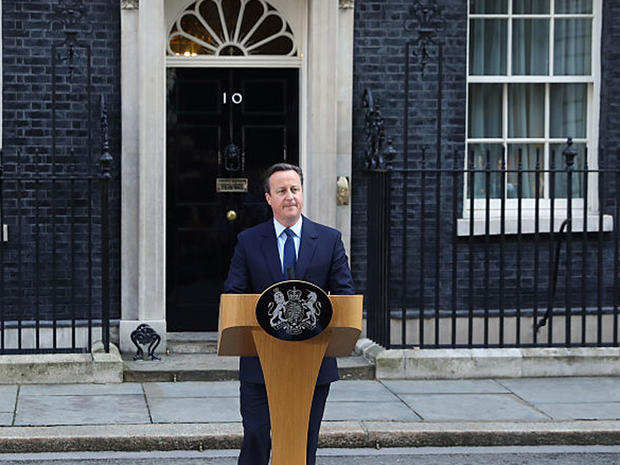
Brexit had transformed his party: Many longtime Conservative voters found themselves unaligned with the largely pro-business, pro-Remain party as they pushed toward a populist, pro-Brexit movement.
At the same time, many longtime supporters of the Conservatives' chief rivals, the center-left Labour Party — especially members of its traditional working-class base — also embraced the Brexit movement.
The May, Johnson, Truss, Sunak years
The "Vote Leave" campaign also raised enormous expectations, promising voters that leaving the EU would reduce immigration, improve the economy and give the country's National Health Service a huge cash boost, and give Britain a renewed sense of national direction.
While the COVID-19 pandemic and wars in Ukraine and the Middle East undeniably made those promises harder to deliver, what voters got instead has been years of political turmoil and economic stagnation.
That's what brought down Theresa May, the prime minister who found herself tasked with delivering Brexit promises after Cameron stepped aside. Hamstrung by divisions within her party over Brexit, however, she bid a tearful farewell as Conservative leader in 2019, and made way for another member of the party to try his hand.
Boris Johnson had made "Get Brexit done" his campaign slogan, and it won him enough Conservative support to take the leadership.
Despite repeated promises to reduce immigration after Brexit, however, the number of people entering the country actually reached record highs under policies devised by Johnson, badly damaging trust in his party, and in Britain's political class.
Ultimately though, Johnson was undone by his own indiscretions. He broke several of his own COVID-19 era rules, including hosting a series of gatherings at 10 Downing Street during lockdown — a scandal quickly dubbed "Partygate." The final straw was Johnson promoting a Conservative politician despite knowing of sexual assault allegations hanging over him. In September 2022, he stepped down.
The next leader, Liz Truss, holds the unenviable record of the shortest ever tenure of a British prime minister.
Her infamous "mini-budget," which included proposals for large, unfunded tax cuts, crashed financial markets and spiked British mortgage rates. She resigned after just 45 days in office, in October 2022.
After Truss was Rishi Sunak. He held on for about two years, but he was unable to get hold of the cost of living crisis squeezing households, exacerbated by the pandemic and the Ukraine war.
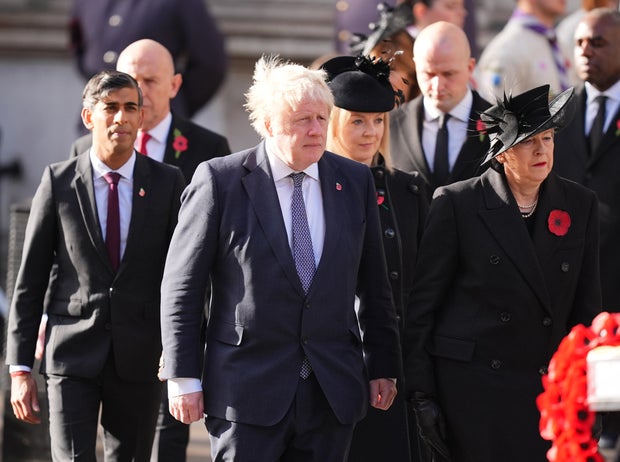
After 14 years of Conservative governments, Sunak was unable to convince the British public they needed more of the same.
A changing of the tides, and maybe another coming
The longtime opposition Labour Party won a July 2024 general election in a landslide. Its leader Keir Starmer became the prime minister, and he's still there — but less than two years later, his government is already on the brink.
His tenure has been marked by internal tension, policy reversals and a lack of clear direction right as Britain faces enormous challenges.
Starmer's government has also been mired in scandals, including over what he did and didn't know, and when, about Peter Mandelson, a friend of convicted sex offender Jeffrey Epstein who Starmer tapped to serve as Britain's ambassador in the U.S.
But it may be local election results that eventually end Starmer's leadership.
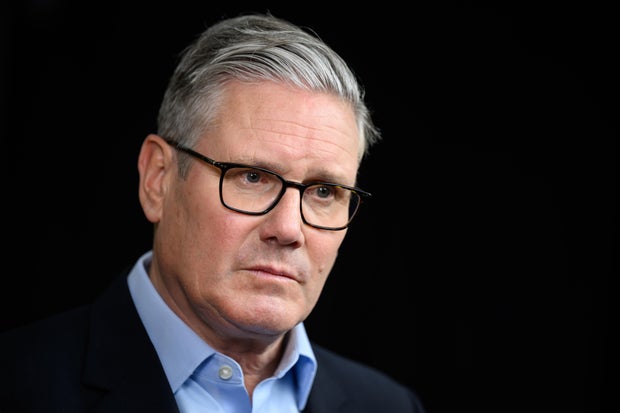
Labour did disastrously in a recent round of voting for local council and regional parliamentary seats that are often seen as a barometer of public opinion, similar to the U.S. midterms.
Multiple high-level Labour politicians have resigned and called for him to step down due to the party's poor showing.
So far, he has resisted the calls, but at least two chief rivals from within Labour are making it clear they will challenge him for the party leadership. And whoever leads the party with the most seats in parliament, which will be Labour at least until there's another general election, will be the prime minister.
One of the architects of Brexit, President Trump's ideological ally Nigel Farage, has capitalized on the chaos.
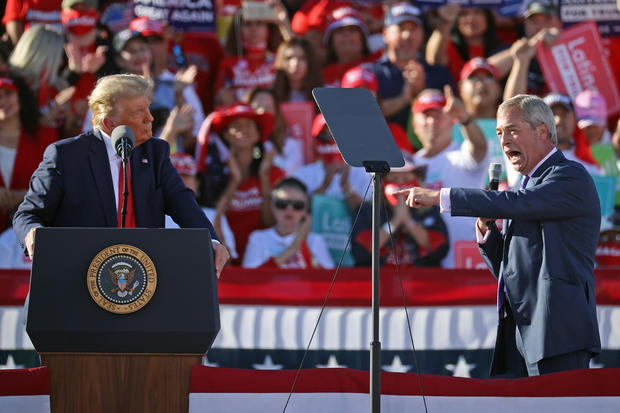
Presenting himself as an option for voters who believe both major parties have failed, Farage's Reform UK party did exceedingly well in the recent elections, cementing its rise from the fringes of British politics to center stage.
Under U.K. law, Starmer must call a new general election no later than August 2029, five years after the last one. If he's able to fend off internal challengers, he could potentially stay in Downing Street until then.
But the pressure is mounting fast for him to at least take on those Labour challengers in a leadership battle. If he's replaced by a different Labour leader, there could be a rising chorus of demands for a new general election much sooner than 2029.
If Britain's 10-year carousel of prime ministers shows anything, it's a definitive collapse of old political loyalties and the de-facto two-party system, and Farage may well be able to ride a wave of dissatisfaction all the way through the gleaming black door at 10 Downing Street.
"Every vote since 2016 and the Brexit referendum has effectively been a vote for change," says Luke Tryl, U.K. director of opinion research organization More in Common. "People were saying, 'We're not happy. We don't like the sort of structure and settlement in modern Britain.' That change hasn't been delivered, and I think that helps to explain this sort of instability."
In: