




惯性聚合 高效追踪和阅读你感兴趣的博客、新闻、科技资讯
阅读原文 在惯性聚合中打开

推荐订阅源

D
Docker
阮一峰的网络日志
阮一峰的网络日志
T
Tailwind CSS Blog
博客园 - 【当耐特】
量子位
博客园 - 叶小钗
有赞技术团队
有赞技术团队
Jina AI
Jina AI
钛媒体:引领未来商业与生活新知
钛媒体:引领未来商业与生活新知
博客园 - Franky
博客园 - 司徒正美
爱范儿
爱范儿
美团技术团队
小众软件
小众软件
酷 壳 – CoolShell
酷 壳 – CoolShell
让小产品的独立变现更简单 - ezindie.com
V
V2EX
罗磊的独立博客
freeCodeCamp Programming Tutorials: Python, JavaScript, Git & More
Last Week in AI
Last Week in AI
Hugging Face - Blog
Hugging Face - Blog
I
InfoQ
D
DataBreaches.Net
宝玉的分享
宝玉的分享

World - CBSNews.com

Rat poison found in HiPP baby food in Austria, prompting recall Strait of Hormuz remains closed, as Iran blames U.S. blockade Attempted arson at London synagogue is 3rd attack on Jewish site in past week: "Sustained campaign of violence" Trump says Iranians have "agreed to everything," including removal of enriched uranium Trump says U.S. officials heading to Pakistan for talks but Iran says it doesn't plan to take part Senior U.S. officials could be back in Pakistan for Iran talks within days, sources say We took a boat into the Strait of Hormuz. Here's what we saw. Mexican environmentalist survives assassination attempt caught on video: "I told the hitman 'good morning'" Hidden cave, prehistoric hippo bones found under Welsh castle called a "once-in-a-lifetime discovery" 4/16: The Takeout with Major Garrett Israel-Lebanon ceasefire could impact U.S. deal with Iran Trump tries to change conversation from war to the economy U.S. intelligence detects signs China is weighing giving Iran advance radar systems 4/16: CBS Evening News Cuba will "be ready" for possible U.S. attack amid Trump threats, leader says Latest effort to rein in Trump on Iran falls short in House vote Latest on the Strait of Hormuz blockade as fragile ceasefire holds Cybersecurity firm shows how hackers are using AI to breach networks Meghan Markle says she was "the most trolled person in the world" Israel-Lebanon ceasefire begins as Iran keeps Strait of Hormuz gridlocked Caine warns "we will use force" if Iran does not comply with blockade on Strait of Hormuz Former U.S. Marine pilot accused of training Chinese aviators loses extradition appeal in Australia House breaks with Trump, voting against ending deportation protections for Haitians Partner held in Zanzibar after American influencer Ashly Robinson dies under mysterious circumstances Russia launches deadliest aerial assault of the year on Ukraine, killing 16, officials say Trump says Iran war 4/15: The Takeout with Major Garrett Eighth grade student kills 10 people, wounds 12 in Turkey's 2nd school shooting in 2 days Back-to-back deadly school shootings in Turkey Powerful Typhoon Sinlaku​ barrels over remote U.S. islands in Pacific: "Hitting us hard"
Scientists decipher new secrets from ancient scrolls scor...
Kerry Breen · 2026-06-26 · via World - CBSNews.com

By

Kerry Breen is a news editor at CBSNews.com. A graduate of New York University's Arthur L. Carter School of Journalism, she previously worked at NBC News' TODAY Digital. She covers current events, breaking news and issues including substance use.

Read Full Bio

/ CBS News

Add CBS News on Google

A University of Kentucky project using artificial intelligence to help decode an ancient Roman mystery has led to a major discovery, researchers announced Thursday

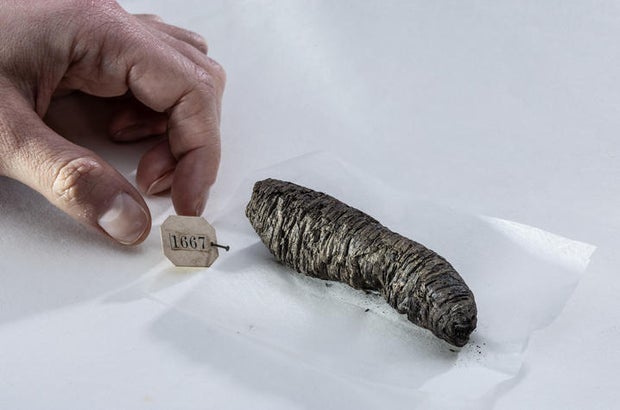
In 79 A.D., the eruption of Mount Vesuvius buried the Roman city of Pompeii and the nearby town of Herculaneum. During a dig in Herculaneum in the 18th century, archaeologists found 1,800 papyrus scrolls in an intact ancient library, deep under the site of a villa that was destroyed by Vesuvius' eruption. But reading them was impossible: The scrolls are brittle and charred, and unravelling them turns them into ash. 

For centuries, researchers have worked to interpret the scrolls. Recent technology led to a breakthrough: A particle accelerator and AI were used to identify ink, even faint traces, allowing researchers to virtually unwrap the delicate scrolls. But interpreting the ancient language is another project entirely.  
mm10354-260324-000457-2.jpg
An unrolled Herculaneum scroll. National Library of Naples

In 2023, Brent Seales launched the Vesuvius Challenge, a global competition offering prize money for those who can help interpret the writing. Three college students became the first to extract words from a carbonized scroll in 2024. But they only interpreted about 5% of one scroll. 

The second phase of the challenge led to Thursday's major discovery. The University of Kentucky's Stanley and Karen Pigman School of Engineering, which leads the research in collaboration with the Biblioteca Nazionale di Napoli Vittorio Emanuele III in Naples, said that experts have virtually unwrapped one entire scroll, recovered more than 70 columns of text from another, identified two new books from ancient Rome, and recovered "sufficient text to support new critical scholarly editions." 

The virtually unwrapped scroll, PHerc. 1667, is one of the oldest in the collection, Nicolardi said. Now that it has been unrolled, efforts to determine the authorship of the paper is underway. One of the books revealed that the philosopher Philodemus wrote an eight-book series. Only one book had been previously known to exist. 

"For nearly two millennia, many of these texts have been physically preserved but intellectually inaccessible," Seales said in a news release. "Today — after years of interdisciplinary work combining advanced imaging, artificial intelligence (AI), academic research and an innovation contest — we are finally able to read them."
scroll-text.jpg
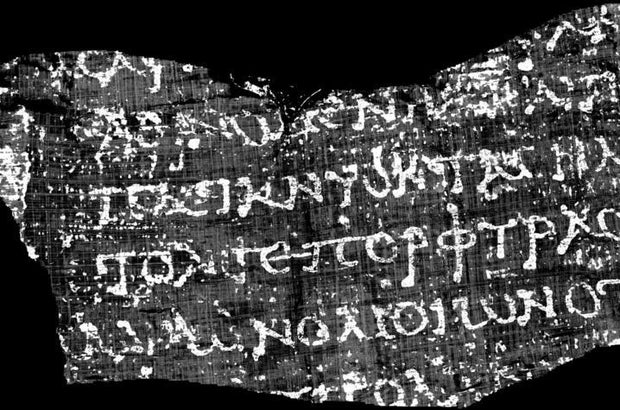
A virtually unwrapped piece of one scroll shows ancient Greek text.  Vesuvius Challenge

The amount of text revealed means scholars can read the scrolls as complete arguments, rather than as fragments. Federica Nicolardi, an assistant professor in papyrology at the Università degli Studi di Napoli Federico II in Naples, said that marks a "transformational shift" for researchers. 

"Today, we are hearing voices that have been silent for 2,000 years," Seales said. "For the first time, we are uncovering and reading them — but most importantly — we are beginning to understand them."

Still, more than 600 scrolls remain unopened and unread. Giorgio Angelotti, a project lead with the Vesuvius Challenge, said the effort is "ongoing" and that archaeologists need "everyone's help to read the scrolls." Seales said he believes the entire library can be deciphered. 

"This is no longer just about imaging or machine learning," Seales said. "Now we need experts who can read, edit and understand what they are saying."

In: