


TMTPOST -- On May 18, 2026, the title of China's most expensive A-share stock changed hands once again.
Shares of Suzhou Semight Instruments Co. Ltd. (SSE: 688808) briefly climbed to 1,361 yuan during trading, overtaking Kweichow Moutai as the country's highest-priced listed stock. Less than a month later, on June 17, Semight's share price surged to 2,378 yuan, trading roughly 1,076 yuan above Moutai, or about 87% higher.
The milestone came less than two months after Semight's April debut on Shanghai's STAR Market. Priced at 81.88 yuan per share in its IPO, a single winning subscription lot generated paper gains exceeding 1 million yuan. Riding investor enthusiasm over its scarcity value in optical module testing equipment, its globally leading HBM testing technology, and strong demand from leading semiconductor and communications customers, Semight sparked a frenzy around China's high-end manufacturing sector.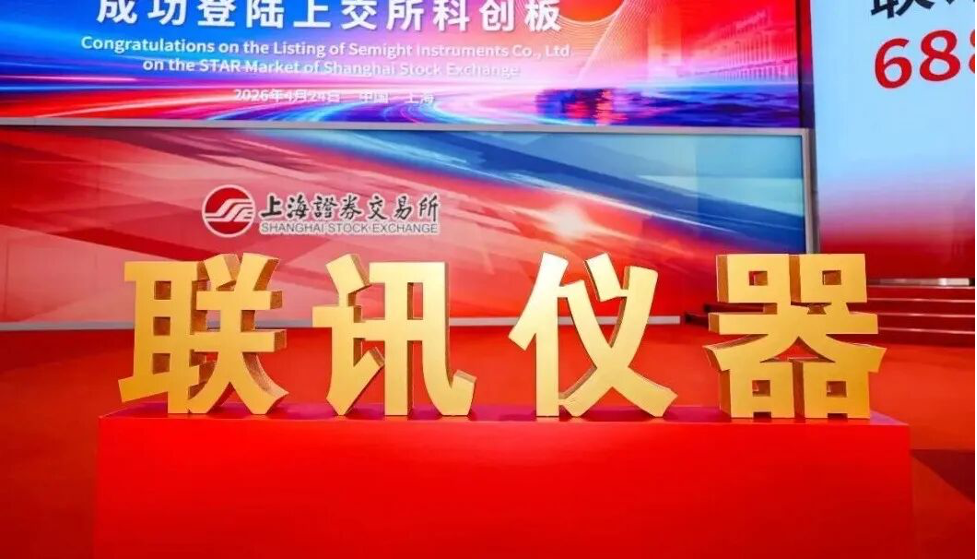
Yet among the shareholders backing the company with a once market value 237 billion yuan before its listing, one name stands out precisely because so few peers do. The roster is largely devoid of China's mainstream venture capital firms. Instead, one of Semight's earliest institutional investors was Bridge Capital, a venture firm that has kept a remarkably low public profile.
Bridge Capital first invested in Semight's angel round in late 2018, when the startup was valued at just 180 million yuan and was still riding the early wave of China's import-substitution drive. The firm went on to participate in two additional financing rounds, becoming the only institutional investor to back the company in three consecutive rounds. Based on Semight's current share price, Bridge Capital's initial investment has generated a paper return of more than 600 times.
Founded in 2009, Bridge Capital manages less than 8 billion yuan (US$1.1 billion) in assets and employs fewer than 30 people. The boutique venture capital firm focuses exclusively on advanced manufacturing. Over its 17-year history, it has rarely appeared in industry rankings, while founder Xu Bo—a former vice president of Ping An Securities and former president of Ping An Caizhi—has seldom given solo media interviews. A veteran investment banker and investor, Xu has spent decades working quietly on the front lines of the industry.
TMTPost has learned that Bridge Capital has maintained a disciplined fundraising cadence, launching a new fund roughly every three years. The firm is now managing its fifth fund. Its first and second funds each achieved a Distributed to Paid-In Capital (DPI) multiple of around 3x, while its third fund has already exceeded that mark. With flagship portfolio companies such as Semight entering their exit phase, there remains considerable room for further distributions. Of the firm's more than 120 portfolio companies, 21 have gone public, including a number of investments that have delivered returns exceeding 10 times.
A low-profile partnership, exceptional investment performance, and the distinction of backing China's newest "king of stocks" at the angel stage have together given Bridge Capital an air of mystery. But beneath that mystique lies not a story of a lucky bet on a single company, but an investment system that differs in meaningful ways from the dominant narrative in China's venture capital industry.
Investing in Semight: The Right People, the Right Business, the Right Context
The partner who led Bridge Capital's investment in Semight is Li Wei, who had previously worked alongside Semight founder Hu Haiyang at a leading global instrumentation company.
At the time, Hu was responsible for application support for optical communications and had already established himself as a respected expert in the field. The two happened to reconnect at the 2018 China International Optoelectronic Exposition, where Li learned that Hu had founded a startup called Semight Instruments. That chance encounter ultimately led to Bridge Capital's first investment in the company.
"My first impression after hearing the story was simple: this company could succeed," Li recalled.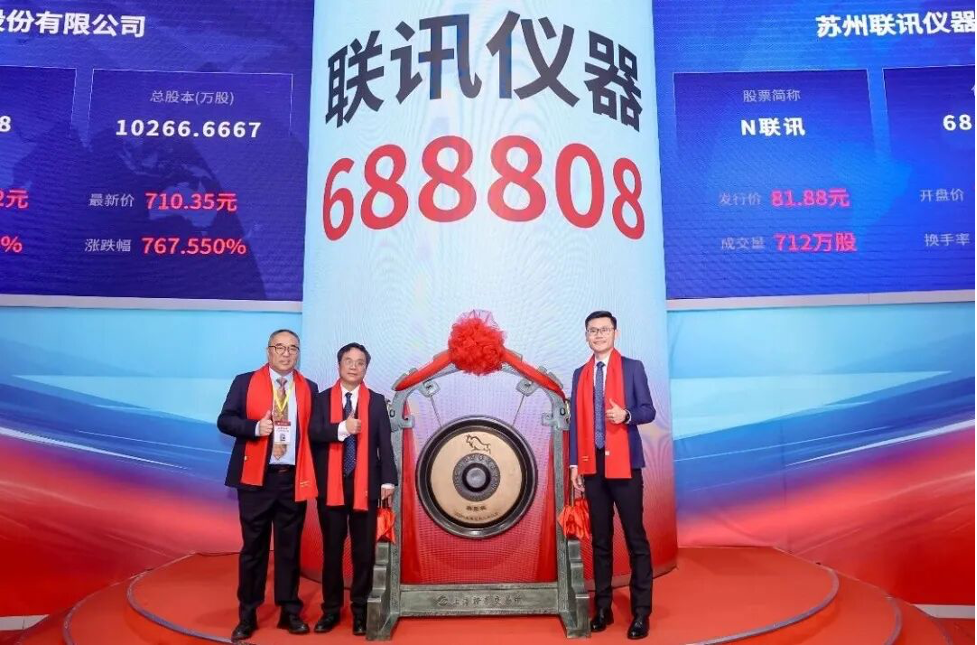
From left to right: Bridge Capital's founding partner Lu Yuan, Semight's founder Hu Haiyang and Li Wei, the partner of Bridge Capital
The conviction rested on two factors.
The first was the founding team itself—a complementary "iron triangle" comprising Hu Haiyang, Huang Jianjun and Yang Jian, who respectively oversaw applications engineering, product development and sales. Their track records at leading international instrumentation companies and across the broader industry supply chain convinced Bridge Capital that the team possessed the technical expertise and commercial execution required to build a successful business.
The second was timing.
By 2018, Semight had already passed the earliest startup phase and reached the critical transition from proving a concept to scaling a business. Its testing equipment was being delivered in volume to leading optical communications customers, while generating healthy gross margins and repeat orders.
For an early-stage manufacturing company, that represented an important milestone. The business had moved beyond laboratory prototypes and was beginning to prove itself through paying customers and real commercial demand.
"Back then, sophisticated scientific instruments attracted very little attention from primary market investors," Li said. "The prevailing view was that the market was too niche, the addressable opportunity too limited, and the technical barriers too high. But because I came from the industry, I understood much more clearly what Semight was building—and how large the opportunity could ultimately become."
Bridge Capital evaluates investments through a framework it simply calls "People, Business and Context."
"People" refers to the founders themselves—their capabilities, organizational leadership and ability to mobilize resources.
"Business" assesses industry trends, product strategy, customer demand and the company's stage of commercialization.
"Context" goes a step further, incorporating risk boundaries, valuation, exit prospects and portfolio construction into a holistic investment judgment.
The framework is deliberately designed to avoid reliance on any single decision-maker.
Within Bridge Capital's investment committee, different partners contribute different strengths. Some excel at assessing founders and management teams; others bring deep industry expertise or technical insight; still others focus on risk management and exit planning. Only after these perspectives are combined does the firm arrive at what it considers the complete investment picture.
In Semight's case, Li's industry expertise proved decisive.
The company operated at the intersection of two powerful themes: China's push for import substitution and the upgrading of advanced manufacturing. Its technological edge stemmed from years of accumulated industry know-how within the founding team. Customer demand was being driven by rapid expansion in both the semiconductor and optical communications industries. Meanwhile, the company had already crossed the difficult threshold from product validation to commercial production.
In Bridge Capital's view, once the team, product, customers, industry trajectory and risk profile all align, an investment enters what the firm considers its "strike zone."
Li's deal flow also reflects Bridge Capital's broader philosophy.
Before joining the firm, he had worked both at a leading international instrumentation company and at another investment institution. While many venture firms rely heavily on financial advisers, demo days or startup competitions for sourcing opportunities, Bridge encourages its investment professionals to uncover opportunities through industry talent movements, shifts in customer procurement, changes in equipment usage, evolving competitive dynamics and technological innovation.
That approach mirrors one of the firm's core requirements for investors: they should possess deep domain expertise, ideally built through firsthand industry experience, and develop proprietary networks capable of generating differentiated investment opportunities.
Persistence -- and Restraint
Semight is far from Bridge Capital's only success story.
The firm's first three funds were relatively modest in size. Fund III, for example, totaled approximately 685 million yuan. Yet across those portfolios, Bridge produced several investments that generated exceptional returns alongside Semight.
Among them were:
- Seichi Technology (688627.SH), a leading Chinese supplier of display inspection and semiconductor memory testing equipment, returning more than 21 times invested capital.
- Huicheng Vacuum (301392.SZ), a domestic leader in high-end vacuum coating equipment, delivering returns exceeding 16 times.
- Shenzhen SC (300724.SZ), the world's leading manufacturer of solar photovoltaic production equipment, generating returns of more than 11 times.
- Piesat Information Technology (688066.SH), the first aerospace company listed on Shanghai's STAR Market, which returned nearly 38 times the original investment.
Rather than focusing solely on the number of IPOs in its portfolio, Bridge Capital pays greater attention to the proportion of investments that meaningfully contribute to DPI (Distributed to Paid-In Capital).
The firm's 21 IPOs are only one measure of success. The real engine behind fund performance has been a collection of investments generating returns of ten times or more, combined with the firm's consistent ability to convert paper gains into cash distributions.
Staying the Course
Rather than measuring success simply by the number of IPOs, Bridge Capital places greater emphasis on the proportion of investments that ultimately drive Distributed to Paid-In Capital (DPI).
Twenty-one portfolio companies have gone public, but IPOs are only part of the story. What underpins the firm's fund performance is a core group of investments that have returned more than ten times the original capital, together with a consistent ability to convert paper gains into cash distributions.
Bridge Capital describes itself on its website as "a boutique investment firm focused on equity investments in advanced manufacturing." It has remained committed to that strategy for 17 years.
The decision was hardly accidental.
Xu spent 13 years as an investment banker before founding Bridge Capital. That experience led him to a simple conclusion: manufacturing companies accounted for a significant share of China's IPO market, and businesses capable of generating consistent exits in China's capital markets were overwhelmingly found in the manufacturing sector.
To Xu, advanced manufacturing represented not merely an investment theme but the structural upgrading of China's industrial economy.
The firm consciously avoided sectors such as the internet and O2O services, areas long dominated by U.S. dollar venture funds. Part of the reason was practical: domestic exit channels for those businesses were often uncertain. More importantly, Bridge did not believe it possessed a sustainable informational advantage in those industries.
Beginning with the Sino-U.S. trade tensions in 2018, demand for domestically developed alternatives to imported high-end technology became increasingly urgent. At the same time, China's long-standing challenge of being a manufacturing powerhouse without comparable strength at the high end reinforced the need to strengthen critical supply chains and upgrade industrial capabilities.
Against that backdrop, Bridge Capital further sharpened its strategy, focusing squarely on early-stage investments in China's advanced manufacturing sector.
"Once we've chosen the path of investing in China's advanced manufacturing industry," Xu has told colleagues, "our job is to stay focused."
That focus extends beyond sector selection. Running through every investment decision is another defining preference: what the firm calls the "pick-and-shovel" strategy.
Shao Zhenxing, the partner responsible for Bridge's U.S. dollar fund and global strategy, explained:
"Our investment strategy centers on companies supplying high-end equipment, scientific instruments and advanced materials upstream of industries that happen to be in vogue. These businesses may not stand at the forefront of the industry's narrative, but they often provide the indispensable infrastructure that enables the industry's growth."
The advantages are significant.
Such businesses generally require more manageable capital commitments, operate within clearer competitive landscapes and often emerge as one of only a handful of market leaders. Because they sell the tools that entire industries depend on, they also tend to be more resilient across industry cycles.
"The downstream solar manufacturers have come and gone, but Shenzhen SC has remained a market leader," Shao said. "The display panel industry has gone through repeated waves of consolidation, yet Seichi Technology has continued to benefit from industry growth."
Bridge Capital intentionally steers away from businesses that require massive fixed-asset investment or depend primarily on financial leverage.
"Looking at the results," Shao added, "that strategy has produced returns no less attractive than chasing whichever company happens to be leading the latest industry boom."
“Scale is the Enemy of Performance”
The composition of Bridge Bridge's investor base reflects that track record.
Returning limited partners have accounted for an increasing share of each successive fund—roughly 30% in Funds II and III, 50% in Fund IV and 66% in Fund V.
According to Shao, that loyalty stems directly from the firm's ability to generate consistently strong DPI.
"Our first priority," he said, "is delivering attractive financial returns for our LPs."
Bridge has also developed its own approach to managing fund distributions.
On average, around 35% of each flagship fund is allocated to later-stage or pre-IPO companies. These investments provide a more predictable source of liquidity for the overall portfolio, creating a stable foundation for cash distributions while addressing investors' desire for visible returns.
Yet another pillar of Bridge's performance is something that appears increasingly unfashionable in today's venture industry: a deliberate refusal to grow too large.
"We have a deeply held belief," Shao said. "Scale is the enemy of performance."
Within Bridge Capital's investment philosophy, expanding assets under management too aggressively inevitably distorts investment pacing. Maintaining a disciplined pace, the firm believes, is essential to preserving long-term returns.
That conviction also explains Bridge Capital's unusually low public profile.
The firm rarely participates in fundraising rankings, conducts little marketing aimed at limited partners, seldom appears at venture capital conferences and maintains only limited engagement with its industry peers.
"We don't follow the crowd, we don't form investment alliances, and we don't chase hot sectors," Shao said. "Those are disciplines we've imposed on ourselves."
A New Chapter
In 2026, Bridge Capital embarked on a new chapter.
Its globalization strategy, led by Shao, has become the firm's most important new strategic direction. Shao previously worked at Legend Capital before joining Bridge Capital in January 2024 to oversee AI+, globalization, and the firm's U.S. dollar fund business. Compared with BRIDGE CAPITAL's traditionally understated and disciplined investment style, Shao's arrival has brought a more outward-looking dimension to the firm. 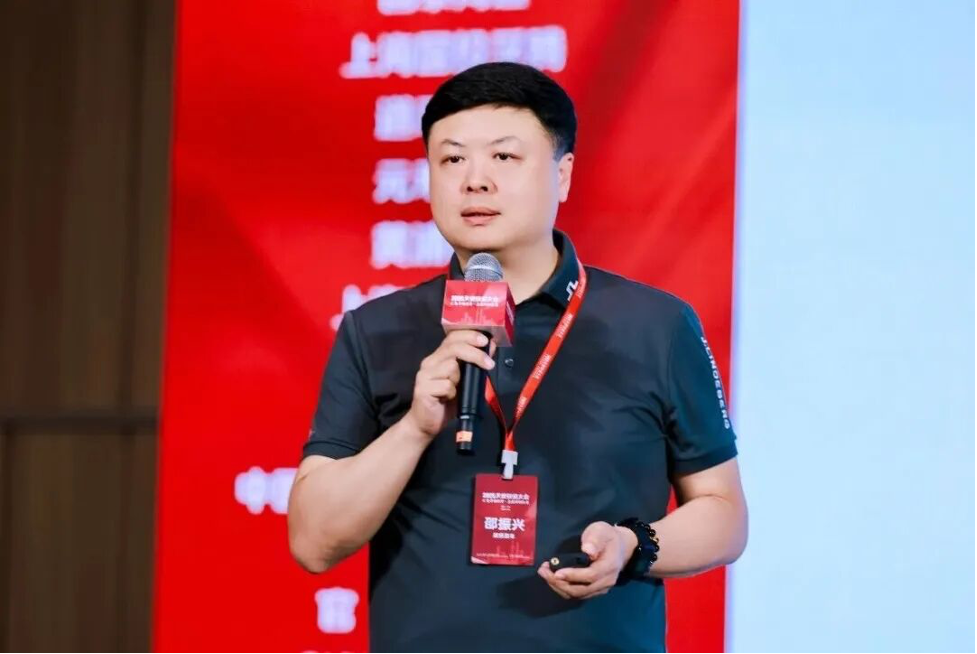
Bridge Capital's partner Shao Zhenxing
In fact, discussions about globalization had already begun within Bridge Capital as early as 2023.
China's manufacturing sector has become increasingly trapped in intense domestic competition. While policymakers continue to promote industrial development, demand has struggled to keep pace with expanding supply. Fierce price competition has forced companies into relentless cost-cutting, squeezing profit margins ever thinner.
"This kind of hypercompetition won't really subside until only two or three companies remain—or perhaps one company commands more than 30% market share," Shao said. "But that process will take a long time."
At the same time, China's share of the global high-end manufacturing market remains relatively small, making overseas expansion an increasingly inevitable path for many advanced manufacturing companies.
This year, Bridge Capital launched fundraising for its first U.S. dollar fund. Unlike traditional dollar-denominated venture capital funds that primarily back brand-new overseas startups, Bridge Capital's fund is designed mainly to invest in the overseas entities of its existing Chinese portfolio companies, helping them scale internationally—from "1 to N."
"We've spent the past two years building our globalization capabilities, learning from JETRO (the Japan External Trade Organization) in conducting overseas market research," Shao said. "Going global generally involves three stages: entering overseas markets, localizing operations, and building a global brand. We can help portfolio companies design their international capital structures, organizational frameworks, localization strategies, customer and distribution networks, and recruit overseas talent."
In Bridge Capital's view, helping companies expand abroad is not about creating overseas demand from scratch. Rather, it means supporting businesses that already have a clear globalization strategy—or even an established overseas presence—to deepen and strengthen their international operations.
Meanwhile, the firm's investments in AI continue to advance, albeit with the same deliberate patience that has long characterized Bridge Capital's investment philosophy.
"If AI is a 20-year—or even 50-year—opportunity, there's no need to rush," Shao said. "We have time to understand it more clearly before investing."
Bridge Capital's fifth fund has already designated AI as a key investment theme, with roughly 20% of its capital allocated to AI-related opportunities. Even so, the firm intends to continue backing the "pick-and-shovel" businesses that enable the AI ecosystem rather than chasing the latest application-layer trends.
Fundraising for Bridge Capital's sixth fund is scheduled to begin in the second half of 2026.
Closing Thoughts
When asked about Semight's future, every partner at Bridge Capital declined to speculate. After all, an IPO is simply the beginning of the company's next stage of growth.
Within China's venture capital industry, Bridge Capital is an unconventional case study. It demonstrates that restraint can be a genuine investment strategy—not merely a convenient way of explaining missed opportunities. And that is precisely why, when the firm finally came into the spotlight, what emerged was not another venture capital brand story, but the validation of an entire investment system.
Behind Semight—and a string of funds with exceptional DPI performance—is a team of fewer than 30 people, an investment framework built around its philosophy of "People, Business, and Context," and seventeen years of unwavering commitment to advanced manufacturing and the strategy of backing the "pick-and-shovel" providers.
Bridge Capital has pursued the theme of domestic substitution for more than a decade. r ahead to the firm's next strategic focus—helping China's advanced manufacturers expand globally—founder Xu believes the opportunity will unfold over at least the next twenty years.
The next Semight, perhaps, is already taking shape under that strategy. (Reporting by Tao Tianyu)