


ICYMI: I went on the Kyle Chan’s High Capacity podcast and Jordan Schneider’s ChinaTalk to talk about my recently published long piece on the history of Chinese open source. If you haven’t read the piece, or prefer an audio digest of it, please give those two podcast episodes a listen!
Today’s post is for our premium members only. If you are reading this in full, thank you for being an Interconnected Premium member! If you aren’t, I hope you become one by scrolling down and tear down that paywall! 😎
Today’s post addresses two seemingly unrelated topics that are nonetheless (inter)connected by a common thread: open source.
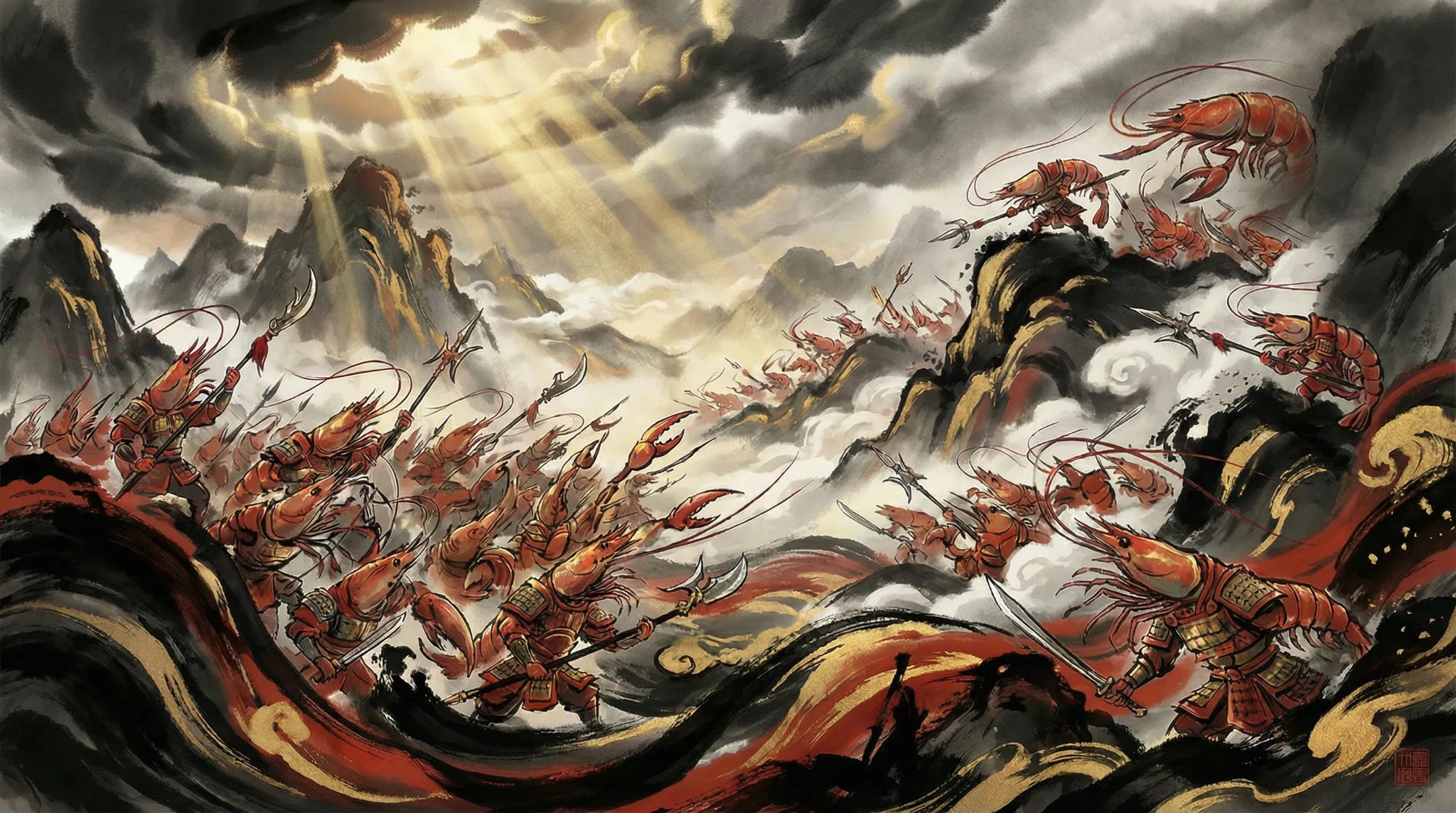
One is the latest update on Alibaba’s AI strategy since the dramatic reorganization of its Qwen team, which I wrote about when the news first broke two weeks ago. The other is the sudden take off of OpenClaw, the open source agent framework – a seemingly inexplicable rise in China that actually has very good reasons behind the phenomenon. This phenomenon has quickly spawned into a so-called “Hundred Claws War” (百虾大战), with at least 30 Claw products released and counting.
Let’s dig it.
When I initially analyzed the rather dramatic shake up of the Qwen team, with its leader Junyang Lin resigning publicly on X/Twitter, my thinking was that the company is shifting its AI strategy to be more commercially focused, but its open source commitment to Qwen will remain in tact for at least the next quarter or two, before more measures to close off future models in favor of revenue generation are introduced.
Looks like this shift is happening much faster than I anticipated.
In Alibaba’s Q3 earnings report released today, “open source” was not mentioned at all in any of its outlooks or commentaries about future AI strategies. The term’s only reference was in the CFO’s prepared remarks, complementing Qwen’s adoption and traction surpassing 1 billion downloads as a family of open models. It sounded more like an obituary than a strategic commitment.
Qwen, as we know it, is dead.
What is being installed as the future of Alibaba’s AI strategy is a new centralized team called Alibaba Token Hub, helmed by none other than the group’s CEO himself, Eddie Wu, with an ambitious revenue target of reaching $100 billion USD over the next five years!
Alibaba Token Hub is actually quite a compelling division, because it is a centralized full-stack team from chips to tokens. Alibaba’s internal chip division, T-Head, is a part of it. So is a new enterprise-facing AI offering called Wukong. Along with both the Qwen R&D team and the Qwen-branded consumer-facing app, it is anything and everything that touches AI all under one organizational roof with CEO-level priority (and scrutiny). Centralizing resources and talent so they all row towards a single lofty revenue goal, as opposed to infighting and competing for resources, could be the recipe that will reignite Alibaba’s lackluster growth and future business prospects.
But words like “centralization” and “revenue target” are anathema to open source growth, which definitionally relies on decentralization and a long runway devoid of commercial metrics. Will the Qwen brand live on? Absolutely. That much Alibaba is committed to, if only because the tiny, 100-people Qwen team before the reorg has punched well above its weight and made this made up quasi-Chinese word into a widely recognized brand in the AI industry. But the steadfast commitment to open source in building the largest family of AI models of any frontier labs that got Qwen that brand recognition seems no more.
There were rumors and speculations before and during the Qwen team shuffle suggesting that an eventual closing of future Qwen models is a government directive, because the officials don’t want Chinese tech companies to keep giving away AI models for free via open source. That could not be further from the truth.
If anything, the top leaders are more receptive and embracing of open source than ever before! Premier Li Qiang in his all-important Two Sessions work report address, delivered the day after Junyang Lin publicly resigned from Alibaba, explicitly committed to supporting “the development of open-source AI communities and build[ing] a vibrant open-source ecosystem.”
Li Qiang gave twice as many shoutouts to “open source” than Eddie Wu did in Alibaba’s earnings call.
Alibaba’s decision to end Qwen, as the leading open model series, is completely idiosyncratic to its business strategy. Whether it will work remains to be seen. But it certainly comes at an interesting moment, when open source AI in agent form is having its own ChatGPT moment.
That brings us to OpenClaw.
此内容由惯性聚合(RSS阅读器)自动聚合整理,仅供阅读参考。 原文来自 — 版权归原作者所有。