惯性聚合 高效追踪和阅读你感兴趣的博客、新闻、科技资讯
阅读原文 在惯性聚合中打开

推荐订阅源

Google DeepMind News
F
Fortinet All Blogs
阮一峰的网络日志
阮一峰的网络日志
Apple Machine Learning Research
爱范儿
爱范儿
WordPress大学
WordPress大学
让小产品的独立变现更简单 - ezindie.com
J
Java Code Geeks
罗磊的独立博客
S
SegmentFault 最新的问题
V
V2EX
V
Visual Studio Blog
钛媒体:引领未来商业与生活新知
钛媒体:引领未来商业与生活新知
美团技术团队
博客园 - 三生石上(FineUI控件)
Stack Overflow Blog
Stack Overflow Blog
Y
Y Combinator Blog
MyScale Blog
MyScale Blog
D
Docker
Google DeepMind News
Blog — PlanetScale
Blog — PlanetScale
M
Microsoft Research Blog - Microsoft Research
Martin Fowler
Martin Fowler
S
Secure Thoughts
B
Blog
cs.CL updates on arXiv.org
www.infosecurity-magazine.com
Recent Announcements
MongoDB | Blog
MongoDB | Blog
C
Cisco Blogs
C
CERT Recently Published Vulnerability Notes
T
True Tiger Recordings
GbyAI
GbyAI
P
Proofpoint News Feed
P
Privacy International News Feed
Jina AI
Jina AI
The Cloudflare Blog
I
Intezer
AWS News Blog
AWS News Blog
Hacker News - Newest:
Hacker News - Newest: "LLM"
S
Security Archives - TechRepublic
NISL@THU
NISL@THU
The Register - Security
Recent Commits to openclaw:main
P
Palo Alto Networks Blog
S
Schneier on Security
L
LINUX DO - 热门话题
C
CXSECURITY Database RSS Feed - CXSecurity.com
Security Latest
Security Latest
C
Cybersecurity and Infrastructure Security Agency CISA

Consumer Insights

Deleted Google API keys may remain active for 23 minutes Ukrainian police identify perp in $721k infostealer scheme Steam removes horror game after malware steals player data FBI: Crypto ATM Scams Keep Growing as Americans Lose Millions FBI warns students and staff that ShinyHunters may come knocking after Canvas breach FBI Warns Older Adults Lost Billions to Scammers Burst Statistics WordPress flaw under attack Android 17 Will Let Users Verify Whether Their OS Is Legit Suspected Dream Market kingpin arrested after gold bars sent to his home address BitLocker zero-day exposes Windows drives as PoC goes public Apple Fixes ‘Persistent Notifications’ Flaw on Older iPhones Football Ticket Scams Are Rising Fast, Lloyds Bank Warns When ransomware gets physical: cybercriminals turn to threats of violence iPhone-to-Android Texts Are Now Encrypted (RCS Messaging) UK Water Supplier Fined Nearly £1 Million After Hackers Roamed Networks for Almost 2 Years Instagram Drops Encrypted DMs — What This Means for You New fear: Man films woman with smart glasses, seeks money to take video down ClickFix Campaign Uses Compromised WordPress Sites to Spread Vidar Stealer in Australia Inside Department 4: Russia's secret school for hackers Ubuntu’s new AI dreams attracted a very old-fashioned crypto scam on X Chrome 4GB AI model: What weights.bin does Sri Lanka makes 37 arrests as it raids another scam centre DAEMON Tools Lite breach prompts clean update Brits Lost £102 Million to Romance Scams Last Year The Online Safety Act Is Changing the Internet for Kids World Password Day 2026 How Hackers Stole and Sold Roblox Accounts for $250,000 Before Getting Caught Four Years in Prison for Cybersecurity Pros Turned Ransomware Attackers Teenager alleged to be Scattered Spider hacker arrested in Finland, faces US extradition 276 Arrested in Crypto Scam Crackdown Popular WordPress redirect plugin found with years-old backdoor Iran-linked Handala hackers leak US Marines data, send chilling WhatsApp threats Alleged Silk Typhoon hacker extradited to the United States to face charges FTC: Social Media Scams Cost Americans $2.1 Billion in 2025 French police arrest 21-year-old "HexDex" hacker over 100 alleged data breaches iOS Flaw Exposed ‘Deleted’ Signal Messages Sony Starts Enforcing PlayStation Age Verification; UK and Ireland Are First Ransomware ‘Negotiator’ Faces 20 Years in Prison for Allegedly Betraying His Employers You’ve Got Mail and It’s Tracking Your Warship Crypto Investment Scam Costs Woman in Hong Kong Nearly $1 Million Operation PowerOFF warns 75,000 DDoS users Singer loses life savings to fake wallet downloaded from the Apple App Store AgingFly malware targets Ukraine government, hospitals 108 malicious Chrome extensions caught stealing Google and Telegram data from 20,000 users Rockstar Games confirms data breach in ShinyHunters leak FBI: Cybercrime Losses Hit a Record $21 Billion Last Year, Fueled by AI Life imprisonment for Cambodian scam compound operators - but will it make a difference? Fake Claude Code leak on GitHub spreads Vidar malware Apple Expands ‘DarkSword’ Patch to More iPhones and iPads Nigerian romance scammer jailed after being caught out by fellow fraudster Fake WhatsApp Clone Used in Spyware Campaign, Meta Warns Fake CERT-UA emails push AGEWHEEZE in mass Ukraine phishing wave Alleged RedLine malware developer extradited to United States The Scam That Tricks You Into Infecting Your Own Mac Iranian hackers breach FBI director's personal email, and post his CV and photos online Apple Sends Urgent Security Alert to iPhone Lock Screens — Here’s Why You Shouldn’t Ignore It Meta and YouTube Designed Addictive Platforms, Jury Finds TikTok Business phishing campaign uses bot checks to sidestep analysis Lapsus$ claims AstraZeneca breach exposes code and credentials How one man used 10,000 bots to steal $8,000,000 from music artists
Scam Centers Under Pressure as INTERPOL Makes More Arrests
Filip TRUȚĂ · 2026-05-19 · via Consumer Insights

International police agencies are mowing through scam centers.

INTERPOL has announced a “first-of-its-kind cybercrime operation” that has led to 201 arrests. Authorities across the Middle East and North Africa (MENA) have identified a further 382 suspects. The coordinated operation targeted online fraud, financial scams, malware distribution, and digital extortion, as global law enforcement agencies step up efforts to disrupt organized cybercrime at scale.

Key takeaways

  • INTERPOL-led authorities across the MENA region arrested 201 suspects tied to cybercrime operations.
  • Investigators seized infrastructure linked to phishing, financial fraud, malware campaigns, and online scams.
  • The operation reflects a broader global trend of coordinated crackdowns on organized scam networks.
  • Cryptocurrency investment scams, romance fraud, and social media scams continue to generate billions in losses worldwide.
  • Despite sweeping crackdowns, cybercriminal groups remain highly adaptable and often re-emerge under new infrastructure.
  • Cybercitizens are encouraged to use security tools designed to detect scams.

Operation Ramz

The operation, described by INTERPOL as the first coordinated cybercrime enforcement campaign of its kind in the MENA region, involved extensive intelligence sharing and collaboration among participating countries.

“Thirteen countries from the Middle East and North Africa took part in Operation Ramz (October 2025 – 28 February 2026) which aimed to investigate and disrupt malicious infrastructure, identify and arrest suspects, and prevent future losses,” INTERPOL said in a press release.

Authorities reportedly dismantled malicious infrastructure, analyzed digital evidence, and identified suspects connected to a wide range of online criminal activity. The crackdown targeted operations linked to phishing, business email compromise (BEC), ransomware-related activity, and online financial fraud.

Nearly 8,000 pieces of crucial data and intelligence were disseminated among participating countries to initiate and support investigations.

The arrests come as international law enforcement agencies intensify pressure on cybercriminal ecosystems that increasingly operate across borders, using cryptocurrency payments, encrypted messaging platforms, fake identities, and large-scale scam infrastructures to target victims worldwide.

Operational highlights

INTERPOL shared several operational details illustrating the wide scope of the crackdown.

  • In Qatar, investigators detected compromised devices whose owners were unaware their systems had been hijacked and used to distribute cyber threats. Authorities secured the devices and alerted victims so they could strengthen their defenses.
  • In Jordan, police uncovered a fraudulent investment scheme operating through a fake trading platform. A police raid found 15 individuals carrying out the scams, but later determined they were trafficking victims who had been lured from Asia with false job offers, had their passports confiscated, and were coerced into participating in the fraud. Two suspected organizers were arrested.
  • Authorities in Oman identified a vulnerable server hosted in a private residence that contained sensitive information and had been compromised by malware. Investigators shut down the system to prevent further abuse.
  • In Algeria, police dismantled a phishing-as-a-service operation, seizing servers, devices, and phishing tools used to support cybercrime campaigns. One suspect was arrested.
  • Meanwhile, Moroccan authorities confiscated computers, phones, and storage devices containing banking data and phishing software. Three individuals are facing judicial proceedings, while additional suspects are under investigation.

Global cybercrime crackdowns are accelerating

The Ramz operation in the MENA region follows several high-profile disruptions to international cybercrime over the past year.

In April, a law enforcement effort led by the US Department of Justice, the FBI, Dubai Police, and Chinese authorities resulted in at least 276 arrests linked to cryptocurrency investment fraud networks in multiple countries. Authorities dismantled at least nine scam compounds allegedly used to run large-scale online fraud campaigns targeting victims primarily in the United States.

The investigators say the scam networks relied heavily on social engineering tactics to build emotional trust with victims before persuading them to invest increasing amounts of money into fraudulent cryptocurrency schemes.

These operations—often referred to as “pig butchering” scams—are among the world’s fastest-growing forms of organized online fraud.

INTERPOL and regional law enforcement agencies have also increasingly focused on infrastructure-level disruption.

In a separate operation across Asia-Pacific countries, INTERPOL announced the takedown of more than 20,000 malicious IP addresses and domains tied to infostealer malware campaigns. Authorities seized servers and arrested suspects linked to malware operations used to steal credentials, cryptocurrency wallet information, and financial data.

While authorities are making arrests, consumer losses linked to online scams continue to climb.

A recent report from Britain highlighted that romance scam victims in the UK lost roughly £102 million in 2025 alone, with criminals increasingly using dating platforms and social media to manipulate victims emotionally before requesting money transfers or cryptocurrency payments.

At the same time, data from the U.S. Federal Trade Commission showed Americans lost an estimated $2.1 billion to social media scams in 2025, making social platforms one of the largest sources of fraud-related losses.

The Bitdefender 2025 Consumer Cybersecurity Survey shows social media is attackers’ preferred scam-delivery system.

Key findings from our report:
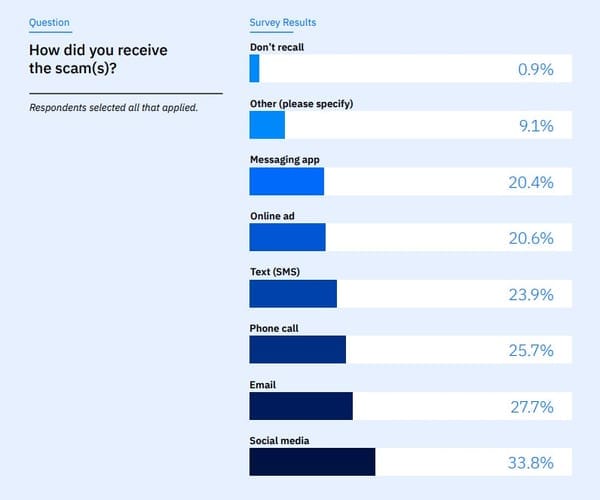
  • Social media is the top scam delivery channel (34%), underscoring how deception blends seamlessly into platforms where people spend much of their time.
  • 7 out of 10 respondents have encountered scams of some type in the last 12 months.
  • 1 in 7 consumers fell victim to a scam in the past year.
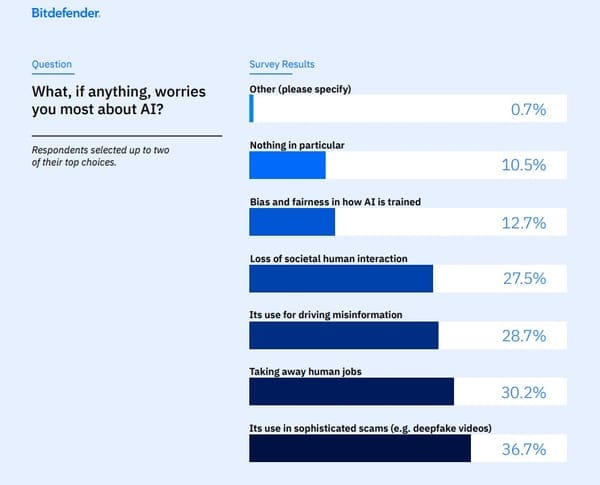
  • In the context of AI, 37% named deepfakes as their biggest concern.

Cybercriminals increasingly rely on fake investment opportunities, impersonation, cloned accounts, and fraudulent advertisements distributed through mainstream platforms where users lower their guard.

Scam operations have evolved into highly organized criminal enterprises. Some groups operate with call-center-style structures, scripted manipulation techniques, multilingual operators, money laundering teams, and dedicated technical infrastructure.

Coordinated busts

Cybercrime investigations are notoriously difficult. Criminal groups often spread infrastructure across multiple countries, rely on cryptocurrency transactions, and rapidly migrate operations when servers or domains are seized. That makes international cooperation critical.

Operations coordinated through organizations like INTERPOL allow participating countries to share intelligence, identify overlapping investigations, trace infrastructure, and act in unison against criminal networks.

Authorities hope synchronized enforcement makes it harder for cybercriminal groups to quickly regroup elsewhere. Still, arrests alone are unlikely to eliminate large-scale scam ecosystems.

Past crackdowns have shown that fraud networks often rebuild using new domains, fresh social media accounts, alternative messaging platforms, and replacement infrastructure within weeks.

The challenge grows even more complicated as criminals adopt AI-assisted tactics, including deepfake impersonation, voice cloning, and automated scam messaging.

Read: Got a Silent Call From an Unknown Number? It’s Not Random, It’s a Scam

Read: Older Adults Lost Billions to Scammers Last Year, FBI Warns

How to protect yourself from sophisticated scams

As online fraud operations continue to expand globally, internet users should exercise caution when interacting with strangers online — especially in conversations involving investments, cryptocurrency, urgent financial requests, or emotional manipulation.

Here are some practical tips to reduce your risk:

  • Be skeptical of investment opportunities promoted through social media, messaging apps or dating platforms.
  • Never send money or cryptocurrency to someone you have not verified independently.
  • Watch for pressure tactics involving urgency, secrecy, or emotional manipulation.
  • Enable multi-factor authentication on important accounts.
  • Use strong, unique passwords and consider a password manager.
  • Avoid downloading attachments or clicking links from unexpected messages.
  • Keep devices and security software updated.
  • Research companies, trading platforms, and investment offers independently before sending funds.

Use security tools that detect scams

Security solutions with scam-detection features can help identify phishing links, fraudulent messages, and suspicious websites.

To help people stay ahead of evolving threats, Bitdefender has introduced Scam Radar, a new feature integrated into Bitdefender Mobile Security for Android and Bitdefender Mobile Security for iOS.

When in doubt about an unsolicited phone call, text or social media interaction, use Scamio, our free scam detector and prevention service. Simply describe your situation and let Scamio guide you to safety.

You may also want to read:

Global Scam Crackdown: 276 Arrested, Crypto Fraud Networks Dismantled

Brits Lost £102 Million to Romance Scams Last Year

Social Media Scams Cost Americans $2.1 Billion in 2025, FTC Warns