

惯性聚合 高效追踪和阅读你感兴趣的博客、新闻、科技资讯
阅读原文 在惯性聚合中打开

推荐订阅源

TaoSecurity Blog
TaoSecurity Blog
L
LINUX DO - 最新话题
Help Net Security
Help Net Security
N
News | PayPal Newsroom
www.infosecurity-magazine.com
cs.AI updates on arXiv.org
The Last Watchdog
The Last Watchdog
S
Security @ Cisco Blogs
W
WeLiveSecurity
C
CXSECURITY Database RSS Feed - CXSecurity.com
Webroot Blog
Webroot Blog
T
Troy Hunt's Blog
V
Vulnerabilities – Threatpost
Google Online Security Blog
N
News and Events Feed by Topic
T
Threat Research - Cisco Blogs
Security Archives - TechRepublic
钛媒体:引领未来商业与生活新知
钛媒体:引领未来商业与生活新知
T
Tor Project blog
freeCodeCamp Programming Tutorials: Python, JavaScript, Git & More
D
Darknet – Hacking Tools, Hacker News & Cyber Security
PCI Perspectives
PCI Perspectives
Google DeepMind News
T
Tailwind CSS Blog
让小产品的独立变现更简单 - ezindie.com
Apple Machine Learning Research
IT之家
IT之家
S
SegmentFault 最新的问题
J
Java Code Geeks
P
Privacy & Cybersecurity Law Blog
Threat Intelligence Blog | Flashpoint
博客园 - 【当耐特】
博客园_首页
H
Hacker News: Front Page
T
Threatpost
Jina AI
Jina AI
博客园 - Franky
月光博客
月光博客
L
LINUX DO - 热门话题
The Cloudflare Blog
H
Heimdal Security Blog
博客园 - 司徒正美
酷 壳 – CoolShell
酷 壳 – CoolShell
Cloudbric
Cloudbric
雷峰网
雷峰网
Hugging Face - Blog
Hugging Face - Blog
S
Secure Thoughts
T
Tenable Blog
I
Intezer
OSCHINA 社区最新新闻
OSCHINA 社区最新新闻

Consumer Insights

The ransomware negotiator who was working for the other side After years on the run, alleged Ryuk ransomware operator pleads guilty INTERPOL crackdown shows scammers shifting to social media Meta lets strangers remix your public Instagram photos with AI—here’s how to opt out Invited to a "job interview" with Netflix or OpenAI? Beware! Your Google password could be at risk Two arrested over credit card phishing - as the Netherlands is named Europe's worst for payment fraud India pauses WhatsApp username feature over security concerns Alleged teen ransomware hustler faces US charges after arrest in Finland WhatsApp usernames explained: how to reserve yours and stay safe Scammers race to cash in on Venezuelan earthquake disaster USB drives carrying China-linked malware infected Japanese military networks for nearly a year WhatsApp tests new safety prompt before you chat with strangers Social media is worth celebrating. It's also worth protecting. Polish police dismantle SIM-swap gang accused of crypto theft Operation Endgame deals fresh blow to StealC and Amadey malware networks Hacker hijacks Brazil's national alert system, sending "misanthropy" to millions of phones Cybercrime now rivals traditional crime across parts of Asia Apple's Hide My Email tweak leaves privacy fans fuming Americans lost $3.5 billion to imposter scams last year — and the scams are getting harder to spot Scammers have killed the physical Steam Gift cards Maine forced to take down data breach portal after fake notices filed with authorities Privacy own-goal: World Cup blunder leaks Lionel Messi's passport details Why schools remain one of cybercriminals' favourite targets WhatsApp detects new spyware activity from Israel’s NSO Group despite court order Got a LinkedIn message from a recruiter? It might be Chinese intelligence, warn FBI and MI5 Europol cracks down on illegal streaming globally Hackers didn't hack Instagram; they just asked Meta AI FBI Warns Fans About FIFA Scams Ahead of 2026 World Cup Virtual knife, real lawsuit: Counter-Strike skin dispute ends in court As Deepfakes Spread, YouTube Makes AI Labels Harder to Miss Carnival breach exposes data of nearly 6 million people Police arrest man following hack of Ajax football club MyPillow listed on ransomware gang's leak site, but denies it has been breached FBI warns criminals impersonating IT support to breach law firms FBI warns of Kali365 phishing kit that breaks into Microsoft 365 accounts — no password required Telecom Executives Plead Guilty to Tech Support Fraud 7-Eleven data breach exposes data of 185,000 people ASIC Warns Australians About Crypto Trading Scams Google Search AI Mode brings a major overhaul Deleted Google API keys may remain active for 23 minutes Ukrainian police identify perp in $721k infostealer scheme Steam removes horror game after malware steals player data FBI: Crypto ATM Scams Keep Growing as Americans Lose Millions FBI warns students and staff that ShinyHunters may come knocking after Canvas breach Scam Centers Under Pressure as INTERPOL Makes More Arrests FBI Warns Older Adults Lost Billions to Scammers Burst Statistics WordPress flaw under attack Android 17 Will Let Users Verify Whether Their OS Is Legit Suspected Dream Market kingpin arrested after gold bars sent to his home address BitLocker zero-day exposes Windows drives as PoC goes public Apple Fixes ‘Persistent Notifications’ Flaw on Older iPhones Football Ticket Scams Are Rising Fast, Lloyds Bank Warns When ransomware gets physical: cybercriminals turn to threats of violence iPhone-to-Android Texts Are Now Encrypted (RCS Messaging) UK Water Supplier Fined Nearly £1 Million After Hackers Roamed Networks for Almost 2 Years Instagram Drops Encrypted DMs — What This Means for You New fear: Man films woman with smart glasses, seeks money to take video down ClickFix Campaign Uses Compromised WordPress Sites to Spread Vidar Stealer in Australia Inside Department 4: Russia's secret school for hackers Ubuntu’s new AI dreams attracted a very old-fashioned crypto scam on X Chrome 4GB AI model: What weights.bin does Sri Lanka makes 37 arrests as it raids another scam centre DAEMON Tools Lite breach prompts urgent update after malware-laced installer Brits Lost £102 Million to Romance Scams Last Year The Online Safety Act Is Changing the Internet for Kids World Password Day 2026 How Hackers Stole and Sold Roblox Accounts for $250,000 Before Getting Caught Four Years in Prison for Cybersecurity Pros Turned Ransomware Attackers Teenager alleged to be Scattered Spider hacker arrested in Finland, faces US extradition 276 Arrested in Crypto Scam Crackdown Popular WordPress redirect plugin found with years-old backdoor Iran-linked Handala hackers leak US Marines data, send chilling WhatsApp threats Alleged Silk Typhoon hacker extradited to the United States to face charges FTC: Social Media Scams Cost Americans $2.1 Billion in 2025 French police arrest 21-year-old "HexDex" hacker over 100 alleged data breaches iOS Flaw Exposed ‘Deleted’ Signal Messages Sony Starts Enforcing PlayStation Age Verification; UK and Ireland Are First Ransomware ‘Negotiator’ Faces 20 Years in Prison for Allegedly Betraying His Employers You’ve Got Mail and It’s Tracking Your Warship Crypto Investment Scam Costs Woman in Hong Kong Nearly $1 Million Operation PowerOFF warns 75,000 DDoS users Singer loses life savings to fake wallet downloaded from the Apple App Store AgingFly malware targets Ukraine government, hospitals 108 malicious Chrome extensions caught stealing Google and Telegram data from 20,000 users Rockstar Games confirms breach after ShinyHunters leaks stolen analytics data FBI: Cybercrime Losses Hit $21 Billion in 2025, Fueled by AI Life imprisonment for Cambodian scam compound operators - but will it make a difference? Fake Claude Code leak on GitHub spreads Vidar malware Apple Expands ‘DarkSword’ Patch to More iPhones and iPads Nigerian romance scammer jailed after being caught out by fellow fraudster Fake WhatsApp Clone Used in Spyware Campaign, Meta Warns Fake CERT-UA emails spread AGEWHEEZE in ukraine Alleged RedLine malware developer extradited to United States The Scam That Tricks You Into Infecting Your Own Mac Iranian hackers breach FBI director's personal email, and post his CV and photos online Don't Ignore This Security Alert Apple Sent to iPhone Lock Screens Meta and YouTube Designed Addictive Platforms, Jury Finds TikTok Business phishing campaign targets advertisers Lapsus$ claims AstraZeneca breach exposes code and credentials How one man used 10,000 bots to steal $8,000,000 from music artists
Crypto investment scam sends couriers to collect victims' cash, FBI warns
Filip TRUȚĂ · 2026-06-16 · via Consumer Insights

Online investment scams have evolved beyond fake websites and fraudulent trading apps.

According to a warning from the FBI's Internet Crime Complaint Center (IC3), scammers are increasingly dispatching real-world couriers to collect cash directly from victims' homes and public meeting locations as part of cryptocurrency investment scams.

The tactic adds a troubling offline component to a scam category that already costs victims billions of dollars each year.

Key takeaways

  • The FBI warns that cryptocurrency investment scammers are using couriers to collect cash from victims in person
  • The interaction typically starts on social media
  • Victims are often persuaded to invest via fake crypto platforms that display fabricated profits
  • Criminals may claim cash pickups are necessary because banks blocked transfers or because additional fees are required to unlock funds
  • Older adults are frequent targets
  • Data from the Bitdefender 2025 Consumer Cybersecurity Survey shows that social media is fraudsters’ preferred scam-delivery system
  • Victims are urged to report incidents to IC3 and preserve all evidence

How the scam works

According to the FBI, the scheme often begins with a seemingly innocent online interaction.

Scammers may pose as potential romantic partners, business contacts, or successful cryptocurrency investors on social media, dating platforms, or through unsolicited text messages. After building trust, they encourage victims to invest in cryptocurrency through specific apps or trading platforms controlled by the criminals.

Victims are initially shown legitimate-looking investment accounts and attractive returns. In reality, the platforms are fraudulent, and the profits displayed are entirely fictitious. The false gains are designed to persuade victims to invest larger amounts of money.

The scam becomes even more worrying when traditional payment methods encounter obstacles.

Why criminals are turning to cash pickups

The FBI says scammers frequently encounter resistance when victims attempt large bank transfers. Financial institutions may flag or block suspicious transactions, making it harder for criminals to receive funds electronically. To work around these safeguards, fraudsters increasingly tell victims to withdraw cash instead.

Victims may be told that:

  • Their account has been "flagged"
  • Additional fees or taxes are required to release profits
  • Cash deposits are necessary to continue investing
  • Alternative payment methods are needed because of banking restrictions

Once the victim has the cash, the scammer arranges for a courier to retrieve it in person.

The courier verification trick

To reassure victims that the courier is legitimate, scammers often use a simple authentication method.

The victim receives a dollar bill serial number, password, or code from the scammer. When the courier arrives, they present the matching serial number or provide the agreed-upon password as proof of their identity. This tactic creates the illusion of a secure and professional transaction.

After the cash changes hands, victims may see an apparent increase in their account balance on the fake investment platform. This fabricated activity reinforces the illusion that their investment is growing.

When victims try to withdraw funds, they are typically told they must pay additional taxes, penalties, or fees—often triggering another round of cash pickups.

As the FBI explains:

When the courier arrives, they show the victim the dollar bill or provide the agreed-upon password to authenticate the courier's affiliation with the scammer.

A familiar scam with a new twist

The FBI notes that in-person cash collection is not unique to cryptocurrency fraud. Similar courier-based tactics have appeared in grandparent scams, law-enforcement impersonation schemes, tech support fraud, and other financial crimes.

What makes this trend notable is the blending of sophisticated online manipulation with physical-world collection methods. By using couriers, criminals can bypass some anti-fraud controls implemented by banks and payment providers while making victims feel they are participating in a legitimate investment process.

Warning signs to watch for

The FBI recommends extra caution if someone:

  • Contacts you unexpectedly about an investment opportunity
  • Quickly attempts to build a close personal relationship online
  • Encourages you to use a specific cryptocurrency platform
  • Claims your funds are locked and require additional payments
  • Requests cash withdrawals instead of standard financial transactions
  • Arranges for someone to collect money from your home or another location

The agency also warns about “love bombing,” a manipulation technique in which scammers overwhelm targets with affection, attention, and praise to establish trust before exploiting them financially.

The bureau’s warning also highlights a broader trend: many of today's investment scams begin on social media, where fraudsters can quickly reach large numbers of potential victims.

New data from the U.S. Federal Trade Commission (FTC) reveals a surge in fraud linked to social platforms. In 2025, nearly 30% of people who reported losing money to a scam said the interaction began on social media, with reported losses totaling $2.1 billion. Social media scams caused far more losses than any other contact method that scammers use to reach consumers—an eight-fold increase since 2020.

Data from the Bitdefender 2025 Consumer Cybersecurity Survey supports those findings, with more than a third of respondents reporting they encountered a scam through their social media feed.
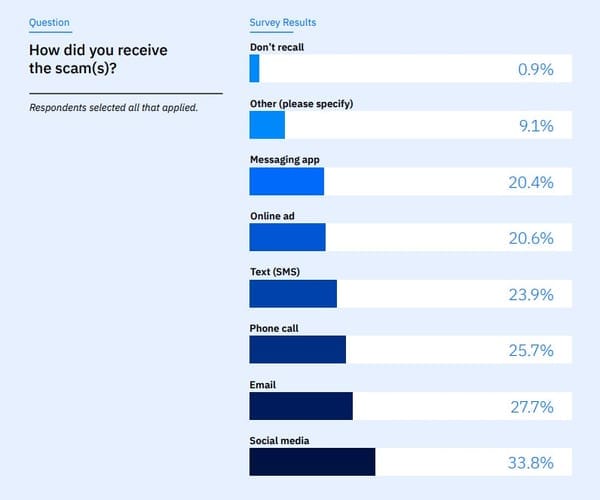
According to FTC data, the top three social media scams today are investment, shopping, and romance scams.

How to stay safe (Bitdefender’s advice)

To reduce your risk of becoming a victim:

  • Be skeptical of unsolicited investment advice from strangers
  • Verify the identity of online contacts through independent channels
  • Never hand cash or valuables to strangers as part of an investment
  • Research cryptocurrency platforms thoroughly before investing
  • Search for reviews, complaints, forum discussions, and information about the platform's website or app
  • Avoid clicking links or responding to unsolicited messages promoting investment opportunities

Consider using reputable security software and staying informed about emerging scam tactics. When in doubt about an unsolicited phone call, text or social media interaction, use Scamio, our free scam detector and prevention service. Simply describe your situation and let Scamio guide you to safety.

Bitdefender has also recently introduced Scam Radar, a new feature integrated into  Bitdefender Mobile Security for Android and Bitdefender Mobile Security for iOS.

Scam Radar enhances our mobile security defenses with capabilities designed to identify emerging scam campaigns and improve user awareness before fraud occurs.

Bottom line

The safest approach is simple: no legitimate investment company will send a courier to collect cash from your home or require additional payments to unlock investment profits.

If you get a request for in-person cash pickups, taxes, penalties, or withdrawal fees, treat it as a red flag.

You may also want to read:

Social Media Scams Cost Americans $2.1 Billion in 2025, FTC Warns

Global Scam Crackdown: 276 Arrested, Crypto Fraud Networks Dismantled

Brits Lost £102 Million to Romance Scams Last Year