



惯性聚合 高效追踪和阅读你感兴趣的博客、新闻、科技资讯
阅读原文 在惯性聚合中打开

推荐订阅源

D
Docker
Microsoft Azure Blog
云风的 BLOG
云风的 BLOG
cs.AI updates on arXiv.org
L
LangChain Blog
P
Privacy & Cybersecurity Law Blog
Hugging Face - Blog
Hugging Face - Blog
C
CXSECURITY Database RSS Feed - CXSecurity.com
大猫的无限游戏
大猫的无限游戏
Cyberwarzone
Cyberwarzone
The Register - Security
Stack Overflow Blog
Stack Overflow Blog
A
Arctic Wolf
cs.CL updates on arXiv.org
T
Threatpost
The GitHub Blog
The GitHub Blog
P
Privacy International News Feed
WordPress大学
WordPress大学
U
Unit 42
S
Securelist
T
The Exploit Database - CXSecurity.com
C
Cyber Attacks, Cyber Crime and Cyber Security
P
Proofpoint News Feed
Latest news
Latest news
Hacker News: Ask HN
Hacker News: Ask HN
小众软件
小众软件
Know Your Adversary
Know Your Adversary
The Cloudflare Blog
V
Vulnerabilities – Threatpost
The Hacker News
The Hacker News
Scott Helme
Scott Helme
有赞技术团队
有赞技术团队
Security Latest
Security Latest
Google DeepMind News
Application and Cybersecurity Blog
Simon Willison's Weblog
博客园 - Franky
Y
Y Combinator Blog
博客园 - 叶小钗
Security Archives - TechRepublic
Google DeepMind News
N
Netflix TechBlog - Medium
S
Secure Thoughts
T
Threat Research - Cisco Blogs
aimingoo的专栏
aimingoo的专栏
S
SegmentFault 最新的问题
Microsoft Security Blog
K
KPMG report finds enterprise disconnect between AI and its ROI | CIO
博客园 - 司徒正美
M
MIT News - Artificial intelligence

AirCloud 日常

快速生成 AI 应用的框架对比:Gradio、Streamlit 和 Dash Node.js 二进制打包:pkg 原理解析 - AirCloud 日常 基于 K8s 容器化运行 web 端对端测试 关于 JupyterLab cell 输出保持问题的设计方案 - AirCloud 日常 读完 type-challenges,我总结了如下常用的内容 - AirCloud 日常 基于 Container 架构的多框架前端应用 - AirCloud 日常 我们应该如何进行 Code Review ? - AirCloud 日常 Clean Code》读书笔记 - AirCloud 日常 使用 fst-json 自动生成更快的 json 序列化方法 《代码精进之路》与《代码整洁之道》-读书笔记 - AirCloud 日常 《重构》-读书笔记 - AirCloud 日常 《架构整洁之道》-读书笔记 - AirCloud 日常 React Conf 2021 内容概要 - AirCloud 日常 PC 开发技术选型:Electron 不是银弹 - AirCloud 日常 web 页面内存分析与生产环境禁用 console - AirCloud 日常 通过优化合成层优化性能 - AirCloud 日常 了解 StackOverFlow 上面最受欢迎的语言 Rust - AirCloud 日常 一些性能相关的 JavaScript 代码编写建议规范 - AirCloud 日常 如何让你的精力更多的用于提高技术深度 - AirCloud 日常
使用 Rust 开发 python 模块
2022-06-04 · via AirCloud 日常

关于 Rust 的基本介绍,我在之前的文章有做过一些总结。

本篇文章我们关注如何在 python 中调用 Rust 开发的模块。

Rust FFI 的一般思路

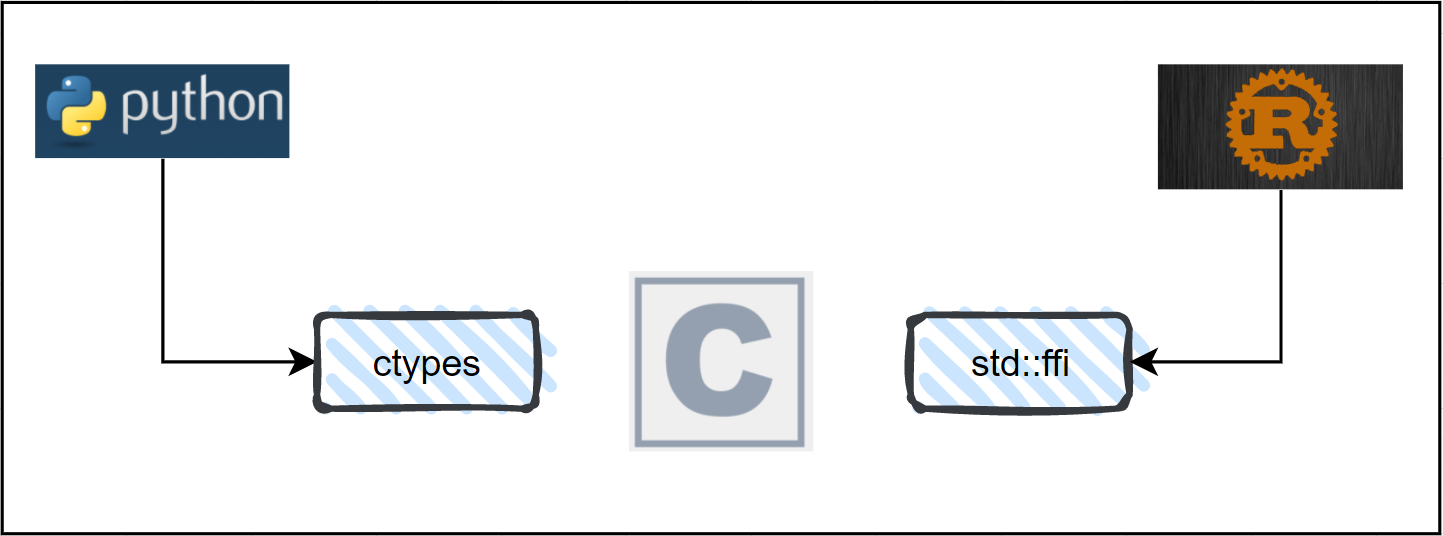
Rust 可以编译出兼容 C ABI 的动态库或者静态库,Rust 调用其他语言,以及 Rust 被其他语言调用,基本都是通过 C ABI 来进行 FFI 调用。

所以我们可以看出,实际上 C++ 调用 Rust 并不是特别方便,需要使用 Rust 提供的 C 接口,也因此没有办法使用 C++ 提供的类型,而 Rust 在导出接口的时候,也没有办法使用 Rust 的类型系统,需要转换成 C 类型。

大多数时候我们都会在这种场景下写一层 wrapper 和 converter,用来自动生成 FFI 层的一些胶水代码。

对于 Python 这类高级语言调用 Rust,基本也是类似的思路,我们可以简单总结为下图:
值得庆幸的是,对于 Python 调用 Rust,社区已经有非常多现成的成熟工具可以使用,基于这些工具,我们可以比较方便地专注于 Rust 实现逻辑本身,无需关注太多 FFI 和转换细节。

入门

一个比较方便的方法是使用 PyO3,PyO3 不仅仅提供了 rust binding,也提供了创建 python 包的开箱即用的脚手架工具 maturin,使用 maturin 我们可以很方便地创建一个基于 rust 开发的 python 扩展模块。

我们这里整理一下官方文档中提供的最简单的方式,读者可以直接依次执行下面的 shell 脚本:

1
2
3
4
5
6
7
8
9
10
$ mkdir string_sum
$ cd string_sum
# 创建 venv 的这一步不能省略,否则后续运行的时候会报错
$ python -m venv .env
$ source .env/bin/activate
$ pip install maturin
# 直接使用 maturin 初始化项目即可,选择 pyo3,或者直接执行 maturin init --bindings pyo3
$ maturin init
✔ 🤷 What kind of bindings to use? · pyo3
✨ Done! New project created string_sum

这个时候,我们可以得到一个简单的 Rust 项目,并且包含了一个示例调用,我们无需修改任何代码,可以直接执行下面的命令测试:

1
2
3
4
5
6
# maturin develop 会自动打包出一个 wheel 包,并且安装到当前的 venv 中 
$ maturin develop
$ python
>>> import string_sum
>>> string_sum.sum_as_string(5, 20)
'25'

进阶工具

接下来,我们介绍几个方便我们使用 Rust 开发 python 包的进阶工具或引导。

setuptools-rust

setuptools-rust 是一个 setuptools 的插件,让我们可以比较方便地编写使用 pyo3 开发的 rust python 包。

我们可以 clone 它的源代码,直接使用它提供的示例,参考如下命令测试:

1
2
3
4
5
6
7
8
9
$ cd examples/rust_with_cffi
$ python ./setup.py develop
$ python
Python 3.9.7 (default, Sep 3 2021, 12:37:55)
[Clang 12.0.5 (clang-1205.0.22.9)] on darwin
Type "help", "copyright", "credits" or "license" for more information.
>>> from rust_with_cffi import rust
>>> rust.rust_func()
14

dict-derive

这个 rust 库提供了 FromPyObject 和 IntoPyObject 两个宏,使用这两个宏,我们可以很方便地进行 python dict 结构和 Rust 结构体的转换。

例如我们声明这样一个结构体:

1
2
3
4
5
6
#[derive(FromPyObject, IntoPyObject)]
pub struct User {
pub name: String,
pub email: String,
pub age: u32,
}

我们就直接可以在导出函数中这样使用了:

1
2
3
4
5
6
7
8
9
10
11
12
13
14
15

#[pyfunction]
fn get_contact_info(user: User) -> PyResult<String> {
Ok(format!("{} - {}", user.name, user.email))
}


#[pyfunction]
fn get_default_user() -> PyResult<User> {
Ok(User {
name: "Default".to_owned(),
email: "default@user.com".to_owned(),
age: 27,
})
}

我们通过宏展开可以发现,这两个宏所做的事情就是分别将 pyo3::types::PyDict 转换成 Rust 结构体和将 Rust 结构体转换成 pyo3::types::PyDict

整体宏展开的代码不多,还是比较方便阅读的。

rust-numpy

rust-numpy 是一个 rust 版本的 numpy C ABI 封装,使用这个库我们可以在 Rust 中调用 numpy

接下来我们运行该库的示例代码。

我们需要先安装 nox,nox 是一个 python 自动化任务工具。

1
$ python3 -m pip install nox

之后我们进入到命令行直接执行即可:

1
2
$ cd examples/simple
$ nox

顺利的情况下,我们可以看到它会输出测试成功:

1
2
3
4
tests/test_ext.py .....                                                                                                                                       [100

========================================================================= 5 passed in 0.32s =========================================================================
nox > Session tests was successful.

pandas

在 Rust 中并没有直接和 python 中的 pandas 包对标的诸如 pandas-rs 包。

不过 Rust 标准库本身也提供了非常多的数据处理函数如筛选、过滤等,我们可以自己手写代码完成大部分 pandas 的工作。

这篇文章中,作者使用了大约 160,000行/ 130列,总大小为 150Mb 的数据, 分别使用 Rust 和 Pandas 处理并测试,我们可以看到提升还是比较显著的:

Time(s) Mem Usage(Gb)
Pandas 3.0s 2.5Gb
Rust 1.6s 🔥 -50% 1.7Gb 🔥 -32%

其他

pyo3 的 README 里面还列举了一些其他的工具库,使用起来相对比较简单,这里就不做单独介绍了。

  • pyo3-log:在 Rust 中使用 python 的 logging 库。
  • pyo3-built:可以在编译 rust 的 python 模块的时候写入一些构建信息,如 rust 版本等。
  • pyo3-asyncio:python asyio 的 Rust binding,可以将 python 的 async 转换成 Rust 的 features。
  • rustimport:可以在 python 中直接引入 rust 代码,但因为引入的时候需要编译,笔者不是很建议在生产环境中直接使用。

虽然上面介绍了这么多工具,但是笔者认为,在实际使用中,还是远远不够的,我们应该还会结合业务,寻找和造出更多轮子,这部分工作就有待我们进一步开拓了。