






 All posts
Summary
- Global funder and charity evaluator GiveWell increased its cost-effectiveness estimate of our flagship program by 3-4x in 2024, and are now funding 3 pilots to test ways to increase this even more.
- These new pilots – cash to small businesses, cash with new trail bridge construction, and cash to the very poorest – each focus on a different mechanism to increase impact per dollar.
- We believe these could generate 2–3x the impact per dollar; and if they do, we will build these into our approach and scale.
Here’s a 5-minute audio summary of these pilots from GiveWell:
In 2024, GiveWell increased its cost-effectiveness estimate of GiveDirectly’s Cash for Poverty Relief program by 3–4x.
Now, they’re funding several pilots to test if targeted variations to our flagship model can further increase impact per dollar for key outcomes in the GiveWell model: consumption gains, and local economic growth.
GiveWell is funding three pilots testing variations to increase cost-effectiveness 2-3x more
Cash is already among the most rigorously studied and cost-effective interventions for poverty reduction. More than a decade of evidence shows that large, one-time cash increases how much people live on (consumption), and generates local economic growth.
Today we’re asking: can we make our cash program even more cost-effective by increasing impact in these areas? With funding from GiveWell, we are running three pilots in 2026, each designed to test a specific hypothesis about how to increase total impact per dollar delivered.
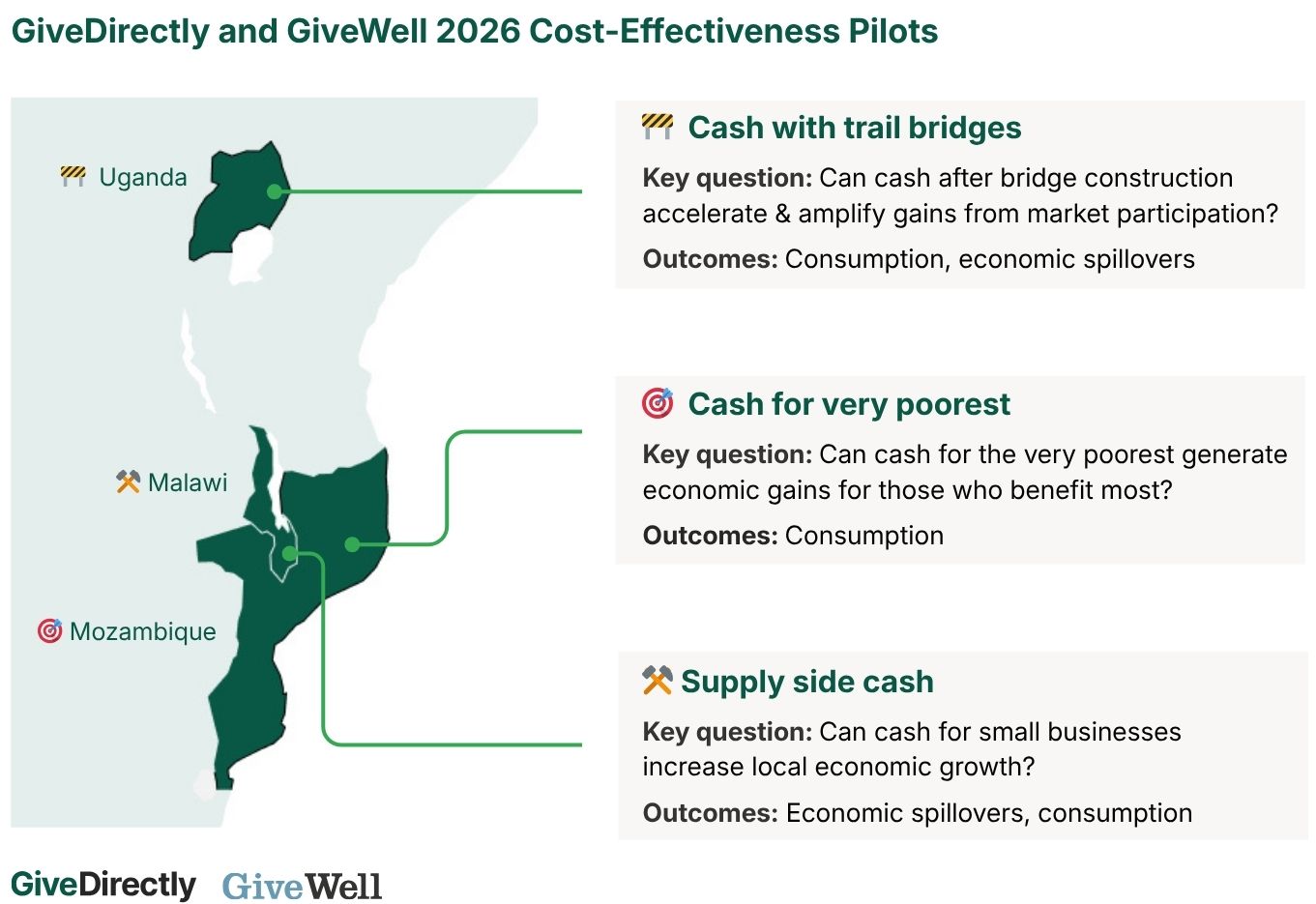
| Pilot | GiveWell Cost-Effectiveness Outcome | Our hypothesis |
|---|---|---|
| ⚒️ Supply Side Cash | ↑ Local economic growth ↑ Consumption | Cash given to businesses before nearby households receive cash allows them to invest and prepare for increased demand. This could amplify economic spillovers, increasing consumption. |
| 🚧 Cash with Trail Bridges | ↑ Consumption ↑ Local economic growth | Cash delivered shortly after trail bridge construction in a previously isolated community allows people to take advantage of new markets more quickly and to a greater extent. This could increase consumption gains, and amplify economic spillovers. |
| 🎯 Cash for Very Poorest | ↑ Consumption | Targeting cash to the very poorest of communities in poor areas reaches those with the lowest initial consumption. This could generate consumption gains of higher incremental value. |
These pilots will help us answer three key questions that we have:
1. ⚒️ Can cash for small businesses (‘supply-side cash’) increase local economic growth?
Large, one-time cash given to individuals increases local demand for goods and services. This in turn increases local business revenues and generates economic ‘spillovers’. Research on our Kenya program found that each dollar given to poor families generated a $2.50 increase in local economic activity with minimal price inflation – a key driver in GiveWell’s recent increased assessment in our cost effectiveness.
In this new Malawi pilot, we are testing if we can amplify these spillover effects by giving cash to local businesses like hardware stores, mills, or grocers, what we’re calling ‘supply-side cash’. We’re giving $550 – $1,1001 to these merchants one month before local residents receive cash, while informing them of the coming spike in demand and providing planning support to prepare.
Our theory is that local businesses have lacked sufficient capital and notice to quickly meet surging demand from thousands of families receiving GiveDirectly cash, so some potential spillovers have gone unrealized.
Our pilot tests if delivering cash and planning support to business owners first will result in better-stocked, better-staffed businesses when families receive their cash. More goods available locally, lower price inflation from better supply, and higher revenues would amplify the consumption gains and economic spillovers that make cash so cost-effective.
We have started piloting and already have early operational learning that is informing current and future work.
👇 Find out how businesses have been using cash
2. 🚧 Can cash after trail bridge construction accelerate and amplify gains from market access?
Trail bridges connecting previously isolated communities to markets are a cost-effective way to generate positive economic impacts in communities. They open up new opportunities through physical access to customers, livelihoods, and new goods and services.
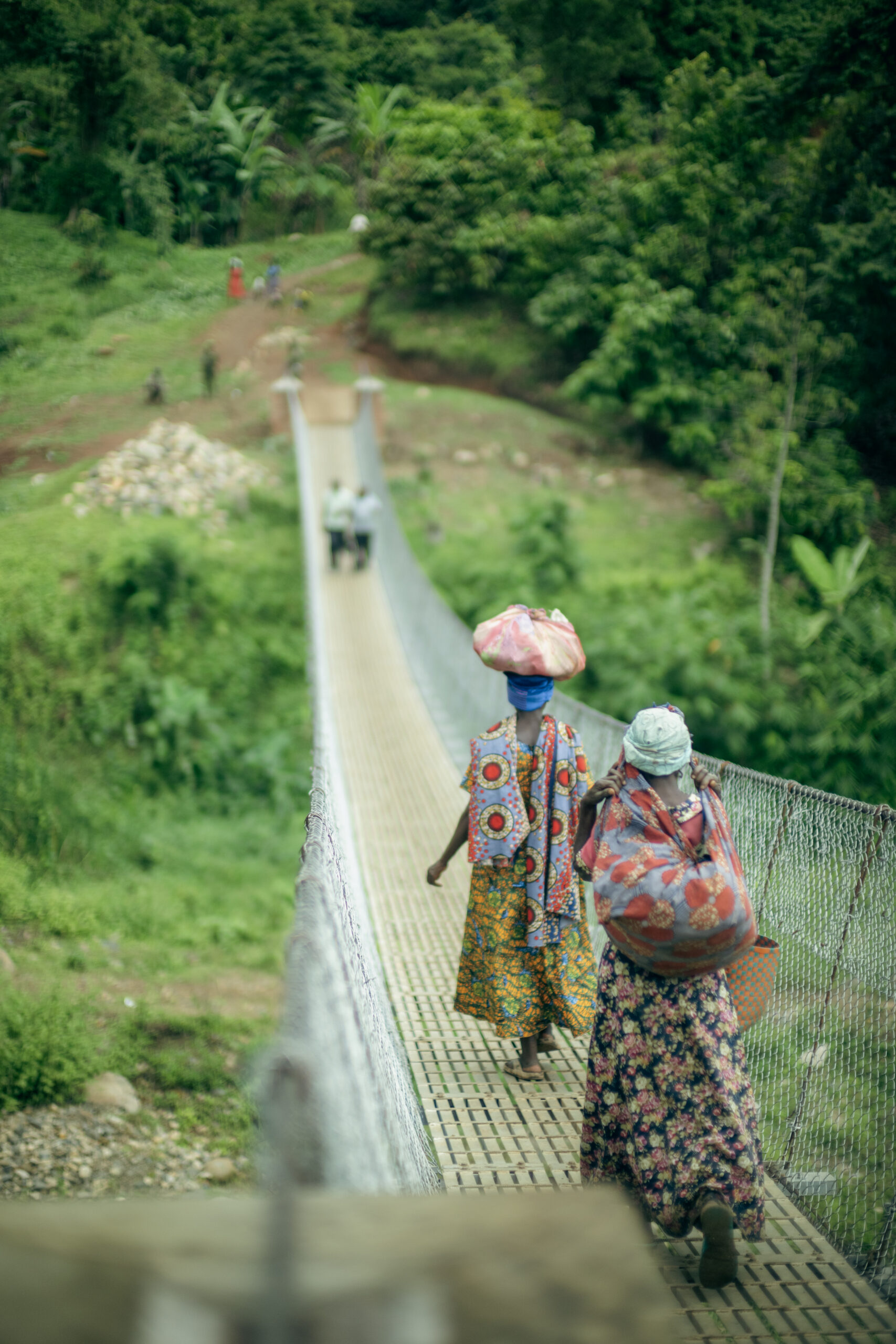
In a pilot in Uganda, we’re testing if the economic gains from a trail bridge constructed by Fika in partnership with the Ministry of Works and Transport can be amplified by giving cash (~$644) to people in previously isolated villages shortly after the trail bridge is constructed.
Our theory is that this cash will help villagers to take greater advantage of what trail bridge access unlocks: new goods and services, new customers, and new jobs. They should also be able to act on these new opportunities from the trail bridge faster – investing in livelihoods, buying agricultural inputs, or acquiring assets they couldn’t previously afford.
Together, these effects should amplify the gains of trail bridge construction. We are testing if this will lead to meaningful consumption increases within the first few months and a larger overall impact than trail bridge access alone would generate.
3. 🎯 Can cash for the very poorest generate economic gains for those who benefit most?
GiveWell’s cost-effectiveness model values economic gains for the poorest more heavily than for those relatively better off:
“We value consumption gains relatively… Concretely, this means we think a $1,000 annual consumption gain for someone consuming $1,000 worth of goods and services a year is more valuable than a $1,000 gain for someone consuming $2,000 worth a year. This means it matters how poor we think recipients are before they receive cash transfers.” – GiveWell
This suggests there’s a ‘declining marginal utility of cash’. The very poor ($1,000/year) family may, for example, use the money to avoid going hungry. Whereas a less poor ($2,000/year) family may use the same money to diversify their diet. Both are important outcomes, but to GiveWell the former is more important.
However, less poor families might be better positioned to invest in income-generating activities than the very poorest, so may make longer-term gains. A program that optimizes for boosting the very poorest in the short-term and encouraging income-generating investments that sustain them in the long-term would be maximally cost-effective.
Our new Mozambique pilot is doing just that: testing if targeting the very poorest communities within poor areas can lead to higher GiveWell cost-effectiveness from greater relative consumption gains in both the short and longer term.
First, we’re using AtlasAI’s geospatial targeting technology to identify the very poorest communities in Mozambique – those living on just over $1 per day. Then we’ll give ~$550 to every adult under 35 and to the head of every household in these poorest villages.
Because we’re targeting the very poorest, more of this cash may be spent on short term consumption gains instead of major investments which might reduce longer term gains.
Our theory is that we can counteract this by targeting young adults in the poorest areas in addition to older heads of households, because our program evidence and other studies show that young adults are more likely to invest in income-generating activities that generate long term gains.
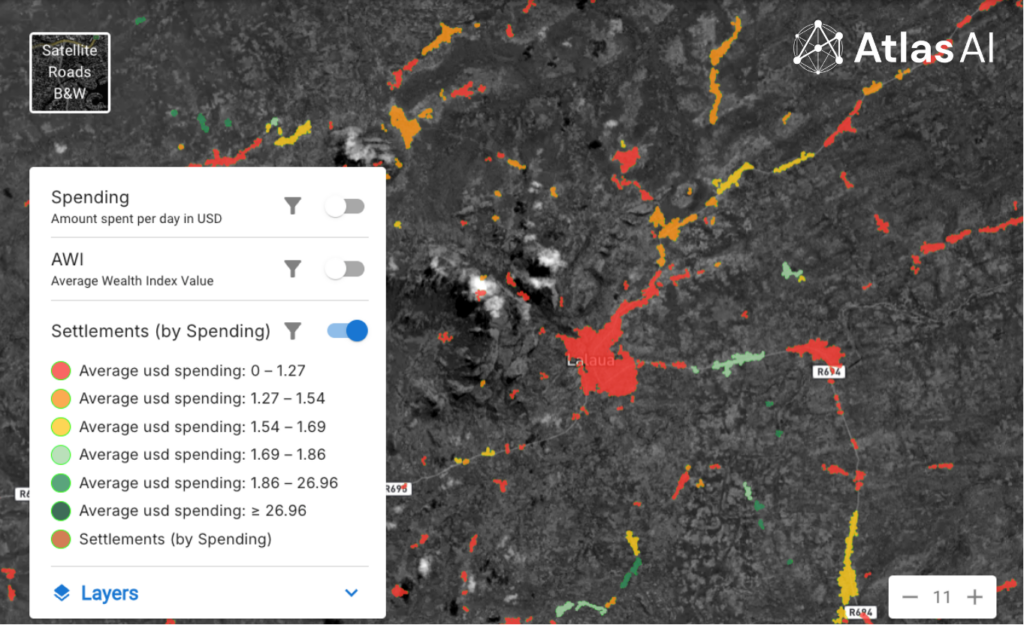
How much people live on varies substantially even within small geographic areas but conventional government census data are often out of date and do not capture this variance well.
AtlasAI’s geospatial technology combines machine learning, satellite imagery and survey measurements to estimate average household spending in and across small villages. We have used this to identify the very poorest areas within Lalaua, Mozambique and verified the accuracy of the AtlasAI estimates through in-person field visits.
We selected these pilots for their potential to substantially increase cost-effectiveness at scale.
Each pilot was selected for two reasons. They involve program tweaks with clear mechanisms to plausibly increase our impact per dollar by GiveWell’s standards. And if results validate a greater impact, they can be scaled rapidly and efficiently.
Both GiveDirectly and GiveWell believe these program variations could generate 2–3x the impact per dollar of GiveDirectly’s flagship cash transfer program as measured by GiveWell’s framework. These estimates are evidence-driven but ultimately uncertain, which is exactly why we are testing them.
We have already begun implementation of supply side cash in Malawi, and will launch the remaining pilots by June.
GiveDirectly & GiveWell continue to share a commitment to maximizing impact.
We view cost-effectiveness not as a static number, but as something we are continuously working to increase. If these models outperform our current approach, we will scale them. If they do not, we will incorporate what we learn and continue refining.
Maximizing the impact achieved per dollar delivered is core to our mission. These pilots are the next step in that journey.
Note: There are many ways to analyze cost-effectiveness in aid, depending on which outcomes you weigh most highly. These pilots test how to improve cash’s cost-effectiveness as defined by GiveWell’s moral weights. Elsewhere, for example, we’re piloting cash for new mothers, with a focus primarily on maternal and child health outcomes.
- We are giving $1,100 to businesses with permanent structures (e.g. hair salons or general merchandise stores)and $550 to those without (e.g. tailors or vendors without permanent stalls). These amounts were calculated based on survey data collected in our Phase 1 work in Malawi and adjusted for the high inflation seen since data was collected. They are an estimate of the anticipated capital constraints faced by firms to prepare for demand surges, and are adjusted for firm type based on observable characteristics. We anticipate businesses with a formal structure require more capital to prepare than those without structures. ↩︎