








The UK Government is undertaking the first major review of England’s curriculum and qualifications system since the current national curriculum was introduced in 2014. We believe that this is an excellent opportunity not simply to update the computing curriculum content, but to reconsider what computing education is for, who it serves, and how it prepares young people for life in a digital society.
Today, we are launching a report featuring 6 key priorities for curriculum reform based on discussions we have had with students and teachers.
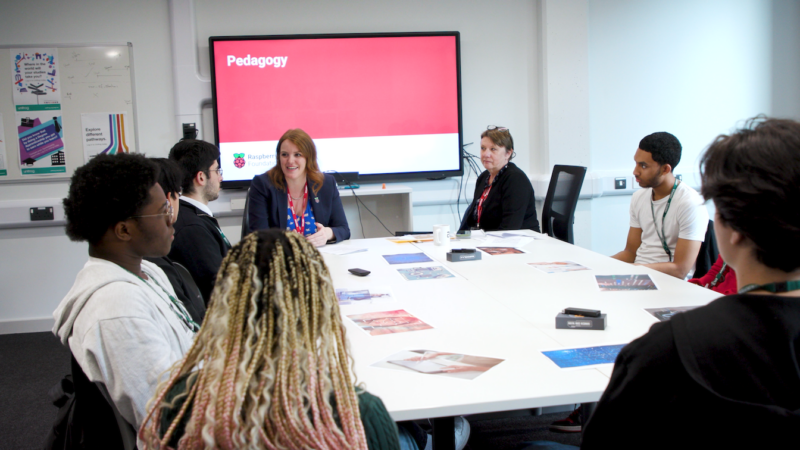
Too often, curriculum reform happens around students and teachers rather than with them. Yet these are the people who experience computing education every day, and they have valuable insights into what is working, what is not, and what needs to change.
Our new report is based on a series of student focus groups and teacher workshops held by us and the University of Cambridge in Manchester, London, and Cambridge during spring 2026.

The student discussions included young people currently studying computer science at GCSE and A level (ages 14–18), as well as young people who had decided to not continue with the subject. We also brought together 18 computing teachers from secondary schools across England to explore curriculum priorities and challenges for implementation.
Although participants in our workshops had differing perspectives, they consistently pointed to the same underlying challenge: the current curriculum no longer reflects the realities of technology, work, or young people’s lives.
“AI is everywhere now, we need to understand how it works, not just be told not to use it.”
– Student, London
In particular, many students highlighted a lack of confidence in their practical digital skills despite using technology constantly in everyday life.
“I can code a bit, but I don’t know how to use Excel properly, that’s what I’ll actually need.”
– Student, London
Students and teachers are not calling for a less rigorous curriculum. Nor are they arguing that computing should lose its technical foundations, with teachers consistently emphasising the value of understanding computational thinking, programming, algorithms, data, and computer systems and networks.
Instead, students and teachers want to make computing education more practical, relevant, inclusive, and future-facing.

Teachers particularly emphasised the importance of helping students understand how AI systems function, including issues such as bias, training data, limitations, and ethical implications. Participants argued that computing education should help young people understand the technologies shaping their lives, not simply prepare them for examinations. Perhaps the strongest area of agreement was that curriculum reform will only succeed if it is matched by investment in teaching.
Based on our discussions with students and teachers, we have identified several priorities for curriculum reform.
All students should leave school with a strong foundation in digital literacy, online safety, data awareness, and AI literacy. These should be treated as essential components of modern education, not optional extras.
The curriculum should focus on contemporary technologies and concepts, including AI, cybersecurity, and data, while trimming content that is overly specific, outdated, or disconnected from modern practice. Foundations such as programming, algorithms, and computational thinking should remain central.
Computing should be taught through making, experimentation, and problem solving. Project-based learning, physical computing, and relevant, real-world applications should become central approaches across all ages.
The revised curriculum should balance a shared foundation with opportunities for students to specialise in areas aligned with their interests and aspirations.
Any reforms should actively address barriers to participation by ensuring inclusive teaching approaches, diverse, relatable role models, and accessible learning experiences.
Curriculum reform must be accompanied by sustained investment in teacher recruitment, professional development, and classroom resources. Without this, reforming the curriculum risks widening existing inequalities in provision.
We believe listening to students and teachers should be central to curriculum reform. You can read the full report now:
此内容由惯性聚合(RSS阅读器)自动聚合整理,仅供阅读参考。 原文来自 — 版权归原作者所有。