









Key takeaways
- Agentic AI operates continuously, not in batches, requiring sustained computing power with fast communication between processing cores.
- CPUs like AWS Graviton are designed for these always-on reasoning workloads.
- Companies like Meta are deploying tens of millions of Graviton cores to power agentic AI at global scale.
What makes agentic AI different
For years, conversations about AI infrastructure centered on chips designed for training large language models. Accelerators like AWS Trainium and graphics processing units (GPUs) excel at processing massive amounts of data in parallel, making them ideal for the intensive work of teaching AI models.
But agentic AI operates differently. To understand why the central processing unit (CPU) is reclaiming relevance in the AI conversation, we have to look at the fundamental difference between a standard language model (SLM), large language model (LLM) and an AI agent. A language model is almost like a calculator: you give it a prompt, and it performs a massive amount of parallel math to predict the next set of tokens (the output). This is where GPUs shine—they run thousands of calculations simultaneously across many cores (individual processing units within a chip).
An AI agent, however, is more like a manager. Agents are AI systems capable of acting autonomously to complete multistep tasks—always on and continuously processing information and taking action. Think of a digital assistant that doesn't just respond to commands but actually completes tasks on your behalf—managing schedules, coordinating across systems, making decisions. If you ask an agent to “research this company and draft a brief,” it doesn’t just generate text. It must break the goal into sequential steps, open a web browser and navigate links, parse files, data, and filter noise, and run code to finalize the draft.

While inference has long been the GPU’s domain, (with CPUs now handling a growing share of that workload too), every other step in that chain, from logic to file management to network calls and code execution, is a CPU-native task. That requires sustained computing power with extremely fast communication between processing cores.
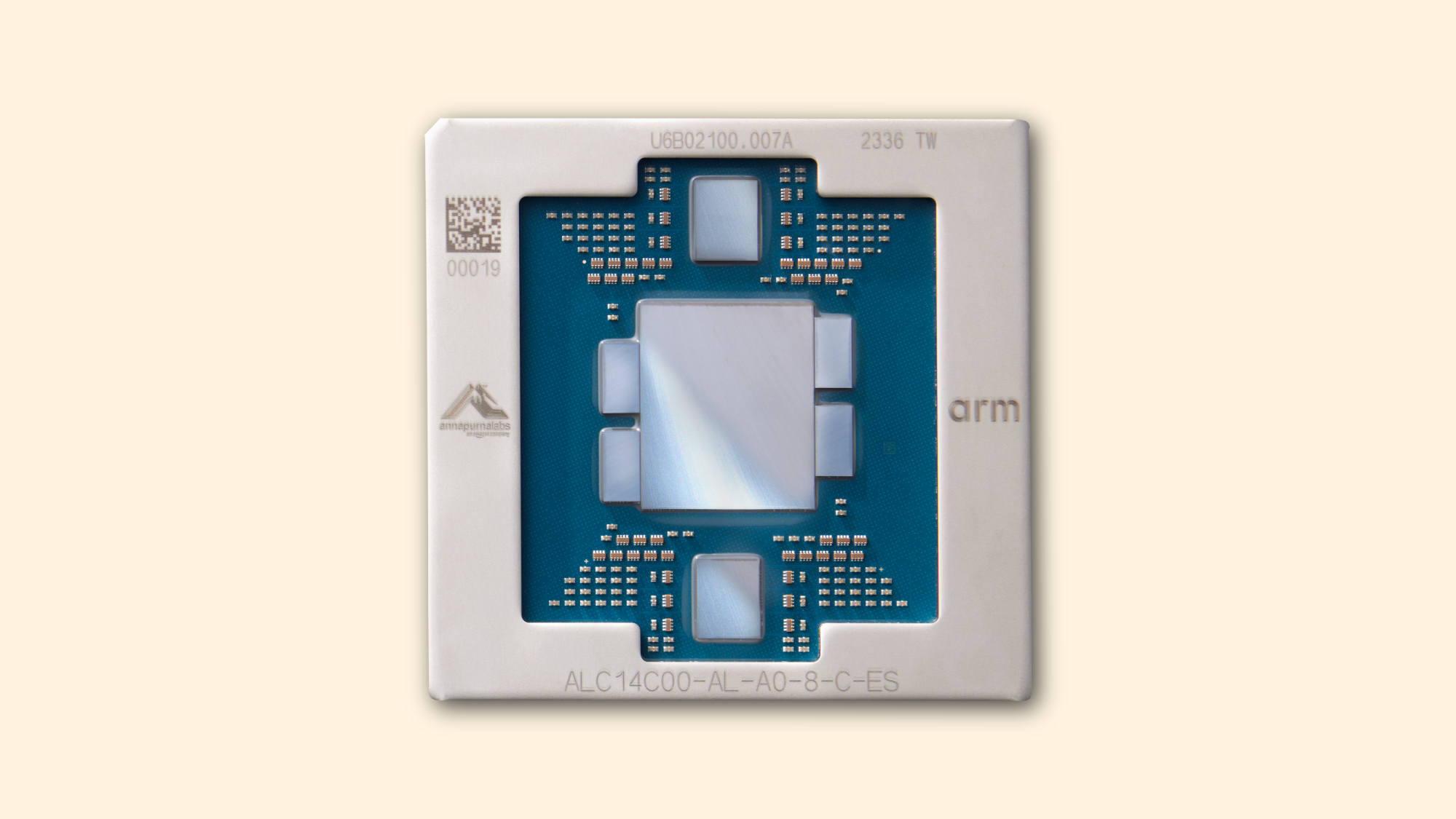
This is where purpose-built CPUs like AWS Graviton become critical. Graviton processors are designed for these continuous, low-latency workloads that define the agentic AI era. That's why companies like Meta are using Graviton for their latest agentic AI workloads—deploying tens of millions of Graviton cores to power AI systems that reason continuously and serve billions of users.
How Graviton addresses the challenge
Agentic systems engage in rapid execution cycles—not just reasoning, but actively retrieving data, calling tools, and taking action before looping back to evaluate next steps. Each cycle requires different parts of the processor to share data quickly.
Graviton chips are designed to minimize the time different parts spend communicating with each other. For AI systems constantly exchanging information during reasoning processes, that speed matters.
Organizations running agentic AI at global scale are choosing Graviton because the architecture matches the workload. Training a model happens in intense bursts. Running an agentic system requires sustained performance and constant adaptation—different work needs different tools.
Why this matters for continuous intelligence
When AI systems serve millions of users continuously, performance and energy efficiency both become essential. Graviton delivers better performance and is our most energy efficient processor. For systems running around the clock at global scale, that efficiency is both environmentally conscious and economically essential. The combination makes it viable to run sophisticated agentic systems continuously for large user bases.

Building infrastructure for systems that never stop thinking
The rise of agentic AI represents a fundamental shift in AI infrastructure. As AI systems become more autonomous and more integrated into daily digital experiences, the requirements evolve.
Processors like Graviton—designed for sustained, low-latency computing rather than periodic training bursts—are becoming the foundation for this new era. The question isn't whether agentic AI will reshape how we work and live. It's whether the infrastructure exists to support it at scale.
Increasingly, that infrastructure is being built on technology designed specifically for systems that never stop thinking.
Learn more about how Graviton chips make cloud computing faster, cheaper, and more energy efficient.