





Recent Updates
Amazon announces watershed restoration project in Northwest Indiana
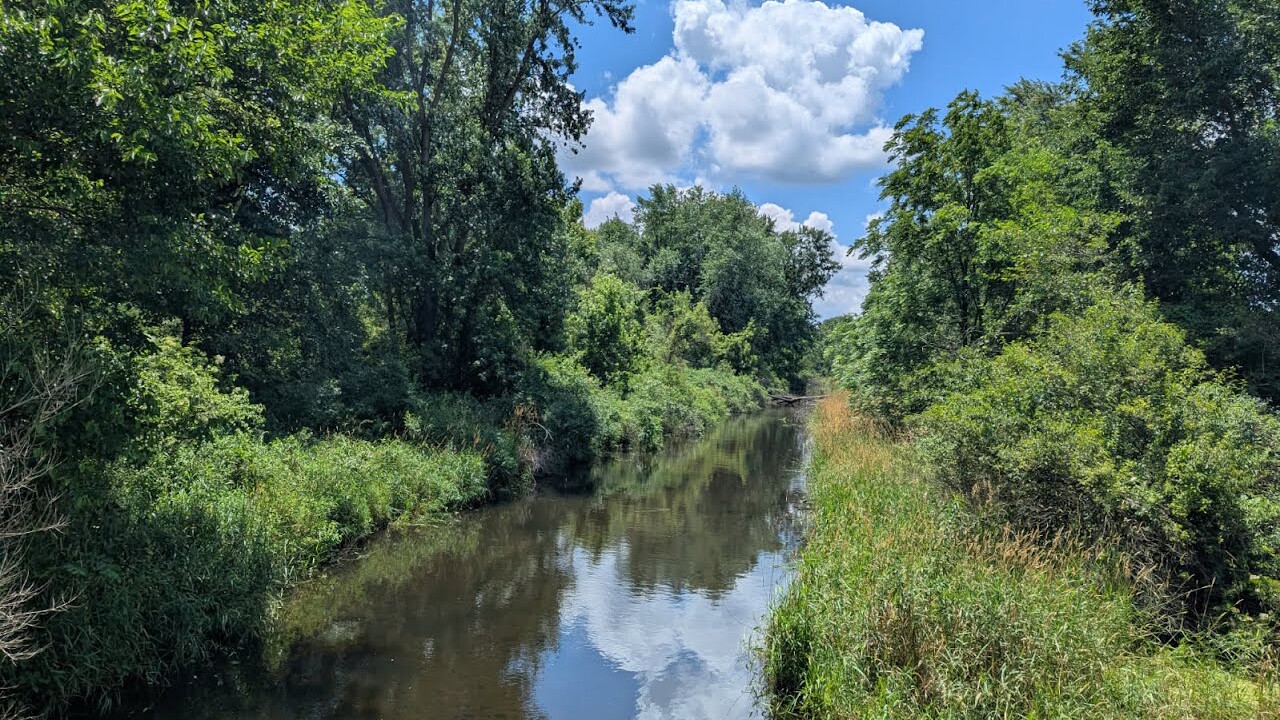
Amazon is announcing its third water replenishment project in Northwest Indiana. This project will support the restoration of approximately 425 acres of habitat along Bogus Run, a waterway feeding into the Kankakee River.
The project, implemented at Shirley Heinze Land Trust’s “Big Eastern” property, will focus on restoring native sand prairie and woodland habitats through long-term land stewardship activities. Shirley Heinze Land Trust acquired the property in May 2025, and Amazon is providing funding to restore it. Implementation is planned from 2027 through 2031 along with ongoing maintenance and monitoring in subsequent years.
Planned improvements include invasive vegetation management across approximately 325 acres, selective woodland restoration across 200 acres, and the establishment of 30 acres of native sand prairie. Together, this work is expected to improve regional water retention and availability by more than 110 million gallons annually, equivalent to the annual water usage of 1,000 U.S. households.
Over time, portions of the watershed have experienced changing drainage patterns, erosion, and habitat loss that can affect water quality and groundwater levels. By restoring native vegetation and thinning overgrown woodlands, the project is designed to help slow surface runoff, improve soil stability, and encourage more natural infiltration of water back into the ground. Native sand prairie species are particularly well-suited to Northwest Indiana’s soils and are known for their deep root systems, which help retain soil moisture, reduce erosion, and support long-term watershed resilience.
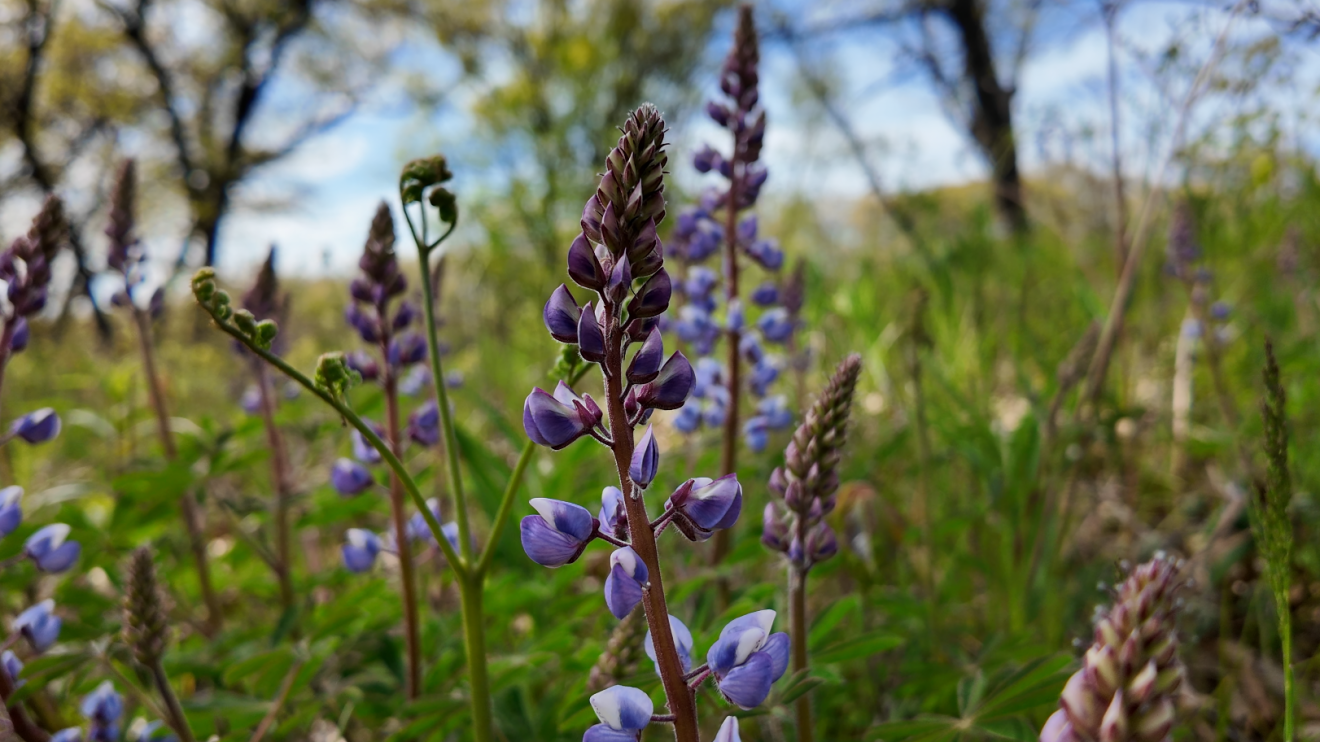
Beyond water benefits, the restoration is expected to enhance habitat for more than 1,000 species of plants, insects, reptiles, amphibians, and mammals—some of which are native species like wild lupine, black oak, sand coreopsis, and numerous sunflowers, milkweeds, and asters that showcase the importance of ongoing restoration efforts to preserving these diverse and interconnected ecosystems.
This project reflects Amazon’s aim to be a responsible water steward in the communities where it operates. It adds to a growing portfolio of more than 50 water replenishment projects globally, including two existing projects in Northwest Indiana that are expected to conserve or improve the quality of at least 100 million gallons of water each year—bringing the region's total to more than 210 million gallons annually.
Amazon launches river revitalization project in India, treating over 200 million liters annually and improving public health
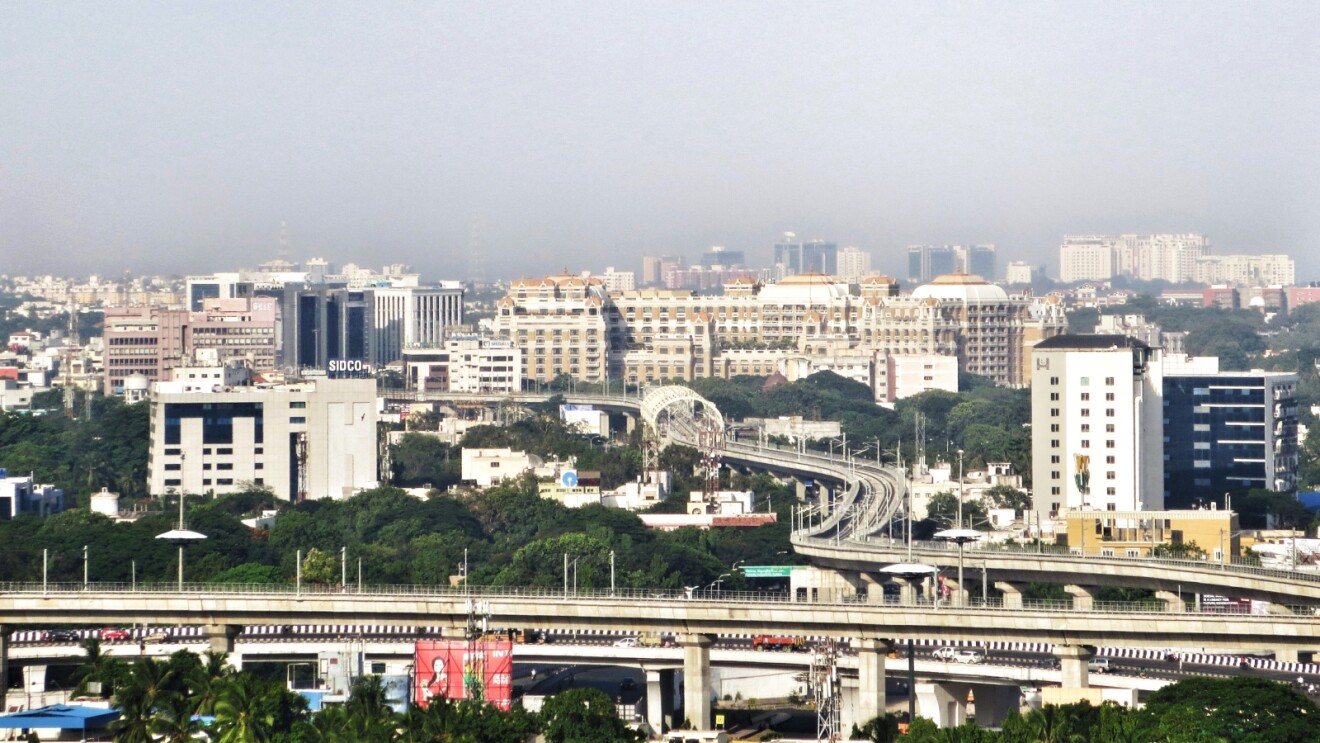
Amazon has announced a ₹10 crore (US$1 million) investment for its first-ever water quality improvement project in Chennai's Adyar River watershed, expected to treat over 200 million liters annually.
The city of Chennai in India currently faces significant wastewater management challenges, with the Adyar River increasingly affected by untreated sewage, industrial effluents, and plastic waste.
The project will feature a modular sewage treatment plant on the Buckingham Canal in Kotturpuram, a key point where untreated wastewater enters the river. This plant will treat sewage from the canal and recycle wastewater for multiple non-drinking uses, improving public health by reducing disease outbreaks linked to untreated sewage.
"Our country faces critical water challenges, with rivers like the Adyar suffering from severe pollution," says Abhinav Singh, vice president of operations for Amazon India and Australia. "This project will not only help restore river health but also provide the community with a valuable new source of treated water.”
The treated water will bring four distinctive benefits:
- Reducing pollution and supporting river restoration by releasing treated water into the Adyar River
- Addressing Chennai's groundwater crisis by channeling treated water into depleted aquifers, improving long-term water security for the region.
- Supporting the city's green spaces by providing irrigation for a Miyawaki forest—a dense, fast-growing woodland created using a Japanese reforestation technique—and public parks in the vicinity.
- Community organizations will be able to collect treated water using tanker trucks for use by local schools and colleges for essential needs like toilet flushing and campus irrigation.
The project is being implemented together with SIV Impact Inc. and in coordination with Chennai Metropolitan Water Supply and Sewerage Board, and Tamil Nadu Water Resources Department.

Amazon announces two water replenishment projects in Germany, set to save 370 million liters annually
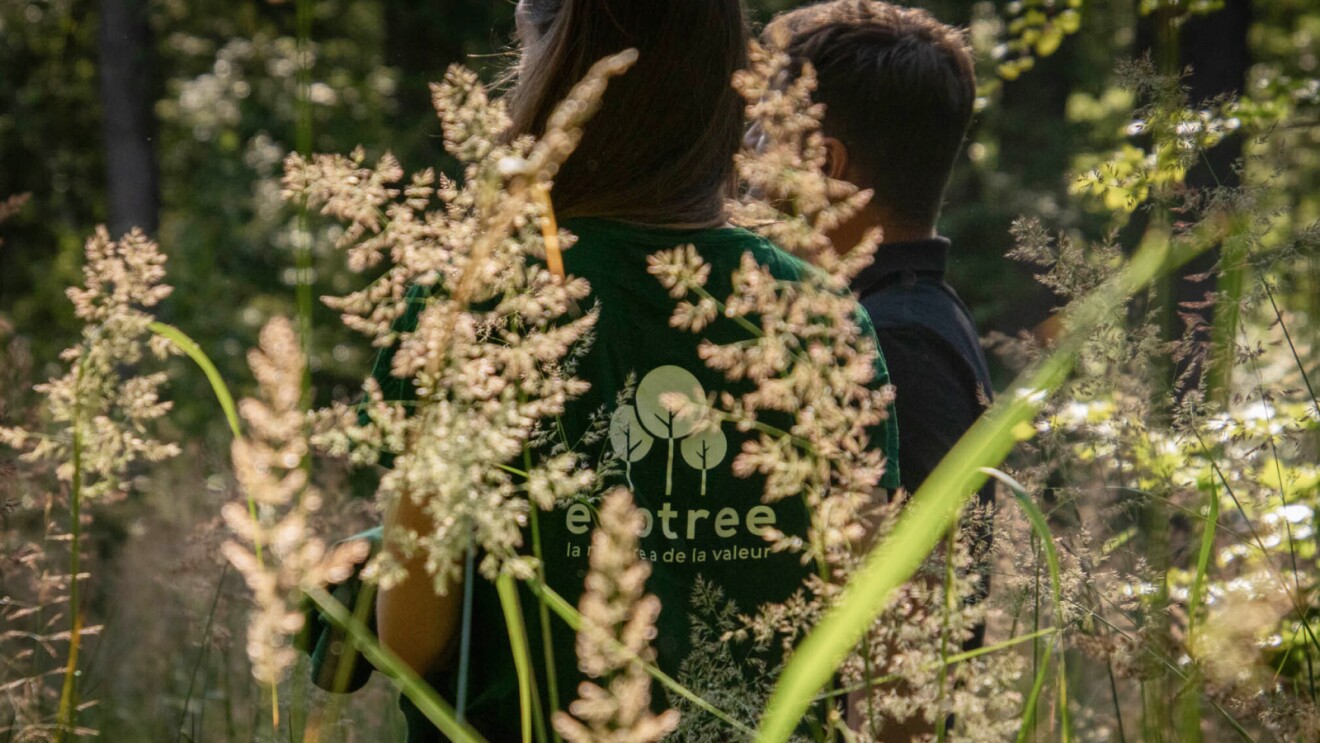
Amazon has announced two water replenishment projects in Germany: an innovative urban leak detection initiative in Frankfurt and a wetland restoration project in the Spessart Forest upstream of the city. Together, the projects are expected to return nearly 370 million liters of water annually to the community once completed.
The projects are being carried out in collaboration with Shayp, a water technology scaleup built on Amazon Web Services (AWS) cloud infrastructure, and EcoTree, a European nature project developer.
Addressing urban water loss through technology
The leak detection initiative in Frankfurt tackles a critical yet often overlooked challenge: in many buildings, water leaks are not detected promptly and can account for a substantial share of total water use. Amazon is funding the installation of Shayp's smart Internet of Things (IoT) monitoring technology in 500 buildings across Frankfurt by 2028, at no cost to building owners and operators. Participating buildings, including public facilities such as schools, hospitals, and medical centers, will receive automated leak detection 24/7, enabling immediate response to water waste.
Installation of Shayp sensors will begin this year. Once installed, each sensor provides continuous 24/7 monitoring—meaning water savings start immediately and are expected to accumulate year after year, well beyond the installation period. The AWS cloud-based technology enables real-time data analysis and rapid response for detected leaks, maximizing water conservation impact from day one. Shayp will work with German facility management group WISAG to recruit participating buildings.
Restoring nature's water systems upstream of Frankfurt
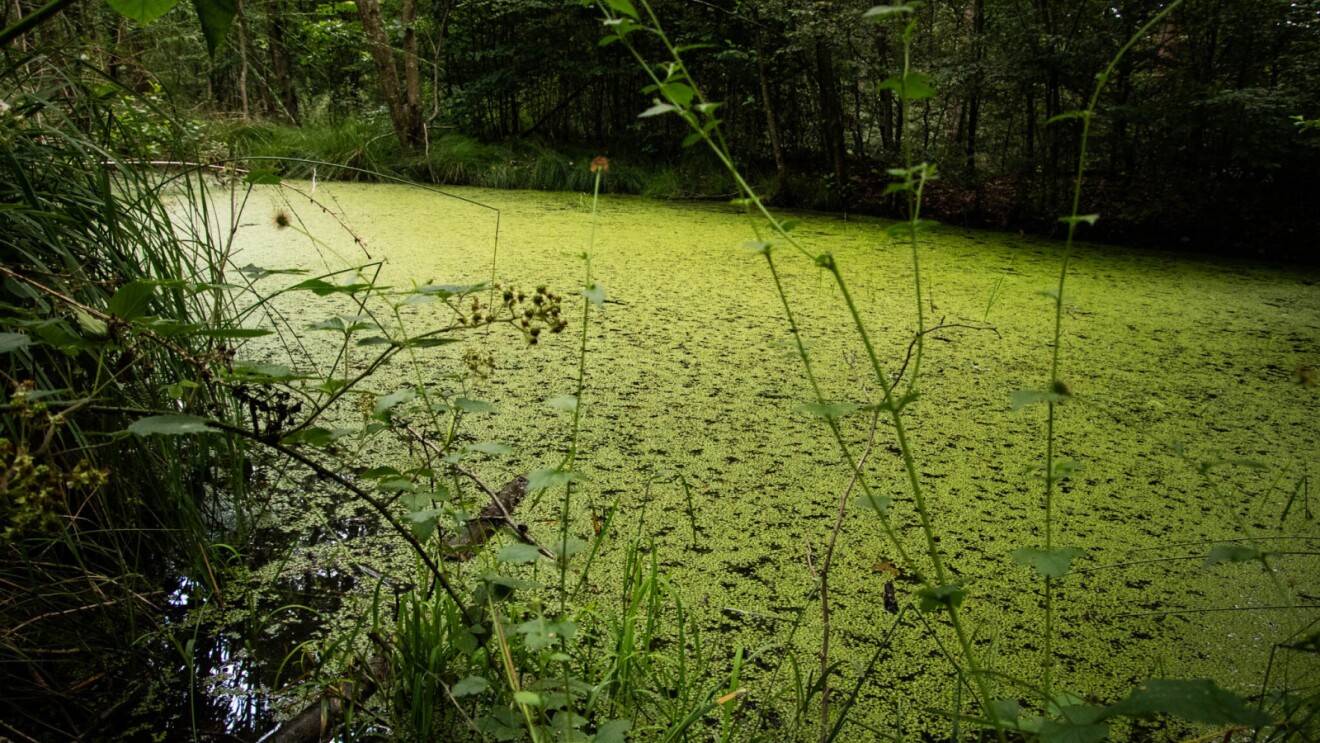
The wetland restoration project, implemented by EcoTree, is expected to strengthen natural wetland conditions across 200 hectares in the Spessart Forest near Würzburg, Bavaria—a region upstream of Frankfurt within the greater Main watershed. Through strategic excavation work, the project will create around six hectares of new wetland habitats that slow water flow, increase retention capacity, and promote groundwater recharge as water filters naturally back into the earth. The initiative is expected to replenish more than 57 million liters of water annually when completed by the end of 2027.
Beyond water restoration, the project will contribute to better habitats for endangered while stabilizing microclimates and sustaining carbon storage in the mixed forest.
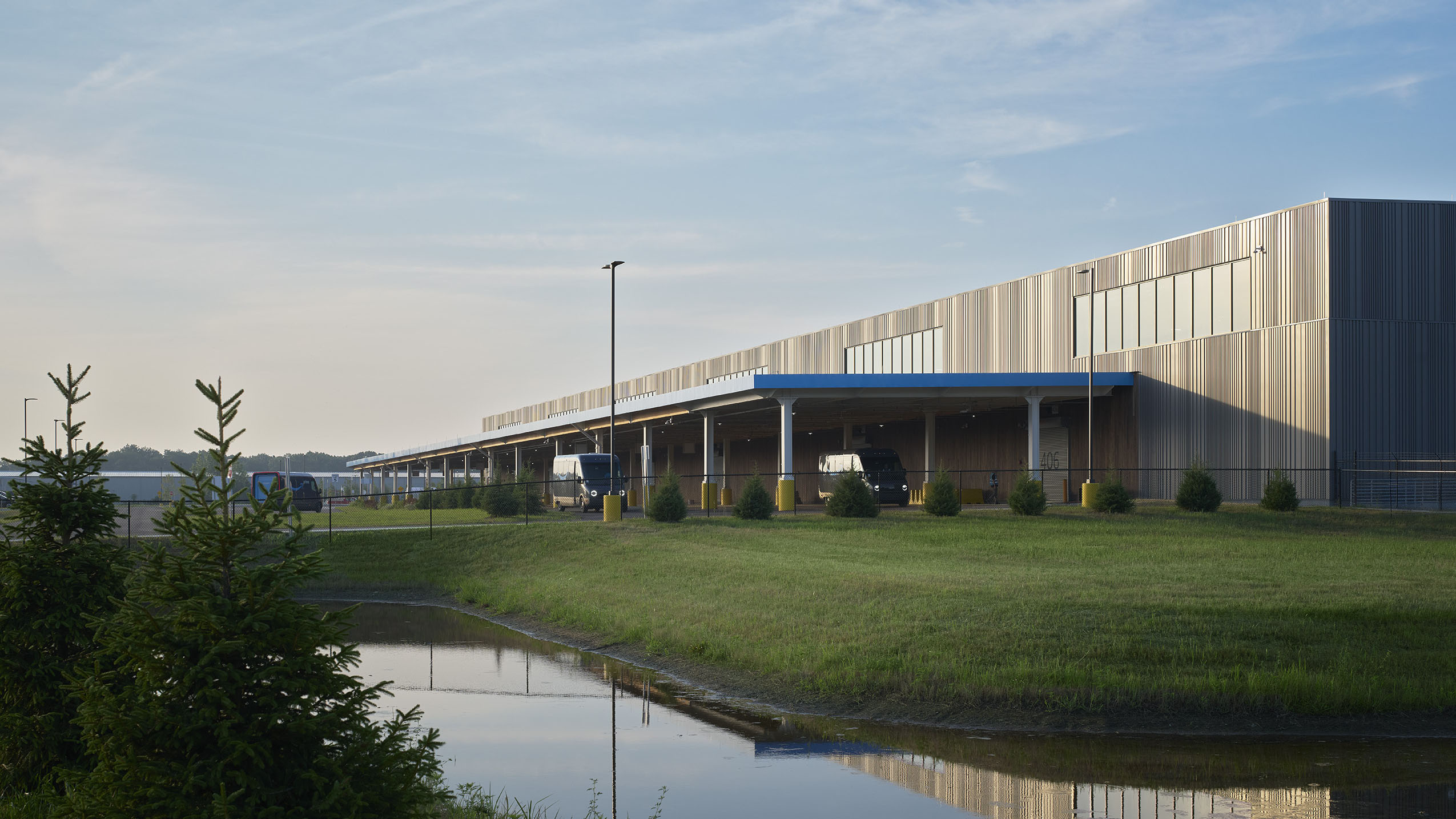
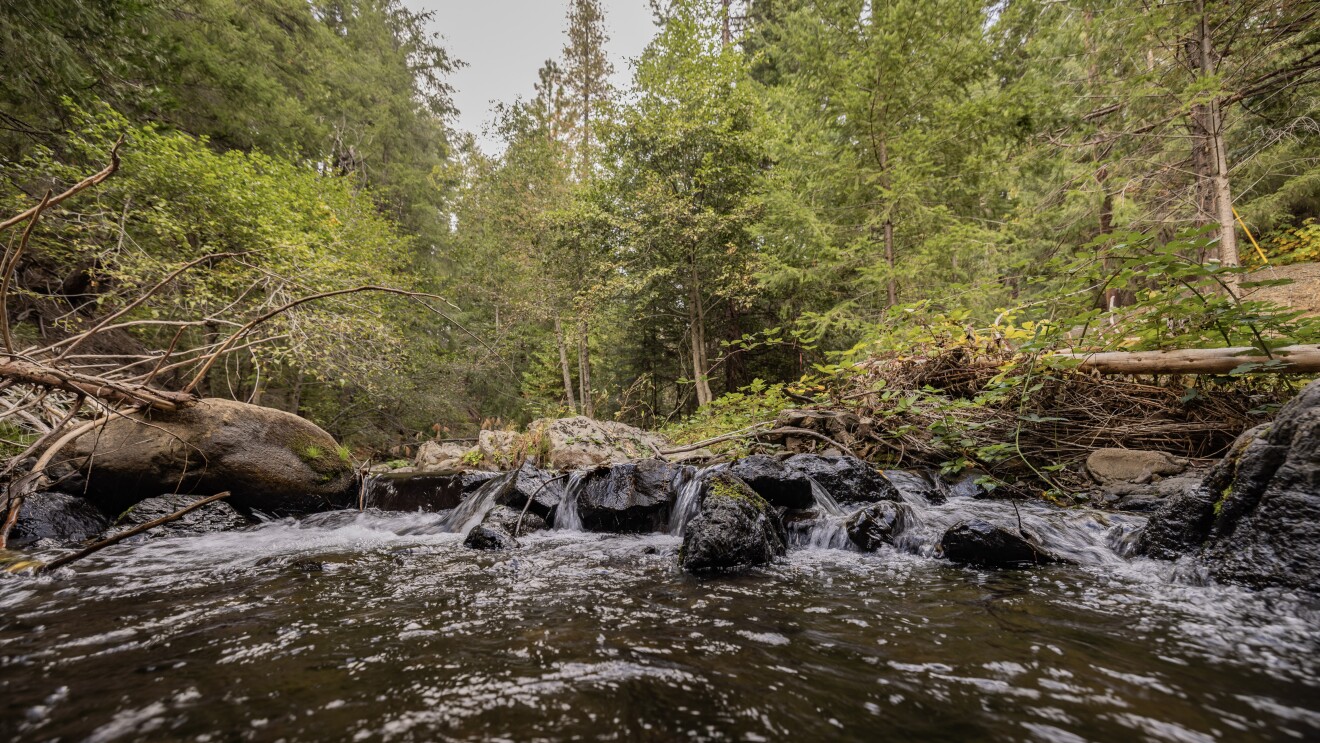
Amazon is supporting watershed restoration in the Upper Mokelumne River Basin within Eldorado National Forest, a critical drinking water source for San Francisco’s East Bay.
The project uses a Forest Resilience Bond, an innovative financing model developed by Blue Forest and the World Resources Institute, which blends public and private funding to accelerate forest restoration at a scale and pace that public funding alone cannot achieve. Key collaborators include the Upper Mokelumne River Watershed Authority (UMRWA), U.S. Forest Service, the Miwok and Washoe Tribes, and utilities like East Bay Municipal Utility District (EBMUD) and Pacific Gas & Electric Company (PG&E).
The forest filters, stores, and regulates the region's water supply, but like many Western forests, the region is increasingly vulnerable to wildfires after decades of unchecked vegetation growth. Restoration work—including mechanical and hand thinning, and native tree restoration in degraded areas—will take place ahead of wildfire season this spring and summer. These efforts reduce fire risk and vegetative water demand while increasing the amount of water that reaches communities that depend on it.
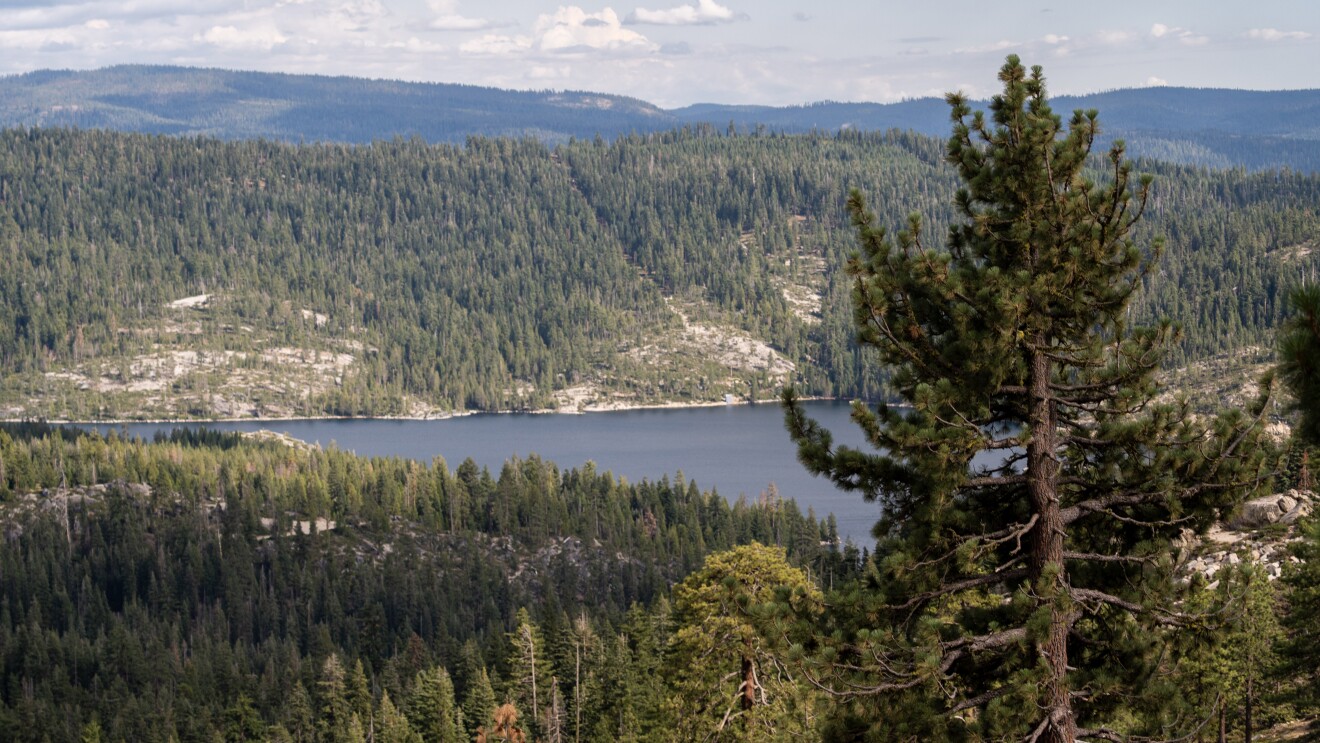
The 26,000-acre restoration project, overseen by UMRWA, is expected to increase downstream water availability by more than 264 million gallons annually—equivalent to roughly 400 Olympic swimming pools—and support the protection of several vulnerable species, including the Sierra Nevada yellow-legged frog and California spotted owl. The project is also designed to provide additional wildfire protection across Alpine, Amador, Calaveras, and El Dorado counties with watershed and water quality benefits are also expected to reach communities in San Joaquin, Alameda, and Contra Costa counties.
"No single organization, agency, or community can solve the wildfire crisis alone,” says Nick Wobbrock, co-founder and chief conservation officer at Blue Forest. “Reducing catastrophic wildfire risk, protecting water quality and quantity, and safeguarding the communities in between—these are shared challenges that demand shared solutions. Blue Forest was built on the belief that when the right partners come together around proven science with innovative funding and financing, we can restore resilience at a landscape scale.”
This project reflects Amazon’s aim to be a responsible water steward in communities where we operate and adds to our more than 45 water replenishment projects globally.
Amazon launches project to reduce water loss in Italy, saving 200 million liters of water every year
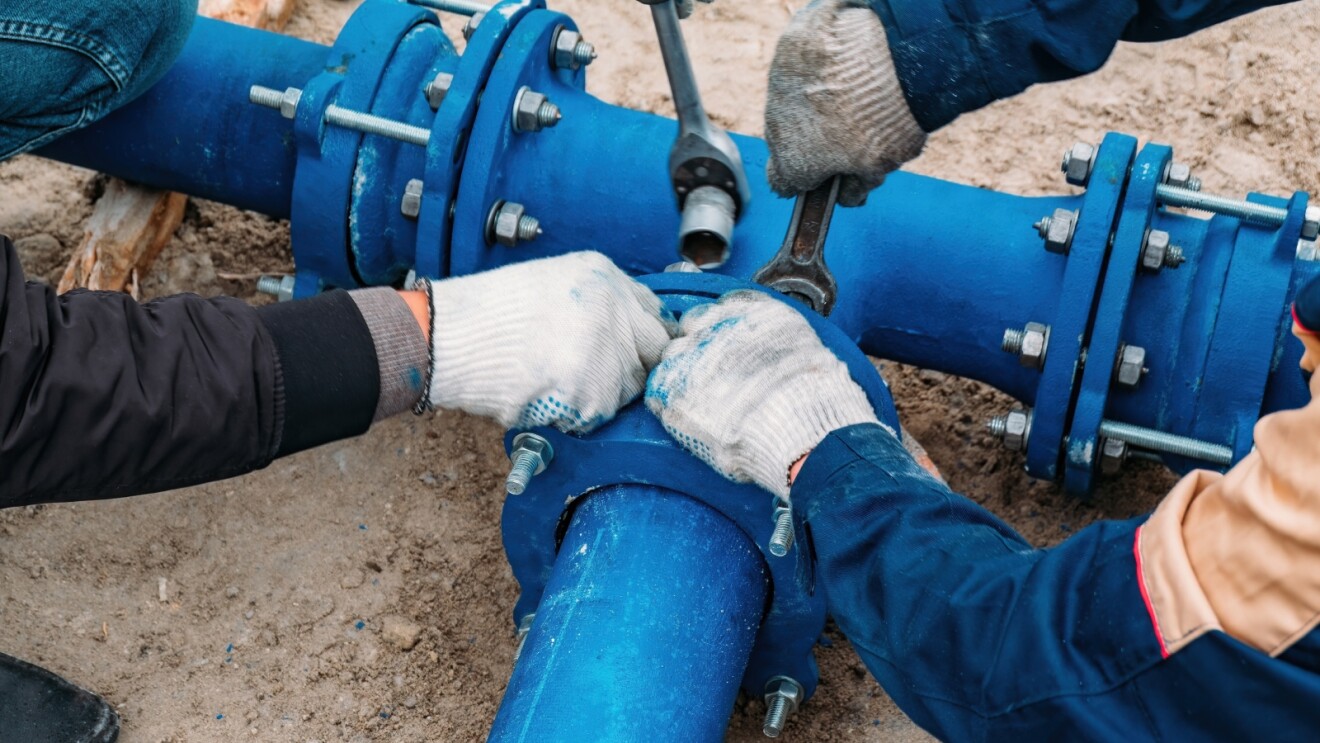
Amazon has announced it is working with Italian water technology provider Aganova to reduce water loss in the country’s Bergamo region, using AI-powered acoustic leak detection technology.
The project will deploy technology built on AWS Cloud services to identify and repair leaks in major water pipelines, saving a projected 200 million liters of water annually once completed (80 Olympic pools, or enough to supply the annual water needs of approximately 1,300 households) over the next 10 years.
Official data indicates that Italy loses over 40% of the water introduced into its public supply networks through leaks, a level that ranks among the highest in Europe and underscores the importance of systematic leak detection and repair.
"Water loss through aging infrastructure is a critical challenge facing communities across Italy and around the world," said Sergio Gianotti, head of AWS Public Sector in Italy. "By combining Aganova's advanced leak detection technology with AWS Cloud computing capabilities, we're helping water utilities identify and address leaks more efficiently, preserving precious water resources for communities."
The project will use Aganova's AI-powered acoustic leak detection technology to identify the precise location of leaks for repair in large water pipelines, while the water savings will be verified through the Volumetric Water Benefit Accounting methodology for leak detection, repair projects, and project monitoring for 10 years.
This initiative, a significant step in Amazon's efforts to support water conservation in Italy, is similar to the project Amazon launched with Aganova in São Paulo, Brazil, a 10-year program running since 2025 that addresses water infrastructure challenges in major urban areas. The project will inspect approximately 64 kilometers of large-diameter pipelines and is expected to generate an estimated 210 million liters of water savings each year.
Uniacque, the company managing the integrated water service in the Bergamo province, is committed to reducing water losses in its distribution network as part of its efforts to address water scarcity issues in the region.
“Uniacque is deeply engaged in developing innovative technological solutions aimed at optimizing water efficiency and granting positive sustainable impact on our territory and communities,” said Pierangelo Bertocchi, chief executive officer of Uniacque S.p.A. “The collaboration with Aganova and AWS goes exactly into this direction and helps us to prevent drinking water loss by monitoring our big water intakes.”
Amazon invests $235 million to bring more clean water to Oregon communities
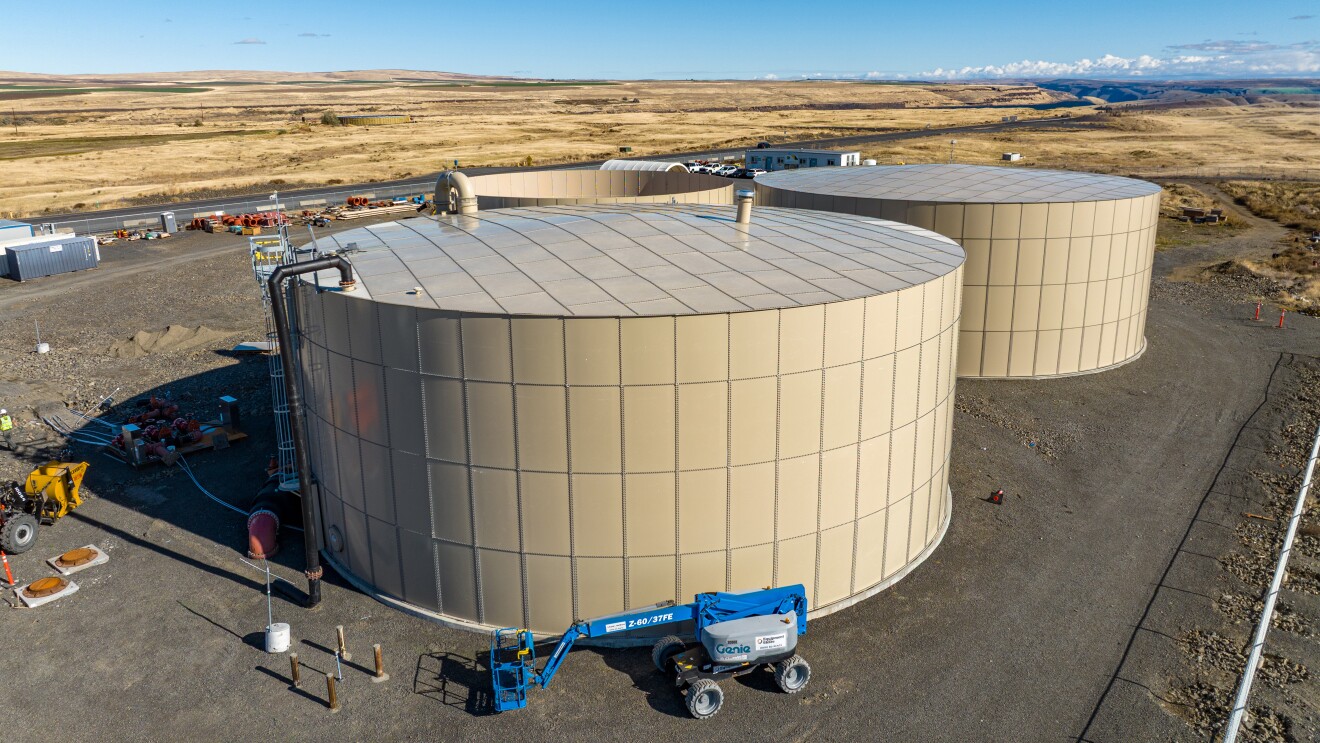 Aerial view of the City of Umatilla's new $144.5 million Columbia River Intake and Water Treatment Facility, expected to be completed in May 2026.
Amazon is investing $235 million in two surface water supply projects in Oregon that will replace aging infrastructure while helping local communities responsibly conserve groundwater sources. Amazon data centers will use roughly 5% of the combined system capacity, with the remaining 95% serving regional industrial and municipal needs.
The investments, which make up 96% of the total $245 million project cost, include $144.5 million for the City of Umatilla's new Columbia River Intake and Water Treatment Facility, and $90.6 million for two new surface water treatment plants serving the Port of Morrow.
The City of Umatilla facility addresses a critical regional challenge: declining groundwater levels in Umatilla County, which were designated as Critical Groundwater Areas by Oregon Water Resources Department. By tapping into Columbia River surface water instead of groundwater aquifers, the project will provide more sustainable water sources for both the broader community and Amazon data centers.
The City of Umatilla facility will provide approximately 80 million gallons annually for Amazon data center cooling operations—equivalent to irrigating 109 acres of land (or less than one center pivot), a small fraction of Umatilla County's 132,558 acres of irrigated farmland. The facility has been designed to expand to produce up to 1.7 billion gallons annually of potable drinking water for city residents—more than 17 times Amazon's planned usage. The project also replaces a 60-year-old river intake structure with a new system that will serve the treatment facility, city water demands, and the Wanaket Wildlife Area.
At the Port of Morrow, the two new treatment plants will have a combined capacity of 10 billion gallons annually. Amazon data centers will use approximately 5% of this capacity, or 455 million gallons—equivalent to irrigating 620 acres of land in a region with 115,072 total acres under irrigation. The remaining capacity will be available to serve other industrial customers across the Port's 3,600 acres of industrial parks.
The Port of Morrow facilities are expected to be completed by April 2027. The City of Umatilla’s surface water treatment facility is expected to be completed by May 2026 and new Columbia River intake structure by April 2028.
These projects help Amazon make progress toward our commitment to be water positive in AWS direct operations globally by 2030, returning more water to communities than we use in data center operations. Amazon has operated in the region since 2011, when we opened our first Pacific Northwest data center at the Port of Morrow.
December 19, 2025 8:59 AM
Amazon and City of Hermiston create innovative aquifer storage and recovery project to strengthen regional water supply
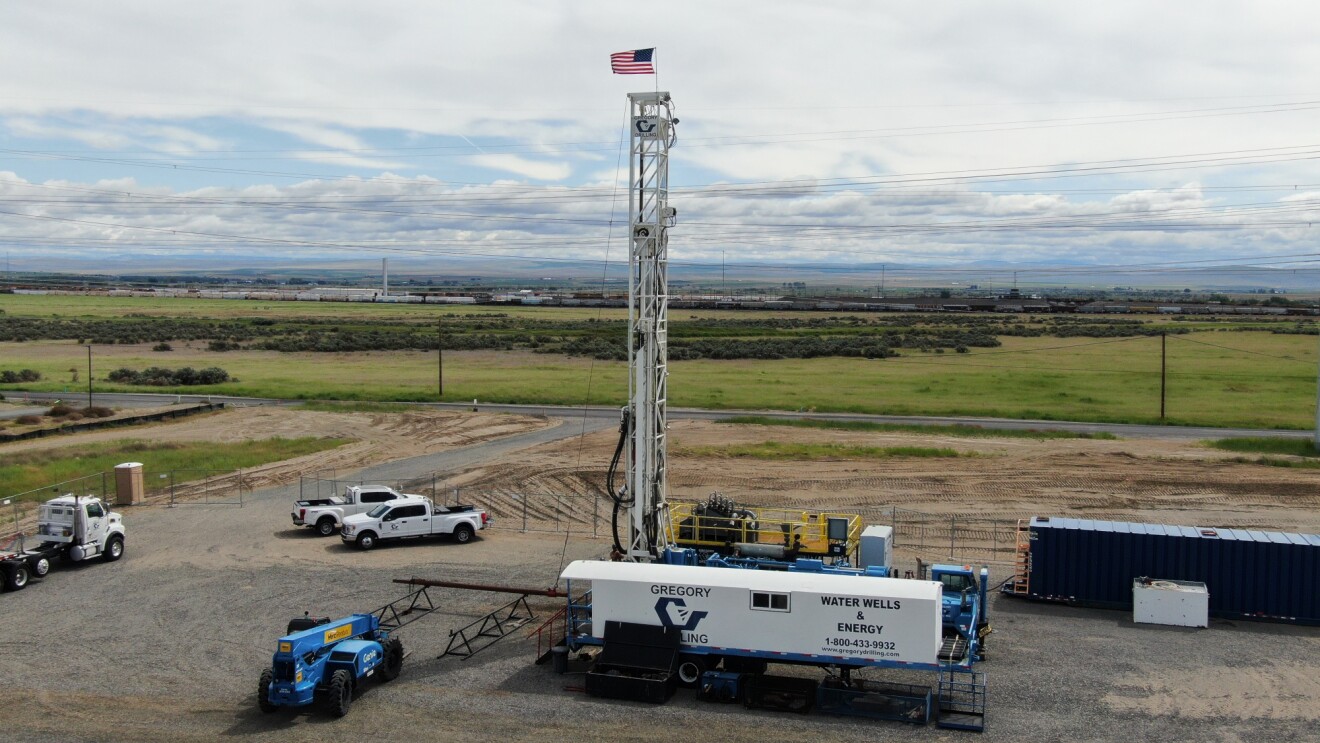
Amazon and the city of Hermiston announced today that Amazon is funding an aquifer storage and recovery project that the city will own and operate.
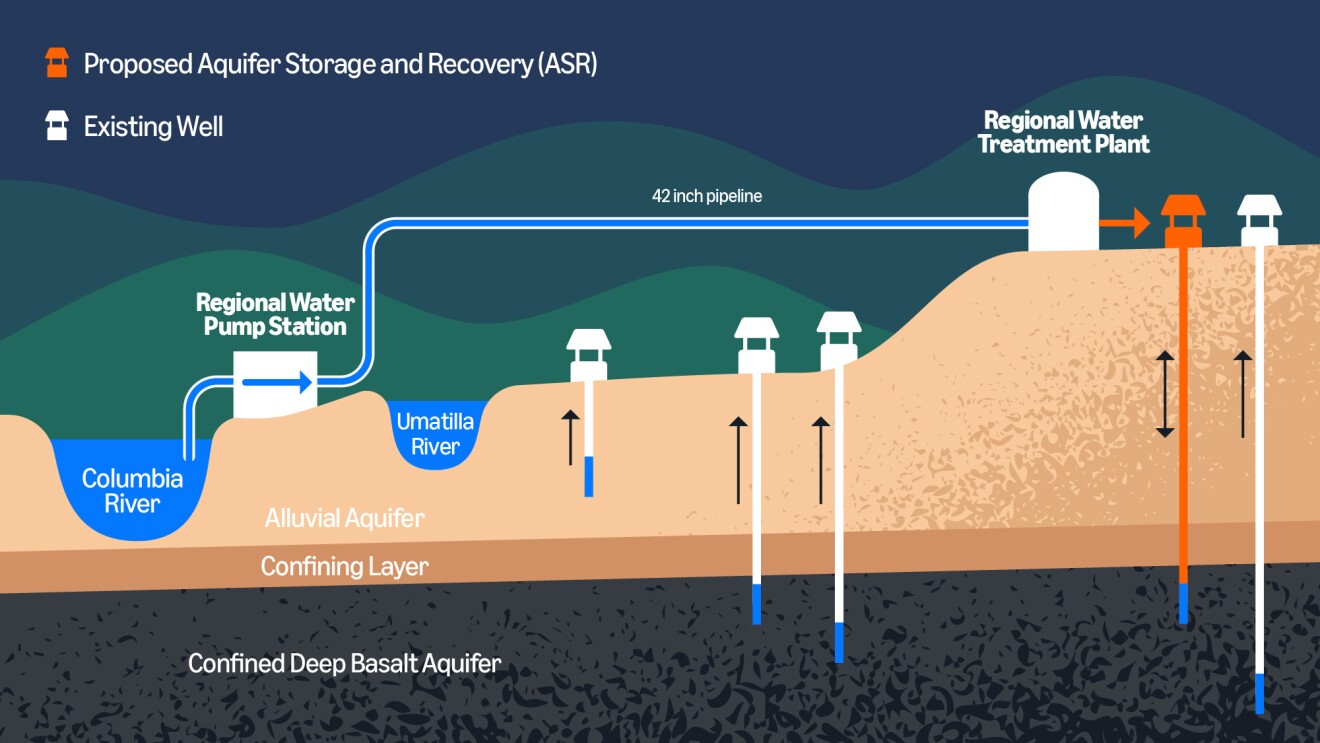
The project will store 1.2 billion gallons of water underground during winter months for year-round community use, and will help recover water sustainably and drive long-term resiliency in Eastern Oregon. It also demonstrates how the public and private sectors can work together on infrastructure that benefits local communities and the environment.
The system diverts Columbia River water from the Port of Umatilla’s Regional Water System during winter months when flows reach their peak levels. Before storage, the water is treated to meet drinking-standards, ensuring quality and safety. Once treated, the water is injected into a deep basalt aquifer, an underground rock layer that naturally stores water, which is also used for the municipal water supply. This winter season diversion minimizes impacts on fish populations and agricultural operations that depend on river water during warmer seasons, particularly droughts.
Timeline and impact
The project is expected to replenish 400 million gallons of water before the end of 2027—and when it’s fully operational by 2030, that will increase to a total of 1.2 billion gallons. A 25-year agreement ensures these benefits extend well into the future, providing long-term water security for the community.
“This work with Amazon represents a significant investment in Hermiston’s future,” said Mark Morgan, assistant city manager for the city of Hermiston. “By collaborating together, this project will benefit the local farmers, environment, and wider community, allowing us to sustainably grow well into the future.”
“After twenty years of living in the Pacific Northwest, I see firsthand how our communities depend on thoughtful water stewardship,” said Brandon Oyer, director of energy and water at AWS. “Amazon is investing in innovative water solutions like this Hermiston project, not just to support our operations, but to strengthen the entire community’s water resilience for generations to come.”
November 17, 2025 3:00 AM
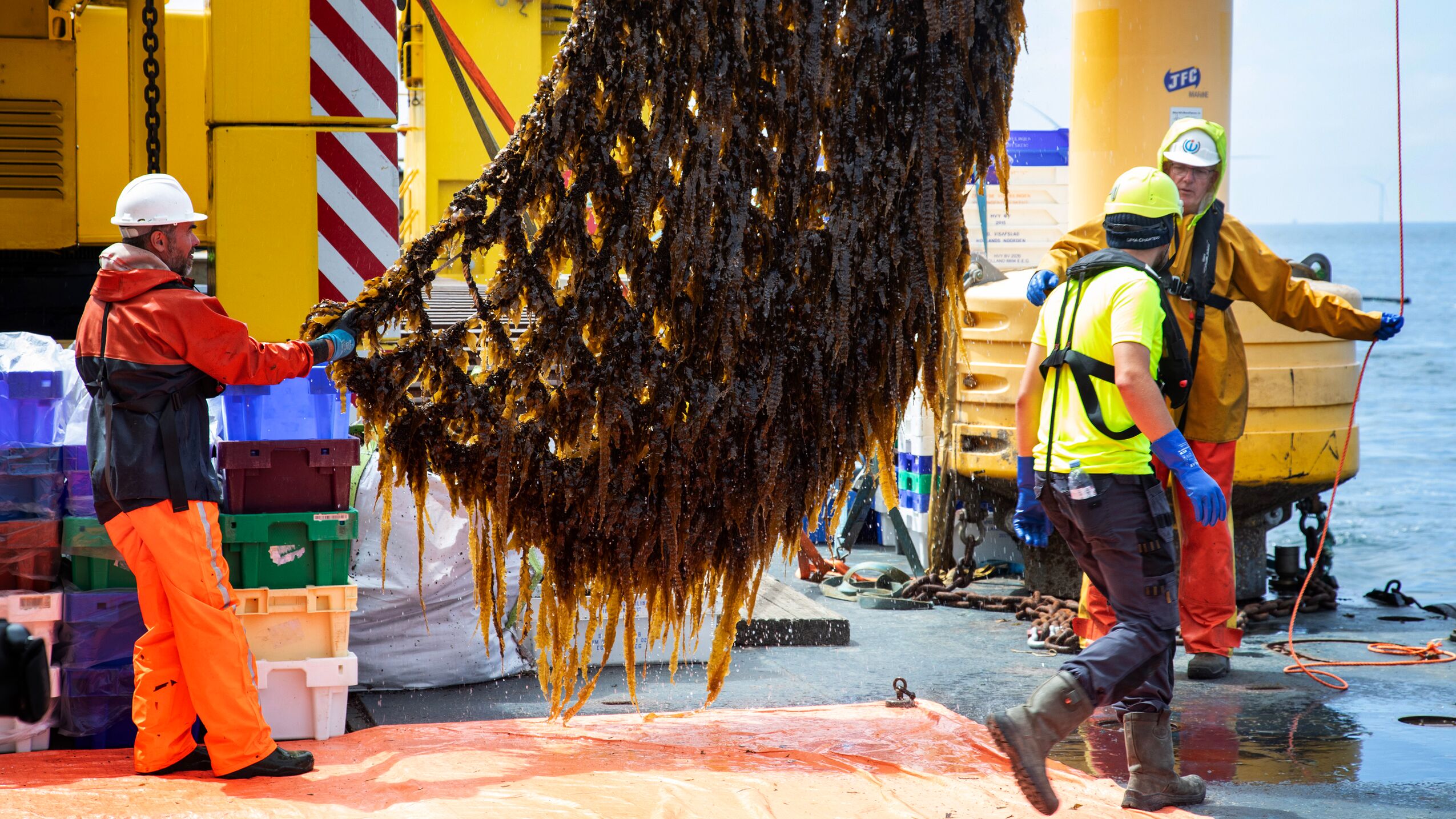
Amazon announces new projects that will harness nature to restore billions of liters of water
Amazon is launching four water replenishment projects that are expected to restore over 2 billion liters of water annually. These nature-based solutions (NBS) to improve habitats and ecosystems.
Interventions like constructing wetlands and promoting healthy soils help collect, purify, store, and distribute freshwater, addressing water security challenges more effectively and sustainably than engineered infrastructure alone. Altogether, Amazon has announced more than 22 similar projects naturally harnessing the environment, which are expected to replenish or improve the quality of more than 11 billion liters of water each year–enough water to fill 4,400 Olympic swimming pools.
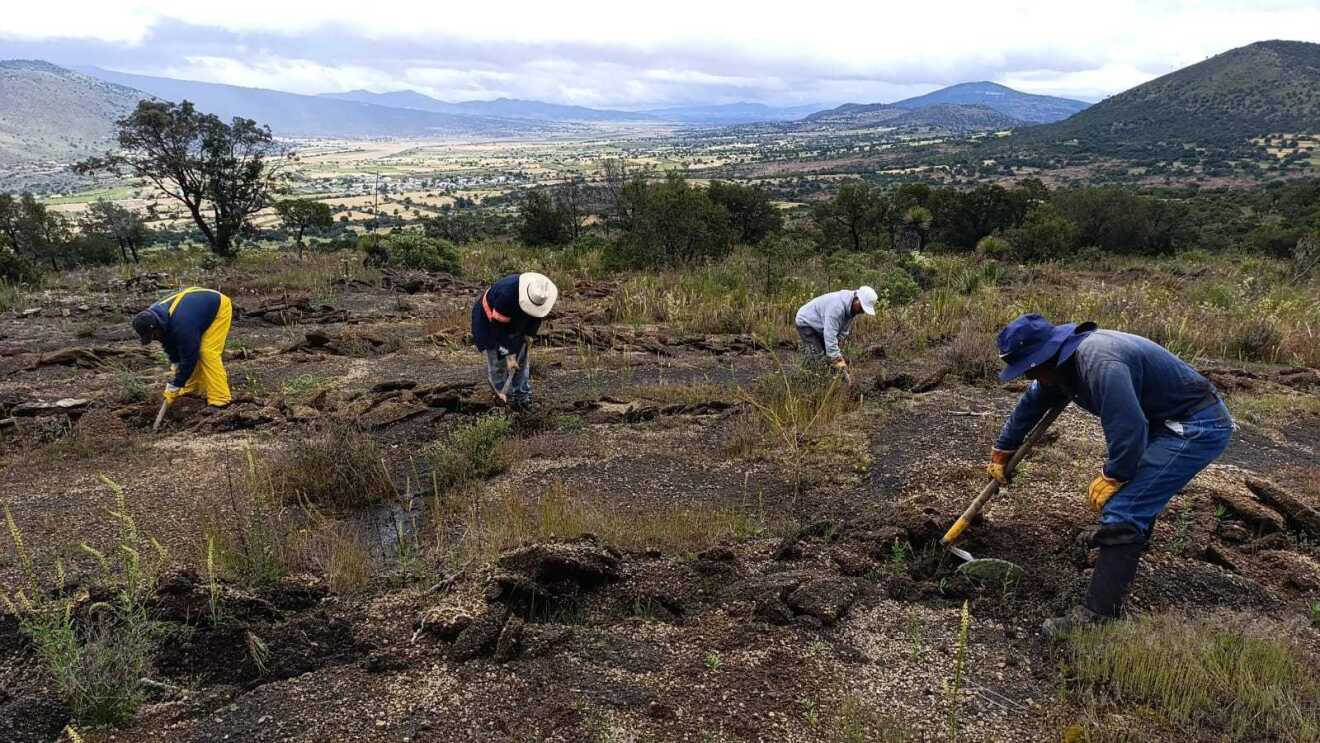 Reforestation on ripped soil, a technique that breaks up the compacted surface layer to improve aeration and water infiltration. This process promotes deeper root growth and supports the successful establishment of the planted trees. The photo is from previous work completed by Toroto.
Near Guadalajara, Mexico, Amazon is working with environmental company Toroto to support a watershed restoration project that aims to replenish 150 million liters of water each year. The project will implement multiple NBS interventions across 259 hectares—roughly the size of 500 footballs fields—like using vegetation and planting practices to reduce runoff and increase recharge. This will help absorb more rainwater to stop pollution flow into the Santiago River basin, where water quantity and quality are an ongoing challenge.
In New Mexico, we’re supporting the National Audubon Society’s program to provide water to the Rio Grande—a major U.S. river that experiences recurring droughts—and two urban wetlands. This initiative is expected to help replenish over 120 million liters of water annually.
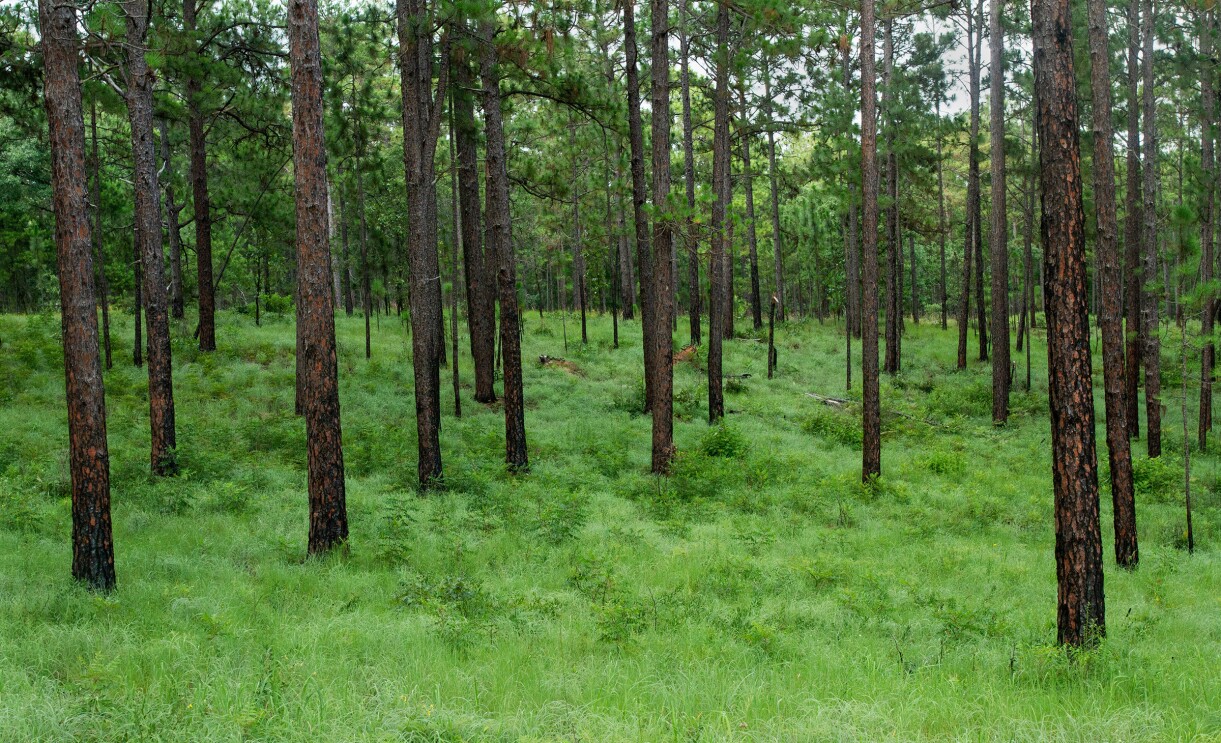 From Amazon's North Carolina project with NFWF, a high-quality longleaf pine savanna.
Our North Carolina project with the National Fish and Wildlife Foundation aims to restore and protect 20,000 acres of longleaf pine forests in the Pee Dee River basin. By bringing these forests back to health, such as by using prescribed burns to remove competing vegetation, the project will help more rainwater soak into the ground and nearby rivers—resulting in in an expected 1.6 billion liters of water replenished annually.

This is the before of The Rivers Trust project with Amazon in Fyfield. Fyfield is a village and civil parish in the Epping Forest district of Essex, England.
In the UK, we’re expanding our work with The Rivers Trust in the Thames River basin. This initiative will help restore natural flood management by removing barriers to reconnect the river to its floodplain, and is expected to help replenish approximately 215 million liters of water annually while supporting biodiversity.
Amazon water projects in Indiana expected to conserve or improve the quality of at least 100 million gallons of water each year
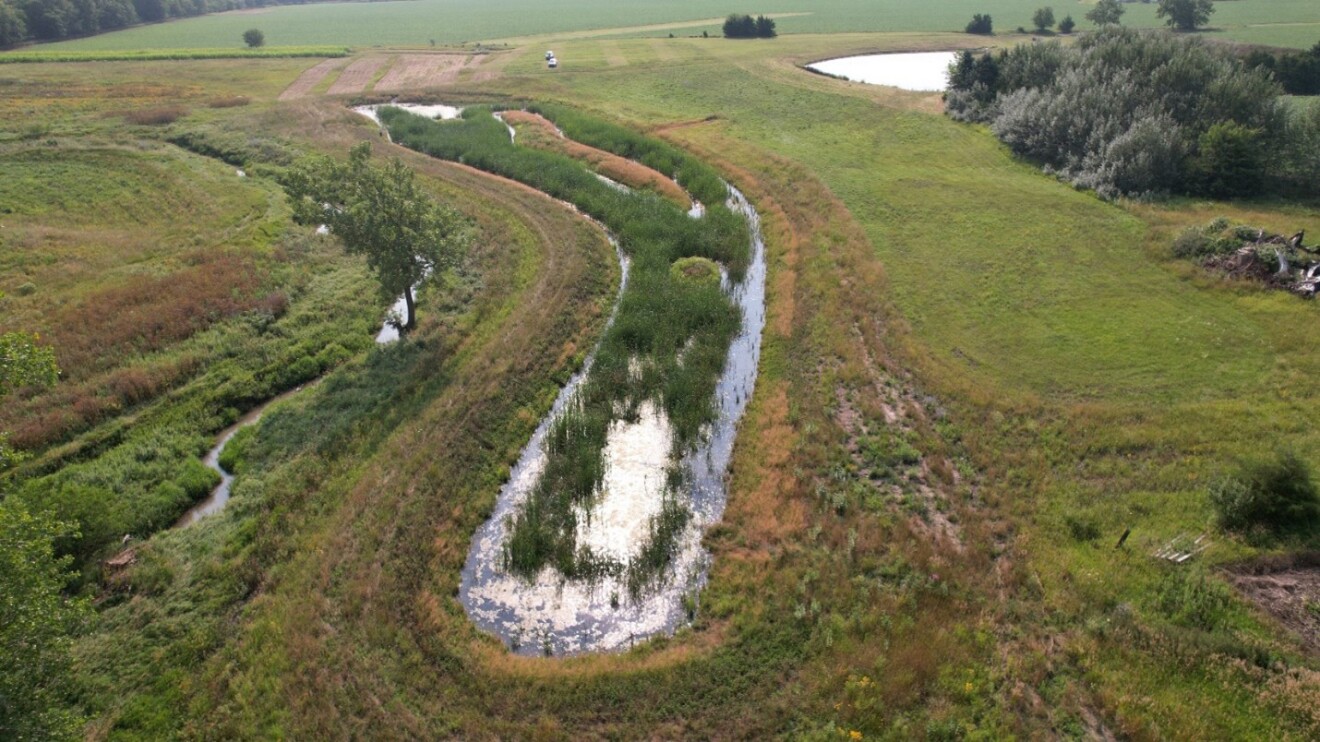
Amazon announced two innovative water replenishment projects in Indiana. These initiatives underscore Amazon’s dedication to being a good water steward everywhere we operate.
Smart irrigation at Kankakee Aquifer
One of the projects, located in the Kankakee Aquifer region in northwest Indiana, focuses on enhancing agricultural irrigation efficiency driven by AI. We worked with crop-intelligence company Arable to deploy precision irrigation technology that’s built on AWS, using AI, to collect crucial data such as rainfall and crop water needs, which enables farmers to make better decisions about irrigation.
Watershed restoration
The second project, in collaboration with The Wetlands Initiative, involves creating a “Smart Wetland” in the Kankakee River Watershed. This approach naturally removes excess nutrients from drainage water before it enters local waterways.
Collectively, these two projects are expected to conserve or improve the quality of at least 100 million gallons of water annually through enhanced irrigation efficiency and natural filtration processes. The projects are one part of how AWS is making progress toward becoming water positive by 2030.
AWS’s holistic approach to water stewardship
AWS continually innovates to reduce water use in our data centers. In our Indiana data centers, we aim to use the most water-efficient technology, which uses the outside air to directly cool servers without the use of water for the majority of the year. Our global water use efficiency has improved by 40% since 2021, now standing at 0.15 liters per kilowatt-hour. And in our Indiana region, our standard design will use water for less than 2% of the year.
These projects add to Amazon’s more than 30 existing water replenishment projects worldwide, which are expected to return more than 14 billion liters of water annually to communities once completed. Around the world Amazon is working to reduce our water footprint by conserving and reusing water across our on-site operations and our communities. Learn more about Amazon’s water stewardship efforts by visiting our sustainability website.
How a new cross-sector initiative from Amazon is helping AI do the most good for water and the planet
When you think of AI, water conservation might not be the first thing that comes to mind. But right now, AI technologies are helping communities worldwide protect their most precious resource: water.
How we’re turning digital innovation into environmental action
Technology is helping Amazon make progress toward its data center commitment to become water positive by 2030, meaning we’ll return more water to communities than we use in our direct operations. AI helps our water replenishment projects predict flood risk, improve agricultural irrigation, and solve for leaks in aging infrastructure.
Now, through a new initiative called the Water-AI Nexus Center of Excellence, Amazon is sharing its expertise with the broader technology industry. The Center creates a collaborative platform where water utilities, researchers, and technology companies can work together to ensure that digital progress and water sustainability advance hand in hand.
Here are the four strategies driving that progress:
- Enhancing water efficiency: Our data centers use cloud-based technologies to monitor water use in real time, quickly address leaks, and implement innovative cooling solutions that allow many facilities to use zero water for cooling during 95% of the year.
- Embracing sustainable water sources: Amazon is pioneering the use of recycled water for data-center cooling and implementing rainwater, helping preserve valuable drinking-water supplies across more than 120 locations in the U.S. by 2030.
- Supporting community water reuse: Non-contact cooling water from AWS data centers is channeled to local communities for irrigation and other uses, extending the water’s life cycle.
- Investing in water replenishment: Amazon is working with leaders in our communities actively replenishing water supplies in the regions where it operates through targeted watershed restoration projects and community water initiatives, ensuring healthy water resources for generations to come.
Why it matters
As cloud computing and AI services grow, so does the potential water demand for cooling data centers. Amazon’s years of developing water-efficient approaches within our data centers are now being shared industry-wide through this initiative, helping ensure technological advancement doesn’t come at the cost of water sustainability.
September 17, 2025 9:06 AM
AWS to pioneer Hong Kong’s first recycled-water data center
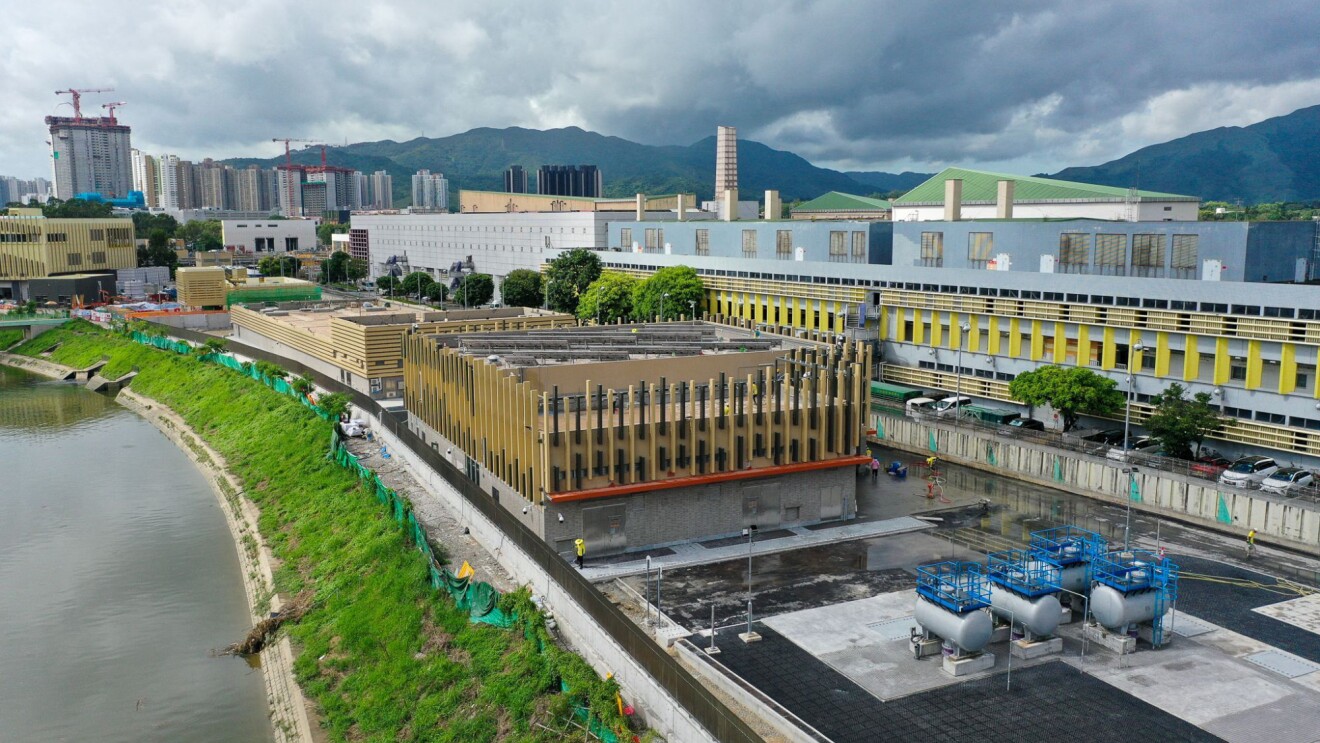 Amazon Web Services (AWS) announced plans to open Hong Kong’s first data center that uses recycled water for cooling operations.
Amazon Web Services (AWS) has announced plans to open Hong Kong’s first data center that uses recycled water for cooling operations.
The data center in Hong Kong will use recycled water from a government water reclamation plant instead of using fresh water for its cooling systems, reducing demand on Hong Kong’s potable water supply.
Once fully operational, the system could save enough fresh water to meet the daily consumption needs of more than 3,000 Hong Kong residents.
The project involves a collaboration between AWS and the Government of the Hong Kong Special Administrative Region (HKSARG). In May, the Water Supplies Department, the Electrical and Mechanical Services Department, and the Building Technology Research Institute agreed to support the use of recycled water for cooling in the AWS data center.
“We are excited to support AWS’s initiative to use recycled water for data-center cooling for the first time in Hong Kong,” said Roger Wong, director of water supplies at HKSARG, “which closely aligns with our strategy to expand the use of recycled water for non-potable uses.”
The project builds on AWS’s established presence in Hong Kong, where the company launched the AWS Asia Pacific (Hong Kong) Region in 2019 with three Availability Zones. The facility represents a significant milestone in AWS’s global water stewardship efforts, as the company currently uses recycled water at 24 locations and plans to quadruple this number by 2030.
The project also aligns with AWS’s commitment to become water positive by 2030, returning more water to communities than it consumes in its direct operations. As of the end of 2024, AWS was 53% of the way toward meeting that goal.
September 9, 2025 9:37 AM
Amazon launches first water projects in Mexico to address critical scarcity challenges
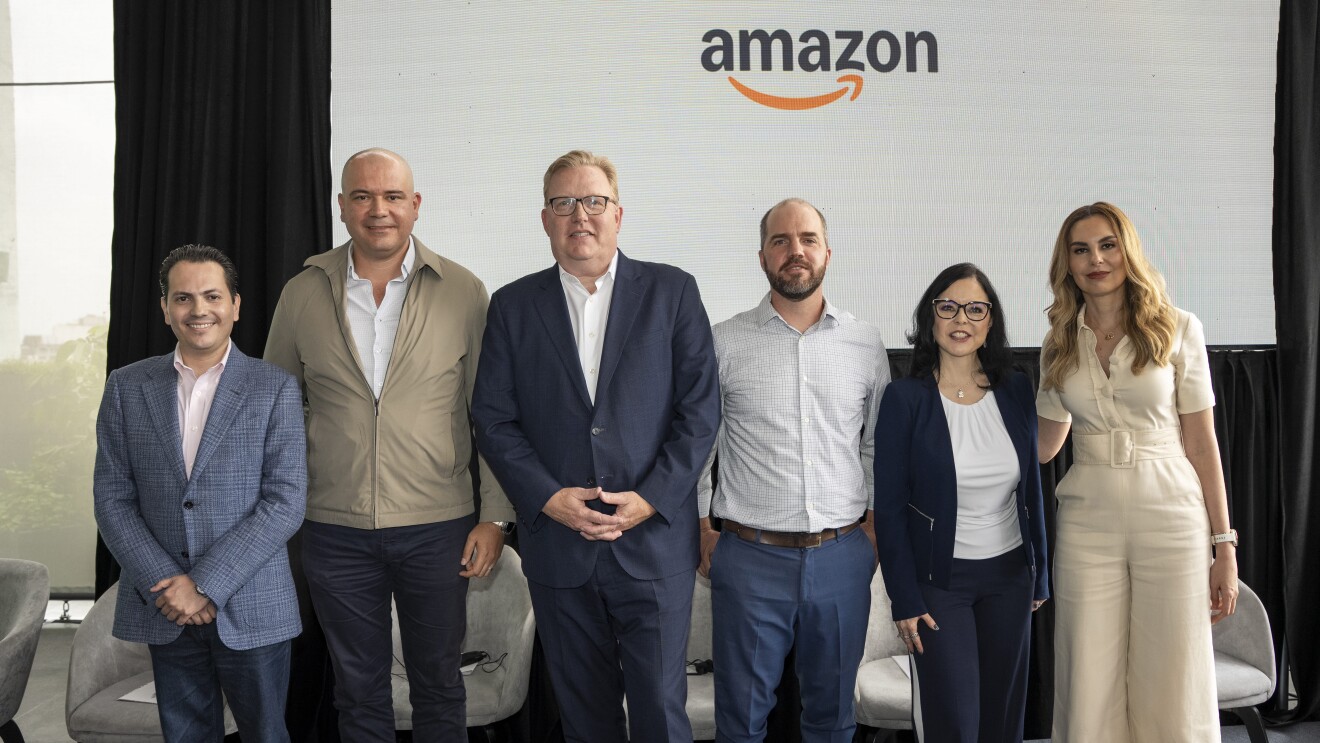 From left: Ruben Mugártegui, Country Manager AWS Mexico; José Mario Esparza, Ministry of Integrated Water Management (SEGIAGUA); Shannon Kellogg, VP of Public Policy AWS; Will Hewes, Water Stewardship Lead; Diana Francés, OPS Director Mexico, and Marisa Vano, Communications Head for Amazon Mexico on August 27 in Mexico City
Amazon recently announced its first-ever water replenishment projects in Mexico, located in Mexico City, Monterrey, and the Queretaro metropolitan area. These initiatives will collectively replenish more than 2.5 billion liters of water annually—equivalent to 1,000 Olympic swimming pools—by addressing one of the region’s most pressing challenges: massive water loss through aging infrastructure.
In Mexico City, where an estimated 40% of water is lost through leaky pipes, Amazon is partnering with global water technology leader Xylem to implement AWS-powered pressure management systems that identify high-pressure areas and quickly reduce them to minimize leakage. Similar technology will be deployed in Monterrey, while in Querétaro—home to a new AWS region—Amazon is working with Aquestia to install water-pressure management technology to decrease water loss through existing pipe leaks, providing immediate water savings.
“Water scarcity is one of the most pressing challenges Mexico faces today,” said Diana Francés, director of operations at Amazon. “That’s why we are continuously innovating to become more water efficient in our operations, as well as enabling community-focused projects that replenish water and build more resilient towns and cities.”
 Pressure Regulating Valve and controller used in Mexico City to automate the modulation of pressures throughout the water distribution network and reduce water leakage.
The technology approach is already showing impressive results in pilot areas, with the ability to not only reduce waste but also create more consistent water supply for residents who currently face intermittent service. The projects demonstrate Amazon’s commitment to addressing global water challenges beyond its own operations: a crucial effort, as many regions worldwide lose up to 30% of their water supply through aging infrastructure.
These initiatives join more than 30 water projects Amazon has launched globally and are expected to return more than 14 billion liters of water annually once completed.

Smart irrigation: Amazon and Arable announce new project to save water, benefit Mississippi farmers
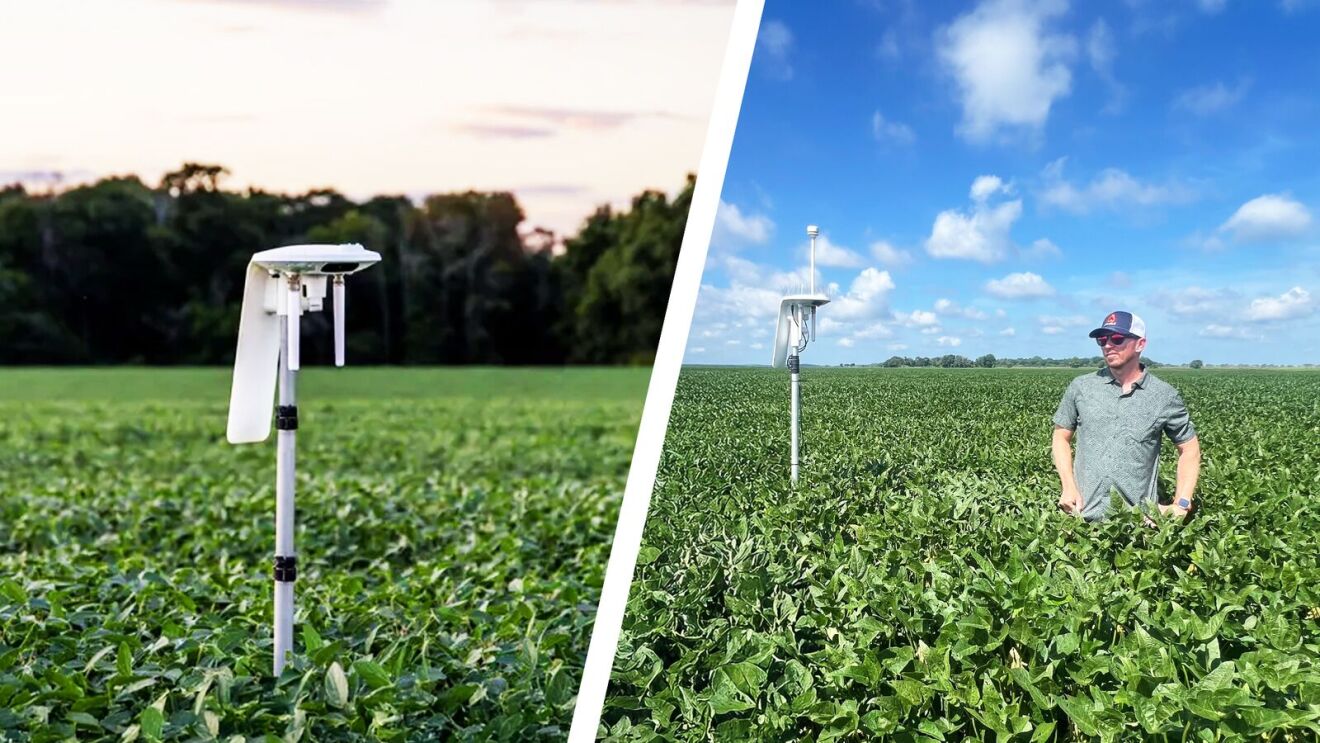
Due to land use changes, agricultural production, and climate variability, the Mississippi River Valley Alluvial Aquifer, which supplies water to approximately 7 million acres of farmland across several states, has experienced a significant decline in water levels since the 1970s. Today, we're proud to announce our first water replenishment project in Mississippi to enable more sustainable use of this critical local resource.
We're working with agricultural technology leader Arable and Mississippi State University to implement advanced irrigation efficiency solutions that will help farmers make more precise decisions about water use. Altogether, the project is expected to reduce agricultural water withdrawals by 150 million gallons annually—enough water to supply over 1,600 Mississippi households for an entire year.
“Water sustainability requires innovative thinking and collaborative approaches,” said Brandon Oyer, director of energy and water for AWS. "By helping farmers adopt precision irrigation technology, we're not only preserving a critical water resource, but also supporting the agricultural economy that depends on it."
The project equips farmers with Arable Mark 3 sensors that leverage AI technology powered by AWS. These smart sensors analyze real-time data on soil moisture, weather conditions, and crop water requirements. Using machine learning algorithms, the system processes historical patterns to deliver clear, actionable irrigation recommendations through a mobile app.
“This AI-enabled technology transforms how farmers interact with their land and water resources,” said Jim Ethington, chief executive officer of Arable. “By providing data-driven insights directly to farmers' phones, we're empowering them to make more precise water decisions."
The initiative complements Mississippi State University's Master Irrigator program, which provides advanced training to agricultural producers on sustainable irrigation practices, soil health, and water management techniques to improve efficiency and profitability.
This project will help AWS make progress toward becoming water positive by 2030 and joins more than 30 water projects Amazon has announced globally, which are collectively expected to replenish over three billion gallons of water annually.
Amazon announces 400 million-liters Delhi replenishment project at inaugural Water Dialogues in India
On World Environment Day, Amazon announced its first water replenishment project in the Yamuna River watershed, upstream from New Delhi. The project, a part of Amazon’s initiatives to tackle water scarcity and over-extraction of groundwater, is expected to replenish more than 400 million liters of water annually once completed. This initiative combines rehabilitation of existing infrastructure—including check dams and ponds—with construction of new water-saving structures like percolation pits and recharge shafts.
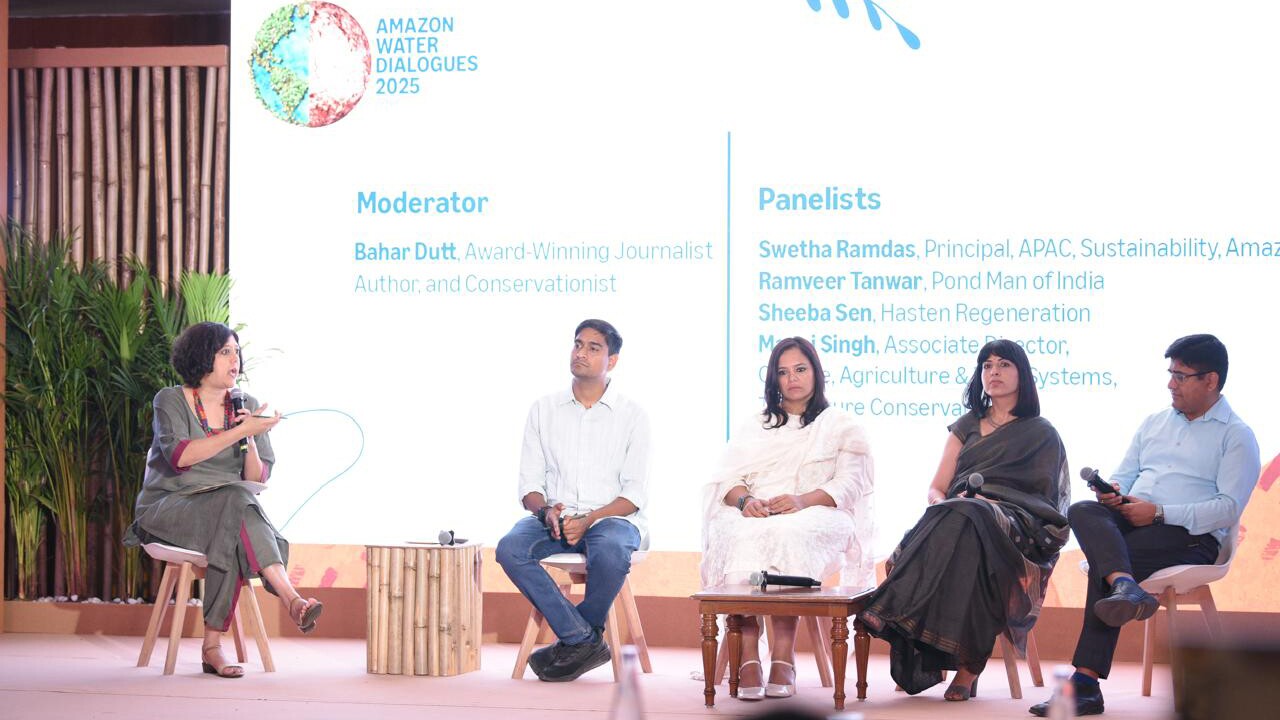
Amazon unveiled the plan at the inaugural Amazon Water Dialogues in New Delhi, bringing together policymakers, environmentalists, and sustainability experts to address one of India’s most pressing challenges: water scarcity. The landmark event at India Habitat Centre marked the beginning of a new initiative designed to foster collaborative solutions for water resilience across the country.
“Our country faces critical water challenges, with groundwater levels in New Delhi declining at an alarming rate,” said Abhinav Singh, vice president of operations for Amazon India and Australia. “This approach aims to capture monsoon runoff and replenish critical aquifers while empowering local communities as stewards of these vital resources.”
Member of Parliament Dr. Sasmit Patra highlighted the project’s significance: “The inaugural Water Dialogues marks an important step in advancing collaboration around India’s pressing water challenges. Amazon’s funding of its first water replenishment project in the Yamuna River watershed is a commendable contribution that reflects growing recognition of water stewardship as a shared responsibility.”
The event featured a panel discussion on "Water Stewardship: Unlocking Opportunities Through Shared Responsibility," moderated by award-winning environmental journalist Bahar Dutt. Panelists included ‘Pond Man of India’ Ramveer Tanwar, Sheeba Sen of Hasten Regeneration, and experts from The Nature Conservancy and Amazon Sustainability.
Since 2020, Amazon’s water initiatives in India have benefited more than 1 million people with climate-resilient water and sanitation solutions. These projects are one way Amazon plans to replenish more water to communities in India than it uses by 2027.
The Water Dialogues initiative will continue as an annual forum for cross-sector collaboration on innovative, community-driven solutions to India’s water challenges.

Amazon breaks ground on Swedish wetland project to enhance water quality and community resilience
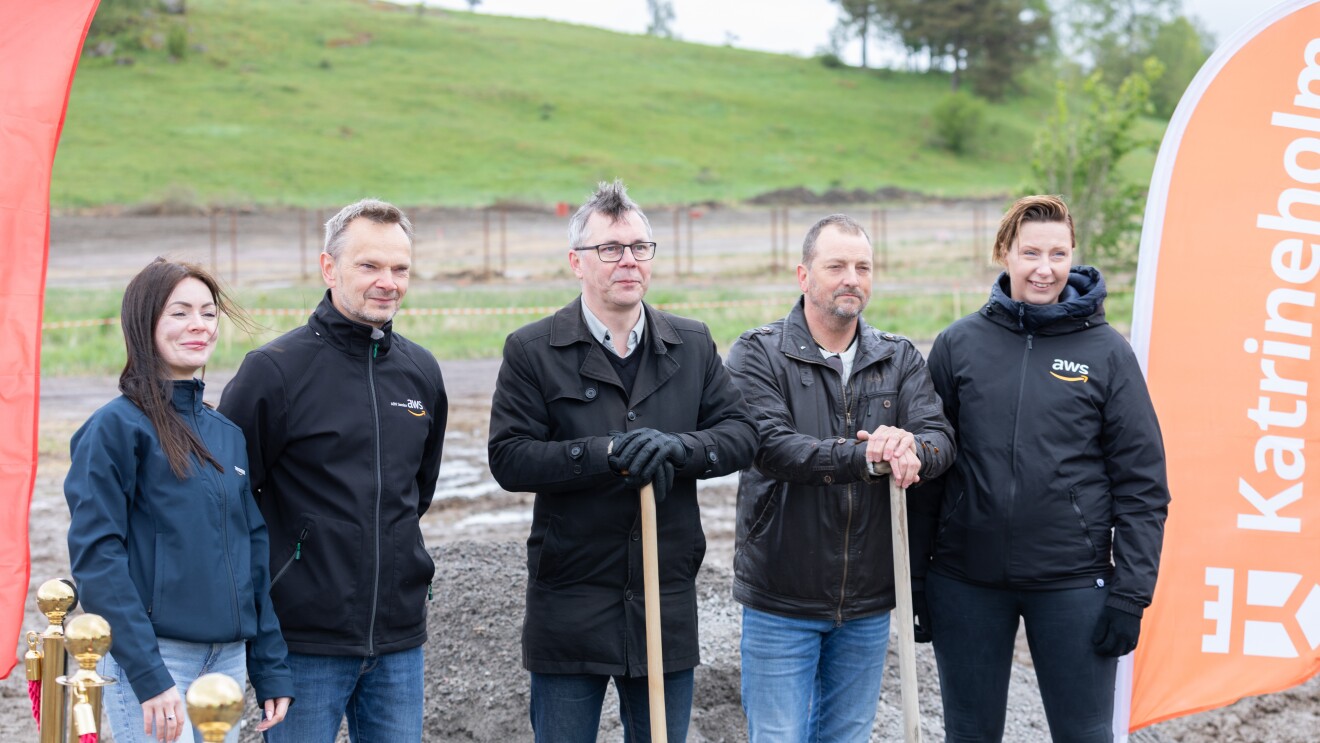
Amazon Web Services (AWS) joined local officials today to break ground on an innovative water replenishment project outside Katrineholm, Sweden, marking a significant milestone in our commitment to water stewardship across the communities where we operate.
The $4 million investment will support critical stormwater infrastructure upgrades, the creation of a new wetland, and community recreational area in Stora Djulö. Once completed in 2026, the project will help reduce flooding risks, improve water quality in nearby lakes, and enhance biodiversity throughout the local ecosystem.
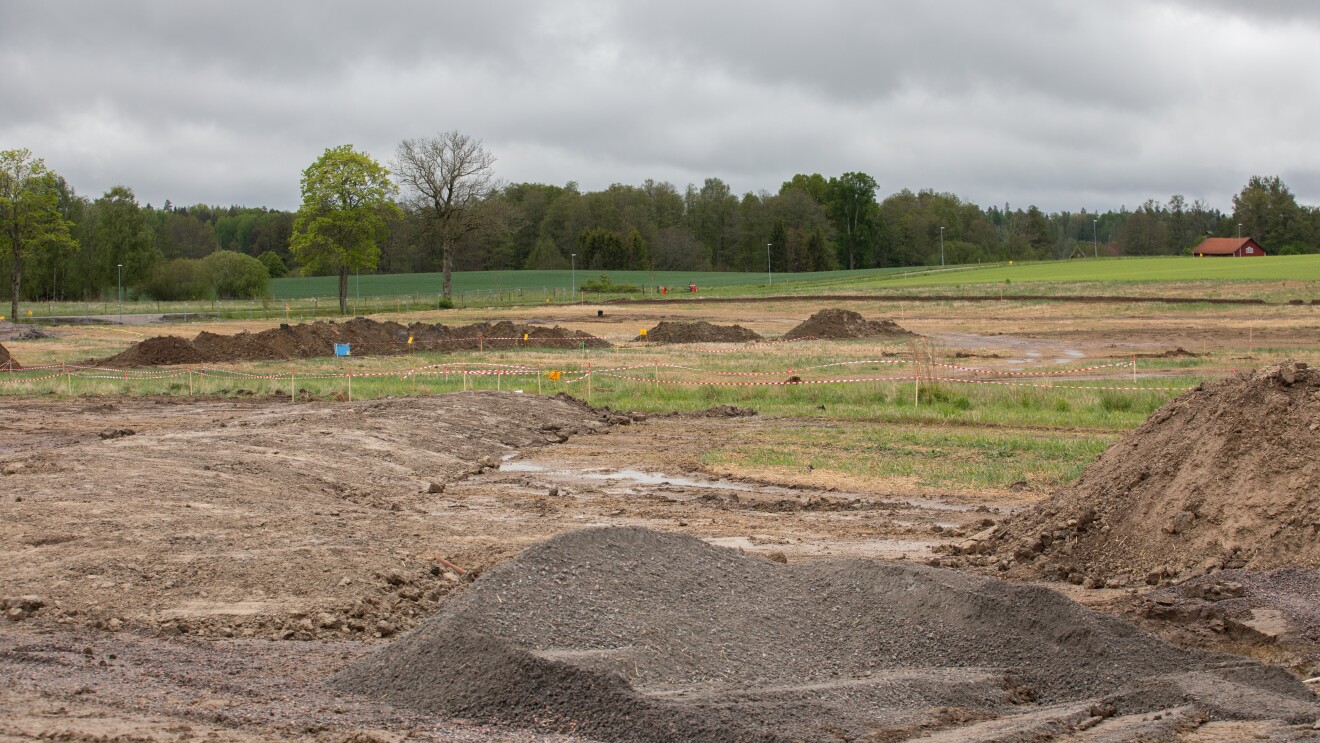
"This groundbreaking represents more than just a water management solution—it's about creating lasting environmental benefits for the Katrineholm community," said Clare Biddle, senior manager, Energy and Water for AWS in Europe, Middle East and Africa. "By supporting natural infrastructure that helps manage stormwater while creating new habitats, we're demonstrating our commitment to being a good neighbor and responsible water steward."
The project emerged from collaboration between AWS, the municipality of Katrineholm, and the regional water utility company, Sörmlands Vatten. In addition to its environmental benefits, the wetland will provide new recreational opportunities for local residents and serve as an educational resource for schools and researchers.
“Breaking ground at Djulö Wetland marks the start of a long-term investment in nature and climate resilience,” said Maja Larsson, project manager at the Municipality of Katrineholm. “This has been made possible through a successful collaboration with Amazon—a partnership turning sustainability goals into real impact.”
Once completed, the Katrineholm wetland will join Amazon's portfolio of 28 water replenishment projects globally, which together is expected to return more than 9 billion liters of water annually to communities. As the project develops over the coming years, AWS will continue working with local partners to ensure the wetland delivers maximum benefits for water quality, flood protection, biodiversity, and community enjoyment.

Amazon to expand water recycling at data centers to over 120 locations across the US
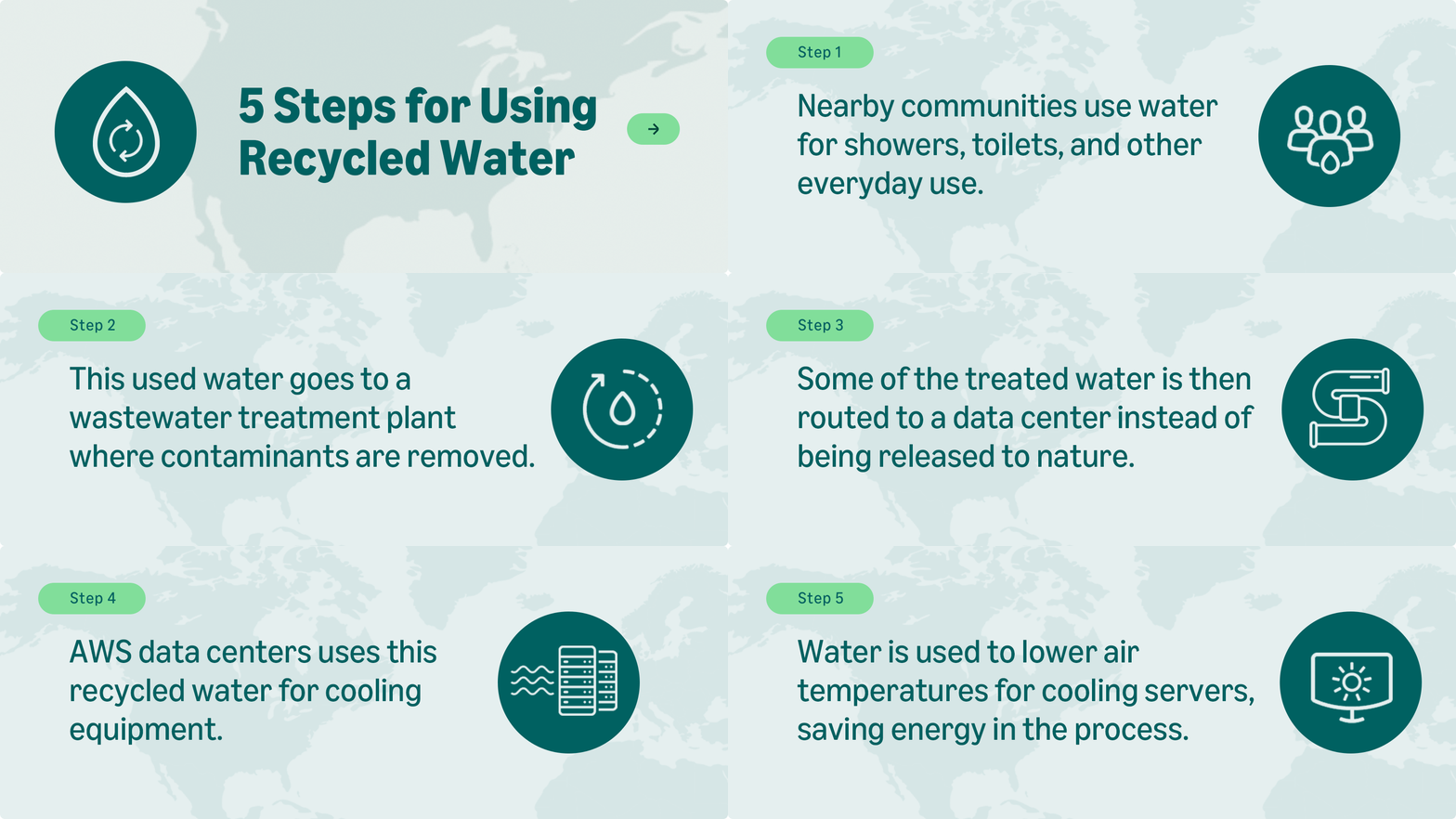
Today, Amazon announced we will expand our use of water recycling to more than 120 locations in states and counties where we have data center operations by 2030. By scaling our use of recycled water—water that has been previously used and treated—we expect to preserve over 530 million gallons of drinking-water supply in our communities throughout the U.S. each year while building a more sustainable cloud for our customers.
“We are deeply committed to being good members of our communities, and doubling down on preserving freshwater resources is one of the ways we can demonstrate that,” said Kevin Miller, vice president of global data centers for AWS. “By significantly expanding our recycled-water infrastructure, we’re aiming to advance technological innovation while still prioritizing environmental stewardship.”
AWS has previously used recycled water in Virginia and California and is now expanding those efforts to more places in Virginia, as well as in Georgia and Mississippi. AWS is a pioneer of this approach by working with a local Virginia water utility to become the first data center operator in the state approved to use recycled water with direct evaporative cooling systems. This practice has helped AWS use up to 85% less water than conventional methods.
“AWS’ new initiative will support communities by easing pressure on local water systems while meeting the needs of the rapidly growing AI economy," said Howard Carter, president of Water Environment Federation (WEF). "As part of our strategy to advance the circular water economy, the Water Environment Federation encourages public-private collaboration to drive innovative water solutions. AWS’s commitment to recycled water exemplifies how the private sector can work with communities to build a more resilient water future.”
This expansion supports AWS’s commitment to be water positive by 2030, returning more water to communities than it uses in its direct operations. As of 2024, AWS reached 53% of the way toward meeting this goal.

Amazon to work with local tribes and conservation groups to keep water in streams and help wildlife
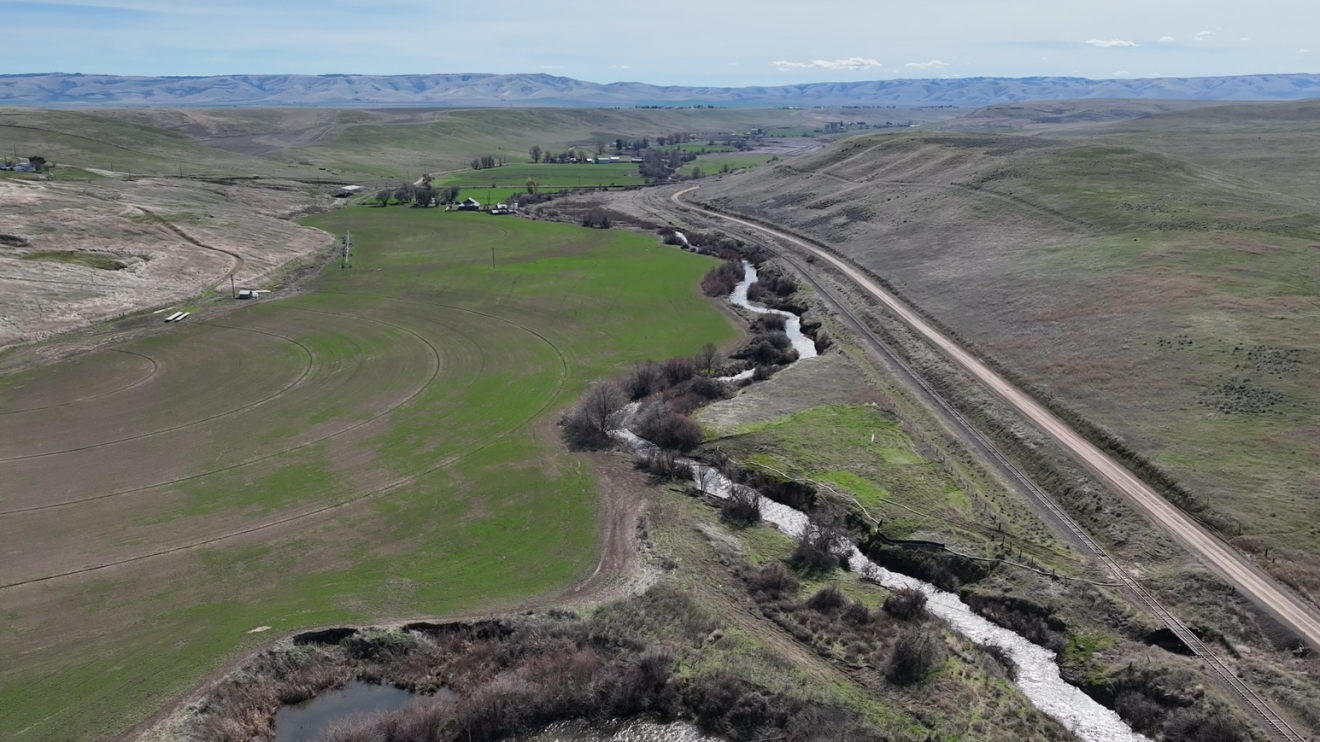 Photo of Birch Creek. Source: Confederated Tribes of the Umatilla Indian Reservation.
Water, a precious resource, is deeply connected to people’s livelihood. As a data center operator in eastern Oregon, we've seen firsthand how rivers and waterways sustain local communities and wildlife. That’s why we’re excited to announce Amazon's first water replenishment project in Oregon, as AWS continues to make progress towards its commitment to being water positive by 2030.
The project features a water-leasing program that will be implemented through close coordination with the National Fish and Wildlife Foundation, Trout Unlimited, and the Confederated Tribes of the Umatilla Indian Reservation (CTUIR) to benefit Birch Creek, a critical tributary of the Umatilla River in eastern Oregon. The voluntary program compensates willing landowners for leaving water in the natural watershed instead of diverting it for other uses, helping to restore instream flows.
“At Amazon, we aim to be a good water steward everywhere we operate,” said Will Hewes, water sustainability lead at Amazon. “We deeply appreciate what water resource availability and wildlife conservation mean to the eastern Oregon community. By investing in local water resources, we're not just helping to restore crucial habitats, we're contributing to the overall health and wellbeing of the families who live there.”
The project is expected to increase water flow in Birch Creek, supporting ongoing habitat restoration efforts. Once completed, the project is expected to replenish 325 million gallons, or 1,000-acre feet, of water each year to the Birch Creek watershed.
“Birch Creek is one of the foremost breeding grounds for Mid-Columbia steelhead trout in the Umatilla Basin. By restoring water flows, we're helping maintain fish passage from the Umatilla River up to prime spawning grounds in Birch Creek,” said Anton A. Chiono, Habitat Conservation Project Leader at the Department of Natural Resources with the CTUIR. “Restoring instream flows is crucial for steelhead recovery, and other local wildlife, especially when facing water scarcity challenges.”
Tackling global water scarcity: Amazon’s commitment to water replenishment
Water sustains life on Earth, yet roughly half of the world’s population is experiencing severe water scarcity, with more than 2 billion people without access to safe drinking water.
Every year on March 22, World Water Day emphasizes the importance of global collaboration to protect our most precious shared resource. For Amazon, this day also serves as an opportunity to raise awareness about global water challenges and showcase our investments and innovations aimed at addressing widespread water scarcity issues.
Conserving water in our operations and returning water to communities
Amazon aims to be a good water steward everywhere it operates. For example, Amazon recently set a goal to replenish more water than we use across our India operations by 2027, and is committed to being “water positive” across all AWS data centers by 2030.
We’re reducing our water footprint by increasing the efficiency of our water use throughout our operations while also investing in ways to replenish water in our communities. Some examples:

- Amazon scaled harvesting and reuse solutions in its fulfillment centers, sort centers, and delivery stations around the world. We’ve also created a global water metering and leak detection program, with one pilot in the United Kingdom saving an estimated 700 million liters of leaked water over two years.
- The Boss Defrost’s powerful circulating pump system recycles meltwater instead of letting it run down the drain. Whole Foods Market stores in the Denver area with Boss Defrost systems installed saw overall store water usage decrease by an average of 12% between 2021 and 2022.
- In many of its data centers AWS uses direct evaporative cooling and free-air cooling systems to remove heat from servers in data centers. Recycled water is also used for cooling at 24 data centers worldwide, preserving valuable drinking water for communities and the environment.
- Amazon’s global corporate offices are increasingly using recycled water and low-flow fixtures. For example, at HQ2 in Arlington, Virginia, by capturing and reusing rainwater, shower water, and HVAC condensate, the building is expected to achieve 50% water savings below building code, and recycle 7.5 million gallons each year.
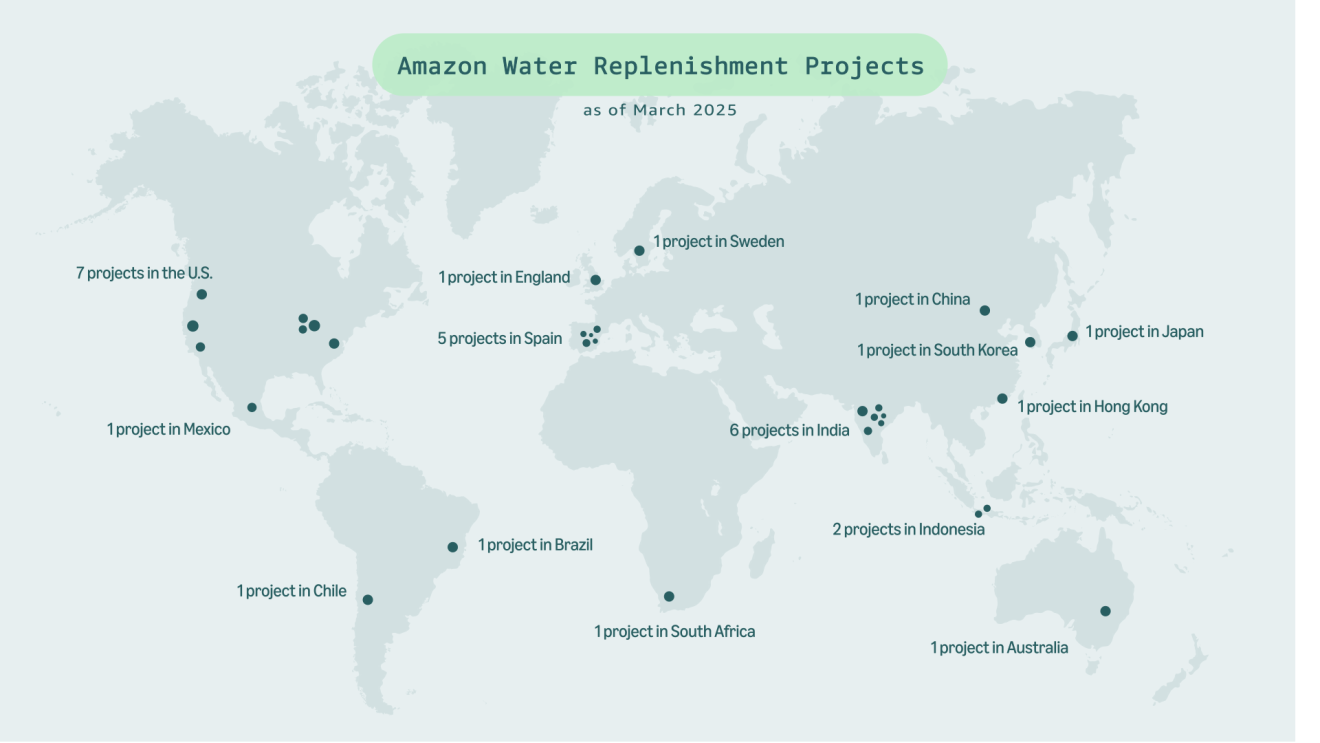
- Globally, Amazon’s 27 water replenishment projects are expected to return more than 8 billion liters of water annually once completed. These projects expand access to clean water and sanitation, improve water quality, and increase the water available to water-stressed communities. Some of these projects are already under way, while others are just commencing.
- For example, earlier this month we announced three projects in Spain that are expected to reduce flood risk for 700,000 residents in the province of Zaragoza, modernize critical infrastructure, and optimize agricultural water use through artificial intelligence (AI). And in India, Amazon has invested in five projects, including partnering with the global nonprofits Water.org and WaterAid to bring clean water and sanitation to over 250,000 people surrounding our regions there.
Sharing what we’ve learned
To help other companies take similar steps to reduce water usage, we’ve created a public water stewardship program playbook available through the Amazon Sustainability Exchange. This resource is meant to be a starter guide for any organization looking to establish a similar water stewardship program.
Visit the water stewardship section of the Amazon Sustainability website to learn more.
