







The 2025 Gartner Identity and Access Management Summit in Grapevine underscored a decisive industry shift: authorization, workload identity, and policy based control have become foundational components of modern security architecture. As identity ecosystems expand beyond humans into services, autonomous agents, and distributed infrastructure, organizations are being pushed to rethink how access decisions are designed, enforced, and standardized.
A standout moment came from Gartner’s Erik Wahlstrom, who introduced a maturing discipline: Workload IAM. Machine identities, containers, functions, VMs, services, ML pipelines, and increasingly AI agents have scaled far beyond what traditional IAM programs were designed to support. The result is a long tail of unmanaged or misunderstood credentials: API keys, tokens, certificates, and service accounts often treated as identities themselves.
Erik’s proposed solution was both simple and transformative. A consistent identity taxonomy where workloads become primary identity entities, and every associated credential is treated as an attached artifact, not an identity. This reframing eliminates one of the biggest sources of authorization drift: ambiguity about who or what is actually making a request.
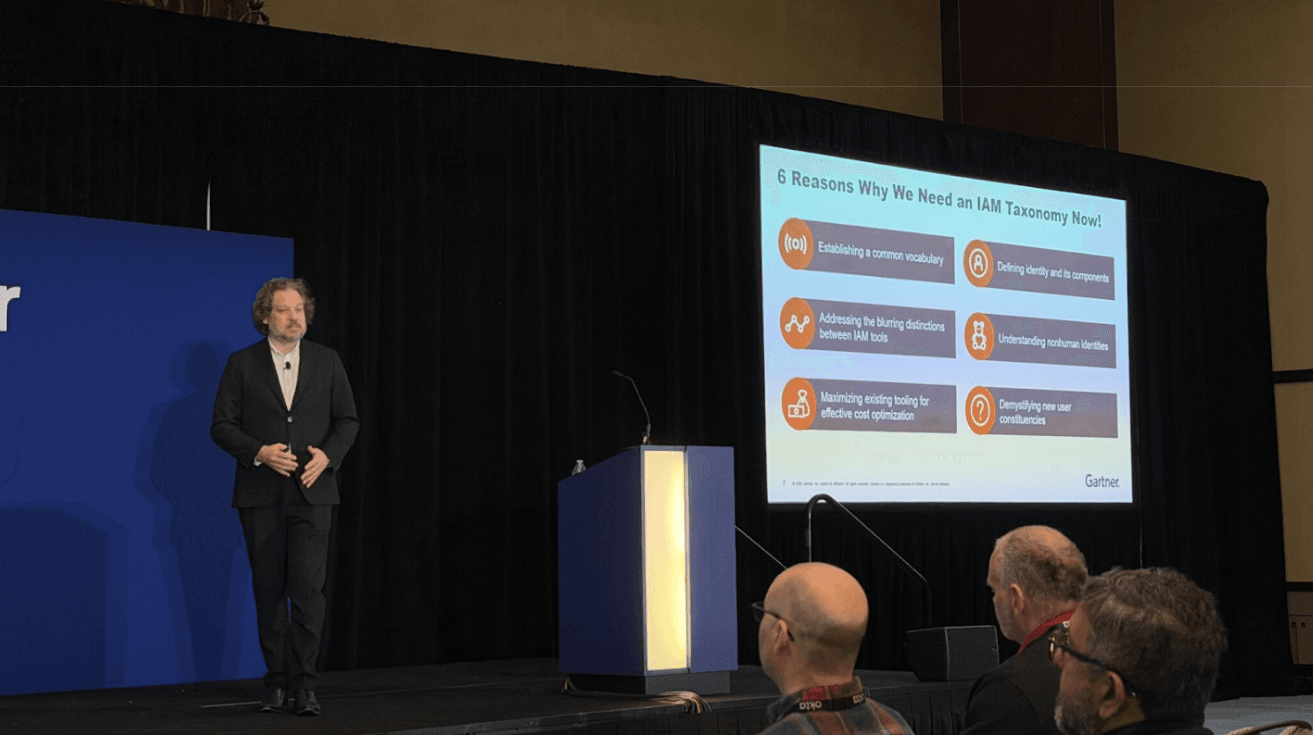
Achieving industry alignment on this taxonomy will be essential. Authorization must operate consistently across legacy applications, SaaS products, in-house systems, cloud-native architectures, and AI-driven workloads. Without a shared understanding of identity, policy fragmentation and inconsistent enforcement become inevitable.
Authorization modernization was another dominant theme across the conference. Hardcoded access logic continues to create bottlenecks in development cycles, gaps in auditability, and unpredictable security outcomes. Gartner highlighted the risks of “authorization sprawl”, multiple interpretations of access rules scattered across codebases, gateways, and infrastructure.
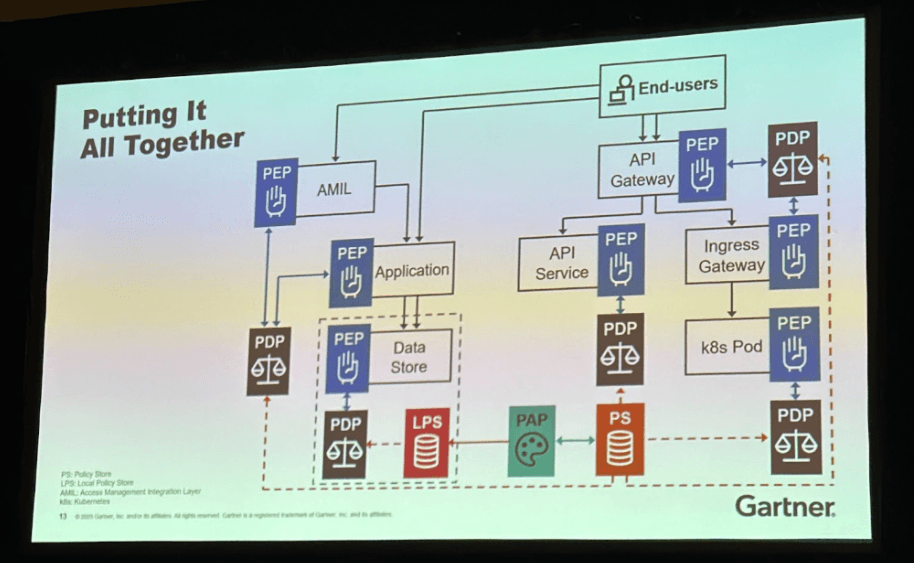
The modernization blueprint was clear:
This combination mirrors the architecture long advocated by dedicated authorization engines, and aligns closely with where the market is heading as organizations adopt Zero Trust and platform engineering principles.
Gartner continued the theme by emphasizing policy based authorization as the bridge between organizational intent and operational reality. Policies must be versioned, testable, explainable, and grounded in a well-understood fact model. Runtime authorization cannot succeed without knowing exactly which attributes and contextual signals matter.
Explicit comparisons across authorization engines, languages, and models revealed a predictable conclusion: no single model solves every problem. ABAC, ReBAC, role-based access control (RBAC), domain-specific rules, and hybrid approaches will coexist for the foreseeable future. The winners will be the teams that adopt structured policy patterns, effectively orchestrate multiple tools, and resist the temptation to let authorization logic drift back into application code.
One of the most anticipated moments of the conference was the OpenID AuthZEN interoperability session, this time focusing on how to integrate authorization at the IdP layer using the AuthZEN specification.

Cerbos took part both as a vendor and as a core implementer of the specification. Alex Olivier, Cerbos CPO and co-founder, is also an author of the AuthZEN specification and an active contributor to the working group driving it forward. This dual perspective, vendor, implementer, and standard author, positioned Cerbos uniquely in the interop.
The live demonstration featured implementers including Thales, Gluu, EmpoweredID, KeyCloak, and more. It was the first public demonstration of IdP gateway use cases powered by externalized authorization policies through a shared standard.
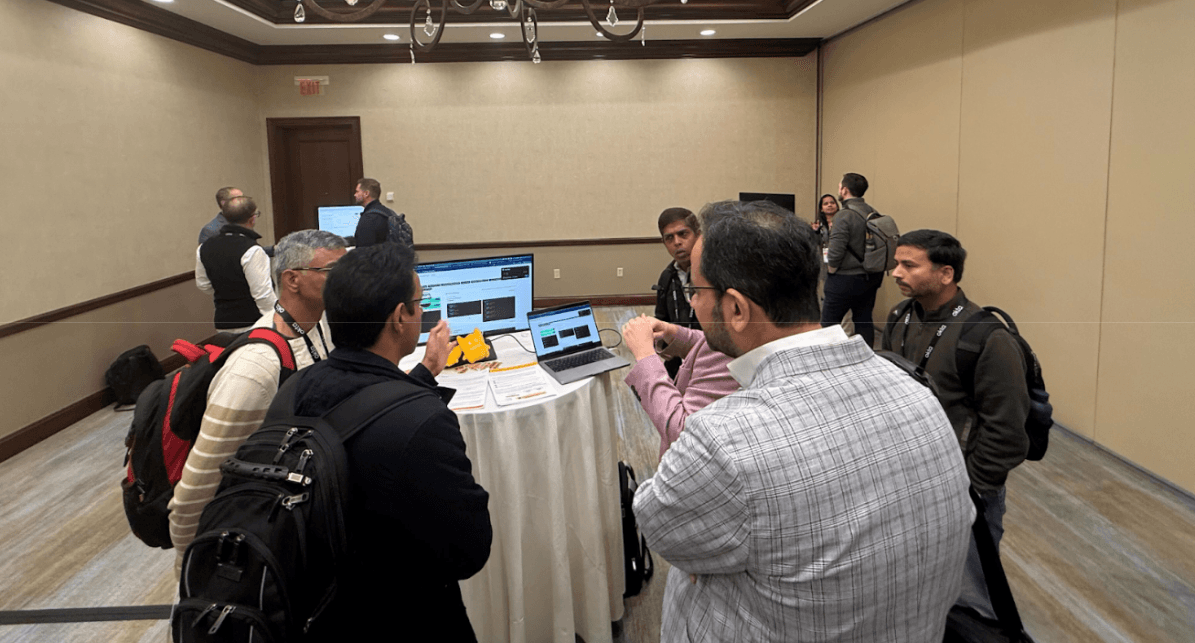
AuthZEN represents a significant milestone: the industry’s first realistic attempt at defining a common authorization API, much like OpenID Connect did for authentication. Its goal is to allow gateways, platforms, services, and applications to rely on a unified evaluation model regardless of the underlying engine. Work on the finalization of the specification has wrapped up and will be going out to voting by the OpenID membership very soon.
The message from Gartner this year: authorization has evolved from a backend control into a strategic identity infrastructure.
Key signals:
Cerbos was built for this shift. For teams designing runtime authorization, enabling multi-cloud policy governance, or securing identity-aware workloads and AI agents, Cerbos provides a fast, flexible, and standards-aligned path forward.
此内容由惯性聚合(RSS阅读器)自动聚合整理,仅供阅读参考。 原文来自 — 版权归原作者所有。