





惯性聚合 高效追踪和阅读你感兴趣的博客、新闻、科技资讯
阅读原文 在惯性聚合中打开

推荐订阅源

aimingoo的专栏
aimingoo的专栏
Y
Y Combinator Blog
云风的 BLOG
云风的 BLOG
Microsoft Azure Blog
腾讯CDC
T
The Blog of Author Tim Ferriss
P
Proofpoint News Feed
Hugging Face - Blog
Hugging Face - Blog
博客园_首页
小众软件
小众软件
美团技术团队
Martin Fowler
Martin Fowler
爱范儿
爱范儿
有赞技术团队
有赞技术团队
博客园 - 【当耐特】
让小产品的独立变现更简单 - ezindie.com
Microsoft Security Blog
宝玉的分享
宝玉的分享
J
Java Code Geeks
B
Blog
V
V2EX
Stack Overflow Blog
Stack Overflow Blog
B
Blog RSS Feed
博客园 - Franky

Cerbos - All Posts

Authentik vs Keycloak: Self-hosted IdP comparison Mapping business requirements to authorization policy for automotive Fine-grained authorization for AI gateways EIC 2026: Stop counting agents, protect what they can touch Agent skill for writing authorization policies in Claude Desktop Identity security in 2026 EIC 2026 takeaways: the identity stack built for humans will not hold up for AI agents Already have authentication? Here's the authorization layer you still need. Tokens are authorization decisions: a guide to policy-driven token issuance What is a Runtime Authorization Platform It's a dimmer switch, not a kill switch. How CISOs are rethinking AI agent governance From maps to bitmaps (and from bitmaps to bitmaps) AuthZEN, Shared Signals, SCIM Events, IPSIE: Notes from the OpenID Enterprise Panel How do you update authorization policies without redeploying your application? IIW42 recap: Where agent authorization got real Cerbos PDP v0.52.0/v0.53.0: Engine performance, security hardening, and CEL path functions Authorization Management Platforms: what they do, how they work, and where they fit PocketOS AI coding agent deleted a production database in 9 seconds Non-Human Identity management still has a blind spot Supabase alternative in 2026: Best open source auth options Benefits of on-premise authorization: Why enterprises are moving toward self-hosted Authorization policies: How to write, test, and validate them (faster with AI) Agent skill for writing authorization policies How much does it cost to build authorization in-house? Why centralized authorization governance reduces incident response time OPA alternative Why AI agents make authorization a right now problem Modernizing legacy application authorization: why it’s your biggest security blind spot How to add authorization to legacy applications without code changes 5 authorization blind spots auditors find, and how to fix them
Scoped Policies, Simplified Run and SQL Server Support - ...
Alex Olivier · 2022-02-23 · via Cerbos - All Posts

The latest release of Cerbos adds a new major capability with scoped policies, a streamlined way to get started with the run command and support for SQL Server as a storage engine.

Scoped Policies

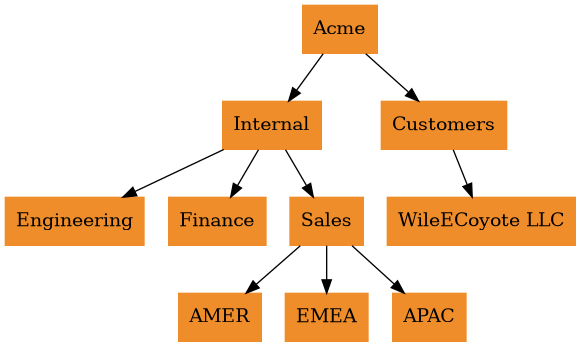
This release introduces the concept of scoped policies to address the common use case of modelling hierarchical relationships. The new scope field of resource and principal policies allows you to define a dot-separated string describing their position in the hierarchy.
Scoped Policies

At runtime, based on the scope defined by the API request, the Cerbos engine moves upwards through the set of policies in the hierarchy until one of them produces a decision. With this feature you can define a base set of access policies that can then be overridden for particular departments, tenants or any other unit of access control that makes sense for your application.

You can find the full documentation here.

Streamlined Run Command

$ cerbos run -- ./your-app

Another new feature in this release is the introduction of the cerbos run command. This command can be used as a test runner or even as a quick way to try out Cerbos. It launches a Cerbos instance in the background (loading any policies found in the policies directory) and then runs the user-provided command.

Two environment variables named CERBOS_HTTP and CERBOS_GRPC are injected to the environment of the child process so that it can discover the Cerbos PDP. When the child process exits, the Cerbos instance is automatically shutdown as well.

For more information, see the cerbos run documentation.
Microsoft SQL Server Support

Microsoft SQL Server

In addition to MySQL, Postgres and SQLite, this release also adds support for using Microsoft SQL Server as a storage backend. These database backends enable use of the Admin API to manage policies dynamically from your application rather than using static policy files.

You can find the full release notes here and if you have any questions join our Slack community.