







Photo: Courtesy of Four Seasons Cartagena
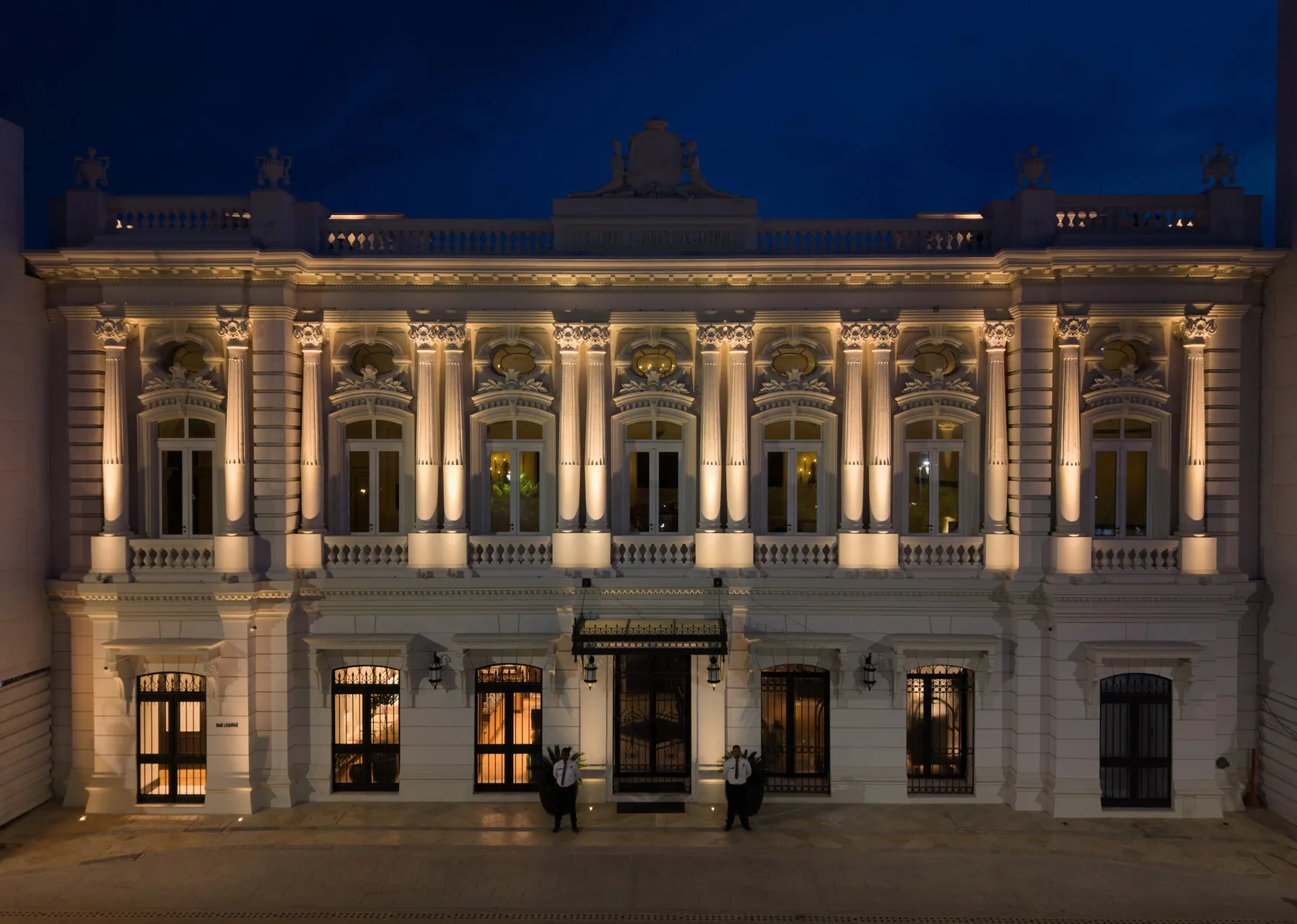
In the late 1920s, if you happened to be strolling through the Getsemani district of Cartagena—and more specifically, past the fashionably landscaped tropical oasis of the Parque de Centenario, where fantastically colored birds still chirrup and tamarin monkeys leap through the canopies—it’s likely you’d have been stopped in your tracks by Club Cartagena.
As a social hub for the city’s elite, you might have heard strains of jazz carried on the breeze, or caught glimpses of the women in glittering dresses and men in natty linen suits dancing inside. Most of all, though, you’d have been struck by its arresting architectural presence: a Beaux-Arts wonder conceived by Gastón Lelarge, the French architect who assisted Charles Garnier on the construction of the Paris Opéra, before moving to Colombia in the early 20th century and leaving his mark all over Cartagena.
Now, just over a century after Club Cartagena stopped passersby in their tracks, it’s returned as the newest jewel in the Four Seasons crown—and with a brand new look to boot.
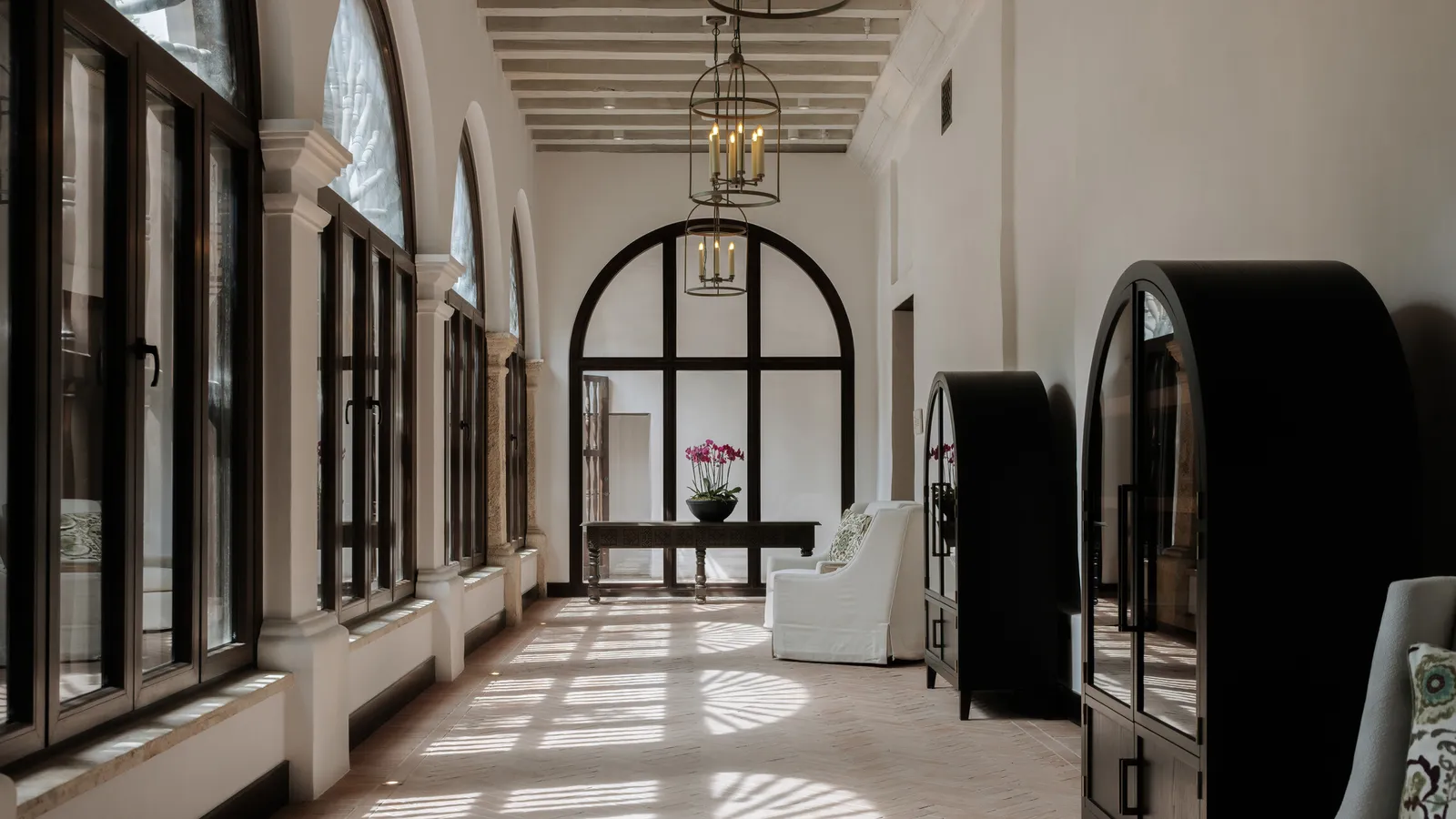
A corridor within the Umari spa, designed by Wimberly Interiors.
And I mean brand new: I arrived on a balmy April morning—though temperatures sit in the 80s all year round, so every morning is balmy—less than 24 hours after the Four Seasons Cartagena had first opened its doors. Not that you would have guessed it. The spectacular (and mercifully air-conditioned) former atrium of the club was a hive of activity, with guests toing and froing from the café for a morning dose of specialty Colombian coffee; further inside, baristas were brewing espressos using Willy Wonka-esque steel levers, positioned behind a bar with a slab of marble the length of a snooker table.
As I was whisked up to my room through the hotel’s various courtyards and corridors, I spotted guests padding back from the spa in their plush waffle robes and slippers, or decked out in brightly patterned swimwear, heading up to the pool for a morning swim. This specific corner of Cartagena may have lain dormant for many decades (well, apart from a brief period a few decades ago when the ruins of the building were used to throw underground raves), but clearly, it had sprung back to life with some ferocity.
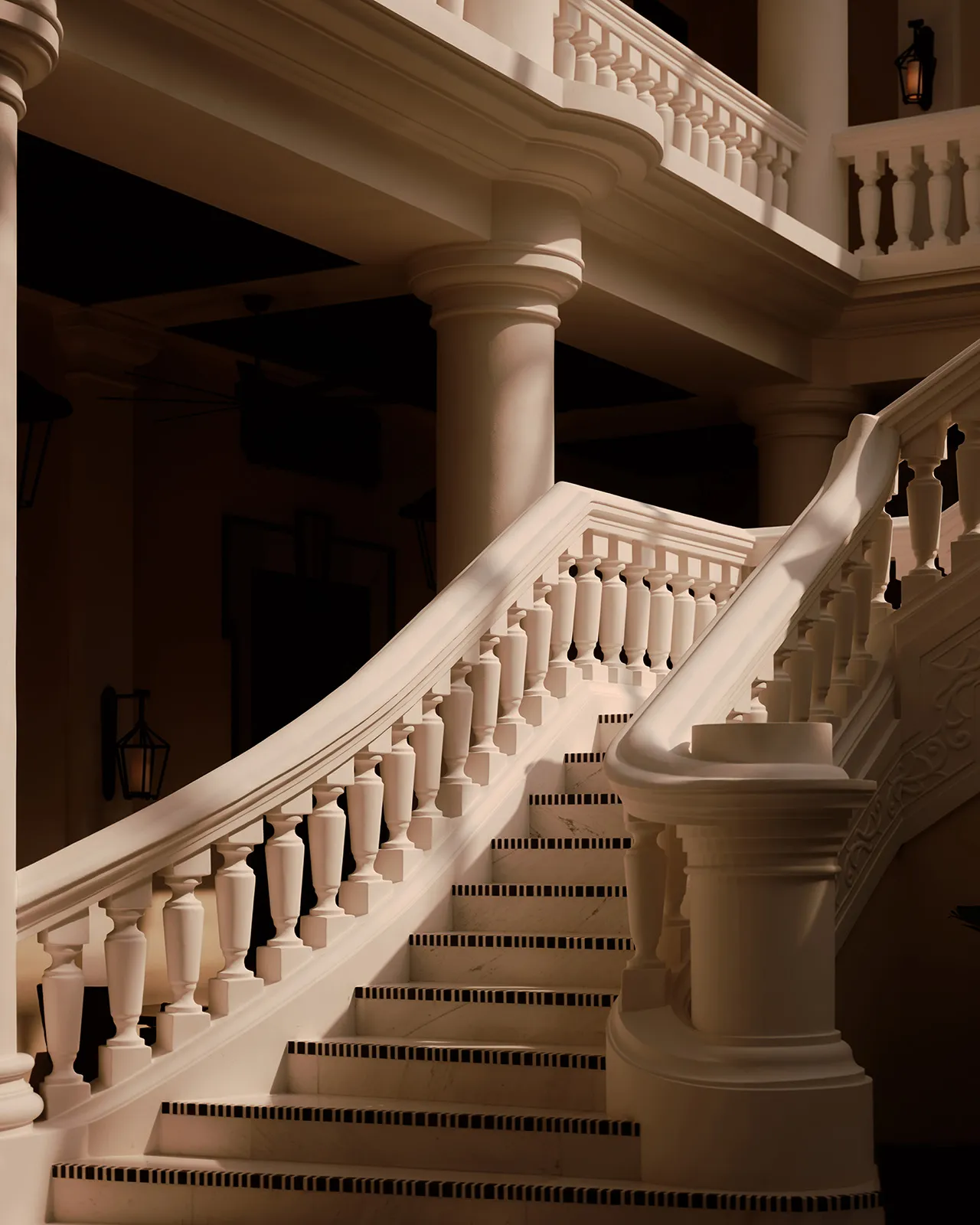
The staircase in the former Club Cartagena atrium.
It also became apparent there was far more to the property than the former club building: the entire, sprawling complex covers nearly an entire block—including a 16th-century monastery, five former theaters, and three churches—that have been thoughtfully sutured together to form a total of 131 guest rooms and suites. And that’s without mentioning the entirely new building in the center designed to serve as the connector between it all, which is topped with an expansive network of rooftop terraces and an impressively large infinity pool overlooking the sherbert orange rooftops and belltowers of the walled old city.
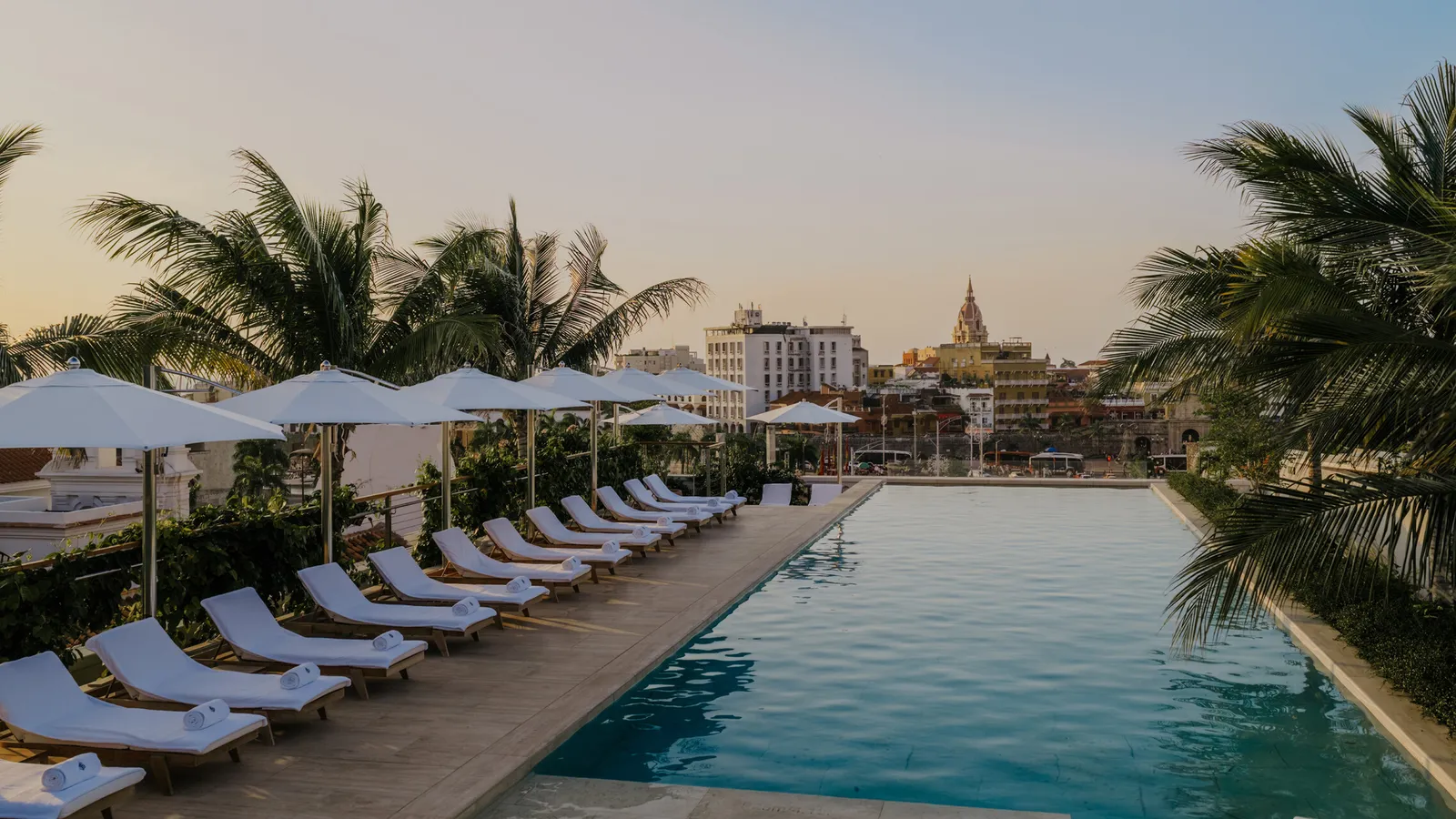
The rooftop pool, overlooking Cartagena’s walled old town.
Even in my room—a colonial suite with soaring, decorative wooden-beamed ceilings and a set of delightful abstract prints by the artist Miguel Cardenas referencing Colombian folkloric traditions—the sense of the building’s history radiated from every surface, despite the fact it had all the bells and whistles you’d expect from a 21st-century five-star hotel suite: an app for room service, superfast WiFi, wireless chargers. (Though not, fortunately, anything too hi-tech or fussy for all the controls: the curtains and lights were still pleasingly analog, in a way that felt fitting given the building’s tangible sense of history.)
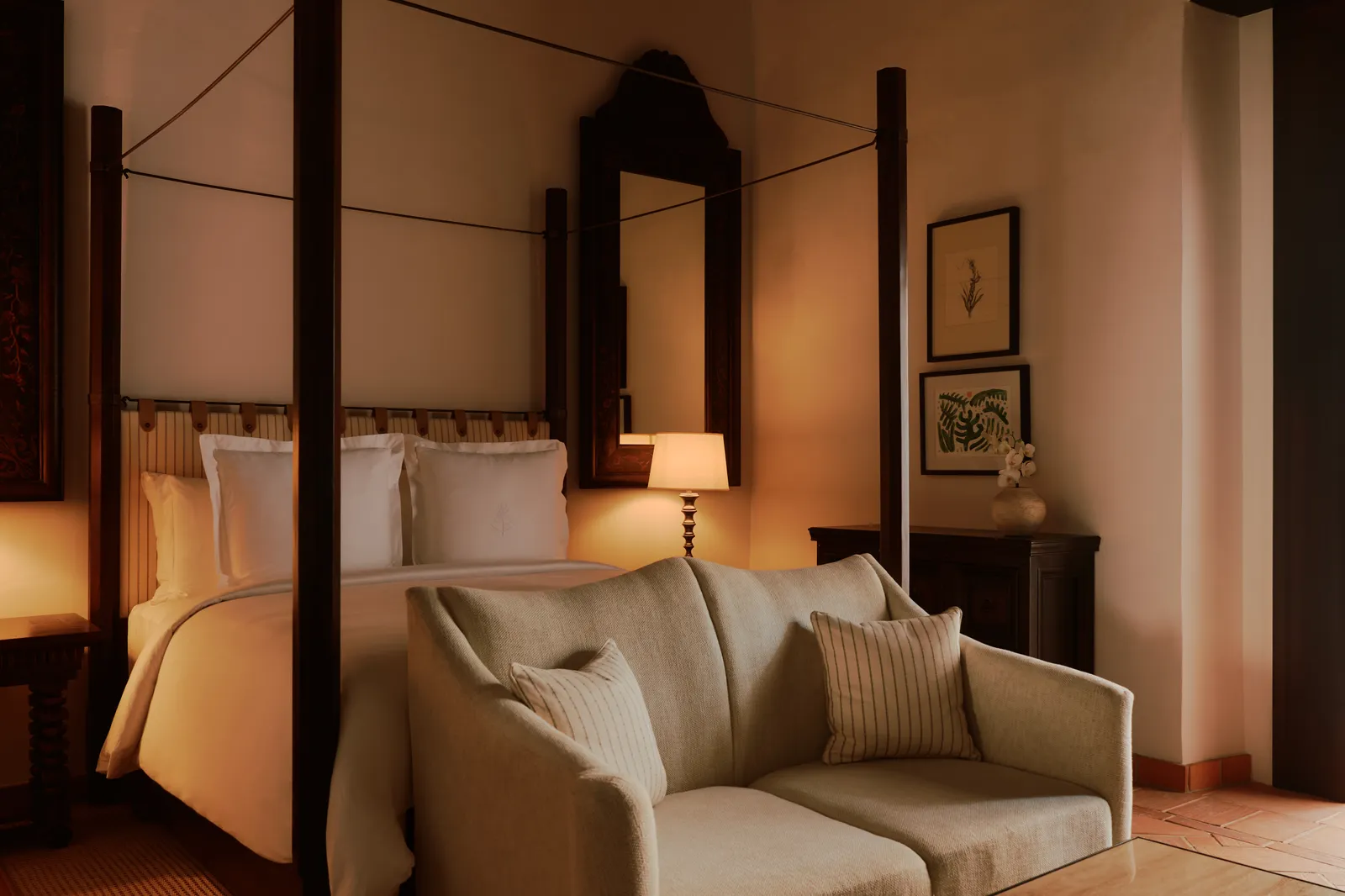
The bedroom of a colonial suite.
That attention to detail can be explained, in part, by the team that created it. The mastermind of the suite I stayed in—and the entire Club Cartagena building—was none other than François Catroux, the legendary French designer (and husband of Yves Saint Laurent muse, Betty) who died at the end of 2020 while renovations were underway, making it one of his final projects. The hotel has been in the works for nearly a decade: the painstaking, years-long restoration process was because, the general manager Annie Monnier told me on a tour of the property, “it was more important to get it right than to rush it.” You can tell.
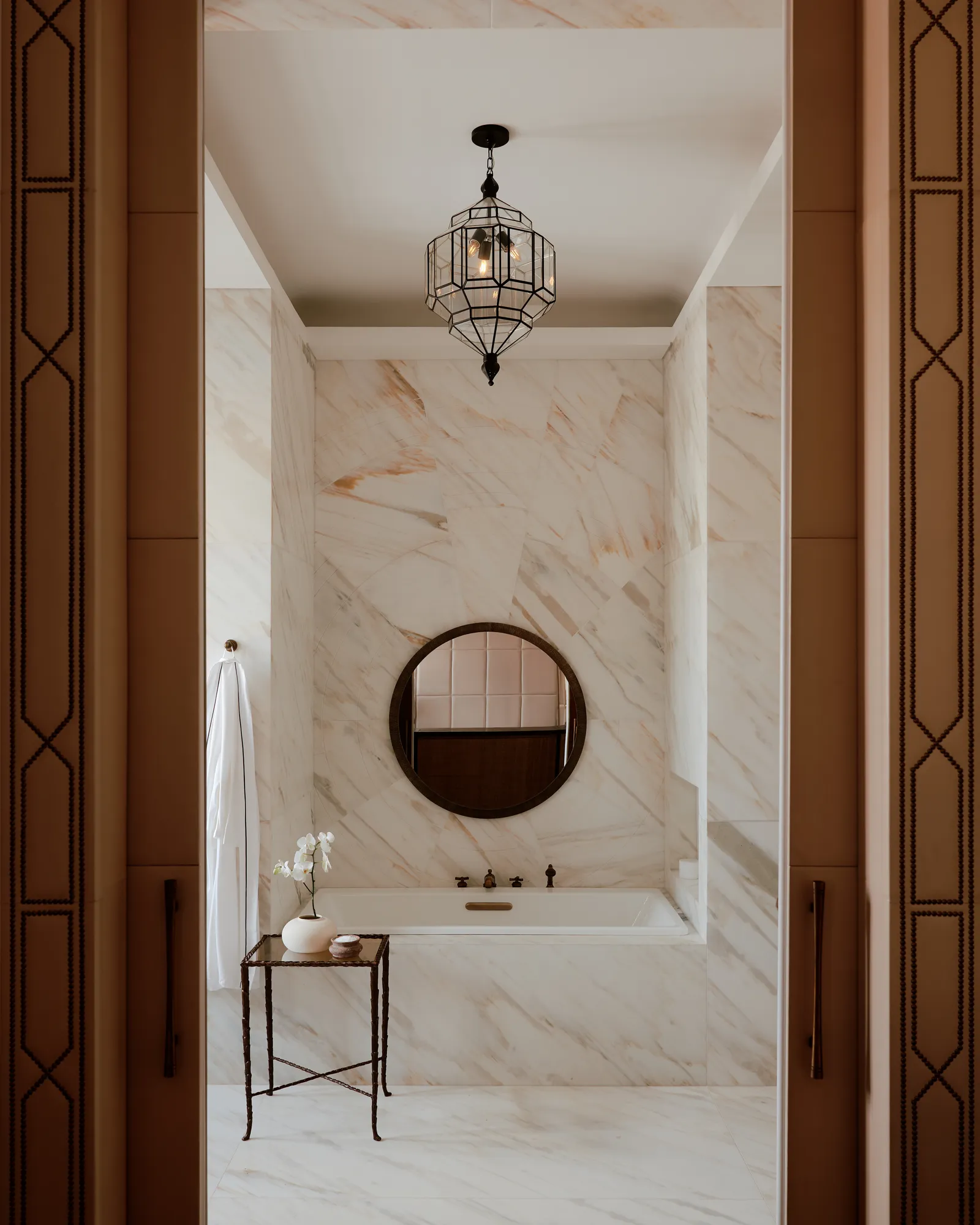
The bathroom of the Catroux Presidential Suite, designed by François Catroux.
For while Catroux’s stylistic hallmarks are all in evidence—bold geometrics, restrained color palettes, cleverly integrated built-in furniture elements—they also come with plenty of welcome local touches. Most notably, perhaps, in the form of designer Poli Mallarino’s interpretations of Catroux’s plans for the furniture and textiles, with the rugs and headboards and textiles lent subtle twists that nod to Latin American craft. (Nearly every piece was designed specifically for the hotel, meaning you’ll find echoes of the same motifs—stars, diamonds, herringbones—everywhere from the ceilings to the tabletop marquetry.) “From the very beginning, it was essential that this hotel feel of Cartagena, not just in Cartagena,” Monnier adds. “These buildings hold memories, stories, and emotional weight for many people in the city, and we felt a deep responsibility to honor that history.”
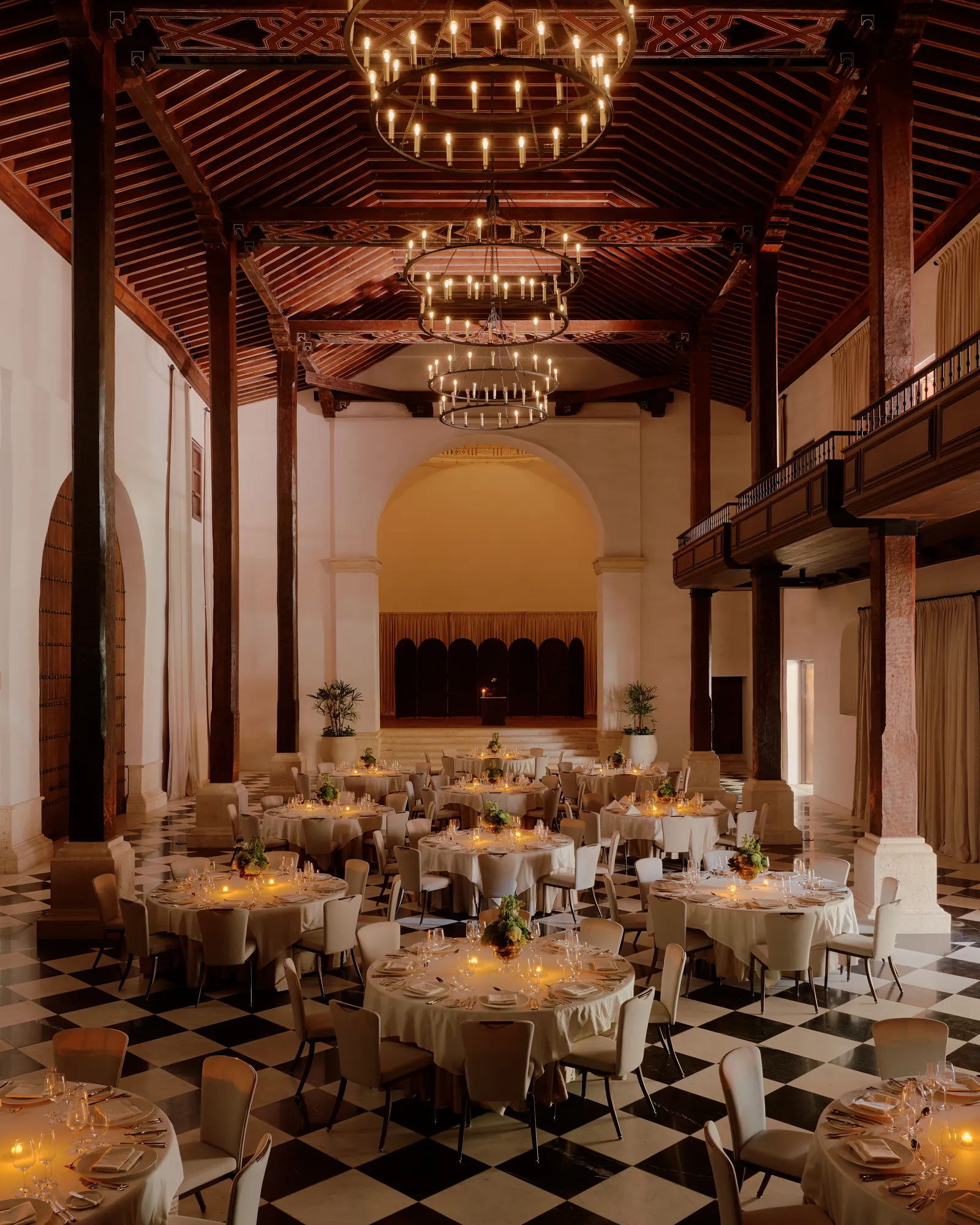
The ballroom, housed in a former church.
“It felt like a huge responsibility,” confirms Laura Acevedo, who oversaw the project as the director of concept and design for the project’s developers, the Santo Domingo family. “The property is so unique, so everything in it had to be unique.” The choice of Catroux—who is best known for his residential properties—as one of the lead designers for the property was very much intentional. “We didn’t want the hotel to feel like a hotel,” Acevedo continues, noting that this was also why they designed so many of the details from scratch with the help of local artisans. “It felt like an opportunity to show the world what can be done here in Colombia.”
It’s a directive that came from the very top. “From the beginning, this was about allowing the destination to lead, ensuring the architecture and interiors feel considered, respectful, and inseparable from Cartagena itself,” Alejandro Reynal, the president and CEO of Four Seasons, tells me later. It is, he says, a “perfect representation” of how he sees the future of the brand: “entering destinations thoughtfully, partnering closely with local communities, and creating experiences that immerse guests in their surroundings.”
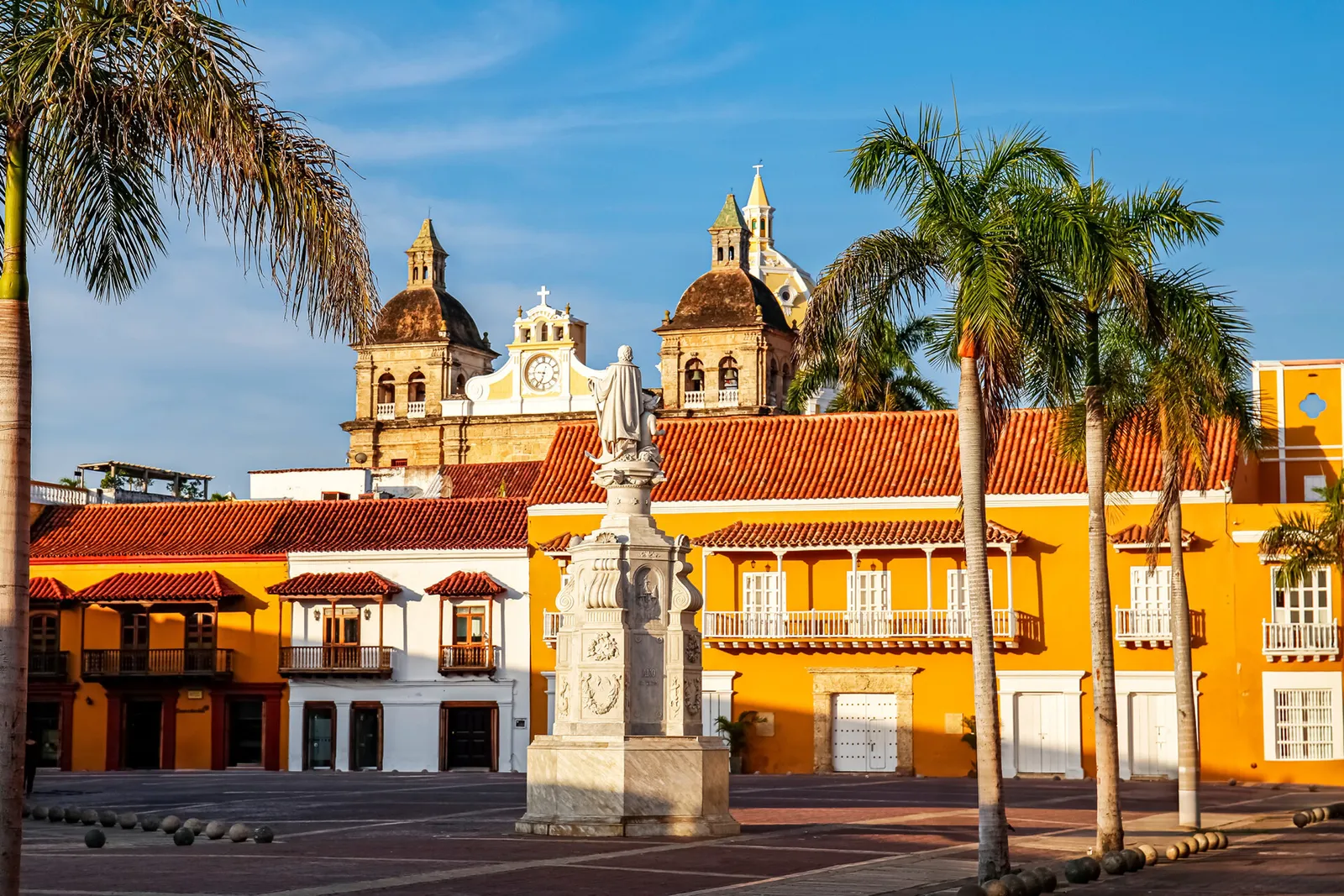
The Plaza de San Pedro Claver in Cartagena’s walled city, just five minutes walk from the Four Seasons.
That connection to its surroundings is palpable across every space of the hotel, from the breathtakingly intricate fresco of a lush tropical scene that adorns the ceiling of the Grand Grill—a classic American steakhouse that marks Carbone founders Major Food Group’s first venture into South America, and serves a mean prawn cocktail—to the Art Deco glass doorway surroundings and inlaid wood mirrors scattered throughout the property. “Even if you don’t pay attention to every little detail, I think you can feel it,” says Acevedo. “There’s a harmony to it all.”
You really can feel it: in the soothing creams and black tones that ribbon their way through every space, or the airy corridors that flawlessly seam one building to the next, or the evident respect for its bones. (I was especially charmed by the stone column that peeked out of the wall in my room.) Though over the course of my three nights in Cartagena, the corner of the hotel I grew most fond of was right outside my bedroom: a wicker chair and cushioned footstool overlooking the hushed cloisters, where four colossal banyan trees sit in the center, their tendrils dappled with different shades of sunlight throughout the day. It doesn’t get much lovelier than that.
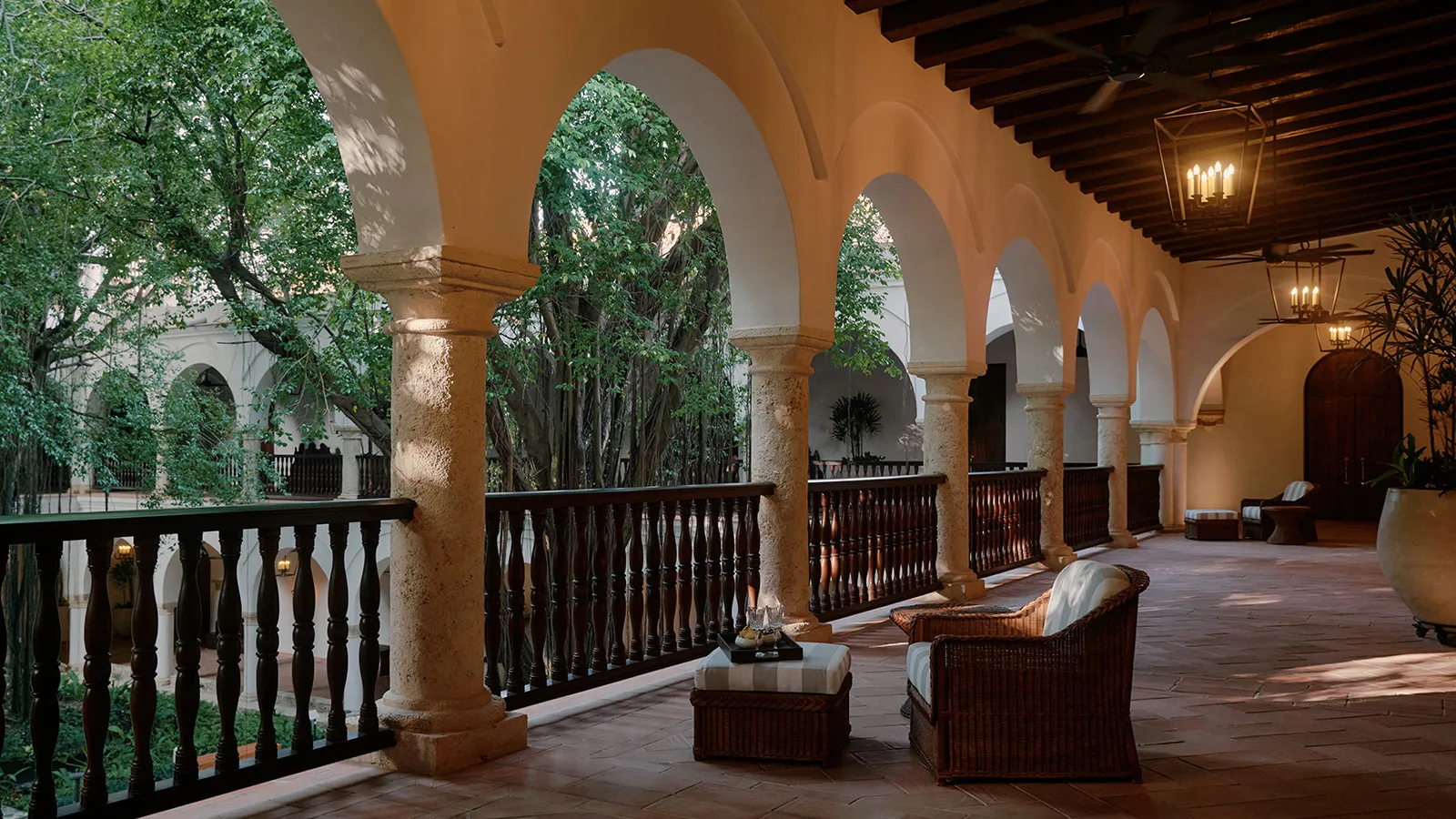
The first floor of the cloisters of the former San Francisco Monastery.
I would have been quite happy potting around the hotel for a few days, but the team was keen for me to explore. To make that happen, they’ve partnered on their guest experiences with Galavanta, a DMC (or, in layman’s terms, a regional travel specialist) run by a creative Colombian couple whose strength lies in “ungoogleable” experiences. Of course, there are a handful of very googleable experiences they also recommend, but only because they really are worth it: an afternoon browsing the kaleidoscopic boutiques of the Old Town, guided by a local fashion designer named Paola, as well as lunch at the perennially (and deservedly) booked-out Celele, a World’s 50 Best restaurant where I enjoy a ginger flower and gulupa salad speckled with Caribbean flora that might be just about the prettiest dish I’ve ever eaten.
But Galavanta’s ties here also run deep. A particular highlight is an afternoon with Fernando, one of their historians, who leads me on a genuinely captivating walking tour of the city, aided by a wealth of vintage photos and maps on his iPad and an even greater wealth of local knowledge. He shows me his childhood home, on a Getsemani street a few blocks away where locals sit on their stoops and chit-chat, and recalls the first friends he made in the city, playing football on the pavements after moving there from Bogotà as a kid; as we move from district to district, he offers an even-handed account of how gentrification and the country’s turbulent politics more broadly have shaped the neighborhoods we walk through. Finally, we stop at a market to try traditional Colombian sweets, and he stocks me up with a pot of papaya stewed in syrup to take back to my room as a midnight snack. By the time we’re back in the hotel’s entryway, I check my watch, and it’s been three hours—I could have done another three.
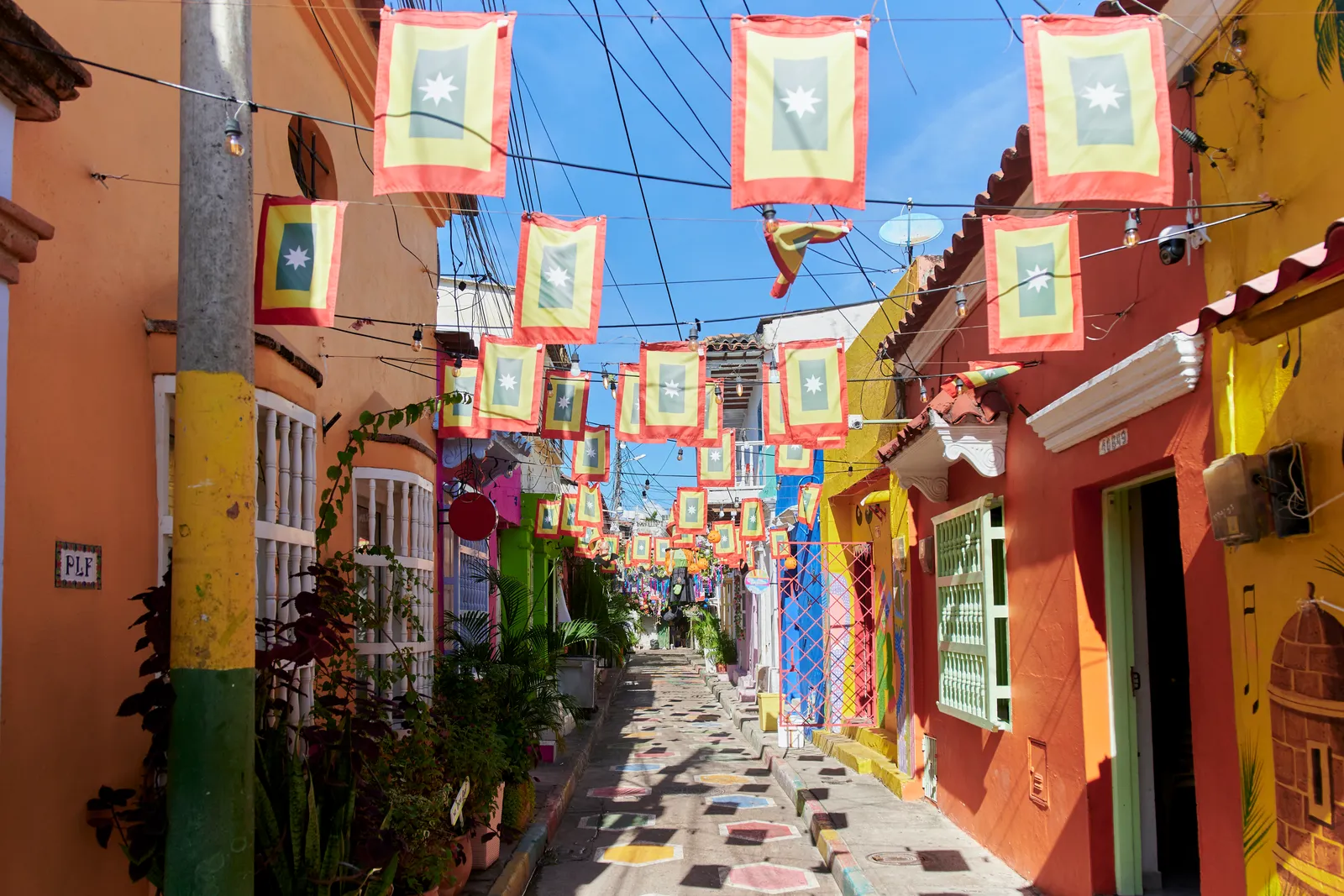
A street in Getsemani.
I eventually learn, however, that what truly makes Cartagena an unbeatable destination is its ability to fire on all cylinders as both a city break and a beach holiday. On my final day, I headed to the port right next to the hotel, and was whizzed out on a speedboat through Cartagena Bay and the Bocachica Strait. Just 45 minutes later, I was in the Rosario Islands, a picture-postcard Caribbean paradise of soft white sand beaches, coral reefs, and gin-clear waters. While we passed a couple of rowdy party boats on the way, we were heading to a destination—uncovered with the help of Galavanta, of course—that was altogether more peaceful.
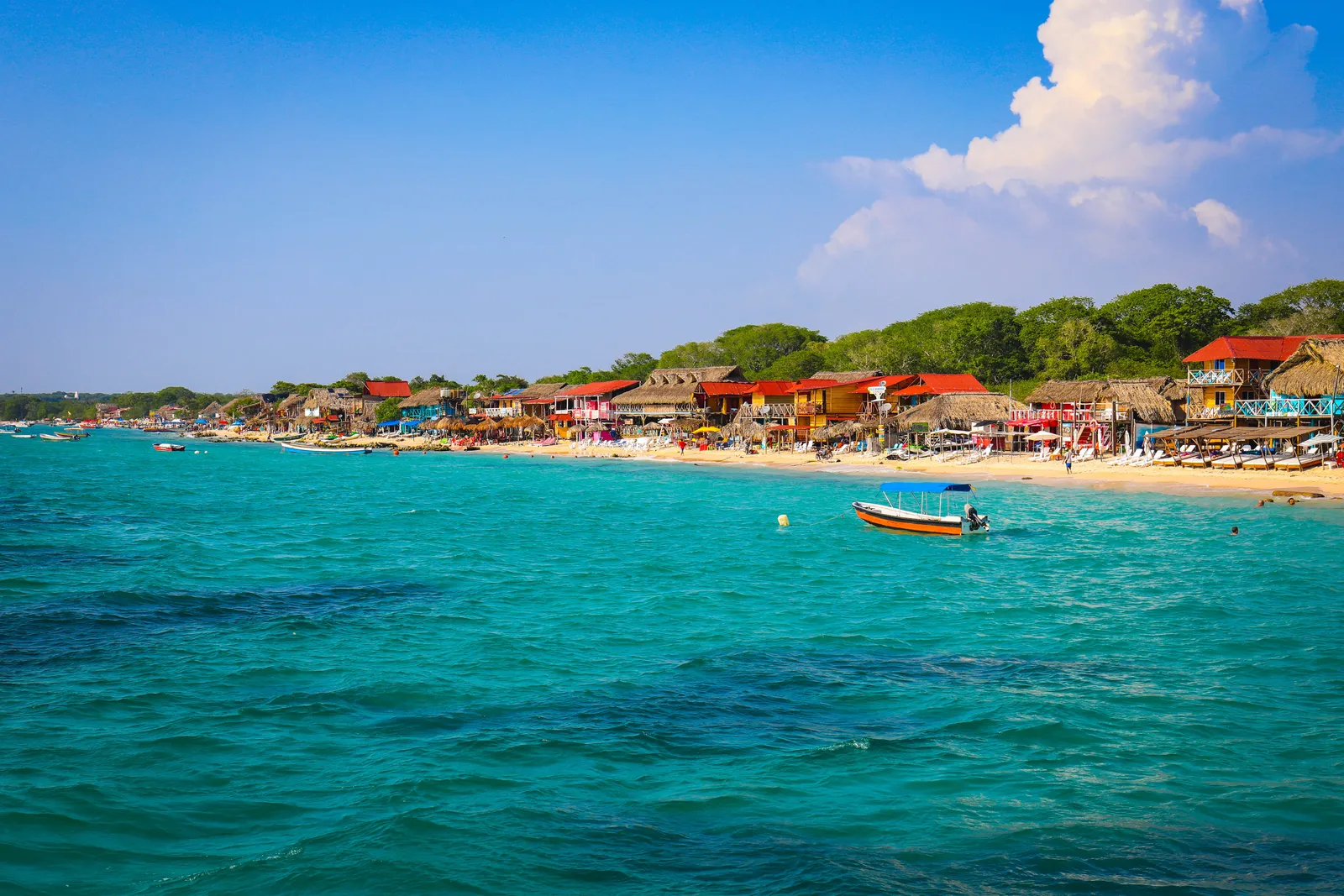
The Rosario Islands.
A few minutes later, we pulled up to an almost comically idyllic 1,500-square-meter island of Cala Mambo: a dusty pink, thatch-roofed villa at one end, and a beach bar and jetty at the other; the half a dozen or so guests staying there lay in hammocks, leafing through books and sipping spicy mezcal margaritas. I was led on a quick tour of the property by its owners, the Colombian couple Daniela and David, before a feast of tuna ceviche and grilled lobster and plantain fritters was laid out on an overwater terrace, to enjoy while watching the pelicans swoop down and pluck their own lunch from the sea with a splash right next door. It felt almost absurd to imagine that Cartagena’s restless metropolis was less than an hour away.
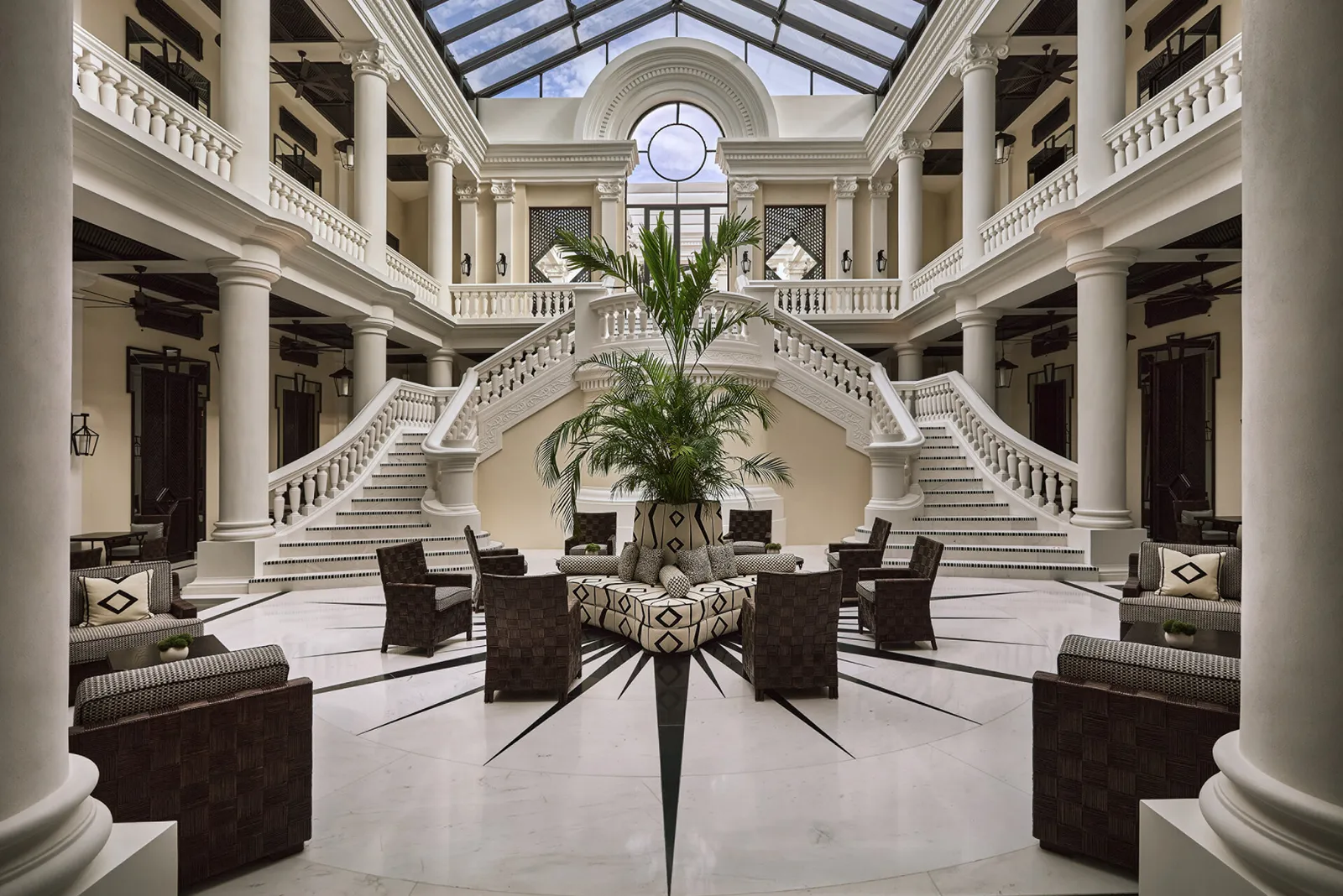
The grand foyer of the former Club Cartagena, restored to its original glory with the addition of a glass roof.
But it was, and when I returned to the hotel that evening, it was livelier than ever. At cocktail hour, the atrium was humming once again: aperitivo carts heaving with fruit and cheese criss-crossed the marbled floors, locals sipped on ginger mojitos, and guests glided up the dramatic split staircase to take in the final rays of afternoon sun on the supremely elegant, Catroux-designed outdoor terrace. If there were any teething problems over the first few days of opening, I certainly hadn’t noticed—it felt like a hotel in full swing. A century after Club Cartagena opened its doors, its story is just beginning.
