



Photo: Shahram Saadat
This article is part of the Future of AI, a collection of articles that investigates how artificial intelligence will impact the fashion and beauty industries in the years to come.
In many ways, sustainable fashion is an oxymoron — a utopian ideal at odds with the current system and the values powering it. It requires the kind of wholesale systems change that can take decades or longer to achieve.
But advocates of AI are quickly building infrastructure that they say could supercharge this process. At the very least, it could streamline the complex process of gathering and verifying data that has everyone from brands to suppliers sinking in the quicksand of compliance.
Vogue Business invited AI innovators to share their future visions for sustainable fashion (with the major caveat that poorly managed AI infrastructure can have disastrous consequences for the environment, and AI companies need much more robust ways of measuring and mitigating this to claim a net-positive impact). So, what are the seeds being sown today that could shape sustainability tomorrow?
Data-driven design
Among AI’s promises to fashion: its algorithms can aid in the design process, making it more efficient and reducing waste upfront.
Curbon was founded in 2025 by three Princeton University students to take the guesswork out of eco-design. “The majority of a product’s environmental impact is determined at the design stage through material selection, supplier geography, supply chain, and logistics, among other factors,” says co-founder Joe Wahba. “But it’s at this precise point that visibility into environmental data is at its lowest. The other issue is that sustainability teams often have competing targets for a given product compared to design, procurement, finance, and compliance teams. For sustainability to be incorporated, environmental modeling can’t just sit in spreadsheets or carbon accounting platforms; it needs to be integrated into product and supply chain decisions, and aligned with those competing targets.”
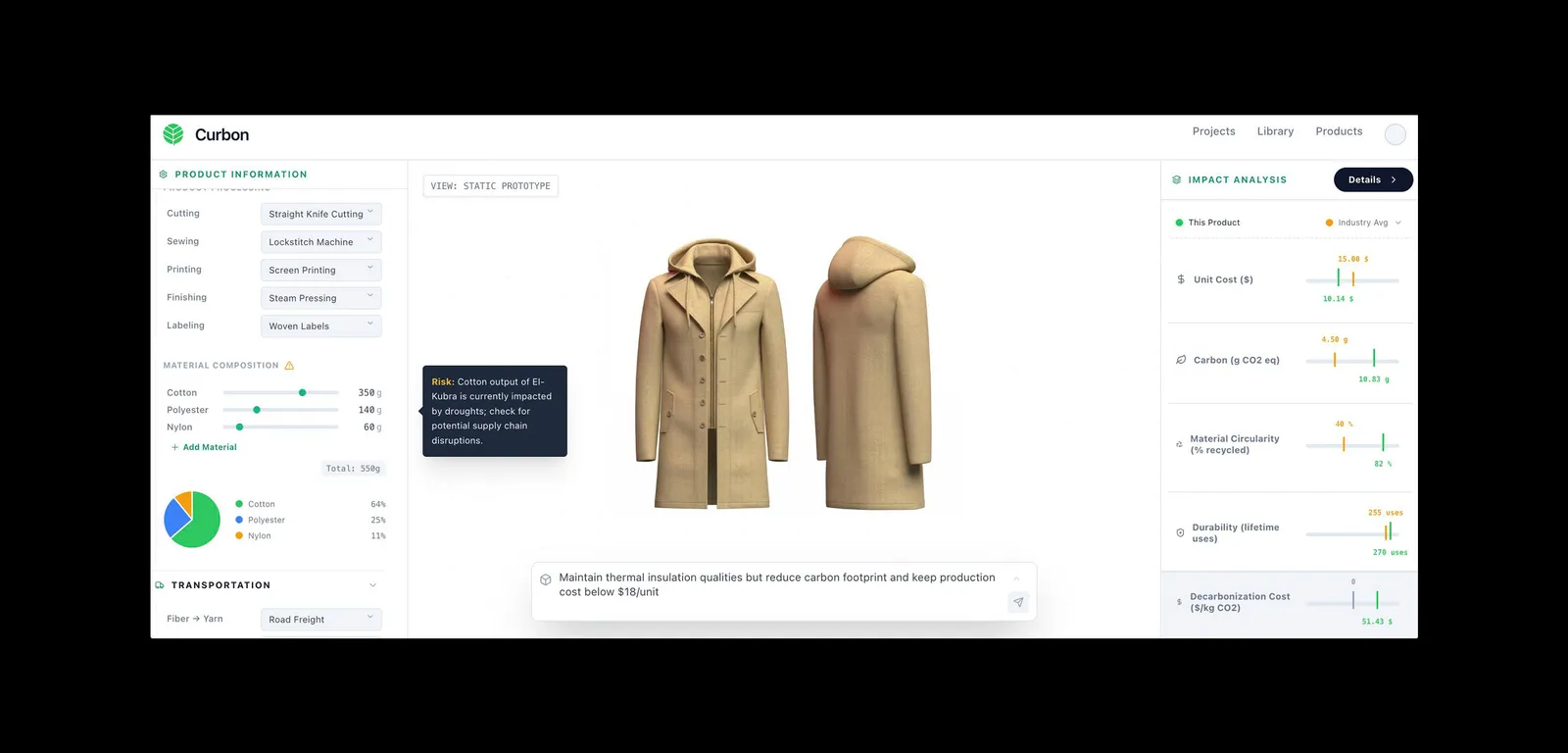
Curbon uses AI to aggregate supply chain and lifecycle assessment data, making recommendations to reduce the environmental footprint of a given product in the design stage.
Like Curbon and Swedish competitor Material Exchange, UK-based Circkit uses AI to aggregate huge swathes of supply chain and lifecycle assessment (LCA) data, making recommendations to reduce the environmental footprint of a given product in the design stage. “Everything brands would normally only know post-production, we take it and stick it at the front, so they can almost reverse engineer their outputs,” says Circkit founder Joe Darwen.
Right now, these AI-powered systems are only as good as the limited data available to feed into them, but each startup has its own approach to filling these gaps in the near future. Circkit is working with traceability platforms, leveraging the data brands are already collecting to comply with digital product passport (DPP) and supply chain due diligence regulations, and plugging the gaps with in-house assessments of garment weight by category. Material Exchange is working with Worldly, the company behind the Higg Index, again utilizing data brands are already reporting elsewhere, but facing the same limitation, that most data today is aggregated rather than brand or factory-specific, meaning individual investments in decarbonization or energy efficiency are not factored in, giving inaccurate or incomplete LCAs.
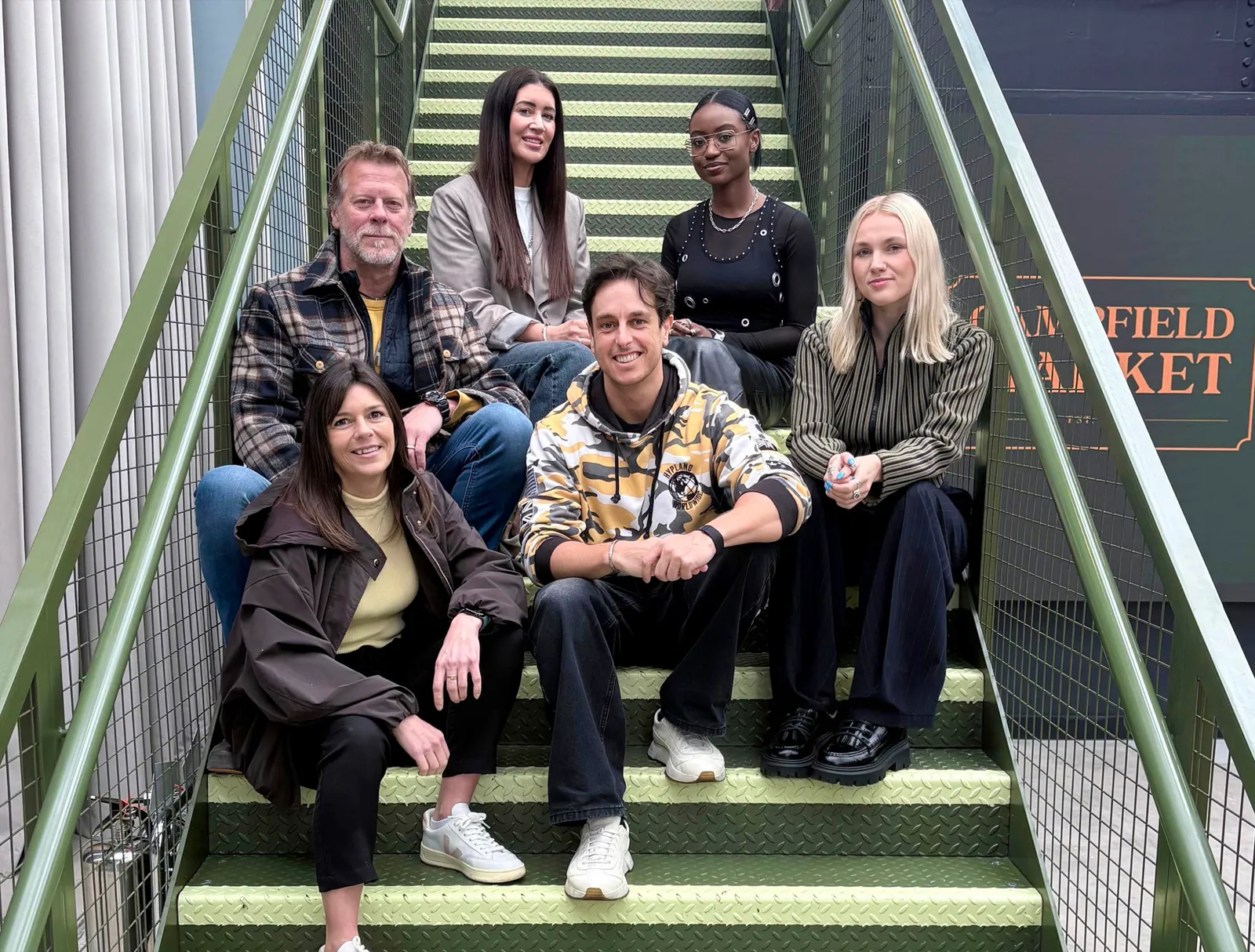
The Circkit team at their office in Manchester, UK. Left to right: Simon Platts (CIO), Sarah Foster (CSO), Lindsey Caldwell (business analyst), Joe Darwen (founder & CEO), Lydia Oyeniran (product manager), Annabel Lindsay (brand & comms manager).
Curbon is exploring something called a dynamic data integration pipeline, says Wahba, which would allow it to calculate what companies would need to do to hit a specific target for a product (a certain carbon footprint, for example) even when there are gaps in the data, making educated assumptions based on the data that is available. “This would allow us to infer and estimate missing data, then automatically update it when more accurate data becomes available,” says Wahba. This could help brands to essentially “backcast” their sustainability targets, so they can see what changes are necessary on the product level to hit big-picture targets. “Specificity is key,” he adds.
Looking ahead, Material Exchange envisions a world in which these AI-powered systems don’t just provide the data to help humans make better sourcing decisions, but become a sounding board in the actual decision-making process. Its blue-sky goal is for each stakeholder — sourcing teams, sustainability teams, compliance, finance, factories, and more — to have their own autonomous AI agent, and for the agents to speak to each other, without the need for human intervention. The AI agents will not act on behalf of Material Exchange, making recommendations they could be legally liable for, explains founder Dóra Lality. Their “recommendations” will essentially just be filtered searches, locating the optimal material or supplier within an enormous database, using parameters or priorities set by the brand.

Long term, Material Exchange envisions a world in which stakeholders each have their own autonomous AI agent, which speak to each other, without the need for human intervention.
For example, if a brand wants to create a T-shirt using regenerative organic cotton, but they would prefer to source nearshore from a country with lower tariffs, and they need every supplier to be powered by renewable energy. Plus, if a supplier could score higher in the ranking if they invested in electrified heat pumps or automated dyeing systems, the platform will recommend that the brand co-invests to make this happen. Essentially, it’s a quicker way of saying that only three out of 5,000 options meet your requirements, side-stepping the current system of endless emails and clunky spreadsheets, says Lality. In an ideal world, adds Material Exchange CEO Darren Glenister, every entity in a supply chain would be digitally connected. Not just companies, but individual machines like looms, dye baths, and sewing machines. Some factories are already exploring this, using automated robots to move bolts of fabric between stations based on capacity.
Compliance without the complications
When it comes to compliance, AI innovators are focused on streamlining the process and reducing duplication, so suppliers and brands only have to input data once — a major hurdle today.
TrusTrace was one of the earliest digitized traceability platforms in fashion, but founder Shameek Ghosh says AI has dramatically reorganized and revolutionized the company. “Before, it was about helping brands with implementing traceability. Now, it’s about the art of possibility, and what they can do with this data they have collected.”
With AI, TrusTrace can gather even more data, incorporating hand-written notes and other languages, says Ghosh. It can also make recommendations for more sustainable sourcing decisions, based on the supply chain risk data it gathers, with the added context of whether it’s talking to a fast fashion brand that might use more recycled synthetics, or a luxury brand that prefers to stick with natural fibers. But the biggest change will be agentic AI, says Ghosh. The goal is for TrusTrace to move from static risk and compliance reports to dynamic queries, allowing brands to use it almost like a “co-worker” that makes traceability “seamless” throughout the company, rather than a siloed function within an equally siloed sustainability team. “We’re not quite there yet, but that is the goal,” he adds.

TrusTrace is using AI to streamline the compliance process and play a more active role in brands’ supply chain risk management strategies.
While companies like TrusTrace focus on large corporations, one startup is working to bring informal fashion systems into the conversation. Anaar is a joint venture from entrepreneur Aditi Angiras; Vishal Kapoor, COO of blockchain infrastructure network Chia; and Lucy Tammam, founder of womenswear brand Tammam. The goal is to question how artisans and small-scale suppliers with limited access to digital infrastructure or big compliance teams can be recognized in the push for supply chain traceability. Anaar is currently piloting a number of AI agents, which could help incubate these informal workers, preparing them to plug into bigger AI-powered traceability systems. So an artisan could upload a paper invoice, for example, and Anaar would extract the relevant data, helping the artisan understand whether they need to comply with certain regulations, and how.
“Upcoming regulations always seem to penalize people who are doing interesting work in sustainability, but lack the set-up cost for digital reporting systems,” says Angiras. “What happens to the people operating alternative business models? The small suppliers, the home-based workers, and the individual artisans? How do you verify someone that doesn’t really like to be verified? How do you onboard offline participants in the fashion system, so they can be recognized and rewarded? If you can’t make your impact group visible in the formal system, you can’t make any visible changes to their livelihoods.”
Gathering compliance data and onboarding artisans is one challenge, but making compliance cool for consumers is another beast entirely. That’s where Alu comes in. Founded by Donatela Bellone, who previously launched and led McKinsey’s ESG arm, Alu aims to turn DPPs into brand experiences that can boost revenue, engagement with circular services like rental and resale, and customer loyalty. On the backend, Alu uses AI to automate data-gathering for DPPs, which would otherwise require countless emails, chasers, and audits. But the bit that excites Bellone most is the consumer-facing side.

Alu founder and CEO Donatela Bellone scanning a digital product passport. Alu is using AI to make this a more dynamic, brand-driven experience, which incentivizes circularity.
The utopian vision is to turn DPPs from a static compliance tool into a dynamic, exciting and emotional brand experience, gamified to incentivize engagement with rental, resale and repair. If a consumer hasn’t used or scanned a particular product in six months, Alu might suggest that it resells or reimagines it, using data about that consumer’s style preferences to recommend different styling techniques. It could also take the legwork out of repair, using one photo of the garment to find the most suitable repair option nearby. The long-term goal is for Alu to function almost like a social network for clothing, reminding consumers of core memories associated with that item, and connecting them with other people that own the same or similar products. “It’s hyper-personalization, facilitating a conversation between the owner and the product,” Bellone explains.
Waste as a resource
While most AI innovations currently in development for sustainable fashion focus on streamlining the data we already have, some startups are trying to create new data sets entirely, making previously hidden parts of the supply chain visible and optimizing them.
Last year, Refiberd won the Global Fashion Agenda and PDS Trailblazer Award, as well as the CFDA x Ebay Circular Fashion Fund. At that point, the US-based startup was laser-focused on its AI-powered textile-detection technology, which used hyperspectral imaging to figure out the material composition of a garment. The goal was to help recyclers identify material compositions, even when mixed, easing one of the biggest challenges for textile-to-textile recycling.
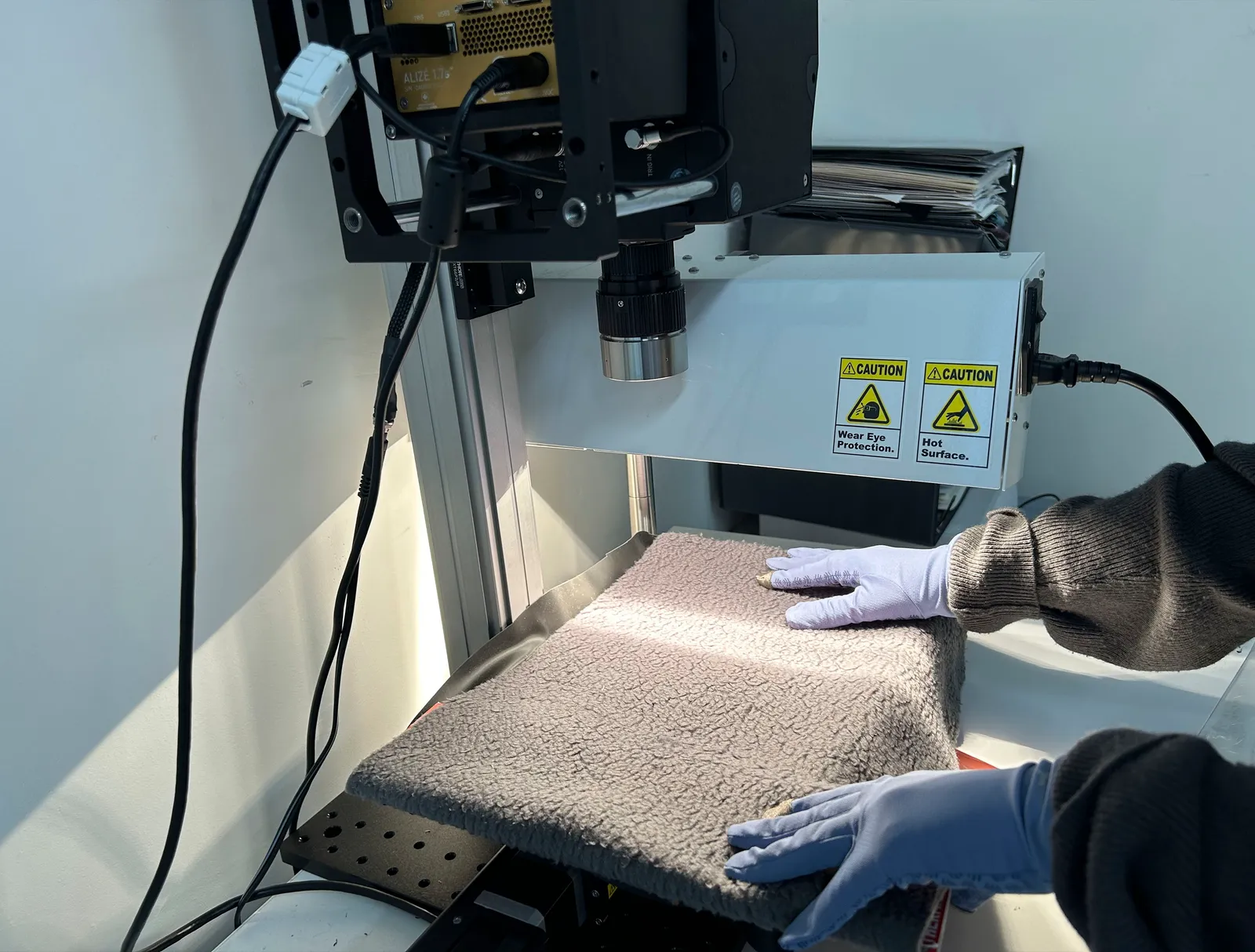
Refiberd started out using hyperspectral imaging to figure out the material composition of a garment, as shown above. Now, the company has broadened its horizons, using AI to solve a number of barriers to circular fashion.
Now, co-founder and CEO Sarika Bajaj says Refiberd has broadened its horizons, creating a number of different AI models to support circularity and traceability. Also in the pipeline is a resale model to help sorters place waste where demand is, rather than shipping it blindly across the world and essentially hoping for the best. “We’re focused on the problems fashion doesn’t have the technological ability to solve without AI, rather than existing processes AI can optimize,” she says. “Fundamentally, it’s about building models that help track a garment from beginning to end. It’s like the dream of DPP, except everything is truly validated and geared toward maximizing the wastestream already in existence, so we can calculate what is being landfilled or incinerated, and extract the lost value.”
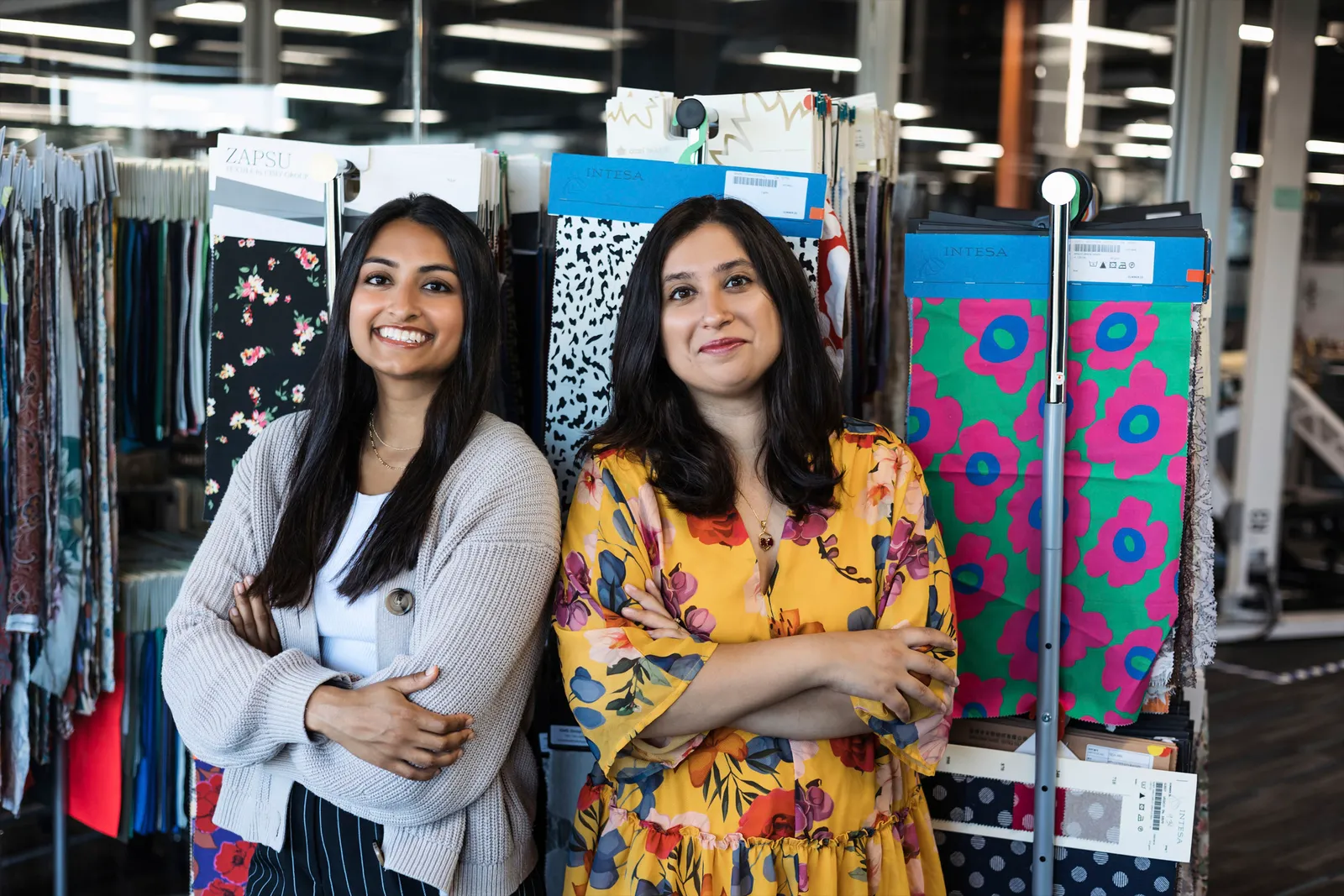
Refiberd co-founders Tushita Gupta (left) and Sarika Bajaj (right).
UK startup Fleek is hoping to use AI to revolutionize the textile waste stream, says founder Abhi Arora. He describes Fleek as a business-to-business (B2B) marketplace that connects resellers of secondhand and vintage clothing with suppliers, wholesalers and sorters around the world, powered by AI. The goal is for this to replace manual sourcing, where vintage sellers have to travel constantly, scouring estate sales, wholesale warehouses, and used clothing brokerages for hidden gems. Before fully embracing AI, Fleek was working to bring used clothing stock around the world online. Now, Fleek users can take a single photo of each item, and the app will do the heavy lifting of sorting and grading it, while suggesting a price and finding potential buyers.
This could help find new uses for the mountains of textile waste building up in EU countries, where separate textile collection is now mandated, but there is not yet a viable sorting infrastructure that isn’t incredibly time or labor intensive. In theory, Fleek says its digitized system could bring the global used clothing market into alignment, allowing resellers in Ghana’s Kantamanto Market or vintage dealers in LA, for example, to sidestep the usual blind bulk-buying process and import what they know they can sell.
That’s where CircularTech comes in. Based in the Ghanaian capital of Accra, the startup was originally created to track single-waste plastic flows in informal markets, later expanding to include textiles and other forms of waste. It was designed with informal waste workers in mind, to capture the quick-moving nature of informal markets, allowing brands to stage needs-based interventions rather than just speculating on what is needed.
“Informal waste workers carry a lot of Ghana’s waste management on their backs, but they are invisible to the system,” says CircularTech founder Nabeela Abubakari. “All of this information remains unbankable because it just lives in people’s heads. So CircularTech is meant to behave like a live-stream data tool.” She points to a recent initiative sponsored by Access Bank, which sought to create 100,000 school bags for children from denim waste in Kantamanto Market. When Abubakari went to the market to source the denim, there wasn’t enough. CircularTech’s goal is to use AI to keep real-time records of what waste is available, where, and what it might be suitable for, making the ever-changing work of informal waste workers visible, while incentivizing brands and governments to value and support it in the process.
“Without this data, we cannot make the policies or build the infrastructure that is needed,” Abubakari says. “This sector has been neglected by the dominant systems. My hope is that AI can change that.”
