


Oscar-winning actress Youn Yuh-jung always seems to have the answer. Take that time at the 2021 Academy Awards when a reporter asked her what Brad Pitt smelled like. She famously replied, “I didn’t smell him. I’m not a dog!” Or that time she called the British “very snobbish people” while accepting a BAFTA—something that could have easily come across as offensive, were it not for her deft delivery. Instead of raising hackles, she had the audience doubled over with laughter.
“It came out naturally,” she tells Vogue of that BAFTAs moment. “It was five in the morning in Korea time. I wasn’t myself. I felt so sorry! They’re such nice people.”
Yet the comment didn’t come from nowhere: in fact, it was based on her experience as an acting fellow at Cambridge University in the early 2000s.
“I realized they’re well-educated and very elite people, but I felt like they are…” She pauses. “Snobbish,” she adds with a laugh.
Though she admits she’s slightly mortified by her previous acceptance speeches (this, despite giving what The New York Times hailed as the best acceptance speech of the 2021 Oscars), it’s precisely Youn’s blunt charm and disarming sense of humor that have endeared her to audiences around the world.
One of South Korea’s most beloved and revered actresses, Youn broke through in the West by playing the foul-mouthed grandmother Soonja in Lee Isaac Chung’s 2020 semi-autobiographical film Minari. She won a slew of awards for the role, including an Oscar for best supporting actress, becoming the first Korean actor to win an Academy Award and the second Asian woman to win best supporting actress in the Academy’s nearly century-long history.
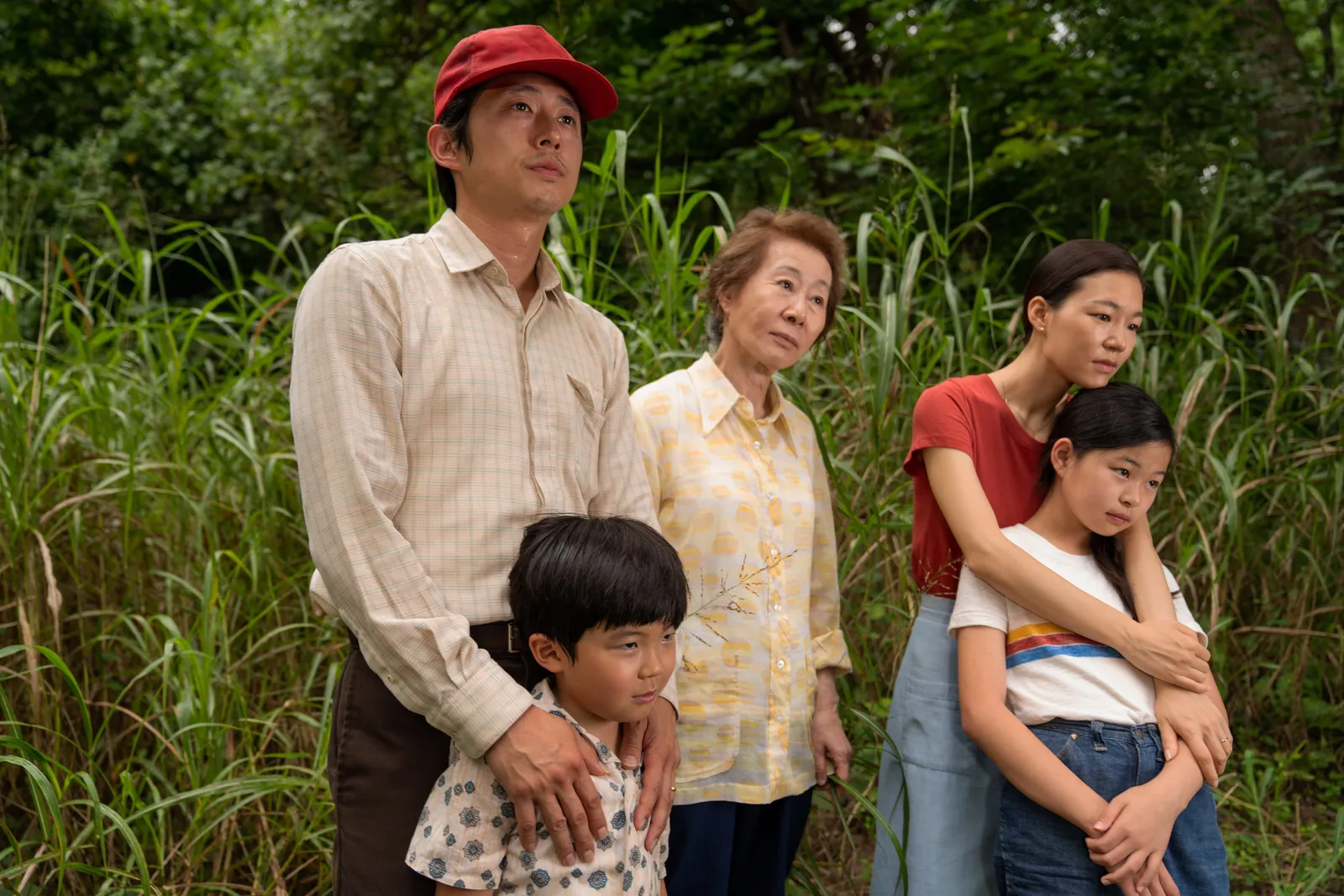
Steven Yeun, Alan S. Kim, Youn, Han Ye-ri, and Noel Cho in Minari.
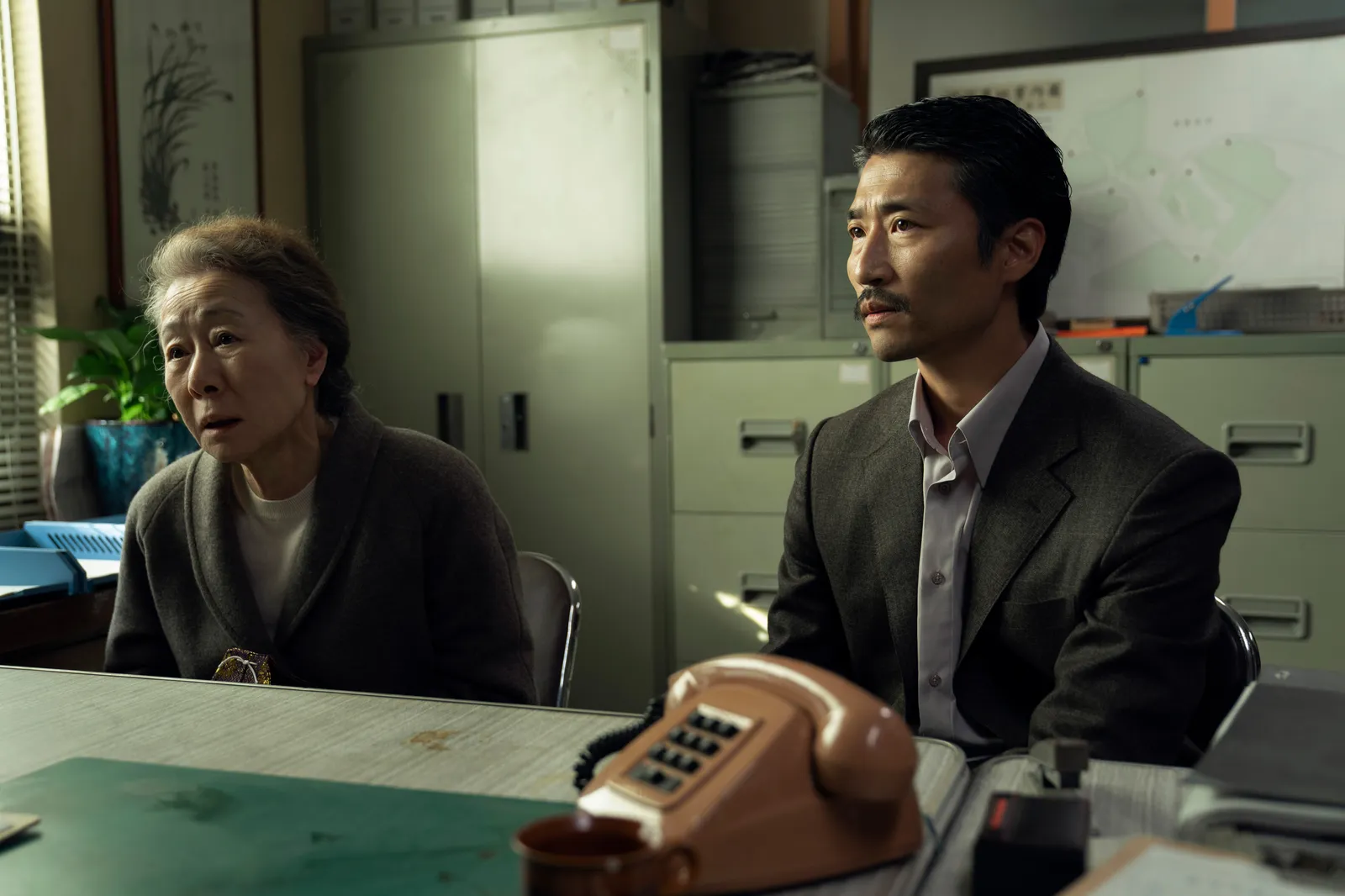
Youn and Soji Arai in Pachinko.
Following Minari, she starred in several more Hollywood productions, including Apple TV’s Pachinko, 2025’s The Wedding Banquet, and, most recently, the second season of Netflix’s Beef, playing Chairwoman Park, the billionaire owner of a country club.
Youn’s acting career began incidentally. While enrolled at Seoul’s Hanyang University in the 1960s, she was looking for a part-time job to help pay for tuition when, while visiting a television station, she was asked if she could hand out prizes to the audience of a children’s game show.
“I said, ‘Okay, I’ll do it.’ And I did,” she says. “And then they gave me the check. I was surprised, so I kept going.”
Then, one day, a producer at the TV station invited her to audition for an acting job. “You know, my major was Korean literature,” Youn says, explaining that the TV network had tried but failed to attract any film school students. “My life is full of surprises.”
After appearing in a few TV series, she made her feature film debut in her early 20s, playing a live-in housemaid who wreaks havoc on a middle-class family in Kim Ki-young’s 1971 thriller Woman of Fire. The role catapulted her to national stardom, earning her several domestic and international acting awards. Around the same time, she portrayed another femme fatale character in the historical TV drama Jang Hee Bin, further cementing her popularity.
Then, in 1974, at the height of her early fame, she married Jo Young-nam, a famous Korean singer who was invited by the late evangelist Billy Graham to perform at his crusades across the US. Youn put her thriving acting career on hold and followed Jo to Florida, where he enrolled at the Trinity College of Florida and she became a housewife and, later, a mother to their two sons.
Nine years later, the family returned to Korea, but Jo’s repeated extramarital affairs led to the couple’s divorce in 1987. With no child support from her ex-husband, Youn was left to raise their sons on her own. She attempted to resume her acting career in Korea but found that no TV network wanted a divorcee on any of its shows. “Divorce was like a scarlet letter back then,” she says.
In dire straits, she contemplated returning to the US, but a friend, the screenwriter Kim Soo-hyun, convinced her to stay in Korea.
“[She] told me, ‘You are not the sinner. Why are you trying to run away from Korea? This is your country. Stick with your country,’” Youn says.
So she took on all kinds of acting roles, gradually rebuilding her career with smaller parts. As she hinted in her Oscars speech, for Youn, acting was simply a financial means to provide for her children.
“It was a job to me,” she says. “I did not consider myself a star; it was not glamorous to me. I was just a single mother trying to feed both of them. I chose almost everything. I was working constantly.”
It wasn’t until she was around 65—after her sons “got all settled”—that she felt she finally had the freedom to choose the projects she wanted to do. One of them was Andrew Ahn’s 2025 remake of Ang Lee’s The Wedding Banquet, which felt deeply personal; her elder son came out as gay in 2000.
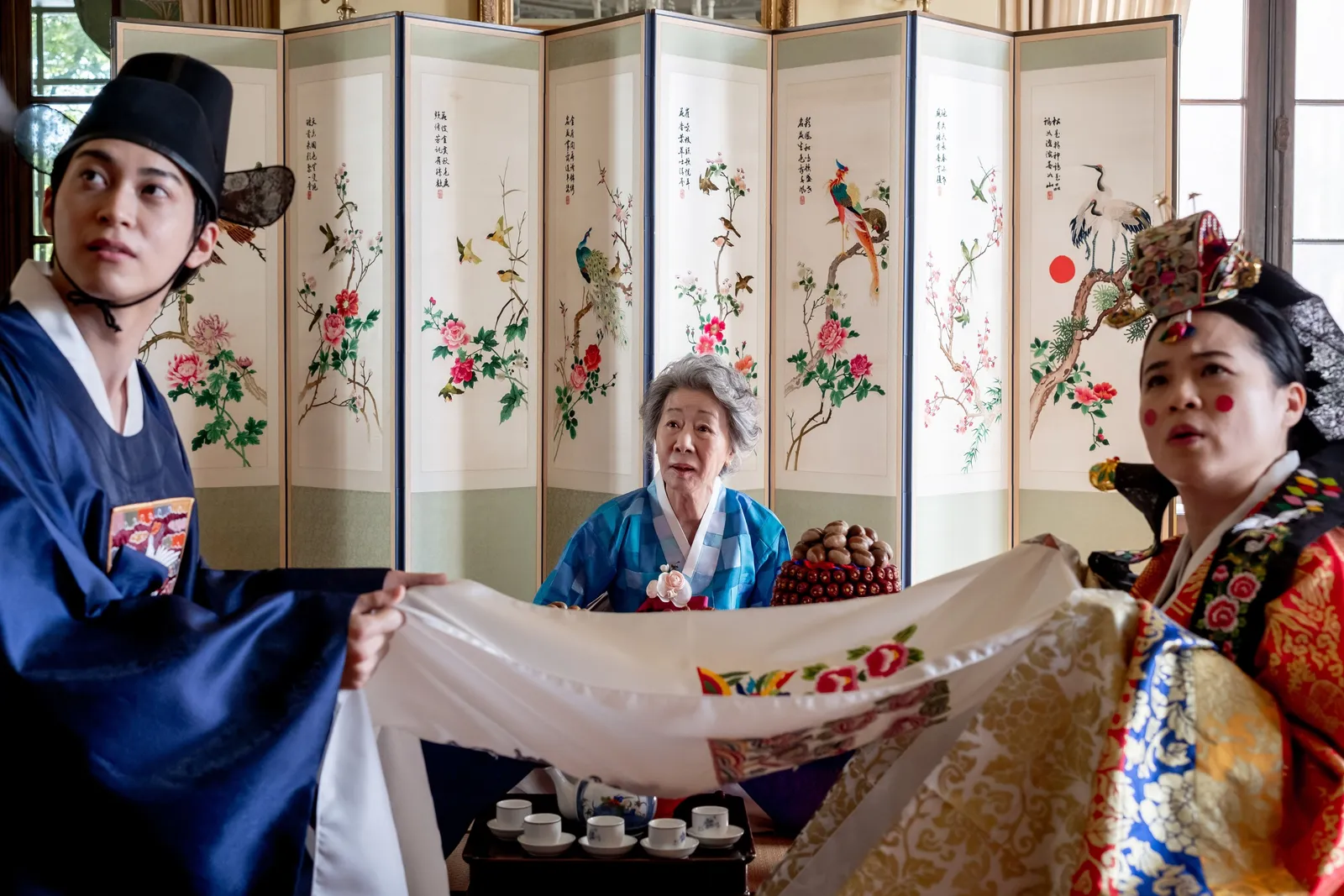
Han Gi-Chan, Youn, and Kelly Marie Tran in The Wedding Banquet.
As for Beef Season 2, she told creator and showrunner Lee Sung Jin that she would play the role of Chairwoman Park as long as she didn’t have to act in English.
“He said, ‘Don't worry, you're a very rich woman. You have your own translator, so you don't have to speak English.’ ‘That's perfect. I will do it,’” she says, laughing. (She would later “panic” upon discovering that her role involved more English dialogue than she’d expected.)
Youn admits that the role of a rich and powerful woman was enticing—as was the fact that her character was originally supposed to have three husbands. (“That’s a lot, so it will be interesting,” she remembers thinking. “Then, of course, that ends up to be only two.”)
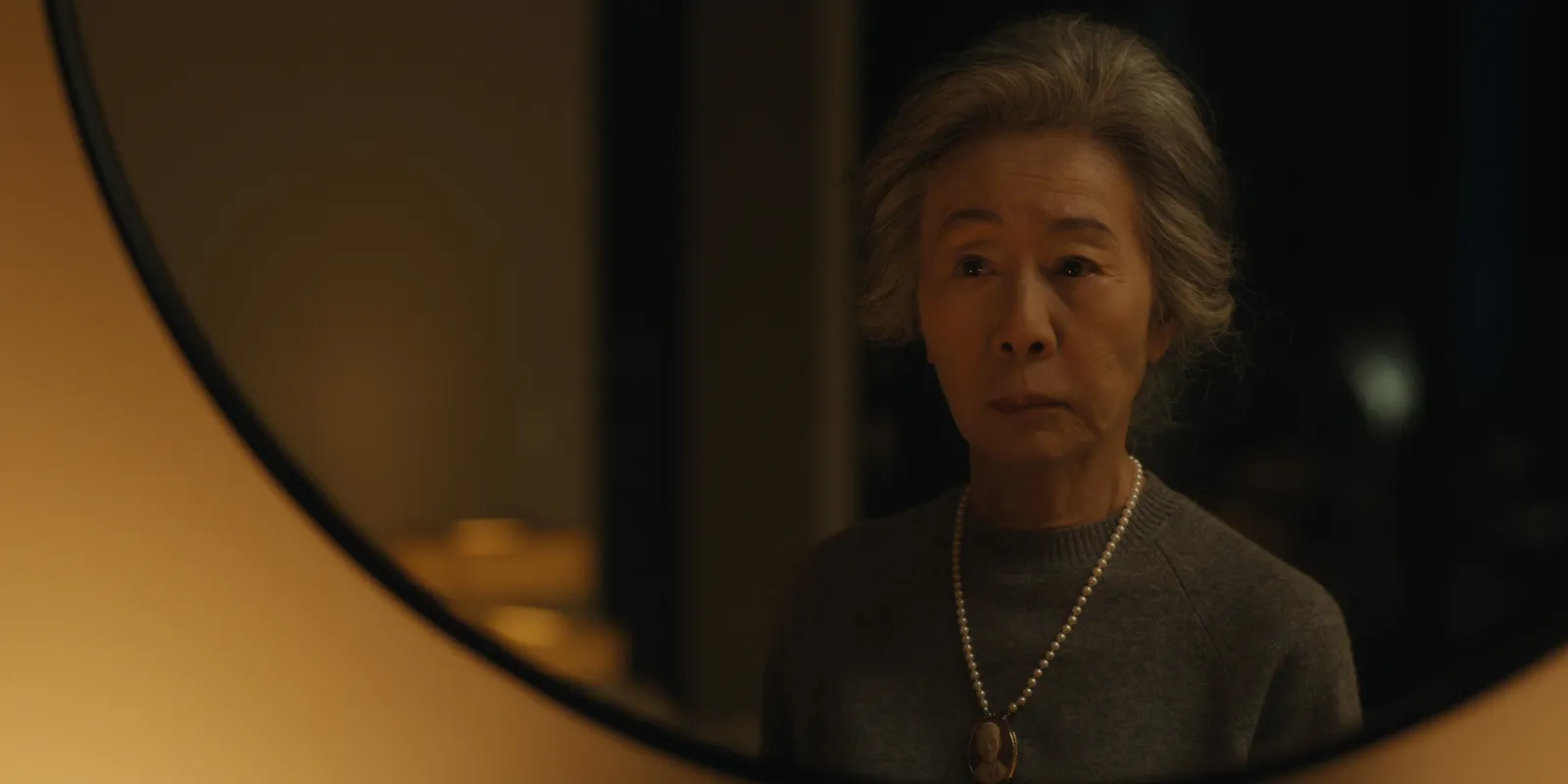
Youn in Beef.
In fact, she would end up wielding some power of her own over the production. When legendary Korean actor Song Kang-ho, who plays her second husband, Dr. Kim, initially turned the project down, Youn called him up herself.
“I was begging him,” she says. “‘Song Kang-ho, you are the best actor in Korea that I know, so you could play any role, I'm sure. Please do it for me.’ I really wanted him to play my counterpart.”
It worked: Lee later called to tell her that Song had accepted the role. “I bought dinner and a lot of wine for [Song] after that,” Youn says.
Although she enjoys the challenge it offers her, Youn says that she never intended to work in Hollywood. “You know, life is not going the way I planned,” she says. “That I learned.”
She implies that her lack of English fluency would prevent her from starring in many more Hollywood titles anyway—though it’s worth noting that she has conducted this entire interview in English.
“She is really worried that her English isn’t perfect, because for Koreans, everything needs to be perfect, right?,” says her second son, Neul, who is present for part of the conversation.
It’s that instinct to work harder and to hold yourself to a higher standard—combined with a bit of serendipity—that has brought Youn to where she is today. A fighter and a survivor, she overcame enormous hardships as a wife, a mother, an immigrant, and a struggling actress before finding her greatest international success in her 70s.
When asked whether she has any advice for younger people charting their own course through life, she replies with her characteristic candor.
“You know what? I don’t give any advice. It’s a waste of my time,” she says with a laugh. “You live your own life, you will learn day by day with experience. Everybody was against my marriage—people gave me advice... Look what happened to me. So I'm not giving any advice. I'm not the pope.”
此内容由惯性聚合(RSS阅读器)自动聚合整理,仅供阅读参考。 原文来自 — 版权归原作者所有。