


This article is part of the Future of AI, a collection of articles that investigates how artificial intelligence will impact the fashion and beauty industries in the years to come.
It’s likely that in time, no area of our lives will remain untouched by AI. This means fashion brands wanting to remain relevant must tap into the evolving desires, behaviors and concerns of a consumer who’s also navigating the AI shift themselves. So what do fashion-conscious consumers actually want when it comes to AI?
To find out, we surveyed 250 Vogue, Vogue Business and GQ readers in the UK, the US and Europe. The key takeaway is that consumers are cautious, and the execution of early applications of AI in fashion is what’s holding them back right now. Those who have adopted its use for shopping are driven primarily by convenience and efficiency, but many are constrained by concerns around trust and authenticity.
That said, there are untapped opportunities for the brands that can get the balance between convenience and authenticity right.
Our survey revealed a discord between consumers’ general use of AI versus their usage for fashion and beauty shopping. Broader usage of AI chatbots like ChatGPT, Google Gemini, and Perplexity is relatively high among respondents: 43% say they use them always or regularly, 26% on occasion, and 32% of consumers say they use them rarely or not at all.
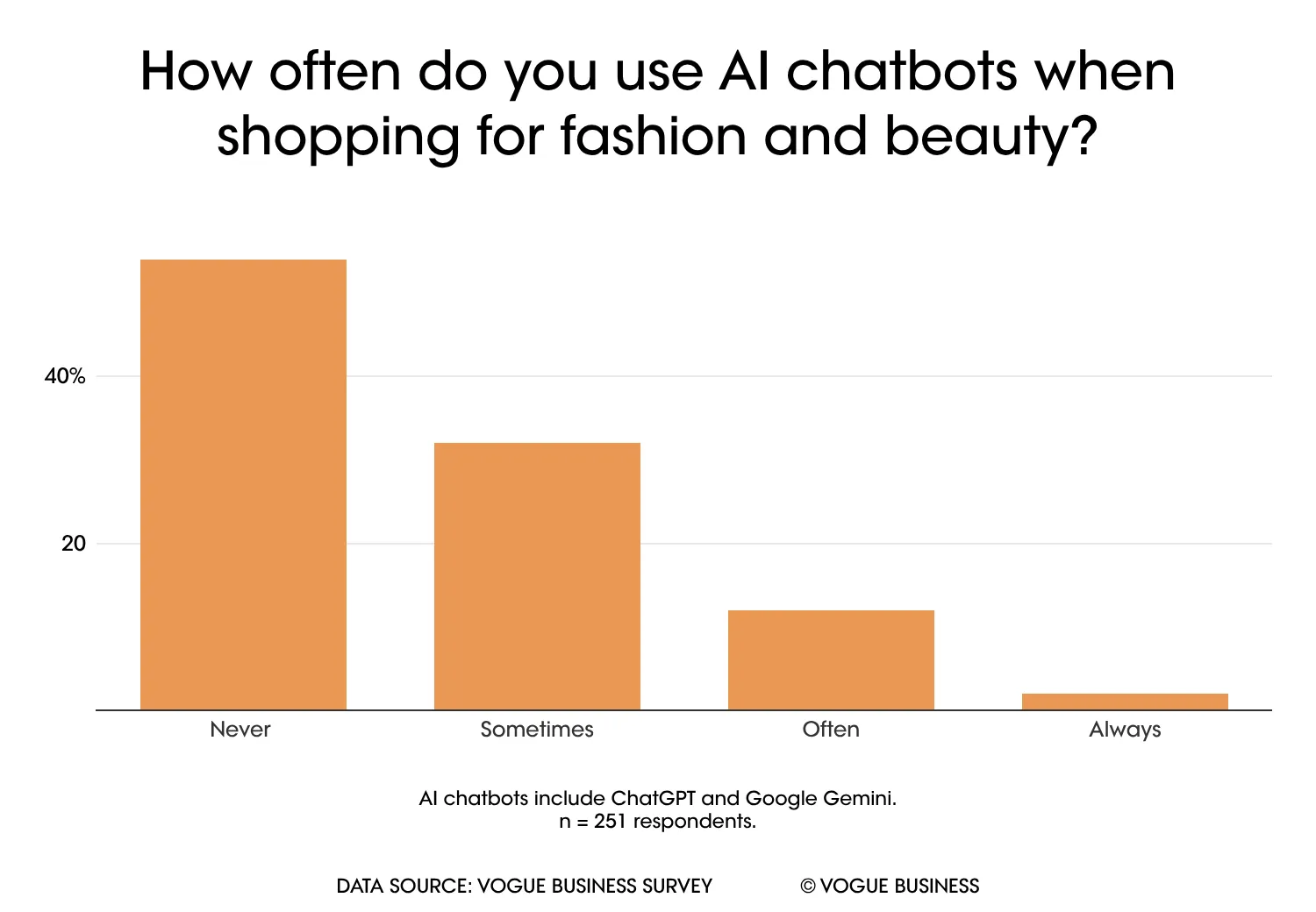
Adoption of AI for fashion and beauty shopping, however, is still early and inconsistent among consumers. Over half (54%) of the audience have never used it for this purpose, and among those who do, usage is occasional rather than habitual. Just 2% of respondents say they always use AI chatbots when shopping for fashion and beauty, with 12% using them often.
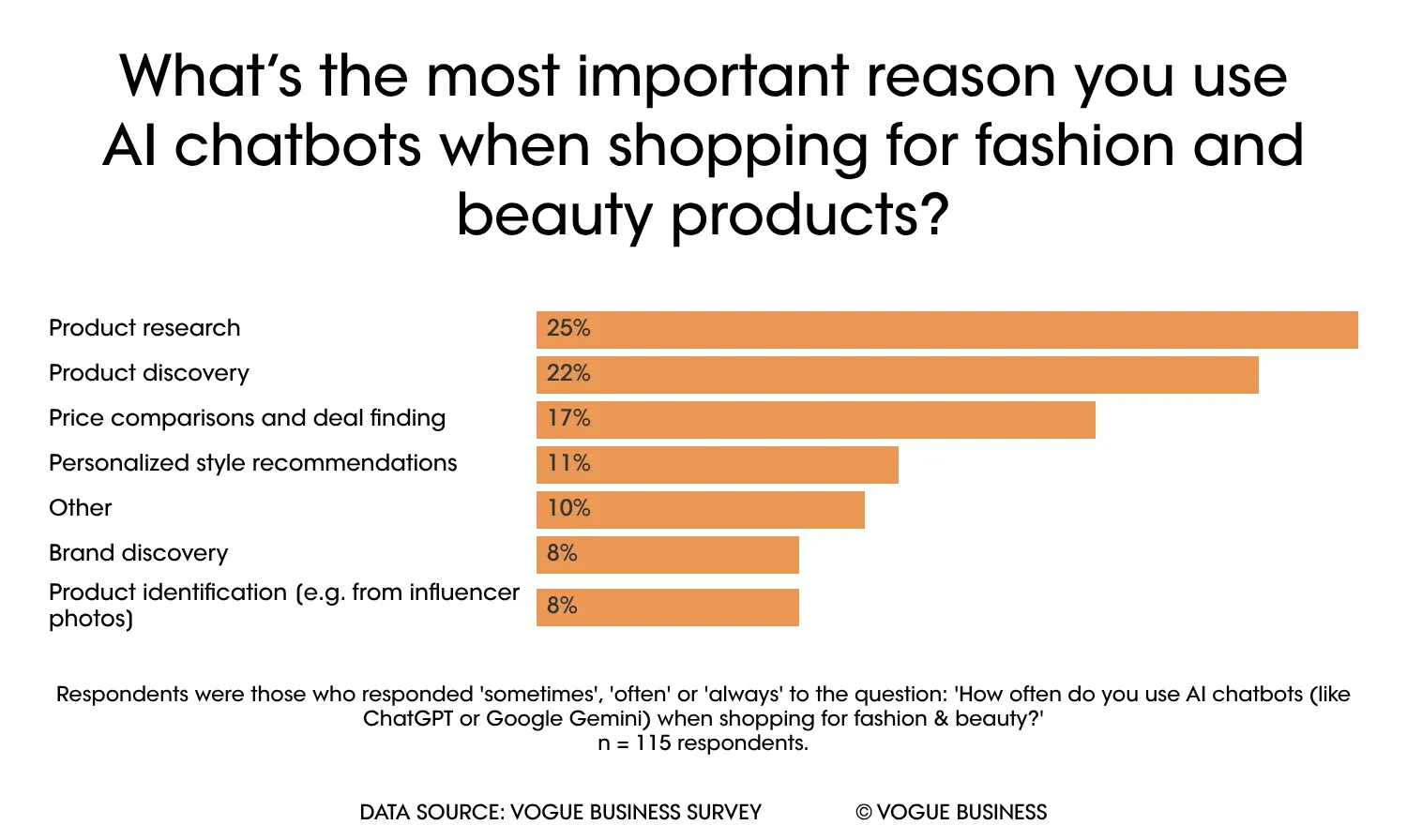
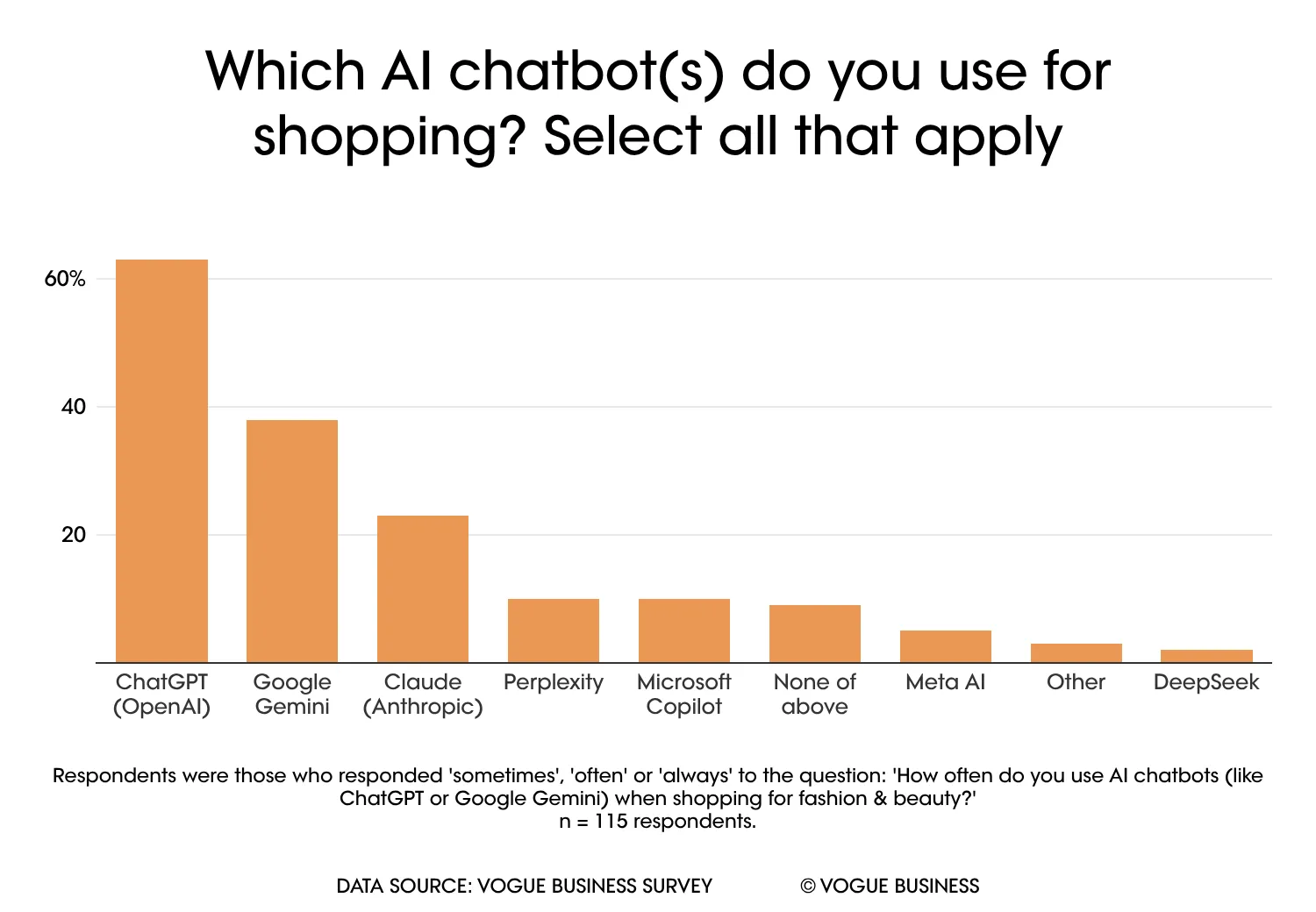
When they do turn to AI chatbots for fashion and beauty shopping, the majority (63%) are engaging with OpenAI’s ChatGPT, followed by Google Gemini (38%) and Anthropic’s Claude (23%). Just 10% of respondents use Perplexity for shopping.
Respondents are more likely to trust influencer recommendations (27%) over AI chatbots (8%), though 49% do not trust either. Those who trust influencer recommendations do so because many see fashion as inherently human. With over seven in 10 saying they would never trust an AI influencer, there is a general consensus that artificial intelligence lacks the personal, emotional, and creative touch that real people can offer — with one respondent saying “AI can’t physically try the products”, unlike influencers, where you can “see the clothes on their body”. Ultimately, consumers understand that influencer recommendations may be biased, but they feel they can recognize these nuances, whereas AI feels “more murky”, according to another.
When asked what their biggest concern is when it comes to fashion brands using more AI, respondents’ answers were pretty evenly split. Almost a quarter of consumers (23%) say they fear a loss of creativity the most. Another fifth (19%) are worried about the technology replacing people’s jobs, while a similar number (18%) fear an uptick in AI usage will result in less human interaction in fashion, and data and privacy is the top concern among another tranche (17%). A loss of the luxury feeling is another top concern (11%).
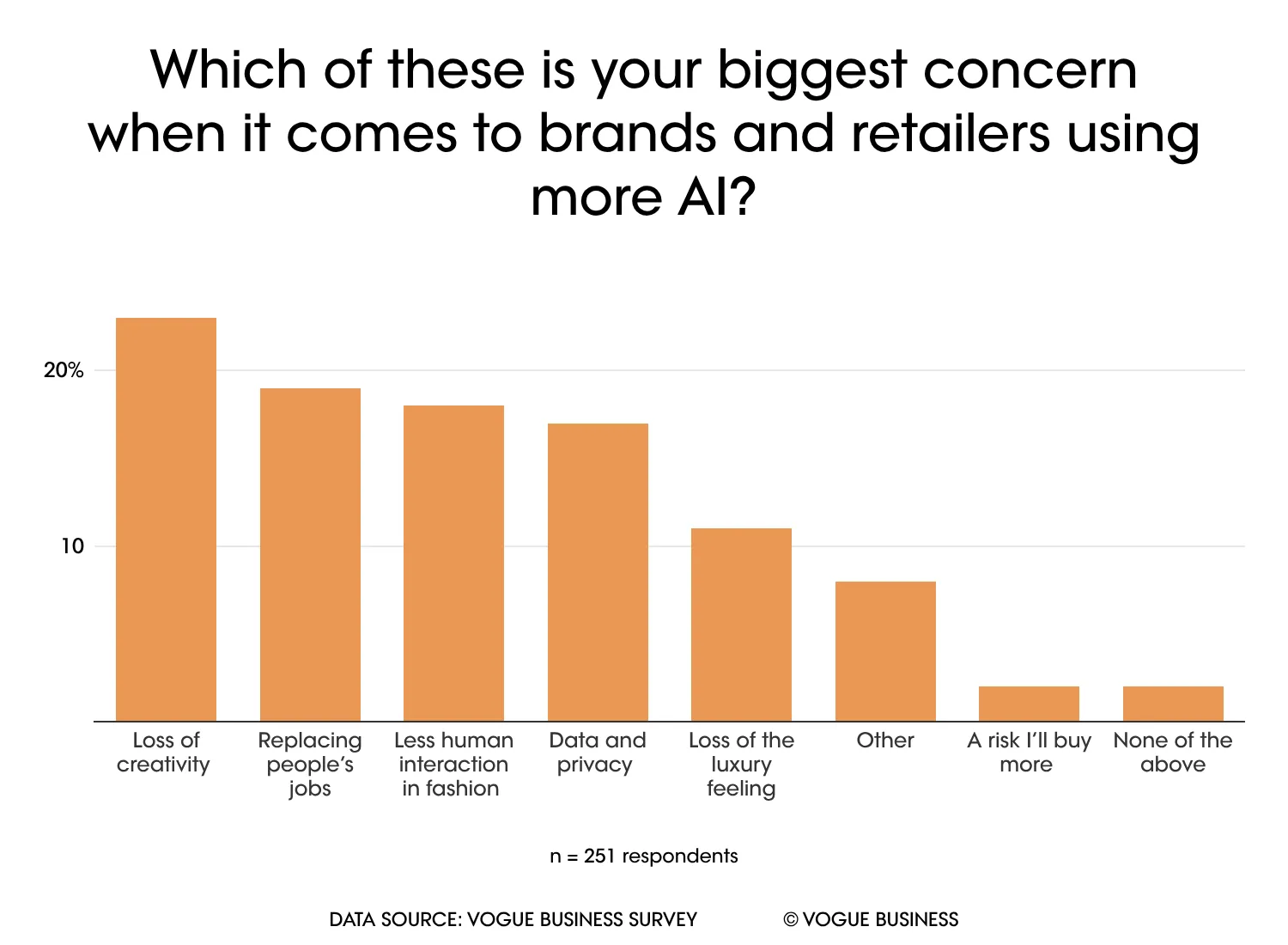
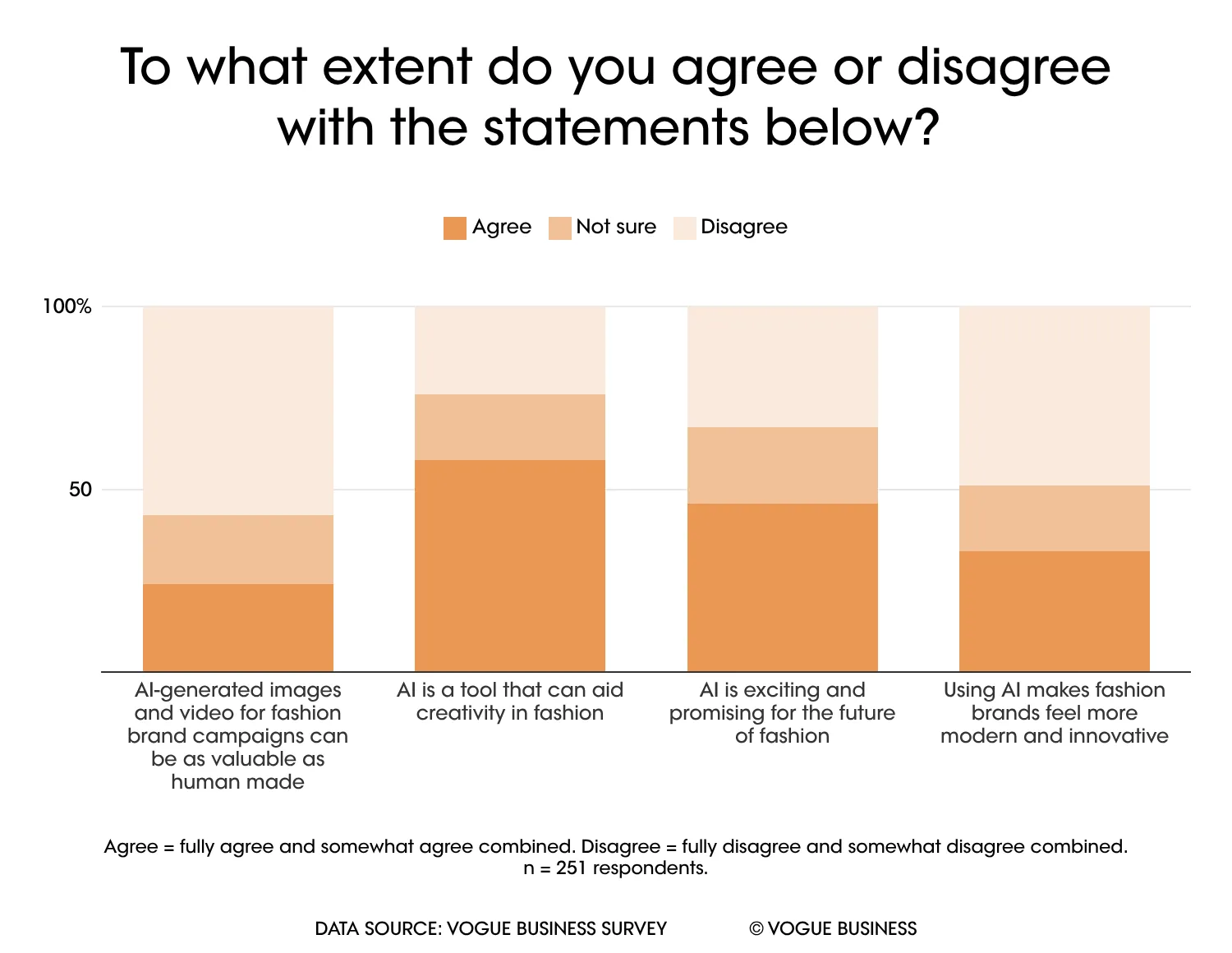
These findings suggest consumers are not opposed to fashion using AI, but they are concerned that it could diminish the creativity, humanity, and exclusivity that define the industry. Forty-six percent agree that AI is exciting and promising for the future of fashion, and 58% agree AI is a tool that can aid creativity in fashion. Less than one in four (24%) think AI-generated images and videos for fashion brand campaigns can be as valuable as human made, while just over half (51%) would feel more negatively toward brands that use AI in the making of a luxury fashion or beauty product. The findings point to a disconnect: efficiency can erode desirability.
For luxury brands, the most immediate opportunity for AI is not visible, consumer-facing tools, but better behind-the-scenes systems that the customer never interacts with. Physical retail presents an arena for luxury brands to stand out as the technology develops, by employing what could be described as “invisible AI”: applications that improve the customer’s experience without requiring active engagement or an additional data exchange.
In-store shopping remains the preferred channel for luxury purchases among our respondents, with 40% preferring physical retail and a further 37% adopting a hybrid approach. The primary drivers are to assess quality (43%) and fit (31%). What’s clear from our survey is that consumers don’t want to feel like they’re interacting with AI when they’re visiting a luxury brand’s store. Two-thirds (66%) say their shopping experience would be hindered if an AI robot were to assist them in-store. This points to an enduring need for human interaction, but it also highlights where AI could operate discreetly in the background. In practice, this could involve AI-driven inventory management to ensure product availability or clienteling tools that support sales associates with relevant insights and hyperpersonalized service.
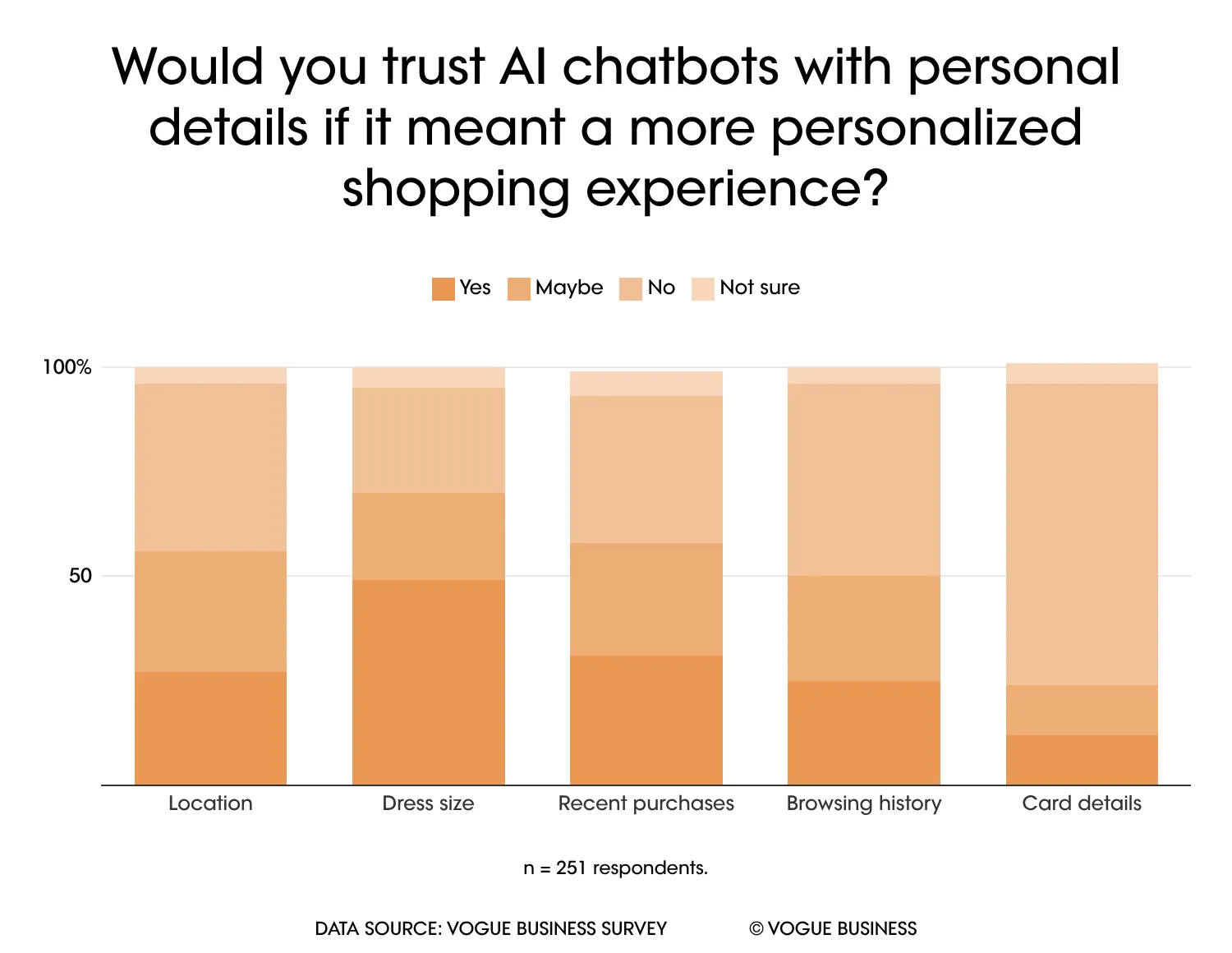
Across the survey, trust was the central barrier to adoption — both in terms of AI models’ ability to make good recommendations, and in terms of the data it requires to function. While 69% of respondents use AI chatbots at least occasionally, fewer than a quarter (24%) trust their recommendations in fashion and beauty, while more than half (55%) actively express distrust. Beyond distrust in AI recommendations, there’s also a pronounced fundamental distrust of data privacy, security, and control, especially when it comes to sensitive information. While nearly half (49%) would be willing to share relatively low-risk data such as dress size, clear boundaries emerge around financial and behavioral data: 72% say they would not share card details, 46% would not share browsing history, and 40% say they would not share location data. “I don’t care if my dress size gets leaked in a data breach. I care if my card details do,” says one respondent. Respondents note they’d only feel comfortable sharing sensitive information such as their card details if it was encrypted by a trusted third party.
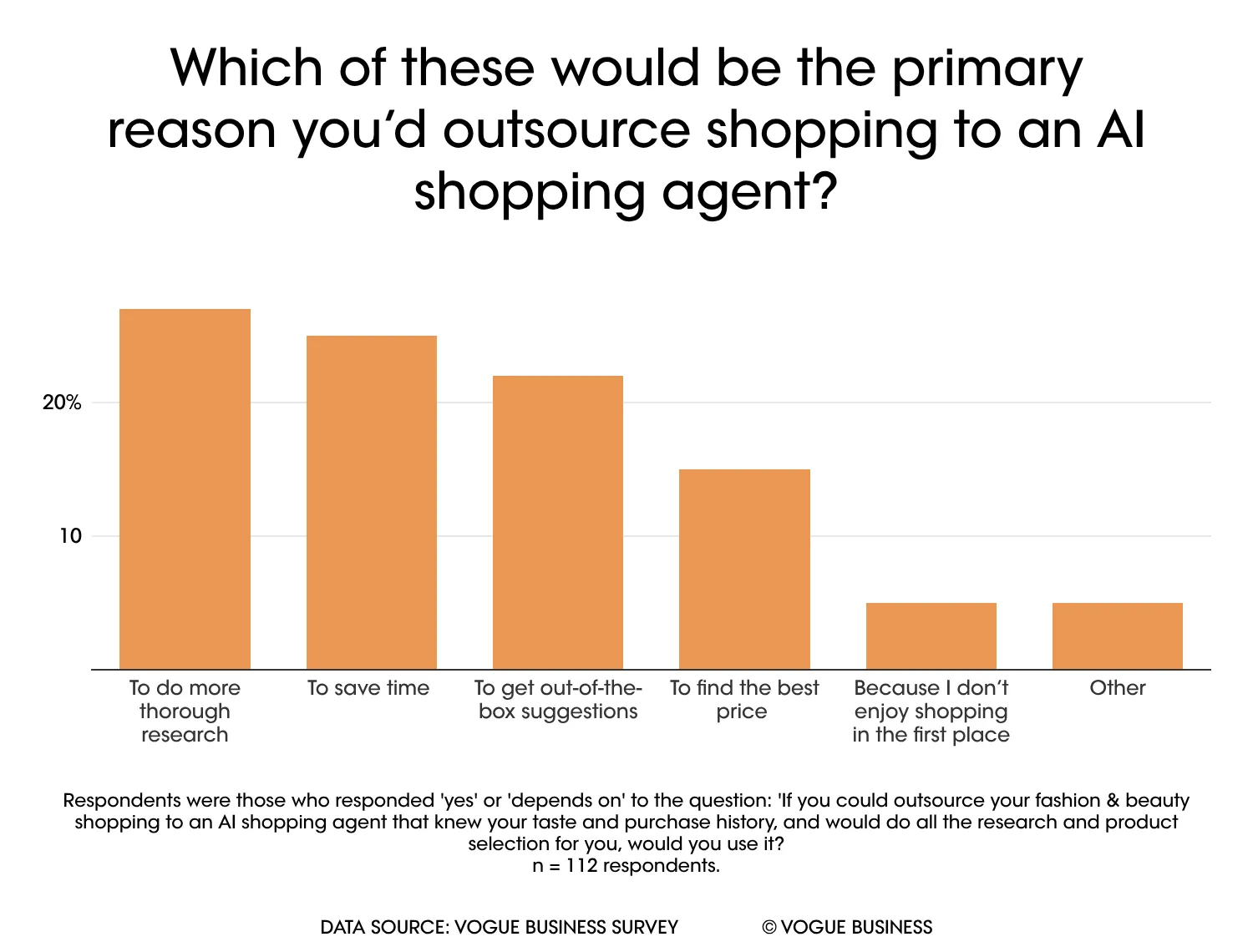
This presents a structural challenge for advanced AI use cases in shopping, particularly those that are agent-led. Only 31% would outsource shopping to an AI agent, even if it knew their taste and purchase history. Even among respondents who are open to the idea of an AI assistant, their acceptance hinges on a number of conditions. Respondents cite accuracy, transparency, and security as prerequisites, along with a strong desire to retain control. “I would rather keep the control. I don’t want it to make the purchase for me,” says one respondent. “If it becomes too easy and automatic, I might lose control of my shopping habits,” says another. For many, the perceived risks outweigh the convenience.
Our data illustrates an interesting contradiction: consumers’ biggest shopping pain points are where AI adoption remains weakest. This indicates that the performance of AI tools is what’s holding back uptake, rather than a lack of demand.
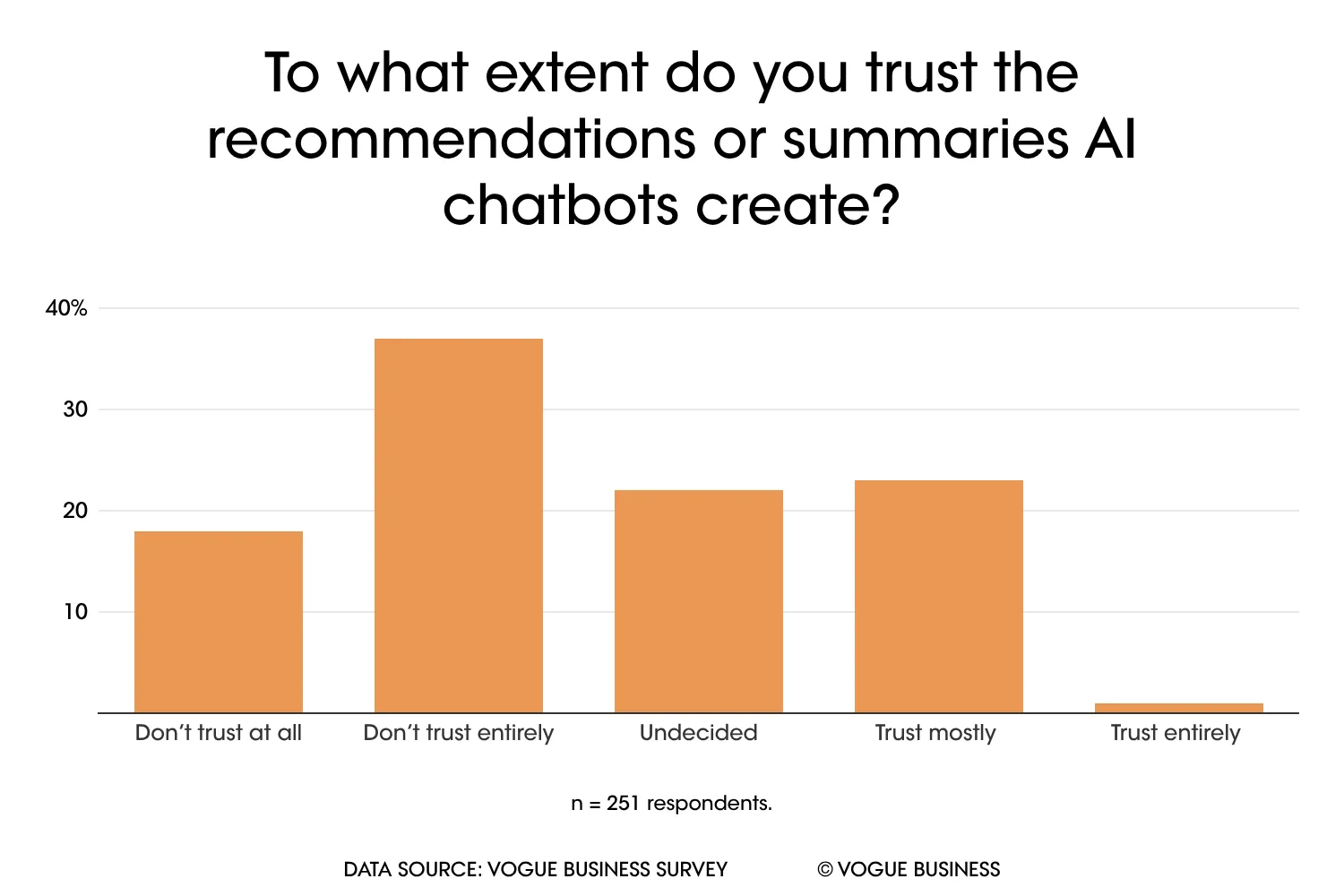
When asked to what extent they find AI chatbot recommendations for fashion and beauty shopping useful, 38% of respondents are undecided, while 35% find them mostly useful. Just 1% of consumers think they’re “entirely useful”. Trust is also limited. Fewer than a quarter (24%) say they trust the recommendations and summaries made by AI chatbots, and over half (55%) express distrust — despite 60% claiming they understand how AI sources information and arrives at decisions. This suggests a gap between awareness and confidence regarding AI, particularly in a category as personal and subjective as fashion.
When asked what their biggest challenges related to fashion and styling are, the top responses were “putting styled outfits together with items I own” and “finding my style within my budget”. These problems are not unknown to the fashion and tech industries: a flurry of styling and shopping AI tools like Daydream, Doji, Alta, and Phia have emerged to solve these very problems. Despite that, awareness and optimism around these tools remains low: 30% say they don’t know what AI shopping assistants like these are, while only 11% say they use these tools to shop. Only 6% have used a virtual try-on app (though 25% would be interested to try one).
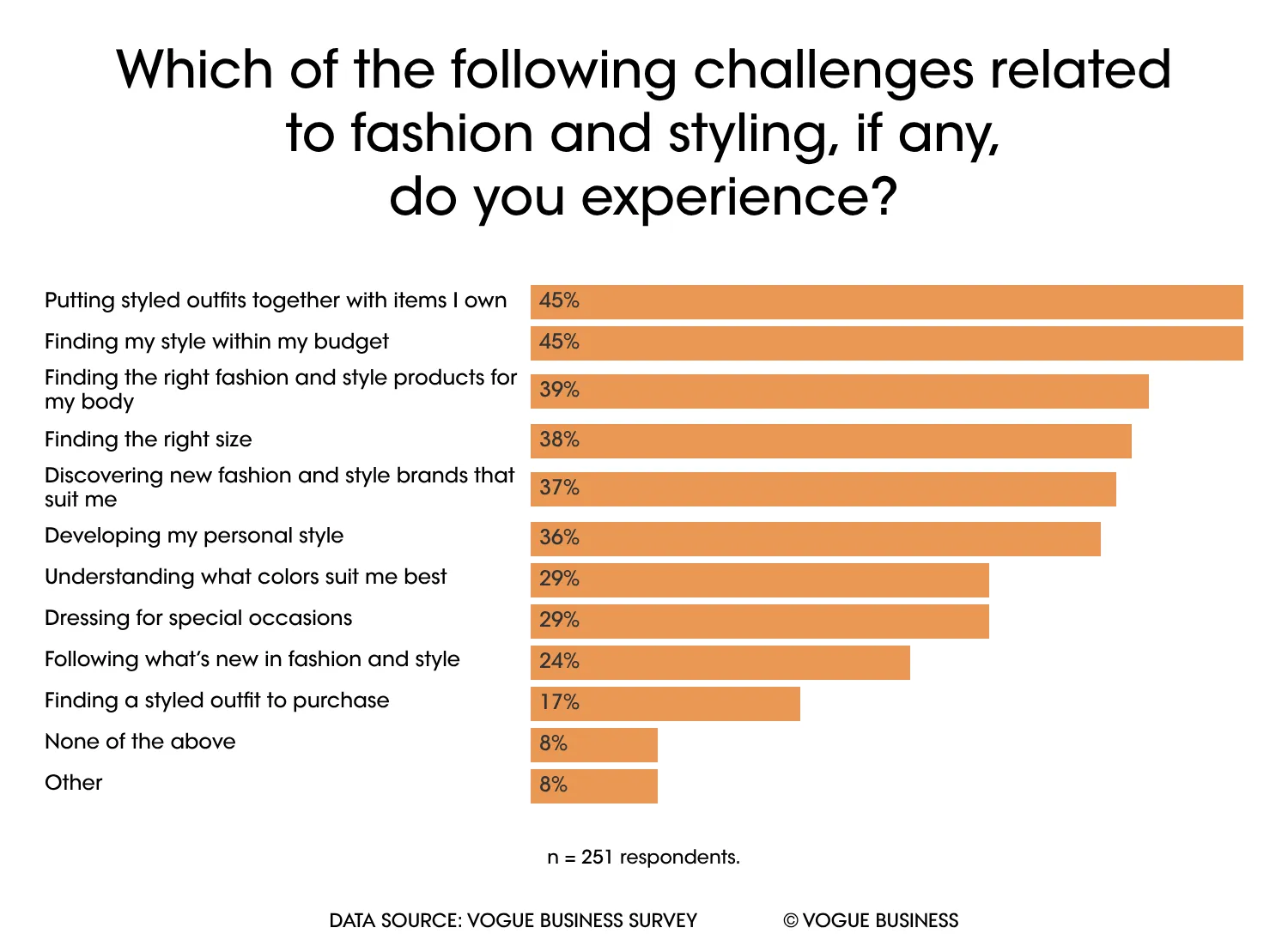
And despite the biggest challenges in shopping being style related, only 11% are using AI for personalized recommendations. Inaccuracy seems to be the biggest barrier: just 2% say AI “always” gets their style right, with most saying only “sometimes” (62%) or “never” (21%).
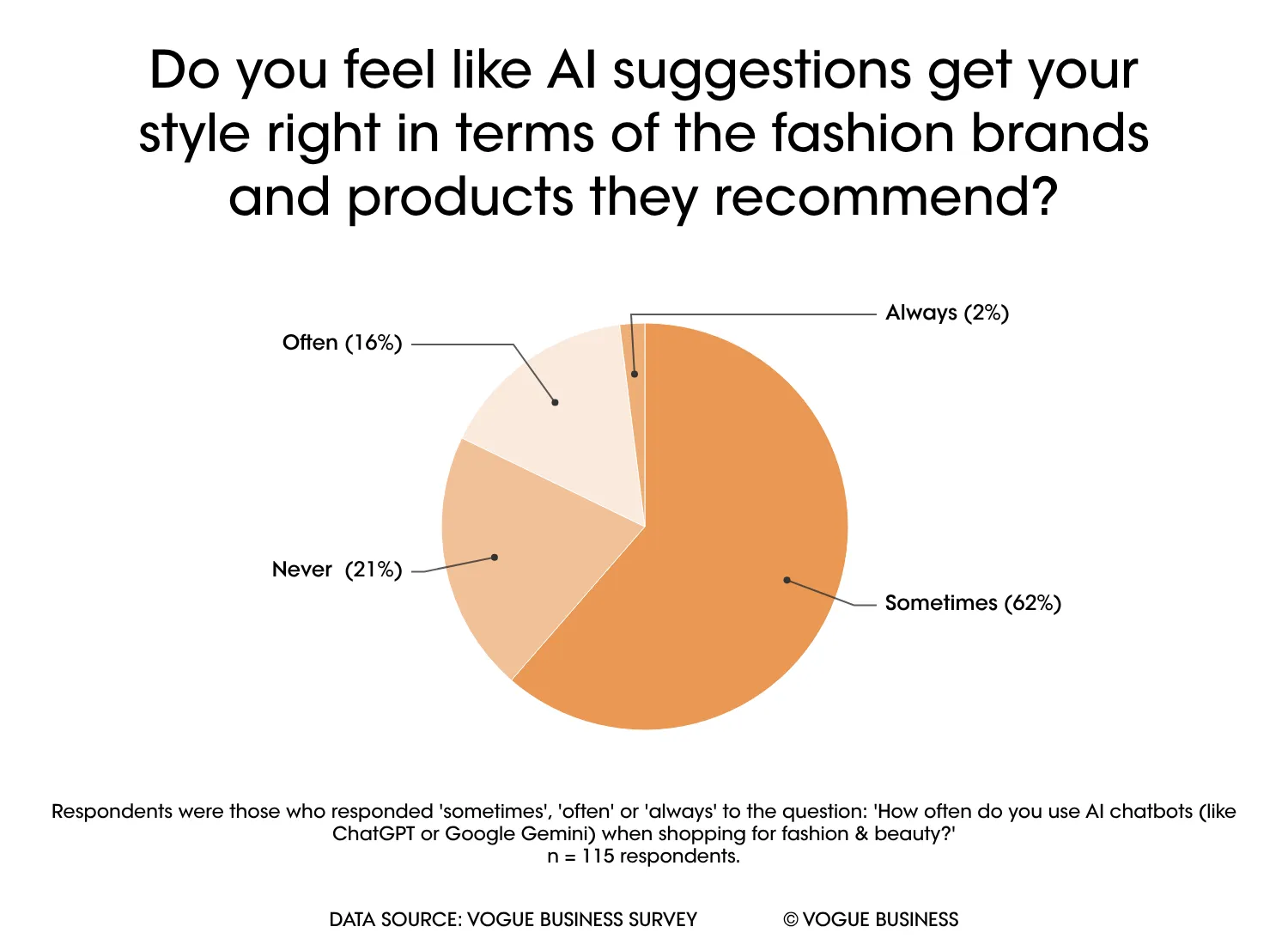
The performance of these tools is the key barrier. Many respondents reported outputs that feel misaligned or generic. “A machine cannot understand the nuances of what might inspire me,” says one respondent. Another adds: “They are just going to input information I could find online… I look for information that can’t be sourced online when looking for fashion and style advice.” With styling sitting at the intersection of taste, identity and cultural context, AI’s recommendations don’t yet feel dynamic enough. Until it can deliver recommendations that are more nuanced, adoption among a fashion-forward audience is likely to remain limited. Only 3% of respondents look to AI chatbots for style inspiration, compared to magazines (57%), street style (47%), and influencers (35%).
The takeaway is that taste and curation still register as fundamentally human skills for most respondents. This creates opportunities for brands to rethink how they position AI tools: not just as purely data-driven systems, but as extensions of human expertise that signal taste and brand visual codes.
In this sense, taste would become a system in itself. This could look like clearer storytelling around how these tools are built, from the data sets they’re trained on to the creative logic that informs outputs. At the luxury end, this need for storytelling may go further: framing AI styling tools through the lens of heritage, for example, by drawing on archives, house codes, and design history. Branded AI styling experiences online that serve as both style inspiration and product discovery for customers could be a huge opportunity to upsell inventory, too.
The challenge is that luxury brands, for the most part, have not yet developed the infrastructure to encode their own aesthetic in a scalable way — archives may not be digitized or tagged in a usable way for AI, and data systems tend to be fragmented. There’s also a risk that, even with copious brand data, the AI could produce something off-brand that cheapens it, so it would be essential to apply human oversight at every layer to avoid this.
Personalization has long been positioned as a core benefit of AI in retail, but our survey results indicate that its value is less straightforward, particularly in luxury. The challenge with personalization is compounded by how algorithms predict consumer behavior, which narrows the field of options to what is already known. “Just because I bought something once or have browsed for something, it doesn’t mean that’s all I keep wanting,” one respondent says. Others note that feeds and recommendations can become repetitive, limiting discovery rather than enabling it. “This is why I’m struggling to find anything new. AI bots are taking away from traditional browsing.”
A lot hangs in the balance between enhancing personalization without alienating the luxury consumer. Areas consumers are happy for fashion brands to use AI are nuanced and could change with time, and there’s a risk that personalization becomes restrictive rather than helpful.
There are also concerns around uniformity. Some respondents question whether AI-driven recommendations might lead to a homogenization of style, particularly among consumers with similar profiles. “Shopping with their help is just boring. None of the excitement I would expect to have, no discoveries, just force-fed info,” one respondent says. “I’d worry that people with similar tastes to me would get the same outfits,” flags another.
Despite that, consumers do not seem to outright reject personalization: they’re willing to be guided, but not restricted. They’re comfortable with lighter-touch versions, particularly when they improve service, but remain wary of deeper automated systems that feel flat. Rather than maximizing efficiency, the opportunity for luxury lies in balancing predictions with openness. As ever, the goal in luxury is not to give the customer exactly what they expect, but to offer something they didn’t know they wanted.
Methodology and demographics
Vogue Business conducted a 10-minute quantitative online survey, which was shared with Vogue, Vogue Business, and GQ readers in the UK, the US, and Europe. This research was conducted by an internal Condé Nast custom research team between March 16 and April 7, 2026. In order to take this survey, respondents were required to be aged 16 or over.
In total, 251 respondents completed the survey. Among respondents, 33% were under 35 and 65% were over 35. Female respondents made up 76% of the group, while male respondents made up 22%. Over half (55%) were based in the UK, while a quarter (24%) were based in the US, and the remaining 21% across Europe. Just under half (45%) of respondents are aspirational customers, defined as those with an annual income of less than 100,000 in local currency (USD, EUR, or GBP), while 37% earn over 100,000 a year, and the remaining 19% prefer not to answer.
此内容由惯性聚合(RSS阅读器)自动聚合整理,仅供阅读参考。 原文来自 — 版权归原作者所有。