


There are fashion obsessives, and then there’s Jean-Denis Franoux. A longtime fashion professor at Studio Berçot and a designer himself from 1994 to 2001, Franoux began collecting perfume bottles as a child before getting hooked on clothes. As a fashion student in Paris in 1990, he spent his spare francs at the Puces, then became an eBay and real-life auction junkie decades before vintage hunting turned into fashion people’s favorite pastime. This is how he bagged multiples from foundational collections by John Galliano, Comme des Garçons, Yohji Yamamoto, Martin Margiela, and Jean Paul Gaultier—plus countless rarities by Madeleine Vionnet, Schiaparelli, Balenciaga, Madame Grès, Jeanne Lanvin, and others—amassing them not out of whim or speculation but from an abiding need to understand the whys and hows of shape.
Today, at 56, Franoux is sitting on an archive of 25,000 pieces and counting. Among his latest scores: an austere yet opulent Balenciaga haute couture gown from winter 1938 in near-mint condition, with zigzag seams, slightly built-up shoulders, and rounded sleeves, that resurfaced on Vinted in Spain. Another: 400-plus original Vionnet toiles, preserved untouched since the designer shuttered her house in 1939. “To me, those are like time machines,” he said. He bought the lot for the sake of his students, he notes, but also to keep it clear of counterfeiters’ hands.
From tonight through Saturday, an invitation-only event at a private space in the Upper Marais will offer a first look at the collective achievement, titled Regarderobes (the name is a portmanteau of the word “look” and “wardrobes”). Now structured as an endowment fund, the collection is legally shielded from sale or dispersal, and will be made available to schools and other institutions. For his curatorial debut, Franoux handpicked about 150 pieces, including 50 complete looks, from mid-1980s era Galliano, Yamamoto, and Comme des Garçons to silhouettes from the 1930s (Hermès, Schiaparelli), ’40s/’60s (Balenciaga, Balmain), and ’70s/’90s (Chloé, Gaultier, Margiela).
Days before the opening, he welcomed Vogue to his Paris apartment/storeroom/makeshift photo studio, where hundreds of finds line racks while others, piled in boxes from floor to ceiling, await their close-up (the bulk of his trove, meanwhile, is biding its time in a storage facility somewhere near his native Epinal, in Eastern France). In a wide-ranging conversation, Franoux talked about the unexpected similarities between perfume and fashion, the “Frankenstein factor,” and why, rather than cashing in—or donating it all to a museum—he decided to create an endowment fund. This conversation has been condensed and edited for clarity.
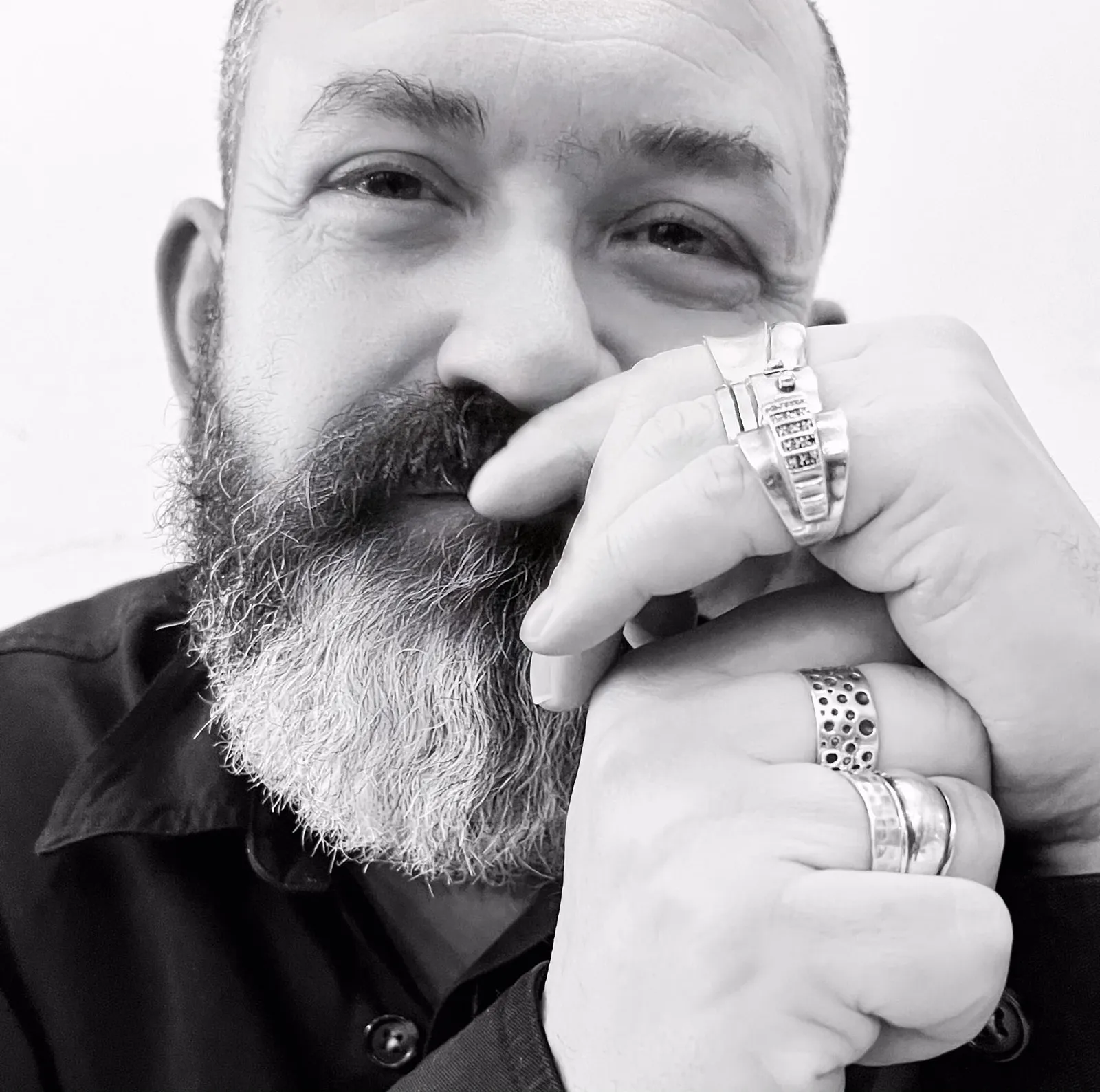
Jean-Denis Franoux
When did you catch the collecting bug?
J-DF: It started with perfume bottles when I was a kid. I only ever bought commercial formats—no miniatures, no display factices, just what was available at retail. What interests me is the serial dimension, like matryoshka dolls. I love all the possibilities around a single object, and that transferred naturally to clothes. Eventually I realized there was an important connection in the way of choosing things. These clothes didn’t just exist on the runway—they were produced, purchased, loved, and worn out in the world. Like perfumes.
What’s your approach as a collector?
The throughline is cut, which drives everything. Then there are the designers who made me want to work in fashion, the ones I dreamed about through photos—primarily Yohji and Rei, and also Mugler, Montana, Gaultier. I was a small-town boy and they blew away all my references; it was extraordinary. Then there are the early days of each house: I love it when it’s all there in the first five or 10 years. When you look at Galliano’s first show in winter 1985 straight through Maison Margiela, the lineage is direct. Everything is there, right from the start. And, lastly, I’m old-school: I need to see how things are made. My passion is for clothes, even more than fashion. I need to understand the cut and construction.
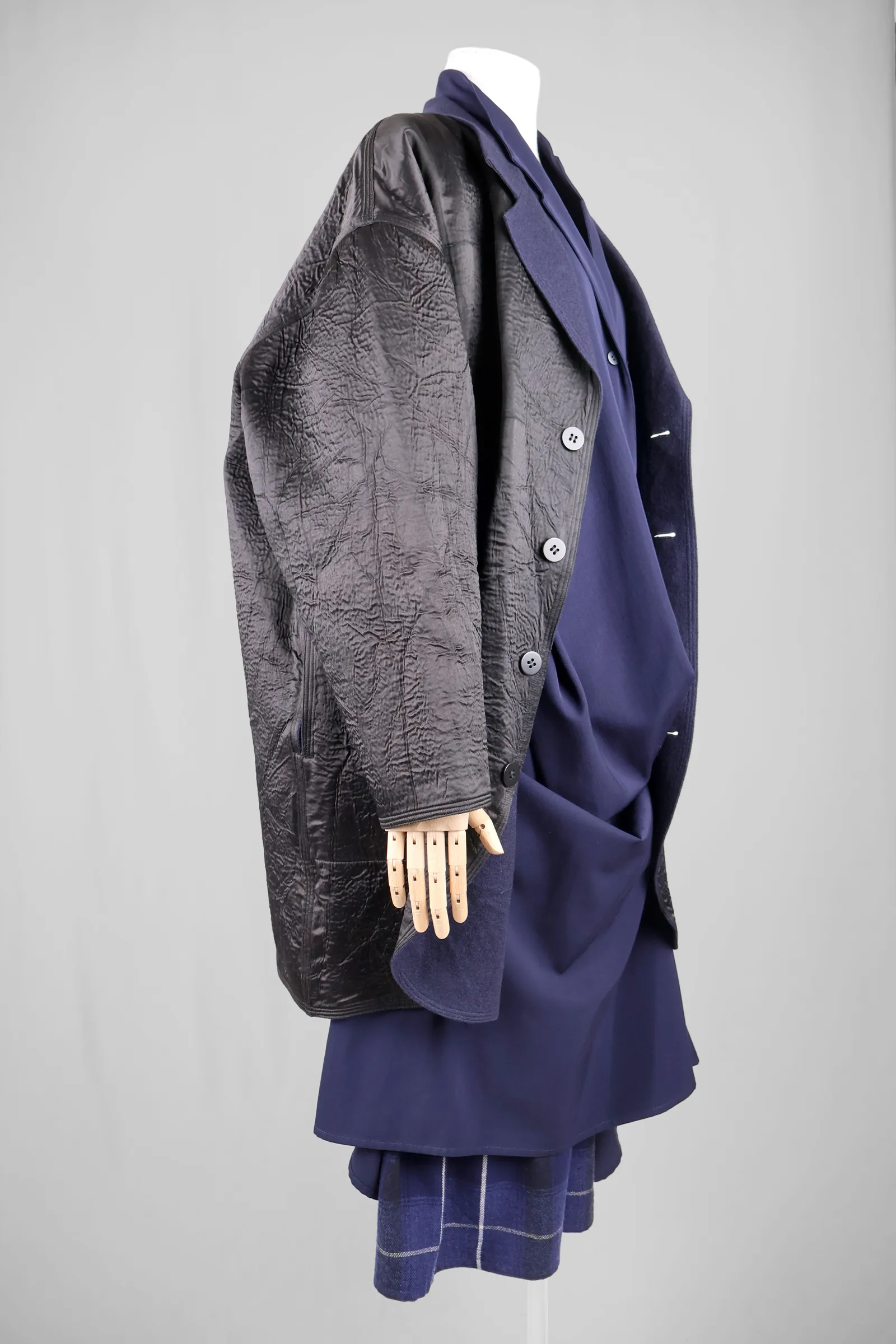
Yohji Yamamoto winter 1984
When you look at the racks, do you see gaps?
There’s an entire theme by Yohji from winter 1986—short-front, long-back jackets, coats, and checked dresses that I have never, ever been able to track down. I only have a red and white checked dress. And when I look at these [three early Galliano separates with a feather print] I find something’s amiss. Maybe it’s not pretty to put it this way, but it’s like Frankenstein: I feel like the body’s not complete; a limb is missing. That’s what I used to say to my students—the collection is like a living thing still being assembled.
What’s your most precious piece?
The Balenciaga evening gown. It represents everything I love; there’s something both baroque and minimalist about it—it’s nothing yet it’s everything. I had to negotiate with the bank to make it happen, and my best friend, Pierre, flew to Valencia to fetch it. But it’s not the price that counts. What’s important is to have it, whenever that’s possible.
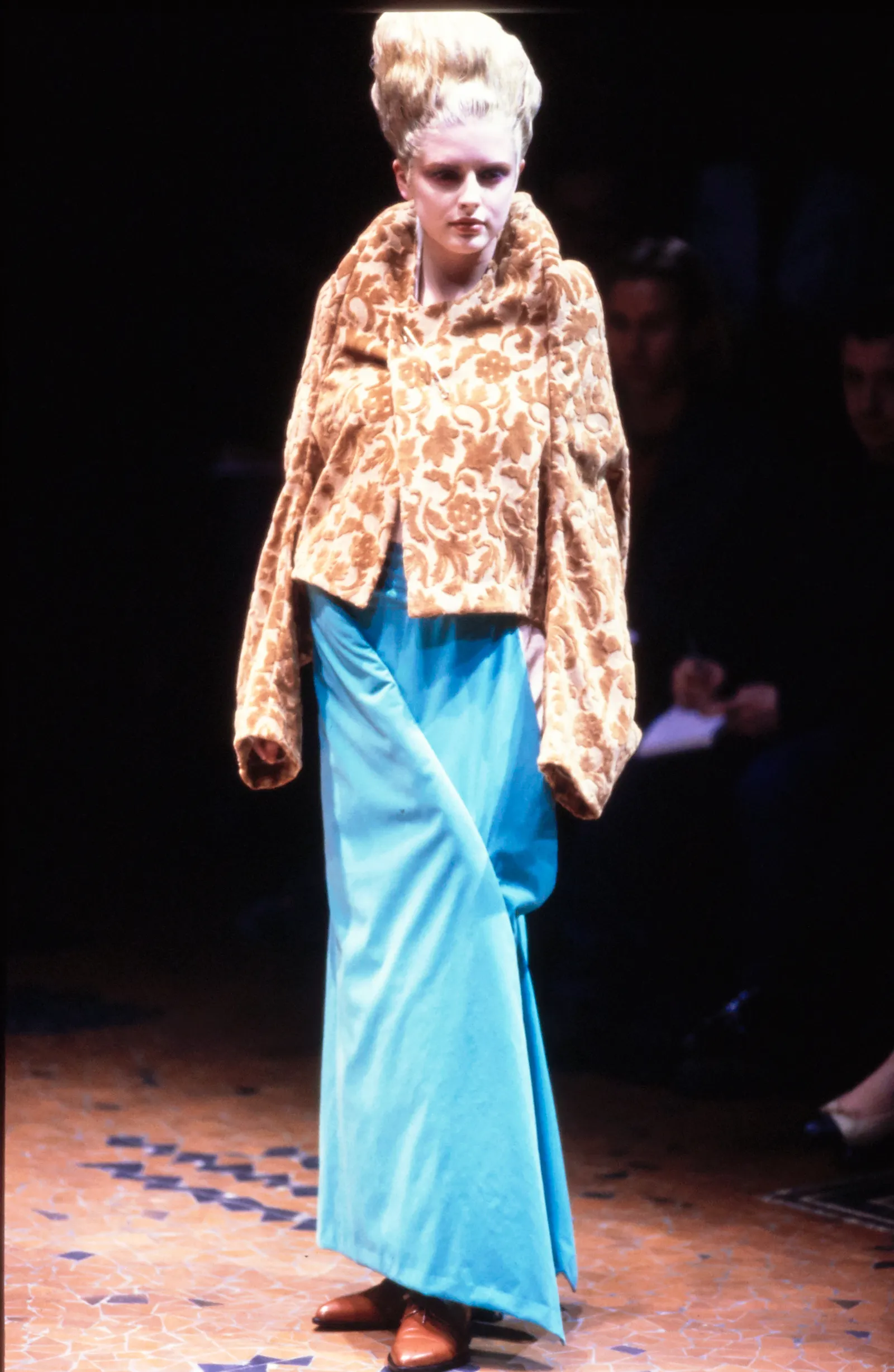
Comme des Garçons winter 1996
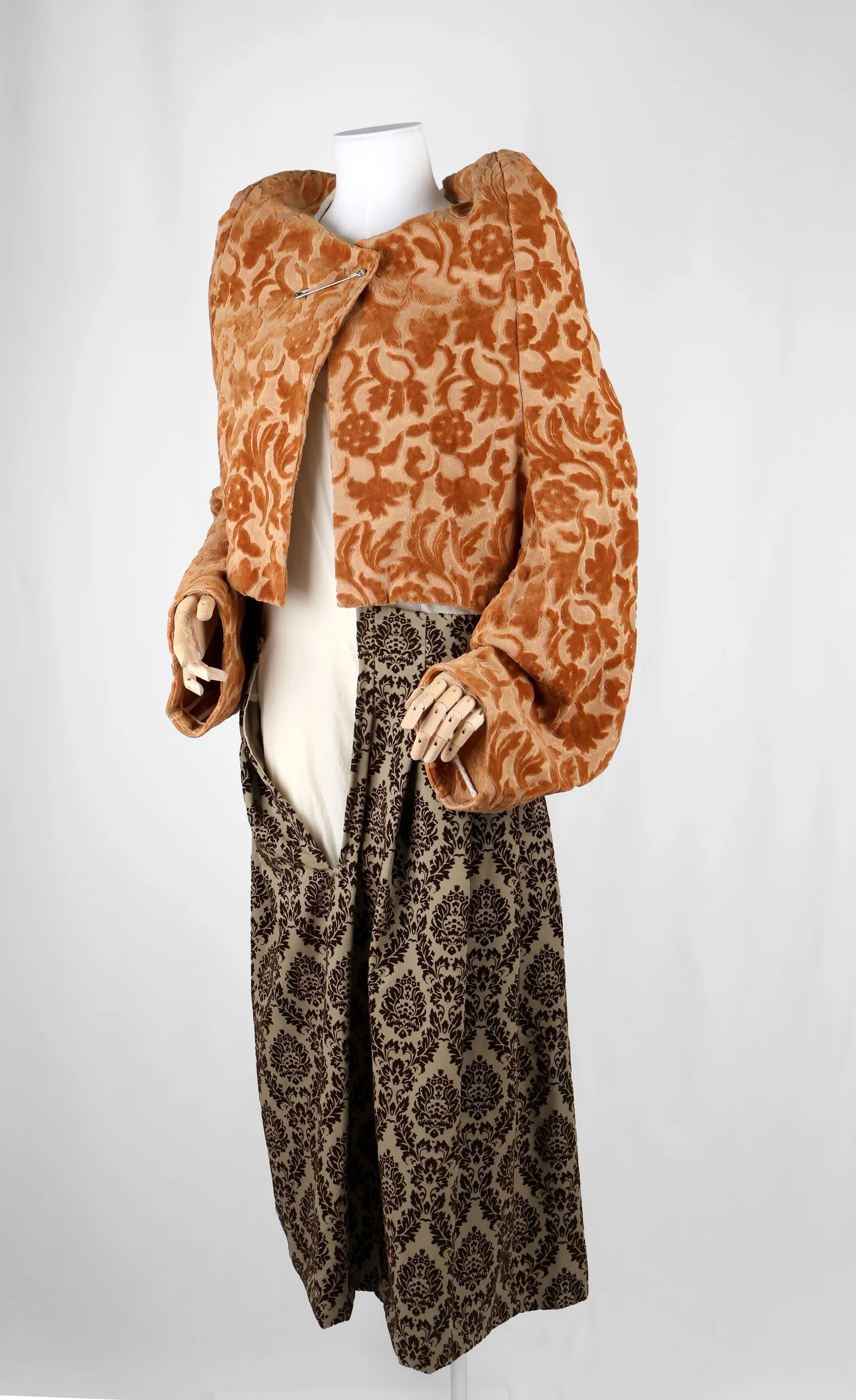
Comme des Garçons winter 1996
Any regrets about what got away?
I once lost an unsigned, draped jacket, probably by Mad Carpentier [a French label founded by former employees of Vionnet], at auction—I suspect Azzedine [Alaia] got it. My regret isn’t not having it; it’s not being able to study it. On the other hand, 25 years after buying a late 19th-century overskirt at a flea market in the south of France, I came across its matching bodice at a sale in Paris. That sort of summarizes my philosophy, and it’s why I don’t really have regrets: when something escapes me, it might come back later, or better.
Your former students include a number of well-known designers.
Yes, I had Natasha Ramsay-Levi, Bruno Sialelli…. But I always told students that the goal is to work in fashion, not to have your name on a coat. That’s also my philosophy. What interests me is the work. A career is more important than fame; I hate it when it becomes all about a person. It’s more meaningful to know why a piece of clothing is important, why it was worn.
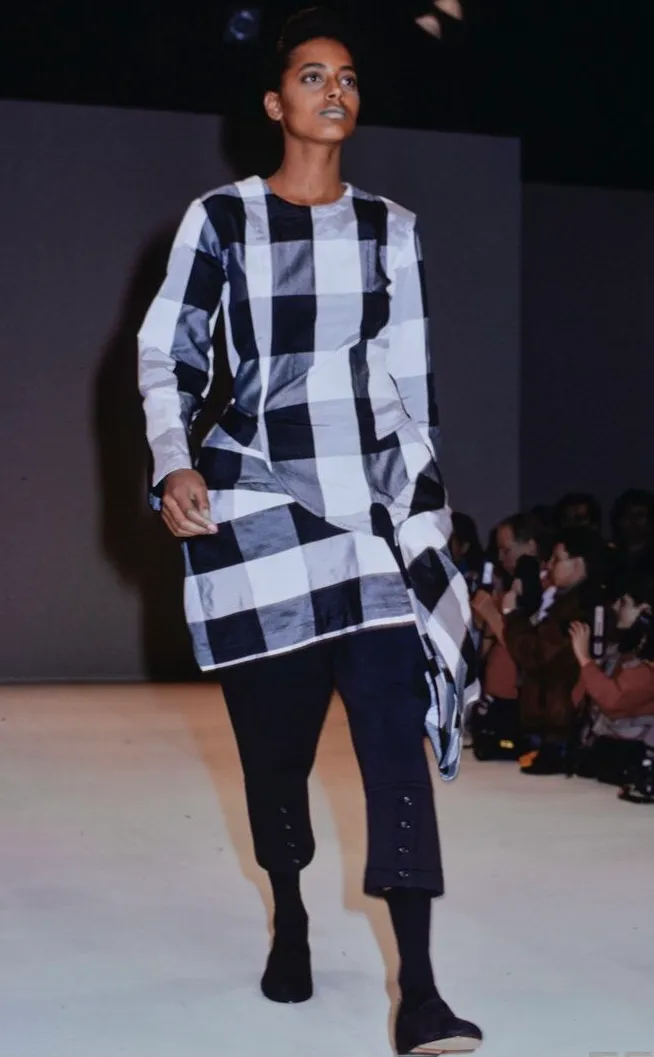
Comme des Garçons winter 1986
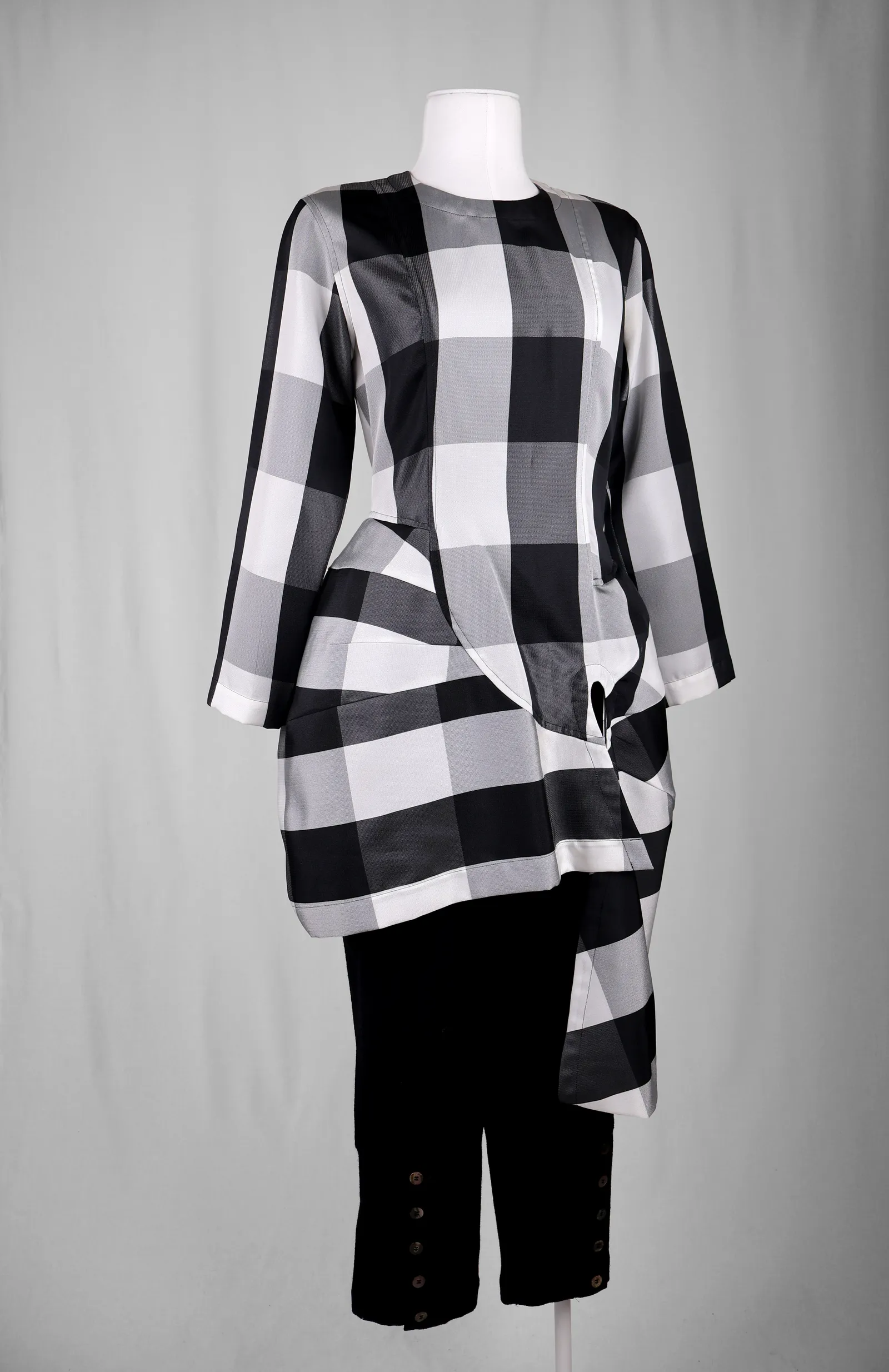
Comme des Garçons winter 1986
Which designers not included here have you collected lately?
I have some pieces by Glenn Martins for Y/Project. Some early Demna. I really admire Rick Owens. He can make a t-shirt as interesting as an evening dress—that’s talent. Getting the most everyday garment possible to be just as interesting as the museum-worthy version is perhaps where my collection has a different perspective.
Any surprises along the way?
It turns out that I have an amazing number of pieces that were worn on the runway by Kirsten Owen: a red and white Galliano look from fall-winter ’89, a Romeo Gigli. That’s why I think there’s a throughline that’s over my head, even. The associations go beyond just me.
Regarderobes is an endowment fund, so what happens next?
It has to be dynamic, not frozen in time. I want to move the conversation forward. What I especially like is creating unexpected connections—a 1968 Balenciaga dress with a Yohji Yamamoto skirt from winter ’87; a Vionnet-inspired red top with a red Comme des Garçons from winter ’88. They have nothing and yet everything to do with each other. The idea is to mount exhibitions with institutions and houses. I’d also like to create a publication that would inspire the kind of excitement I used to feel whenever a fashion issue landed.
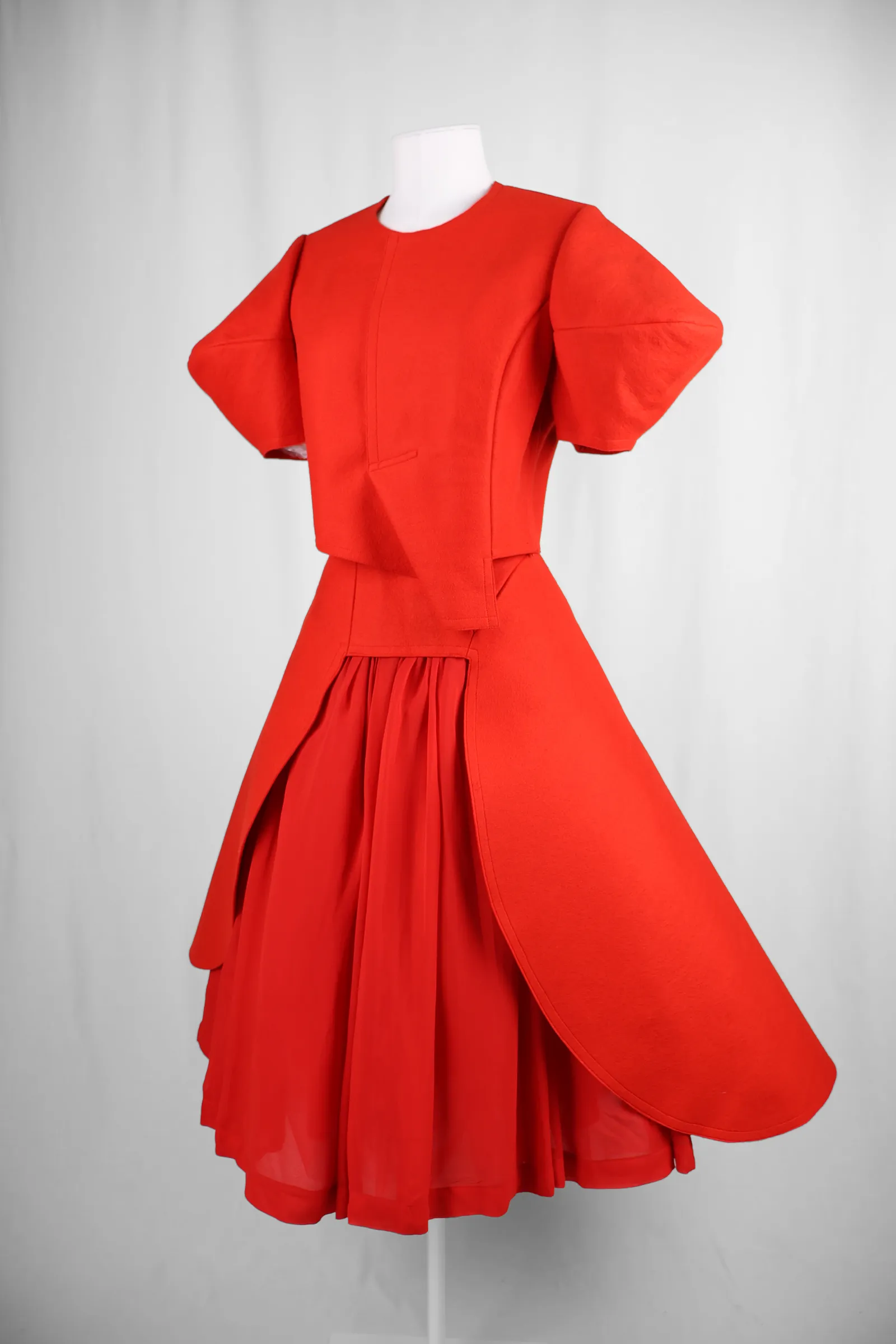
Comme des Garçons winter 1988
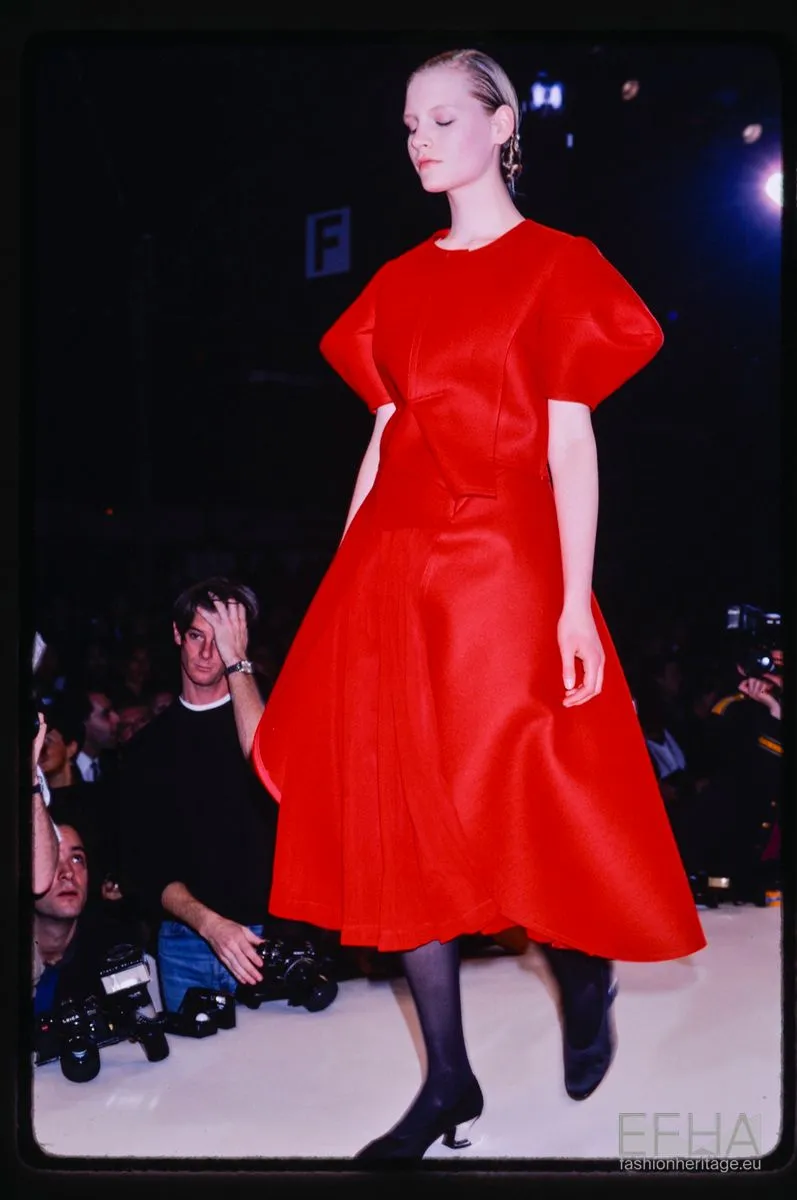
Comme des Garçons winter 1988
此内容由惯性聚合(RSS阅读器)自动聚合整理,仅供阅读参考。 原文来自 — 版权归原作者所有。