












As Earth Month rolls around each year, brands clamor to market their products as the sustainable option — a guilt-free purchase for the environmentally minded, timely for the holiday. But they might reconsider this year. Not only are customers more attuned to sniffing out shallow marketing claims than ever before, but a flimsily connected Earth Day promotion can also get brands into legal hot water.
In December, the UK’s Advertising Standards Authority (ASA) banned adverts from Superdry, Lacoste, and Nike. At the heart of the ASA’s complaints was the use of the word ‘sustainable’ or ‘sustainability’ without high levels of substantiation to quantify how, exactly, the products in question were sustainable — a word heavily used, but without a universally agreed upon definition. None of the brands responded to requests for comment, but the bans, which came as part of a wider piece of work from the ASA as it investigates environmental claims in the retail fashion sector, illustrate just how far the needle has shifted in sustainability storytelling.
For many, the ASA’s crackdown was a long time coming. Fashion’s big sustainability surge at the tail end of the 2010s and the early 2020s can be typified by promises rather than action, and greenwashing swelled as a result. Whether it was only using so-called ‘sustainable’ materials, diverting textiles from landfills, or decarbonization, brands were eager to put their stake in the ground on sustainability-related targets. Though target-setting is necessary to create company-wide climate action roadmaps, promises soon began to ring hollow as the deadlines to meet targets came and went without meaningful progress.
“I truly thought that it would only be a good thing that it was cool to be sustainable. But in fact, we just saw this shadow side of people taking advantage and doing one-off initiatives, or just flat-out lying about their sustainability work,” says Erin Allweiss, co-founder of communications agency No. 29, which works with clients such as French footwear brand Veja, US seaweed materials innovator Keel Labs, and US non-profit The Solutions Project, which funds and amplifies grassroots climate justice solutions.
Now, sustainability communicators recognize that when brands lack the evidence to back up their claims, it isn’t a communications issue but an operational one, and it should be solved long before they consider shouting about their efforts publicly.
“You can’t do the communications if the work isn’t being done. This is about living and breathing it,” says Lucy Evans, co-founder of PR and communications agency This Way Next, which works with clients including travel gear and documentary maker Groundtruth, Portuguese menswear brand Isto, and innovation platform The Mills Fabrica. Recently, Evans worked with a knitwear brand to transition its British Wool supply to regenerative farming. The work was supported by certification body Pasture For Life and the project was “sense checked” by Textile Exchange in order to ensure the necessary, foundational work was solid long before any communication was on the cards.

The Performance Without Toxicity exhibition explores how high performance and environmental health can go hand in hand.
Backlash to greenwashing has caused the pendulum to swing in the other direction. Unnerved by greenwashing allegations and tightening regulations on making green claims, many brands retreated into so-called ‘greenhushing’ — staying quiet to avoid criticism. But silence isn’t the answer. There’s an expectation of honesty and proof from consumers, says Melanie Hughes, CEO and founder of PR and communications agency Theia, which counts traceability platform TrusTrace, textile-to-textile recycling company Reju, and sustainability ratings platform Good On You among clients. “It’s better to be open and honest about what you are doing and the work that you still need to do, rather than not say anything,” she says.
A new middle ground is needed, which builds honest communication on the back of meaningful work behind the scenes, and doesn’t alienate consumers with overly technical language. It’s a fine line to walk, but with the right guardrails in place it doesn’t have to be complicated. Vogue Business spoke to leading consultants and communications experts to get to the heart of the dos and don’ts in a new era of sustainability storytelling.

Good On You provides sustainability ratings for fashion and beauty brands.
In recent years, rules and regulations such as the UK’s Green Claims Code, the EU’s Empowering Consumers Directive (EmpCo), and Canada’s Bill C-59 have been tightened, amended, or more keenly enforced. Driving these efforts is a crackdown on vague claims and terminology. Earlier this year, the UK Competition and Markets Authority (CMA), which set out the Green Claims Code in 2021, published further guidance on how to make claims across the supply chain.
It’s not enough to repeat a claim from a supplier, the guidance says; brands should be verifying facts across the board. To this end, Allweiss, who previously worked under the Obama administration on climate legislation, sees herself as the first line of defense, and will enlist lawyers and policy leads where appropriate to ensure no false or misleading claims are made by — or on behalf of — her clients.
Brands have been feeling the heat of this increased scrutiny. In April 2024, Zalando committed to removing what the European Commission called “misleading” sustainability flags and icons displayed next to products on its platform and to provide specific product information. “No one can really claim a product to be sustainable because it’s always a continuous improvement. So I think this guidance came at the right time,” says Pascal Brun, VP of sustainability at the German retailer.
In the years following, the brand has moved away from making blanket claims that its products are sustainable and focused on what Brun calls factual, more pragmatic information at the product level, such as clearly stating the percentage of recycled fiber by full-product weight. “It’s much more simple, because it’s really about educating customers and avoiding vague references, which was basically, at that time, an industry practice,” he says. When it comes to marketing and storytelling, Brun says that plays out on social media, with the brand now focusing on facets such as durability, heritage of its brand partners, and clothing care and restyling.
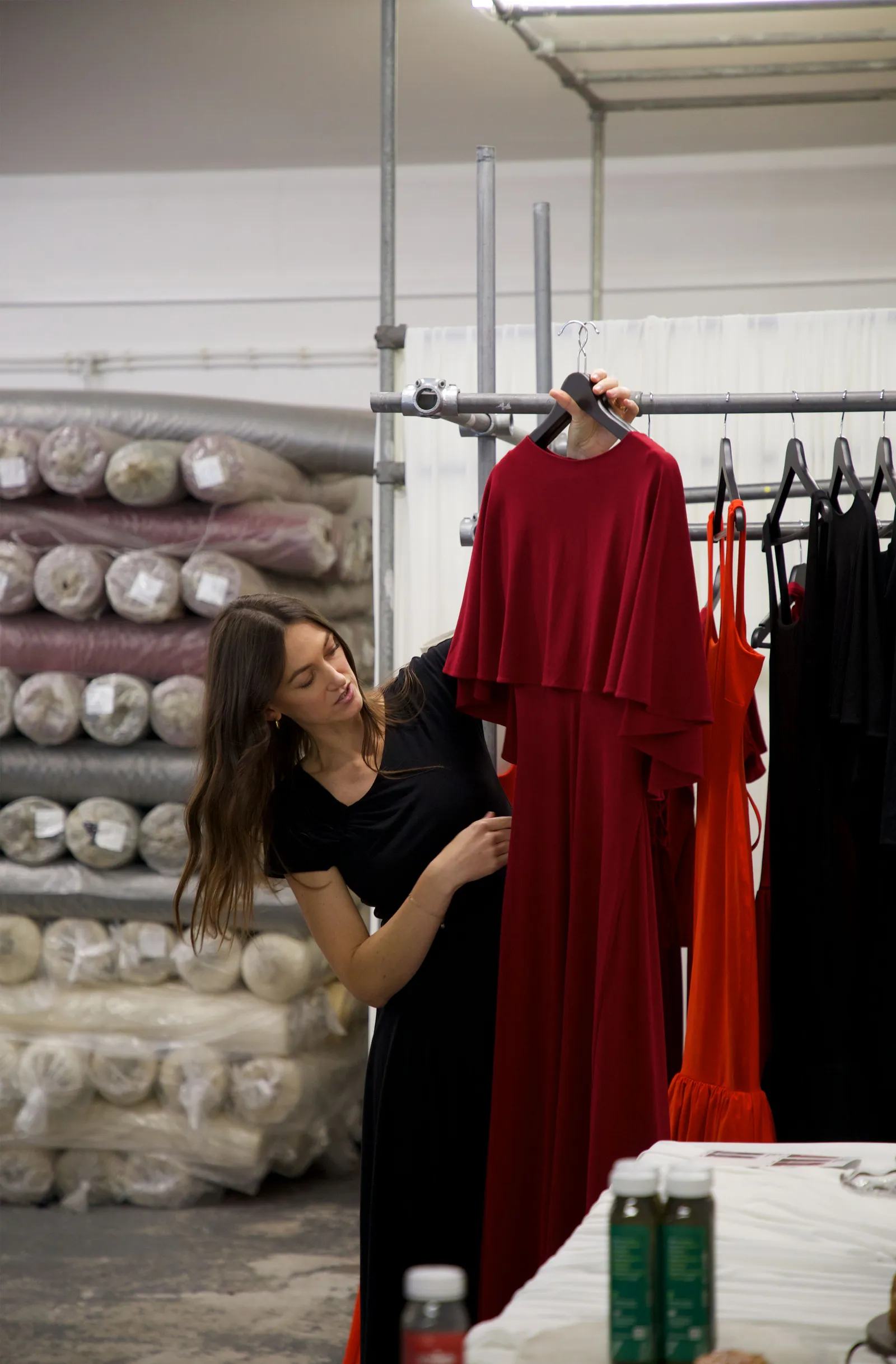
Aym garments are made in the UK.
With a growing mandate for evidence and specific language, some brands are adjusting, while others are finding it hard to differentiate themselves. “They want to communicate immediately to the consumer that they’re better, but they can’t say, ‘We’re a sustainable fashion brand,’” says Natalie Binns, founder of Better Fashion Consultancy, a fashion sourcing and sustainability consultancy.
Binns suggests that brands talk factually about the positive attributes of their products, such as being traceable to the farm level, or being manufactured locally. While Binns accepts brands can’t solve every problem, talking in specifics shouldn’t mean using the favorable parts of a business as smoke and mirrors to detract from areas where there’s still work to be done. It’s about sticking to the facts entirely, even if that means addressing where progress still needs to be made. This approach only poses a problem when there are no concrete facts to draw upon.
“People might ask what they can say instead of ‘ethically made’, and I say talk about living wages, but then they’re not paying living wages. So when you take away this generalized term, it reveals that some brands aren’t doing enough,” she says.
When a brand starts to talk less about sustainability promises and more about product and performance, the customer comes into view, with the focus shifting to how they will experience a product. Centering the consumer and offering a value proposition is essential to communicating sustainability successfully, says Solitaire Townsend, sustainability expert and co-founder of change agency Futerra.
“[Previously] the vast majority of sustainability campaigns were ego marketing, where the company was trying to get more credit for what it’s done with no proposition to the consumer,” she says. When Futerra reviewed award-winning sustainability campaigns from 2024, less than 20% communicated any functional, emotional, or social benefit to the consumer, according to Townsend. Rather than the brand acting the hero, they should be making the consumer feel like the hero for buying their product, she continues, even if sustainability isn’t their primary motivation for buying it.
“Consumers care about whether the product is healthy, whether they can feel good about the product, and whether the product is cheaper. They care about whether it’s easy to use… whether they can travel with it,” she says. Sustainability must support — and be attached to — these desires.
Working to comply with the European Commission, Zalando wanted to know what sustainability information its customers were seeking, collating the results in its 2025 It Takes Many report. “Customers are much more keen to know what’s in it for them. They want to know more about the quality, the durability, how they can better take care of their product. They want to know more about the resale value of their product, too,” says Brun. With these personal catalysts in mind, the retailer ran a “Closet Care” series on social media in 2025 to provide its customers with practical advice on how to mend, customize, care for, and prolong the life of their garments.
Not all brand communication is purely consumer-focused, and brands can maximize the impact of their communications by targeting multiple audiences at once through different mediums. Townsend suggests a tiered hierarchy: Tier 1 is the value proposition, which should be communicated across the board, from social media posts to product descriptions; Tier 2 provides more room for information via mediums such as infographics or short films that will live on brand websites and be peppered across social media.
Evans’s client Groundtruth exemplifies this approach. It markets its bags as durable, ready-for-anything, and tested by famous adventurers. The recycled and vegan materials come next. Its documentary-making sister company Groundtruth Productions, which seeks to inspire climate action through storytelling, has a separate website and content is sparingly cross-posted to the main brand’s social media feed. Its latest film, Kuleana, uses sport as the gateway into the plastic pollution crisis. At the brand level, it uses sturdy bags as the gateway into discovering climate stories.
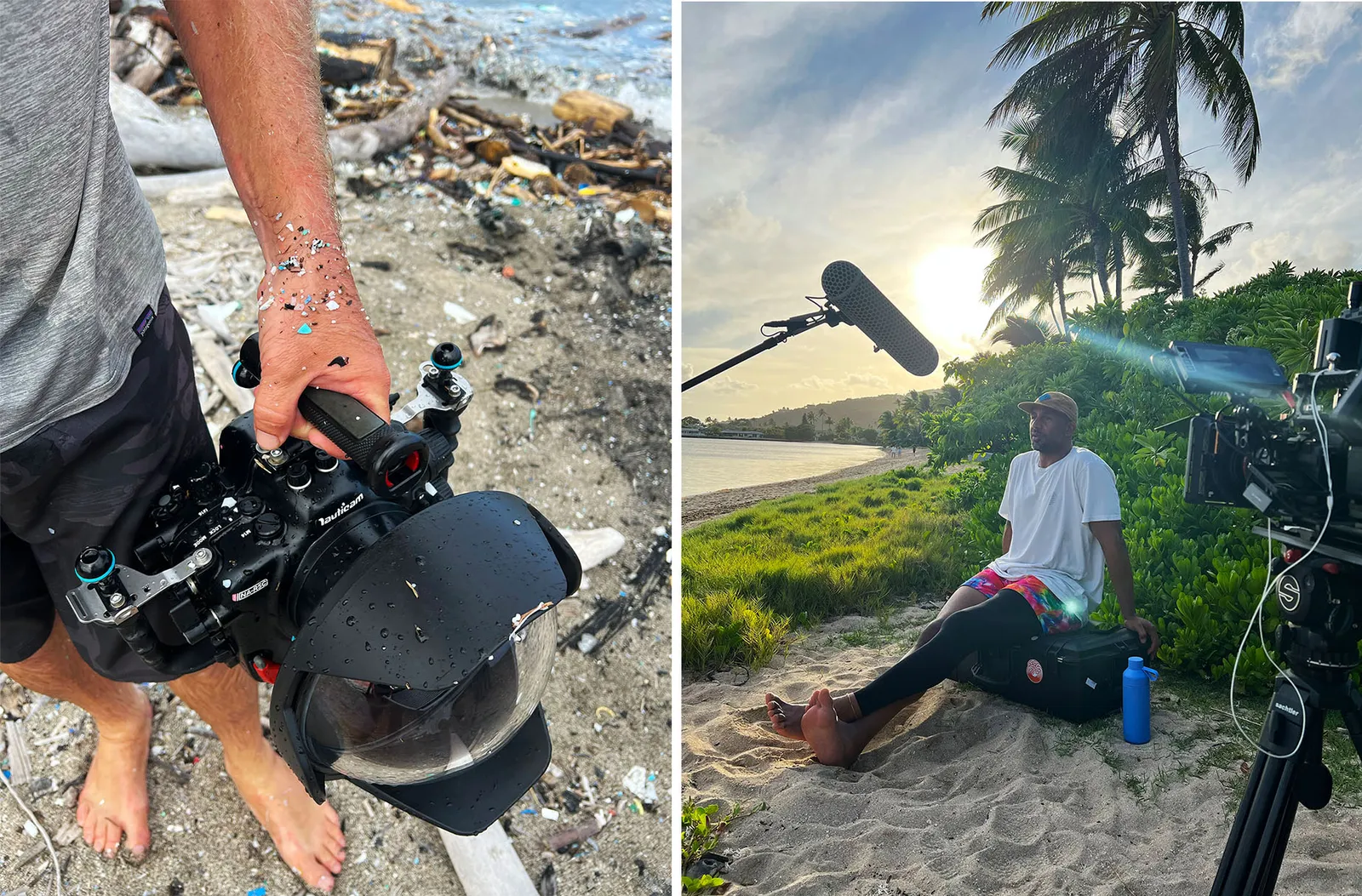
Groundtruth’s documentary Kuleana uses sport as a lens for the plastic pollution crisis.
Press is an important Tier 2 lever, too. Allweiss explains that if a brand is using a novel material developed by scientists, she would have the scientists talk to science reporters, but she would also create a fashion campaign around the garment itself with strong imagery to draw clicks to articles and consumers to the product. “I think a beautiful example of this is the Circ x Mara Hoffman dress [released in 2023],” she says referring to the textile-to-textile recycler who is one of her clients. “With that we really pulled back the curtain on how those materials were made. We had the science conversation. But then, with Mara and with the garment itself, we were able to get these fashion stories about it, because there was a real concrete product.”
Below the first two palatable, consumer-friendly tiers comes the third tier of reporting, which should, according to Townsend, have everything including the kitchen sink, from impact reports and sustainability pages to corporate commitments and net-zero targets. Though consumers rarely check in on such resources, they are reassured by their presence, experts say, therefore they should be easily found, not hidden away on a corporate sub-site.
Industry-facing communications, meanwhile, may look more like the sustainability campaigns of old; brands signposting their operational endeavors and achievements. “It’s signaling leadership or building collaborations, maintaining transparency across the whole sector or appealing to investors, potential partners, and policymakers,” says communications advisor and brand strategist Chinazo Ufodiama, who has fashion justice non-profit The Or Foundation, repair service Sojo, and biomaterials startup Biofluff on her roster.

Martine Rose AW26 features details manufactured from BioFluff.
Timing is crucial, too. “It’s finding ways in with people,” says Evans. Part of the reason consumers responded to the toxic-free messaging of The Mills Fabrica’s exhibition is because it tapped into the conversation around toxicity, kickstarted by recent Netflix documentary The Plastic Detox. A consumer wants to know how a product benefits them, a reporter wants facts and evidence, peers want guidance. The key is apportioning the narratives accordingly.
Certain narratives will inevitably be aligned with politics. Topics such as farming, local manufacturing, chemicals and toxicity, global supply chains, and decarbonization all feed into, and feed off, political debates, from state paternalism to energy sovereignty. Whether or not a brand wades into such debates should, like sustainability more broadly, feel embedded within its wider purpose, and be authentic. Ufodiama’s client designer Kazna Asker describes her brand as being built on the values of community, activism, and charity, while her aesthetics are rooted deeply in the Middle East. It did not feel out of place for her, then, to create a souk at London Fashion Week selling products from Middle Eastern businesses, a portion of the proceeds from which were donated to Medical Aid for Palestinians.
“Over the past five to 10 years, a lot of companies have misused the narratives of NGOs, civil society organizations, or trade unions, superficially claiming to fight the system, to generate new customers and get Gen Z on board,” says Lavinia Muth, co-founder of “The Crisps” anti-greenwashing newsletter and a self-styled post-sustainability consultant. This, again, risks brands being opened up to scrutiny about whether what they’re saying lines up with what they’re doing behind the scenes. To avoid wading into what she calls “communications warfare”, Muth would advise brand communicators to slow down and be more thoughtful.
Whatever your brand’s sustainability work looks like — from decarbonizing supply chains to chasing circularity — it should be wholly embedded within the overall story, says Townsend. If a brand’s sustainability efforts are siloed in a “green” diffusion line, or limited to specific products with a totally different tone of voice and visual identity, it can look tokenistic, she explains.
“Sustainability isn’t just for Earth Day. It’s not this one moment in the calendar where we roll out a sustainability campaign. It can look quite disingenuous if brands are only cherry-picking when they’re talking about sustainability,” says Hughes. “If a brand is truly doing the work and baking sustainable practices within all its operations, then sustainability should be the golden thread through all of the storytelling.”
此内容由惯性聚合(RSS阅读器)自动聚合整理,仅供阅读参考。 原文来自 — 版权归原作者所有。