







My husband and I sat on opposite sides of an unfamiliar leather couch: Alex on the far right and me on the left. It was our first meeting with Bruce Almo, a highly recommended couples therapist whose hourly rate was way more than we could afford.
We were there for one reason only: to negotiate my salary.
“So…,” Bruce began, fanning his hands out to both of us like a Catholic priest welcoming his parishioners.
I knew not to speak first—to never speak first. Alex jumped in.
“We’re not really here to talk about our marriage,” Alex clarified. “We’re having more of a business issue.”
Bruce smiled neutrally again. This was obviously a marriage issue.
Two years earlier, my husband Alex and his identical twin brother, Mike, started a clothing company named Faherty Brand (after their last name). Alex had a background in finance, Mike’s expertise was fashion design, and my background was in social justice and mindfulness. I joked that each of us only had a third of a brain, but together we might be able to figure things out.
Before long, the queen-size bed I shared with Alex essentially became our conference room. Conversations about the business were our pillow talk, our good-morning chat, and, dare I say it, even our foreplay at times.
“We are actually here to figure out how much I should get paid,” I said. And then I laughed, recognizing the ridiculousness of having a couples therapist mediate such a thing—and also because I always laughed when I was about to cry.
“Listen, I value Kerry, I do,” Alex assured Bruce. “But I should make more money than her. I work more. I care more. I’m the CEO, which means I have to run almost every part of the company to ensure we financially survive. That’s a lot of stress on me. Plus, this brand has been my and my brother’s dream since we were kids.”
Alex wasn’t wrong. He did work more than I did, he did care more about the company, and he did manage more people. But the three of us were in this together, fully consumed by the desire and need to make sure Faherty got off the ground. If salary reflected value, Alex was confirming his belief that I mattered less than he did, and this hurt. Beyond the fact that I spent nearly every waking moment trying to make his and his brother’s dream come true, I also contributed things to the company that were invaluable, though often unseen: building a healthy culture, forming meaningful relationships with partners and nonprofits, creating an expansive community of customers, and ensuring our family values were reflected in the brand.
What about emotional labor? I wanted to say. Heck, even spiritual labor?
“And besides,” Alex added, “Kerry’s just not as committed.”
The word hung in the air. It was true that I wasn’t as committed as I used to be—to the business or, frankly, to the marriage. I’d recently driven up to Ojai on a Sunday night and checked myself into a spiritual retreat center, where I filled pages of my journal with ideas and dreams outside the brand: creating a music and meditation event series, writing a book of poetry, hosting retreats, starting a farm, running away.
Alex kept talking. “And anyway, you’re not like you used to be. You’re not the woman I married.”
We weren’t talking about money anymore, but Alex had nailed one of the main issues at hand. I finally chimed in.
“Well, you’re exactly like you used to be, Al. You’re the exact man I married.”
This was our shared problem: I wanted a man who would evolve, and he wanted to wake up next to the girl he fell in love with when he was 19 years old—the one who was reliable, who pleased people, who never got angry, who put others first.
“And now,” Alex said, closing his opening statement to Bruce, but staring at me, “you just do what you want.”
I paused, trying to decide whether this was an insult or a compliment. Where was the problem?
“Why don’t you do what you want?” I asked.
“Because I’m not selfish.”
Another silence.
He’d actually said it: the S-word.
Days later, Alex and I agreed to take the same salary, but the conversation around who was being selfish remained at the forefront of our conversations over the years, as if there were an unspoken game of math being played at all times. Who was contributing what, and when, and what was that contribution worth? How were we each showing up for the business? For the marriage? And later, when kids arrived, for the home, for the children, for each other?
The deeper we went, the harder the math got. Were we adding to the other person’s health and happiness or quietly subtracting from it? Were we being supportive and kind to each other, or were we resentful and wounding—two people keeping score while pretending not to?
And one layer deeper: How were we each, as individuals, measuring our own worth? Alex’s was tied to ensuring the company was successful and profitable, and start-up life was an unstable financial roller coaster. Mine was tied to being seen and valued in my creative pursuits, which had very much fallen by the wayside in the chaos of building the brand.
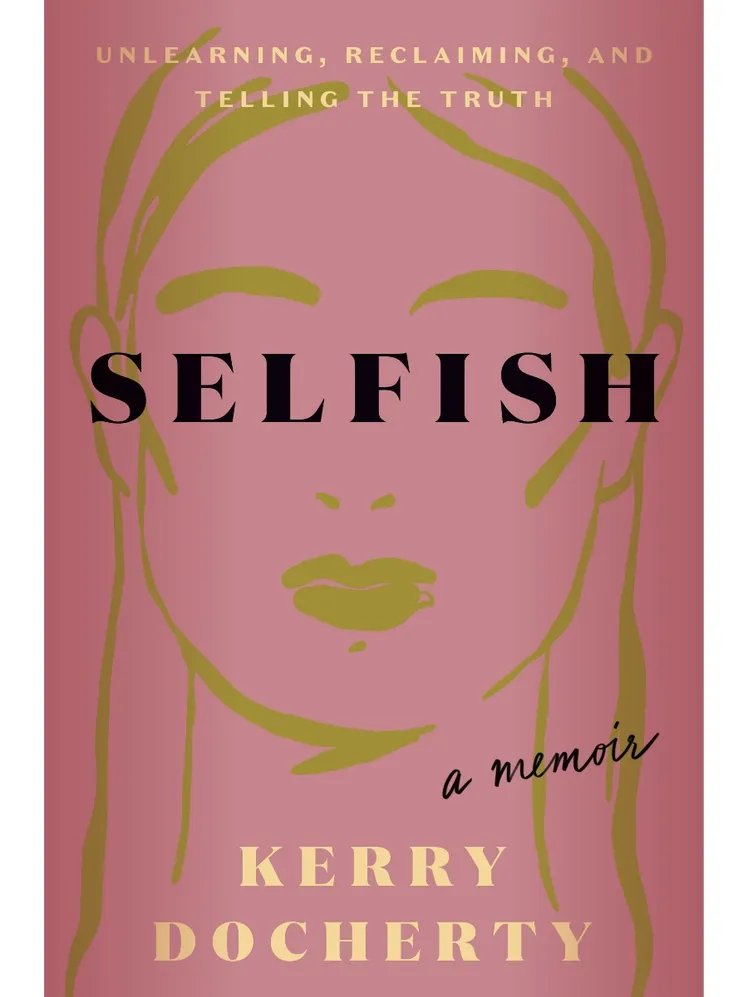
Years have passed since that date in couples therapy. Alex’s CEO leadership is one of the main reasons Faherty Brand now has more than 84 stores across the country, and I have recently written a memoir titled Selfish that explores the complicated dynamics around putting oneself first in business, marriage, motherhood, longing, and creativity.
Alex and I still have the hard discussions around what it means to be seen and valued—sometimes in therapy, sometimes on our commute to the office, and sometimes lying in bed at night. And yet saying the hard things out loud and articulating what we need has helped strengthen our relationship. We are now more honest, more emotionally connected, and more willing to name the ways we hurt each other. We are also now addressing the ways in which we want to heal together.
Sometimes we start keeping score again. But something in the scorecard has shifted—because, more than anything now, we want to be on the same team.
Adapted from Kerry Docherty’s memoir Selfish: Unlearning, Reclaiming, and Telling the Truth.
此内容由惯性聚合(RSS阅读器)自动聚合整理,仅供阅读参考。 原文来自 — 版权归原作者所有。