






Ever heard of a peptide? The internet’s latest biohacking craze, these are the injectables promising clear skin, bigger muscles, and lower body fat with heaps of energy. If user content on social media is to be believed, they seem like a beauty fix-all. But upon closer inspection, there are some murky truths.
Peptides are short chains of amino acids, also known as microproteins, which your body naturally creates, to regulate processes like hormone release, metabolism, immune response, and tissue repair. Scientists can artificially replicate these peptides to mimic their natural properties, the most prominent examples of this being GLP-1s (glucagon-like peptide-1), the weight-loss drugs, or diabetes drug insulin. Those peptides are approved by the US Food and Drug Administration (FDA). But many of the peptides hawked by manosphere personalities and other influencers, are not approved for human consumption.
Over the last two years, the looksmaxxing movement has gained steam, amid rising conservatism and a growing fixation on self-optimization. Meanwhile, longevity clinics and unverified websites have taken the opportunity to bulk buy peptides from China and sell them through their own channels. It means that while still not approved for human consumption, these drugs are managing to find their way into people’s fridges for injectable use. In December 2025, US Customs and Border Protection officers seized over a total of 5,000 shipments of peptides from China.
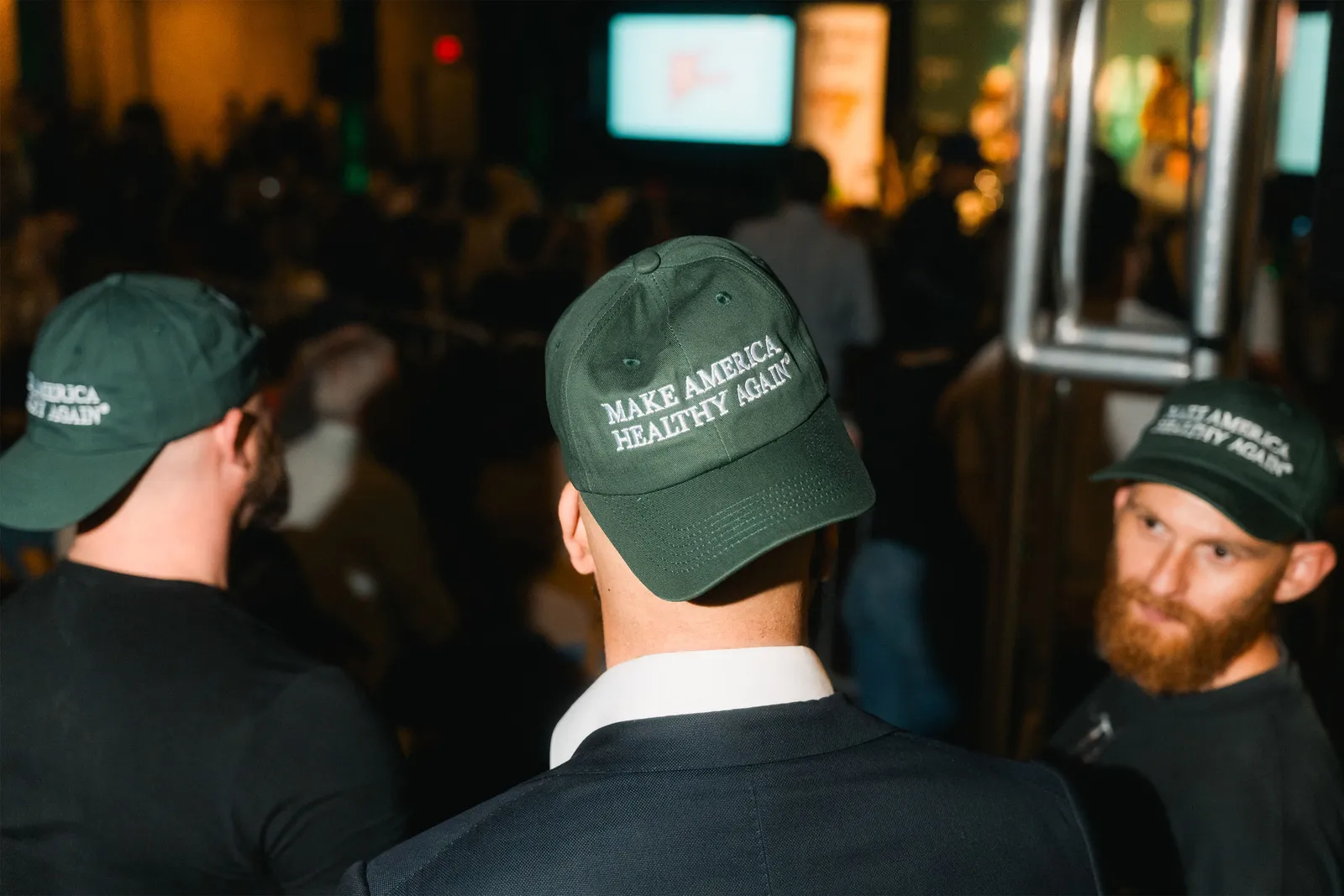
Robert F. Kennedy Jr.’s Make America Healthy Again campaign. Photo: Getty Images
This week, following pressure from US Health secretary Robert F. Kennedy Jr. — who, in line with the obsession with self-optimization, has publicly stated he’s a “big fan” of peptides — the FDA announced it will be holding a panel with external advisers on July 23, to decide whether specialized US pharmacies should be allowed to produce 14 previously banned peptides for health purposes including wound healing, inflammatory conditions, obesity, and insomnia. On Wednesday, Kennedy wrote on X that lifting the bans would “restore regulated access, and will immediately begin shifting demand away from the black market”. However, if this goes through, it could boost illicit access to peptides in the US for reasons beyond health concerns, further raising the profile of the injectables.
On TikTok, there’s a growing market for the cosmetic benefits of peptides — from muscle gain to clear skin — and users are selling vials through a link in bio, or by asking other users to comment to gain access to a locked website that allows the purchasing of peptides for as much as $100. The platform says it suspends all accounts that promote peptides for cosmetic use, or substances marketed for weight loss or muscle gain. But it’s difficult to catch them all, as many of these peptide sellers reappear under new usernames and claim orders can be placed through social platforms.
As brands consider researching peptides, it’s important to examine where the trend came from. The way in which cosmetic peptides started making headlines was through social media influencers and biohacking YouTube creators referencing research that paints peptides in a positive light. Terry Roberts, senior lecturer in biosciences and molecular biologist at Brunel University, co-authored a paper exploring an enzyme called telomerase, which is found in 90% of all cancer cells and manifests as a protective cap made of DNA and proteins located at the end of a chromosome. “The paper almost went viral,” Roberts says. “But what they [influencers and podcasters] did is pick parts of the research, ignoring swathes of it.”
The part of the paper that the internet has run with is where Roberts notes “a strong link” between telomere length and aging-related diseases. Therefore, telomeres are considered to be one of the biomarkers of aging, and increasing or maintaining telomere length with peptides may contribute to both healthy aging and longevity. But risks persist, Roberts flags.
Finding the beauty gap
As we’ve seen with other trending ingredients or injectables, from NAD+ to exosomes, beauty brands often lean into longevity trends as they enter the social media conversation.
Topical peptides are already used in skincare products, but brands remain skeptical when it comes to injectable peptides, even if they can see the potential of their properties for product use in the long term. Medik8’s Liquid Peptides Advanced MP contains Matrixyl 3000 and copper peptides, otherwise known as GHK-Cu, for collagen support. The Ordinary uses acetyl tetrapeptide, which claims to reduce puffiness. Rhode uses palmitoyl tripeptide-1 in its Peptide Lip Treatment to help plump and hydrate lips.
These topical peptides are different to injectable peptides, because they are reacting to the surface of the skin, with subtle results. Injectables have a more intense outcome, as they can create changes in deeper tissues. There’s injectable GHK-Cu, which claims to improve skin quality and collagen support; BPC-157, nicknamed the Wolverine peptide, which claims to repair tissues, reduce inflammation, and accelerate wound healing; and TB-500, which claims to promote muscle growth and tendon repair.

Photo: Vogue, August 2012. Steven Klein
Vogue Business reached out to a total of 21 beauty companies (including conglomerates, luxury brands, and mid-size brands) to ask if they are currently exploring incorporating the properties of injectable peptides into their products, but only five agreed to comment for this story.
“In the future, it is very likely that cosmetic brands will draw inspiration and develop active ingredients that offer similar effects to these medical molecules, but without using them directly,” says Nathalie Broussard, scientific communication director at Shiseido, who also has a pharmacy PhD. “Even though medicine has always been a source of inspiration for cosmetics, it is important to be aware that not everything is always transferable, and that a medical trend does not necessarily offer relevant effects for the skin.”
“Injectable peptides could usher beauty and longevity rituals into a new era, but at the moment, we’re flailing blindly in confusion and misinformation,” says Suzanne Scott, global associate beauty director at PR and strategy firm Seen Group. “There simply isn’t enough testing or regulation.”
As a starting point, brands that have long used topical peptides in their products should be more vocal about it, to capitalize on the buzz around the catch-all term. “We may see them mentioned more on pack, because the word ‘peptide’ will almost definitely become a word that consumers associate with longevity,” says Scott. “[Conumers] might not fully understand what a peptide is and what it does, they just associate it with beauty innovation, efficacy, and results.”
“Topical [peptides] have been around for years, and new ones are coming up every few months,” says Dr. Lamees Hamdan, founder of Dubai-based wellness brand Cosmic Doctor. “They tend to be expensive and drive up the cost of the skincare product. But even the new peptides have not been tested for very long, so we don’t know if their results are consistent.”
Dr. Michael Ingrassia, VP of advanced technologies, global research and innovation at Estée Lauder Companies (ELC), says that while a topical product might not replicate an injectable, advances in injectable science have been pushing scientists at ELC to think about ingredients that can provide alternatives in the cosmetic space, along with the necessary stability, compatibility, bioavailability, and delivery. “The real opportunity lies in finding ways to translate complex biology into cosmetic formats that are stable, safe, and provide advanced visible skin benefits. Ingredients like these are already shaping the next generation of skincare research,” he says.
Lecturer Roberts says that getting a peptide to clinical trial could take between five to 15 years, and will cost millions because they cannot be patented unless a new activity is discovered. “If [brands] can’t patent it, they can’t make their money back,” he says.
The next step for brands
The risks with peptides are still not fully understood. But there are potential future growth opportunities for brands conducting their own peptide research.
Dr. Anita Sturnham, founder of skincare brand Decree, says that injectable peptides and their properties are closer to coming to market than many people realize. “While regulations remain strict, these compounds can now be used in clinical settings, strictly on a trial basis,” she says. “I’d expect to see injectable and inhaled peptides establishing a credible presence in medical-aesthetic and clinical beauty settings within the next five years, with broader consumer market applications following as the evidence base grows.”
Brands that start exploring peptides within their research and development (R&D) labs will get a headstart on market share. The FDA’s recent consideration signals that the regulatory landscape may well shift with the science. At the time of the announcement on Wednesday, digital healthcare company Hims & Hers’s shares increased 12%. The company has a peptide facility that it scaled last year, and has already carved out a name in the health space for tackling weight loss, hair loss, and libido performance. When asked for comment, the company’s chief medical officer Dr. Patrick Carroll said that Hims & Hers is “actively exploring how to expand access in a way that will be aligned with FDA guidance and reflects our commitment to consumer safety, transparency, and clinical excellence”.
“The beauty and aesthetics industry tends to follow where clinical medicine leads, and with compounds like BPC-157 and GHK-Cu now accessible in controlled clinical settings, the conversation is shifting from ‘if’ to ‘when’. Brands that are doing the rigorous research now will be well positioned when the market fully opens up,” says Decree’s Dr. Sturnham.
At the same time, some brands are taking extra precautions when it comes to engaging with injectable peptides. Rodial founder Maria Hatzistefanis says her brand is taking a ‘clean’ beauty approach in the midst of unregulated peptides — the brand only uses topical peptides. By the end of the year, Rodial will be Yuka-approved, the mobile app used to scan food and cosmetics products for their health and environmental impact. “The Ozempic craze has taught people you can have an easy solution through shortcuts,” says Hatzistefanis.
Dr. Yannis Alexandridis, co-founder of innovative skincare brand 111Skin, alongside his wife Eva, says that he’s been carefully evaluating data around all relevant peptides at his surgical practice at 111 Harley Street. He reaffirms that there is still more research to be done, despite some peptides showing promising early results in regards to inflammation regulation, improvements on skin wound healing, as well as benefits for treating wrinkles and scars.
Kieran Lahey, CEO and co-founder of supplements brand Vida Glow, thinks the acceptance of injectable peptides by the beauty market is inevitable. “The trajectory mirrors what we saw with Botox and hyaluronic acid fillers, both of which were once considered strictly medical, but are now mainstream beauty treatments,” he says. Lahey expects injectable peptide protocols to be positioned at the premium end of the beauty market in the future, under the umbrella of “longevity aesthetics” or “regenerative beauty” and offered through both medical clinics and medical spas.
What are the risks?
Roberts advises caution when it comes to peptides, because they still lack definitive research and clinical trials. This poses a huge risk for beauty brands looking to get involved, because their efficacy remains unproven. “Most of these peptides are synthesized in China, they ship it in bulk and we don’t know what their quality control is and what shipping methods or storages they’re using,” he says.

Clavicular, otherwise known as Braden Peters walking at New York Fashion Week for Elena Velez. He has been promoting peptides on his social media profiles. Photo: Getty Images
The vast majority of research on peptide therapy is anecdotal and derives from social media. “Social media is saturated with testimonials from people self-injecting compounds of unknown purity, which makes it impossible to separate placebo, natural variation, and genuine biological effect,” says Dr. Charlie Cox, a cardiothoracic intensive care consultant and consultant at longevity clinic Reborne Longevity. “The deeper issue is that we’re effectively running a large, uncontrolled human experiment without capturing the data. People are self-administering peptides from unverified sources, without oversight or follow-up, which means we’re not generating meaningful safety or efficacy insights.”
Dr. Hamdan advises consumers and brands to wait a few more years when there are established protocols and studies around the side effects of cosmetic peptides — and doesn’t expect to see them in cosmetics anytime soon. “I am actually quite worried and alarmed that so many people are injecting themselves with peptides. But it’s even more alarming to see healthcare professionals actually recommending them,” she says. “While peptide therapy looks exciting, the reality is, no one knows the correct protocols or any long-term side effects. Injecting yourself with substances that are not regulated is not a joke.”
It’s still early days for peptides, and their future is undecided. However, it’s likely that they will not be stocked on the market before several reformulations and clinical trials. It took GLP-1s roughly three decades before achieving mainstream success and becoming a household name; injectable peptides could take just as long.
此内容由惯性聚合(RSS阅读器)自动聚合整理,仅供阅读参考。 原文来自 — 版权归原作者所有。