


Photo: Shahram Saadat
This article is part of the Future of AI, a collection of articles that investigates how artificial intelligence will impact the fashion and beauty industries in the years to come.
When Prada redesigned its New York flagship with Rem Koolhaas in 2001, luxury got its first taste of a futuristic shopping experience that felt personalized and highly data-driven. Every product in-store had an RFID tag embedded, allowing sales associates with handheld devices to instantly access stock levels, available colors and sizes, pricing, runway footage, designer sketches, and styling suggestions. In the fitting rooms, sensors automatically detected which items customers had brought in, and touchscreens suggested different sizes and styles, matching accessories, and showed the piece as it appeared on the catwalk. RFID-enabled customer cards allowed returning customers to opt-in to be recognized as they entered the store, giving staff access to their purchase history and preferences.
Prada’s ambition was to create a seamless, almost concierge-like shopping experience, and it anticipated the ideas the industry is still thinking about today: this type of pre-emptive hyper-personalization is the luxury industry’s dream, functioning as a conduit for full brand immersion, and service that goes above and beyond mass retail. But Prada was a little too early — the tech was clunky, expensive and unreliable, and crucially, the consumer wasn’t ready yet. Privacy concerns around tracking customers led the brand to eventually wind the “Prada Epicenter” project down.

Prada’s 2001 New York flagship ‘Epicenter’ store concept, designed by OMA co-founder Rem Koolhaas, which incorporated futuristic technology that anticipated the retail ideas the fashion industry is still thinking about today.Photo: Courtesy of OMA
Twenty-five years later, technologists say shifting consumer behavior combined with rapidly advancing AI means luxury is close to finally realizing this dream. But this time around, consumers are less likely to encounter AI in luxury via gadget-like retail tech and “store of the future” concepts, or a single tool or interface. Instead, AI will function as an invisible layer embedded throughout retail, so that human, staff-led interaction remains the primary customer touchpoint.
The hope is that these invisible AI improvements will increase sales — no more waiting a week for your size to come back in stock, or being treated like a stranger on your bi-monthly trip to a brand flagship, so the promise goes. While for a long time, the accepted wisdom within luxury retail has been that advanced tech features have little place in physical stores — as reinforced by the boom and bust of Web3 hype ideas like VR headsets — experts say this time, it’s different, because the tech is solving real retail pain points.
Those working at the frontier of experiential retail say AI is also leveling up what they call “empathetic” retail design, from store concepts where the lights change color or the music shifts in step with a customer’s breathing tempo, to AI-written poetry hand-delivered to a customer in seconds, based on how they look and what they’re wearing. In luxury retail’s AI era, a core focus on the humanity of every experience is the common thread.
“Customers now have high expectations of luxury retailers — they expect them to already know a lot about them, their services, what they’ve bought, what they might like,” says Andrew Hill, creative technology director at Random Studio. “But in the visual presence of offline and online store environments, there will be less and less visible technology. AI is this virtual, invisible layer beneath everything that makes the store a more magical, interesting place.”
Digital twins
Behind the scenes, brands are currently laying the groundwork so they can deliver this human, AI-assisted hyper-personalization at scale. “One of the most interesting use cases of AI that we’re seeing across luxury today is within the customer relationship management [CRM] and consumer marketing functions, where teams are building ‘digital twins’ of their customer base in a digital environment,” says Andrea Steiner, associate partner at Bain, who focuses on luxury retail and fashion. Brands are uploading all the information they have on details like what customers have bought in the past, how they’re engaging with the brand website, and how frequently they shop, then segmenting their customer base to find patterns and personas. Unlike traditional static CRM personas, AI enables brands to create dynamic virtual representations of individuals that simulate their behaviors and preferences in real time, continuously updated by data from several sources — hence the term “digital twins”.
Critics say this new data feedback loop could come with a darker side: certain fast fashion brands began making headlines last year due to industry speculation that they were following the aviation industry’s lead and experimenting with AI for dynamic pricing, in response to factors like demand, inventory levels, scarcity, and currency fluctuations. But historically, luxury brands have been more hesitant to avoid volatile or transactional pricing.
Instead, Steiner says, brands are using AI in this way as a “sandbox” for testing how a consumer would react to different products, communication styles, and merchandise, giving teams the opportunity to test something in a closed environment, before delivering it to the final customer. “This will enable the CRM and marketing teams to deliver a more personalized and engaging brand experience through all the different touchpoints, while keeping — at least in the foreseeable future — a human at the center of the connection,” he says.
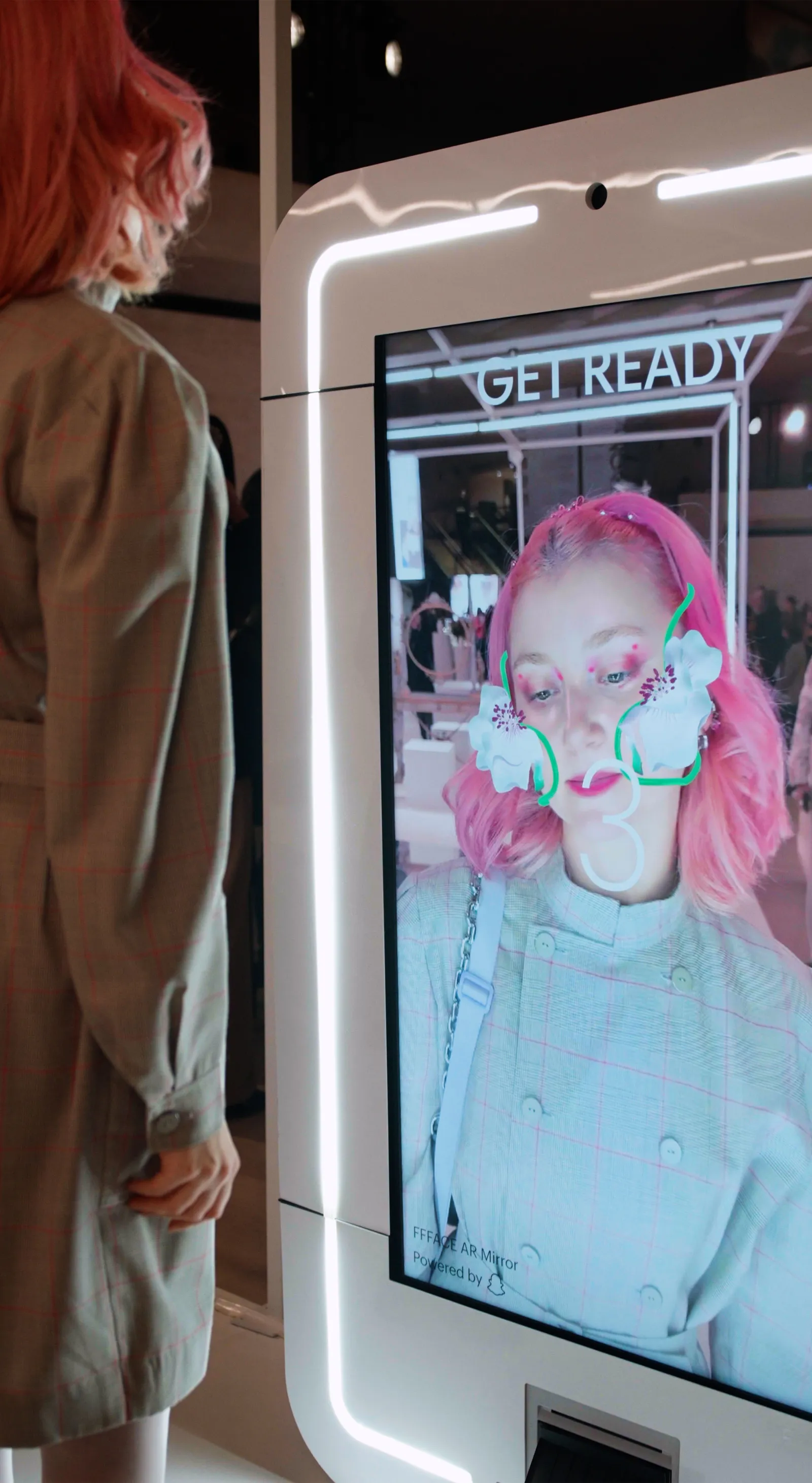
Ffface’s smart mirror activation for L'Oréal at the Louvre.Photo: Courtesy of Ffface
In Steiner’s view, human sales advisors will continue to play a big part in the luxury in-store retail experience — even if AI-powered changing room robot assistants could become a reality at high street stores within the next decade, too. Instead, Steiner says we should think of this AI-powered clienteling as a “backend enabler” of improved, more intuitive human service in high-end brand stores.
“Crucially, it’s not a sales associate in a store that’s segmenting the consumer as they enter, but following the purchase or customer interaction,” Steiner explains. The sales associate is given a template of five to 10 questions such as: was the customer wearing products from recognizable brands? Or were they shopping for a total look or just a single element? This intelligence will then be used for more sophisticated training of the shopfloor salesforce, Steiner adds.
“In luxury fashion, brands are developing a new collection every six months, so the level of know-how that the sales associate must have on the product is extremely high,” he says. “The level of effort required to generate the training material is also very high. So brands are testing AI to improve the human touch on selling — on recognizing how a consumer behaves, and optimizing the sales associate’s behavior.”
Real-time customer profiling
Elsewhere, some technologists are more bullish on the next evolution of this backend hyper-personalization, outlining a vision for AI that analyzes depersonalized video streams from CCTV and in-store cameras, to deliver Google Analytics-style insights for physical retail.
“There’s another layer, which we’re working on right now, where AI can analyze video streams, so all screens will become sources of very valuable information to brands,” says Dmytro Kornilov, CEO of fashion innovation studio Ffface, which develops smart AI products.
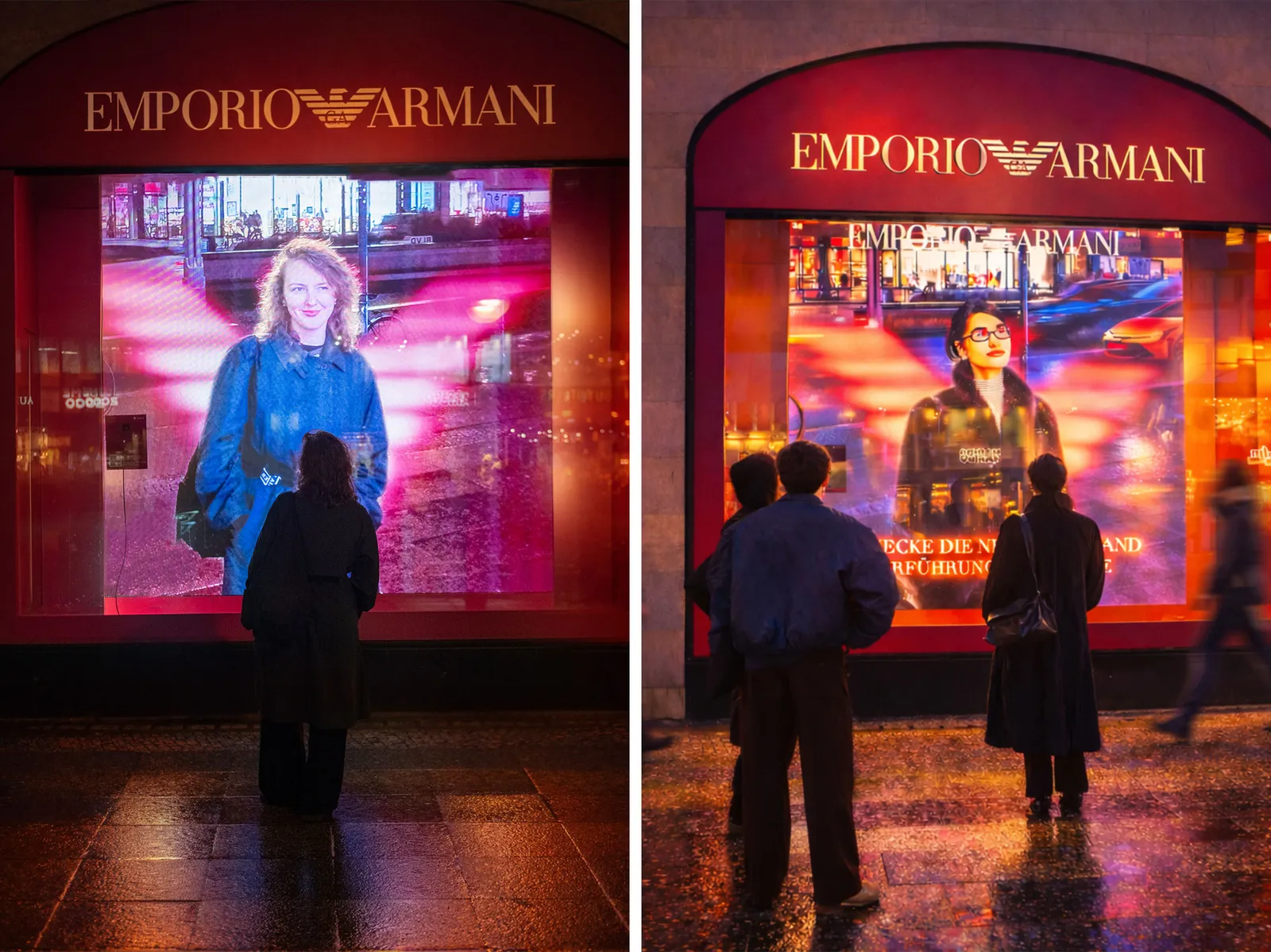
Ffface’s smart window display screens visualize passersby at Armani in Berlin.Photo: Courtesy of Ffface
Among the details Kornilov is training the AI to gauge from video streams are: hot and cold zones in stores; product interactions; and correlations between shoppers’ styles and purchasing habits, allowing brands to pre-empt consumer desire by optimizing layouts, assortments, and store formats, to maximize sales in real time.
“With the help of AI, physical retail becomes very similar to e-commerce, because we can now actually apply similar tools to Google Analytics, but offline,” says Kornilov. “So our real world is becoming a fourth dimension of the internet. The technology is already there and some of this is already on the market — it’s being used for high-level analysis by the very big players. I’d say we’re about a year away from this beginning to happen in fashion at scale.”
These innovations raise significant privacy concerns in a world where luxury consumers are already concerned about how AI uses their personal data — 46% of the respondents to Vogue Business’s AI consumer survey wouldn’t share browsing history with AI, while 40% wouldn’t share location data either.
But the technologists behind the ideas emphasize that all this information will always be anonymized and depersonalized. “We never need the face or to understand who it is, we can analyze other things,” Kornilov says. Instead, he insists that these new AI tools are simply building a bridge between offline and online — consent-based personalization that mirrors the cookie-based targeting already used online.
“It’s basically turning offline into a semi-digital experience. If you’ve given consent online for a brand to understand who you are, including recognizing you, and you’ve consented to cookies, the more consent you give, the more personalized your offline experience,” he says. “What’s better? A screen that shows relevant advertising to you, or passing by the same screen every day that keeps showing you something irrelevant?”
Experiential retail 2.0
AI also functions as an invisible interpretive layer for a new era of experiential retail that designers say will create more immersive, emotive, and personalized store environments.
“In the last three years, with the rise of LLMs and all-supporting machine learning systems, it’s opened up a new chapter for us as a studio, where the most interesting thing is the level of interpretation we can achieve,” says Random Studio’s experience director Richard Overboom. “We can now design a space to be much more empathetic and respond to your behavior more, so it feels like the space is attuning to you.”
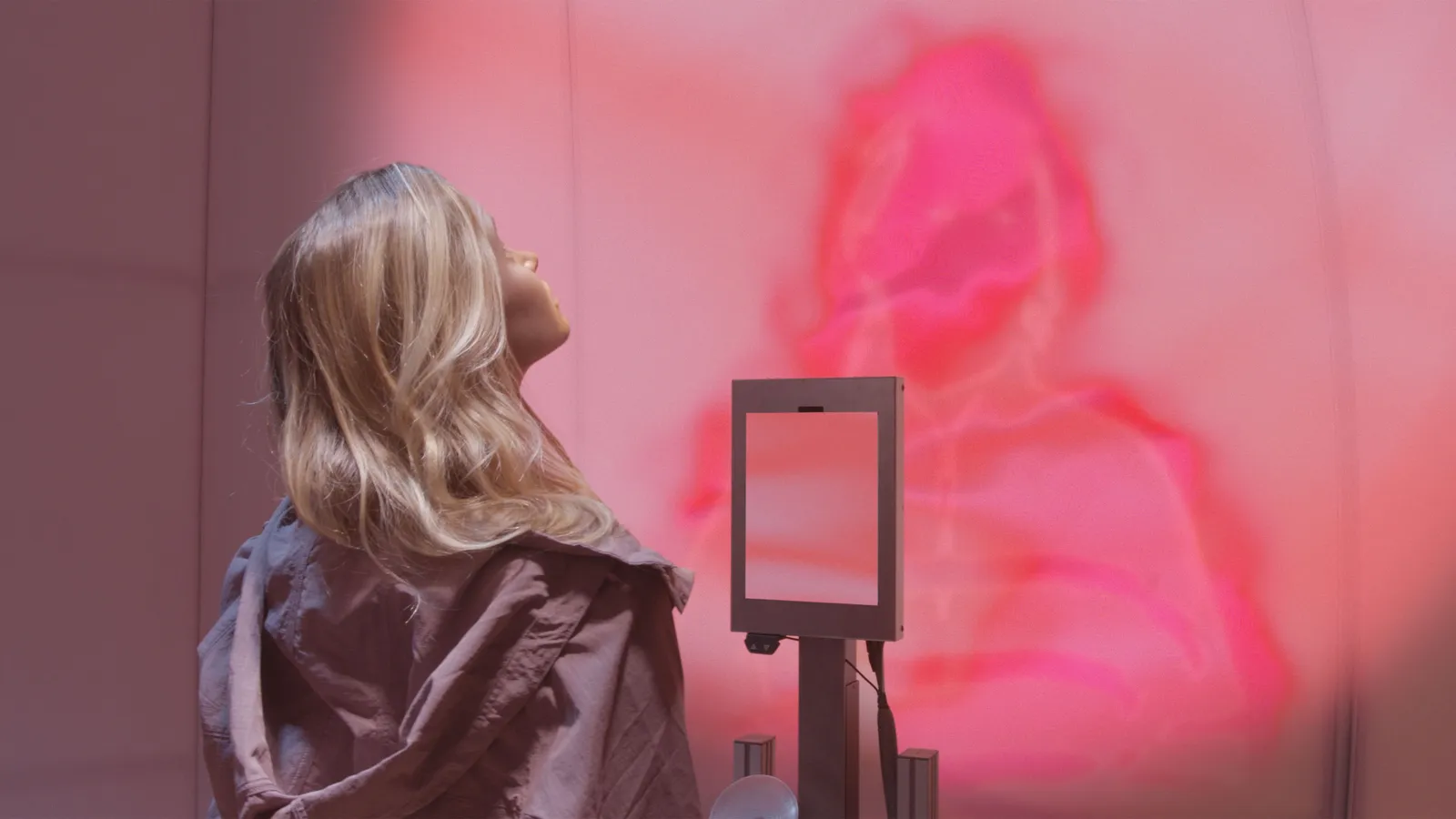
A thermal camera measures a customer’s changing breath rate and initiates a lighting color change at Random Studio’s AI-powered installation at Nike House of Innovation, Paris.Photo: Courtesy of Random Studio
Overboom explains how subtle cues — such as body poses, gestures, gaze direction, and even breathing patterns — are read by the latest computer vision, 3D-depth cameras, and thermal imaging cameras. His team have trained AI recognition models so that when, for example, a concealed thermal camera within a store wall recognizes a customer is exhaling, a purpose-built AI agent workflow is initiated to enable certain lighting and sound effects that make the room feel as though it is guided by your breathing.
It’s a use case that Random Studio has already experimented with, via a breathing-responsive in-store installation at Nike’s House of Innovation in Paris in 2024. The studio is also experimenting with another AI agent application that uses depth cameras (webcam-like cameras that capture 3D movement) to recognize customers’ gestures, before initiating “directional audio”, where a sound is played to solely that customer in-store. “At home, we have so many devices and wires everywhere, but AI is helping us create a retail experience that feels more centering and responsive to your body and presence,” Overboom says. “It’s about making those human moments matter more — using invisible tech to double down on how you actually feel.”
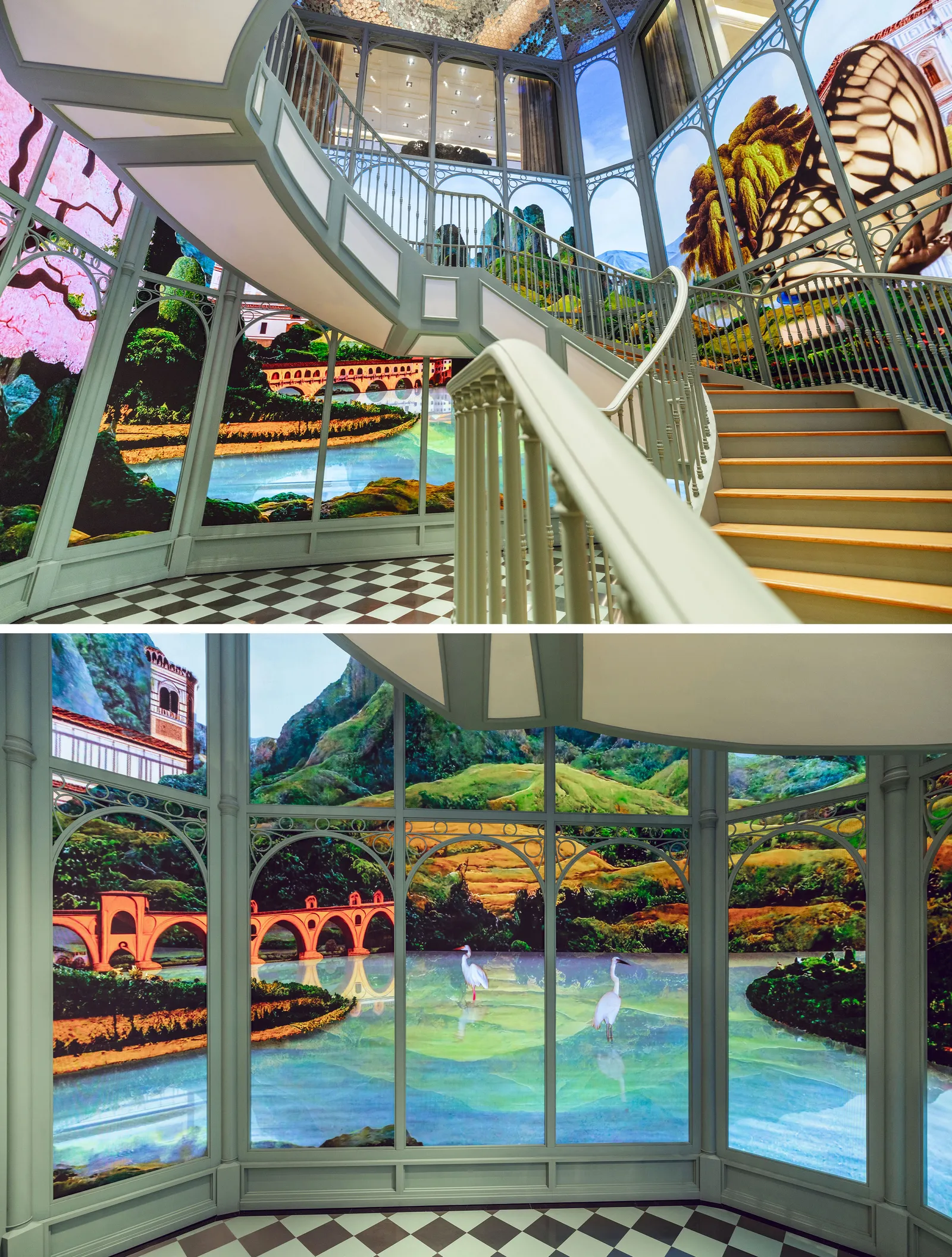
Gucci’s store in Chengdu, where Random Studio created an immersive digital fresco composed of layers of AI-generated imagery morphing together to create an ever-evolving fantasy landscape.Photo: Courtesy of Random Studio
Visual and text-based experiences can also be created with AI. Random Studio was recently commissioned by Gucci to create a “living fresco” for the interior of its new space in a Chengdu department store, where AI-generated imagery was morphed together and presented across large LED screens to create an ever-evolving surrounding that responded to visiting customers. In Paris, the studio collaborated with Glossier on the launch event for its Fleur fragrance, encouraging customers to pick up the perfume bottle. When they did, hidden webcams captured their clothing, posture, and movement, while a custom-built AI agent sent the image to OpenAI’s ChatGPT, prompting it to generate a custom poem unique to the client, which was then printed. The entire experience was screen-free — AI was powering an entirely analogue brand experience. Overboom says that in both examples, the images captured were anonymous, no data was stored, and images were instantly deleted.
“The way we approach it is to assume that it’s the identity we’re tracking, not the people,” he says. “And where you’re doing that in a retail space, you need to be very explicit around consent, and there needs to be a good reason to do it. But we’d never start to ID and track people across the store, as that would be too intrusive.”
Smart AI for ROI
A step beyond the more practical backend applications for hyper-personalization, technology companies are also working on developing AI that can transform several components of a luxury store into a “smart” device, to drive footfall and sales. Kornilov’s Ffface has just developed a new AI smart mirror software, Look AI, that turns any screen into an interactive mirror for virtual try-on and immersive brand experiences. “The big idea is that we no longer have to rely on any special, clunky equipment,” he says, emphasizing how the next evolution of AI smart tech transcends specific forms.
Look AI has split this new software into four scalable formats for brands: smart mirrors for product try-on, which brands can infuse with branded editorial content, like a shopping assistant that tells the client about each product; software that can be installed within screens in brands’ existing windows to create AI-powered storefronts where, for example, a passer-by of Burberry’s store can view themselves in a Burberry trench coat; smart photobooths designed for pop-ups, where the AI can capture and print photos of shoppers using existing cameras in-store; and large outdoor LED “mirror” screens that can turn billboards into similarly interactive branded experiences.
Kornilov says that so far, pilots of these interactive AI storefronts have increased foot traffic into stores by 20%, and that Ffface is working with several major luxury brands, including Dolce & Gabbana, Fendi, Burberry, Prada, Valentino, Armani, Calvin Klein and Nike, on tailored versions of these interactive products. He adds some of these brands are tracking analytics through Look AI’s various screens to feed back into their backend personalization functions, too.
“The thing that allows us to scale is that this technology goes beyond experimenting with some cool shiny activations — every format is dedicated to a different business goal on the sales funnel, whether that be boosting foot traffic, driving sales, or creating shareable moments for Gen Z on social,” Kornilov says.
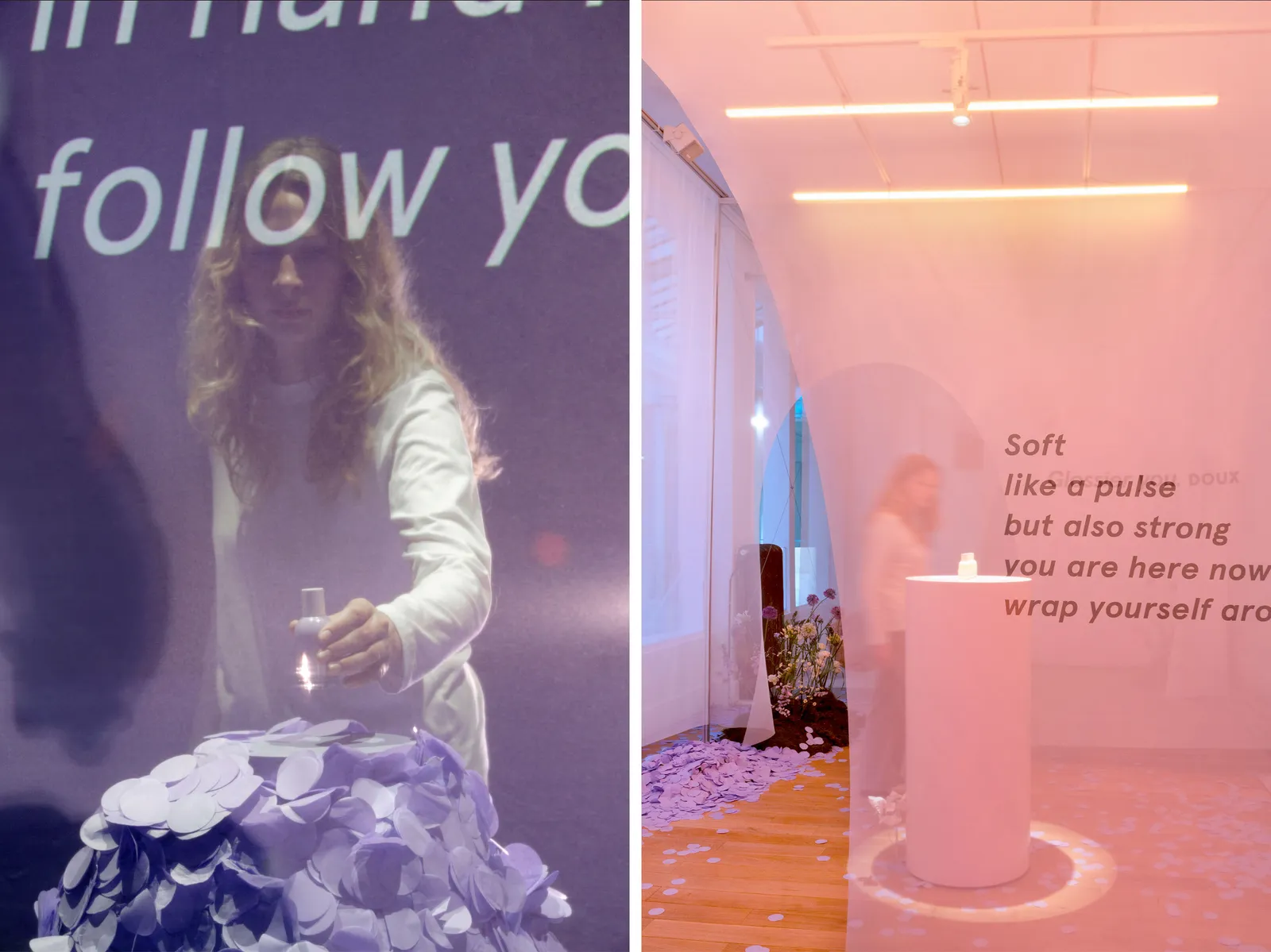
An AI-powered immersive installation by Random Studio for Glossier’s Fleur fragrance launch in Paris, where a customer picking up the perfume bottle caused the space to reflect their expressions and posture, and generated a personalized poem projection in real-time.Photos: Courtesy of Random Studio
Where virtual try-on has tried and failed to meet luxury brands’ visual standards for years, in the last 12 months, AI diffusion models have come so far that Look AI alongside several other startups — Doji, Alta, DressX, Catches — say their tech accurately mirrors shoppers, digitally in real time. Kornilov says that soon, Look AI’s software will enable such precise sizing recommendations that customers don’t actually need to physically try on the clothes — instead, they can try them on virtually in front of any screen where it’s installed.
“The brands we work with do quite advanced analytics on all their activations, they measure everything,” Kornilov says. “We are in a slowdown, and brands have become extremely rational. They’re not interested in just doing shiny projects — all the shiny has died. What they want now is direct impact, and the AI is designed purely for ROI [return on investment].”
Where shutting off from screens, algorithms and AI is the new luxury, brands now compete on cultural relevance and creating “meaning” through memorable in-person moments, rather than battling over heritage alone. Experts say this will drive a renaissance of physical retail that is — paradoxically — powered by the very AI consumers are longing to escape.
“AI will power personalization behind the scenes, but the best brands will keep it invisible,” says Matt Maher, founder and CEO of fashion-tech consultancy M7 Innovations. “The goal won’t be to showcase the technology, but rather to enhance the experience without disrupting it. I see a world where AI helps enhance human connection in luxury retail, not replace it.”
