


Thank you for reading! Letters from Leo is a reader-supported publication. If you find value in my work, please consider becoming a paid subscriber or making a one-time donation.
Make A One-Time Gift to Support My Work
Last week, outside the papal villa at Castel Gandolfo, Pope Leo XIV stopped to take questions from the journalists who had gathered there. One of them asked about the Society of St. Pius X, the traditionalist movement that has announced it will consecrate four new bishops on July 1 without his permission.
Leo reached for no diplomatic cushion. He said he is weighing one last appeal to the group — “Do not do this, let us try to live in communion within the Church” — and then he set down the bottom line.
“If they make that choice,” the pope said, “I am sorry, but we must move forward.”
That is the whole story in a single sentence. The first U.S.-born pope has decided that he will not let a right-wing faction inside the Church hold the rest of it hostage to an ultimatum.
The Society of St. Pius X has spent the spring daring Rome to stop it. Back in February, its superior general, Father Davide Pagliarani, said the group would ordain bishops this summer with or without a papal mandate. When Cardinal Víctor Manuel Fernández, who runs the Vatican’s doctrine office, offered to keep the conversation going on the condition that the consecrations be suspended, Pagliarani turned him down.
On May 13, Fernández put the stakes in writing. Proceeding, he warned, would amount to “a schismatic act,” and “formal adherence to the schism constitutes a grave offense against God and entails the excommunication established under Church law.”
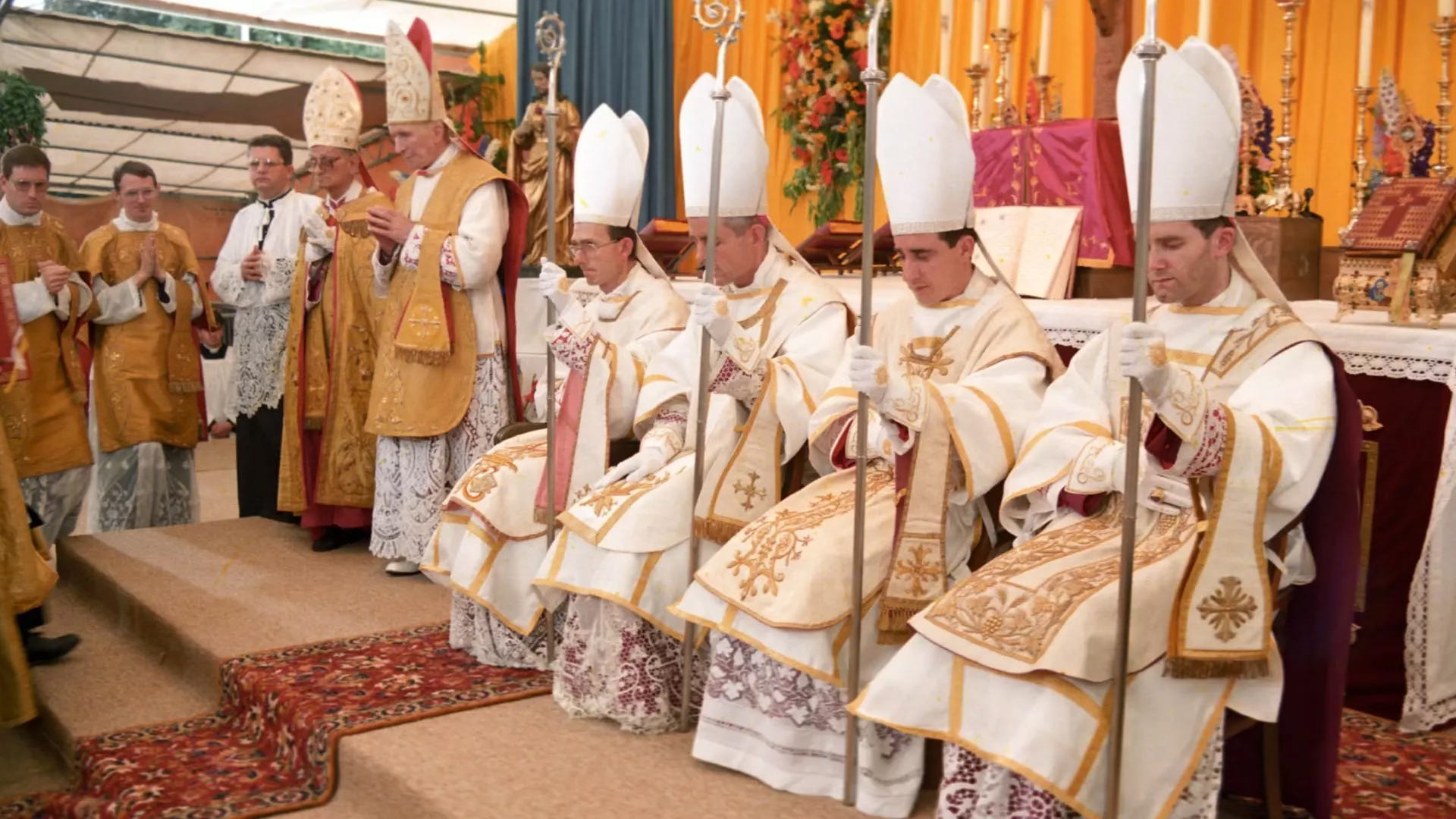
The four priests chosen for consecration — Michael Goldade in the United States, Pascal Schreiber in Switzerland, and Michel Poinsinet de Sivry and Marc Hanappier in France — would walk into that penalty together with the bishops who lay hands on them.
Leo’s reply carried no heat. He named the injury plainly: “Certainly, division among Christians is always a painful point. But they refuse to accept certain fundamental elements of the Church, starting with several points from the Second Vatican Council.”
This is not a quarrel about the Latin Mass as such. A small minority of Catholics treasure the older rite and remain in unbroken communion with Rome, and though limited by Francis in 2021, whole communities celebrate it with the Church’s blessing.
What sets the society apart is its rejection of the council that the last six popes have all upheld, paired now with a readiness to manufacture its own bishops rather than receive them from the man Catholics believe holds the keys.
I usually train this newsletter on what the Church does ad extra.
The phrase is borrowed Latin, the words theologians use for an institution’s life turned outward, toward the world — here, how Rome and this pope press on American life, on our politics, our borders, our conscience.
This quarrel runs the other way. It is ad intra, a fight inside the household of faith, and I am writing about it because an ad intra fight can carry ad extra consequences — this one, in many ways, shapes the political and cultural life of the United States.
A small, intense strand of ultraconservative Catholicism carries influence here far out of proportion to its numbers, and it has spent years trying to capture the priorities of the American Church and bend them toward the culture war.
The Society of St. Pius X is woven into that world. Its chapels are unusually popular across the United States, and its orbit bleeds into the Catholic right that has thrown in with the MAGA movement. The entanglement is real enough that in 2023 an FBI field office in Richmond drafted a memo that branded “radical traditionalist Catholics” — defined by their rejection of the Second Vatican Council — a potential domestic extremist threat and surveilled an SSPX priest.
Conservative groups called the memo an abuse of power. The FBI retracted it, and President Biden’s attorney general, Merrick Garland, condemned it as “appalling.” Even so, it showed how far this current has traveled from the sanctuary into the bloodstream of American politics.
The quarrel itself is older than this pope, older than most of the Catholics now living through it. Archbishop Marcel Lefebvre founded the Society of St. Pius X in 1970, in the unsettled years after the Second Vatican Council, to resist the very reforms the council had set loose — its teaching on religious liberty, its opening toward other Christians and other faiths, and the new Mass offered in the language of the people instead of Latin.
Rome moved against him early. When Lefebvre kept ordaining priests for the society against explicit orders, Pope Paul VI suspended him from ministry in 1976. An uneasy quiet held for a decade, until an aging Lefebvre resolved that he would not leave his movement without bishops of its own.
What gives this moment its ache is everything Rome has already extended.
The break traces back to 1988, when the society’s founder, Archbishop Marcel Lefebvre, consecrated four bishops in open defiance of John Paul II. The Vatican declared the act schismatic, and the excommunications landed at once.
Two popes then spent years trying to heal what Lefebvre had torn. In 2009, Benedict XVI lifted the excommunications of the four surviving Lefebvrist bishops, hoping the gesture might draw the society back toward full communion. The decision blew up in his face within days, when one of those bishops, Richard Williamson, surfaced in an interview as a Holocaust denier.
Benedict stopped short of apologizing for the decision itself, and the Vatican admitted it had not run so much as the simple internet search that would have turned up Williamson’s views.
Francis offered even more.
During the 2015 Jubilee of Mercy he granted the society’s priests the faculty to absolve sins validly in confession, and the next year, in Misericordia et Misera, he made that permission permanent. He later let the marriages the society’s priests celebrate in their chapels be recognized as valid. The pattern is hard to miss: every act of leniency drew a fresh demand in return, until the leniency itself began to look like permission.
If Leo's appeal was an open hand, the society has spent the weeks since filling it with paper. One day after Cardinal Fernández's May warning, Pagliarani answered with a “Declaration of Catholic Faith,” which the society billed as the “minimum necessary to be in communion” — a text that restated its objections to the council rather than setting any of them down.
Today, as Leo prepares to gather the world’s cardinals in Rome for a consistory on June 26 and 27, the society made its case straight to them. It published an open letter to the pope and to the entire College of Cardinals, paired with a “Profession of Catholic Faith … to Enlighten Souls in the Face of Modern Errors” — recasting its rejection of Vatican II as fidelity and branding the Church’s own settled teaching as the modern error in need of correction.
In the letter — dated today and signed at the society’s headquarters in Menzingen, Switzerland — Pagliarani and four of his colleagues present themselves as guardians of an “immutable Tradition,” insisting they are “not the sterile repetition of a group of nostalgics, but the necessary expression, peaceful and resolute, of our Faith.”
Pagliarani has called the consecrations “realistic and reasonable,” pointing to the crowds who fill the society's chapels and its need for its own bishops to ordain priests, and he has framed the stakes in absolute terms — his men, he says, would sooner die than surrender the cause.
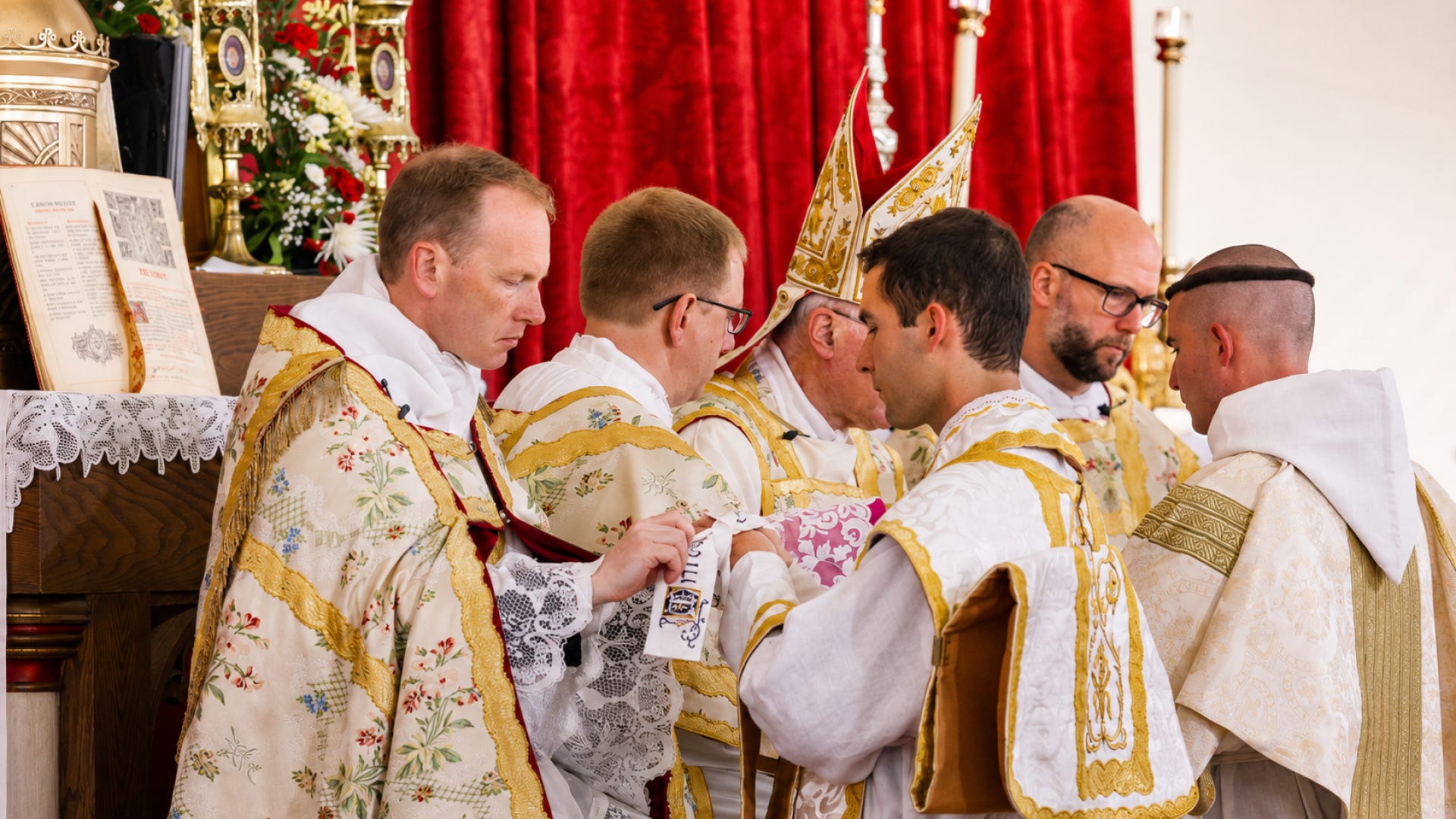
On July 1, two of the bishops Lefebvre consecrated in 1988, Bernard Fellay and Alfonso de Galarreta, are set to consecrate the four priests the society has chosen. The letters are addressed to Rome, but their real audience sits in the pews, and the word to them is that there will be no turning back.
To see why Leo will not blink, look at the document he has named as his compass.
Days after his election, on May 10, 2025, Leo stood before the College of Cardinals and called them to renew the path that Francis had “masterfully and concretely set forth in the apostolic exhortation Evangelii Gaudium.” He was pointing the men who had just chosen him to the program he intends to govern by.
From that exhortation, Leo singled out the points that would shape his own governance: the primacy of Christ in the Church’s preaching, the missionary conversion of the whole community, and a deeper commitment to collegiality and synodality — the slow, unglamorous work of walking together. Every one of them rebukes the instinct that drives the society, which is to wall off a remnant and call it the faith.
On his flight home from Africa this spring, Leo lingered on war, migration, and the death penalty — the questions he plainly weighs more heavily than the culture war’s fixation on sexual morality. Those priorities are, in miniature, the Church the Society of St. Pius X rejects.
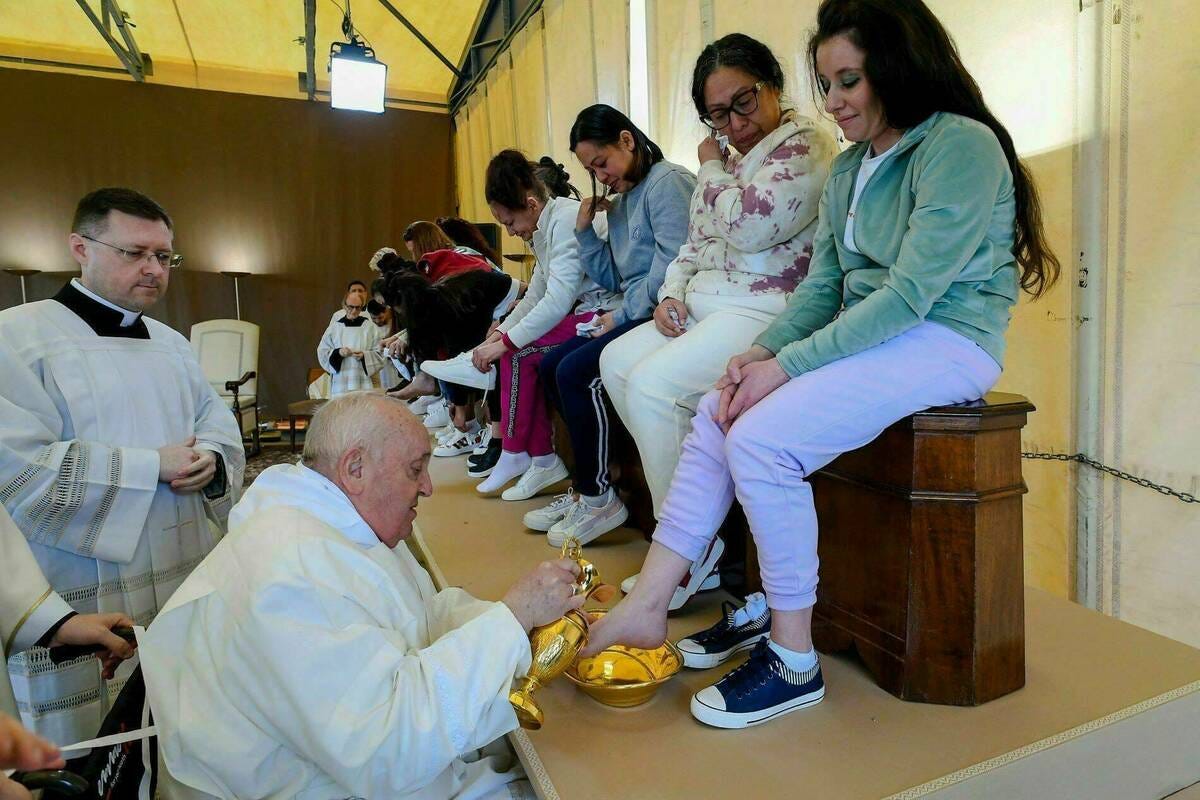
Francis put the heart of it in a line that has become the pulse of a generation of Catholics: “I prefer a Church which is bruised, hurting and dirty because it has been out on the streets, rather than a Church which is unhealthy from being confined and from clinging to its own security.”
Read whole, Evangelii Gaudium is one long warning against the opposite pull — a self-referential faith that mistakes its own frameworks for the faith itself, guarded and dusted like a museum piece, more in love with its own security than with the people it was sent to find.
That is the temptation the Society of St. Pius X has given itself over to. It asks the Church to treat one chapter of its past as a relic too sacred to leave behind, and it would sooner sever communion than step into the present.
There is real human weight here, and Leo knows it. The four priests about to be consecrated are not cartoon villains; they are men formed inside a movement that taught them the rest of the Church had lost its way. The tragedy is that the road out of schism has stood open their entire priesthood, and they are preparing to wall it shut from the inside.
Leo, who said in his first months that he means to keep the Church poor, joyful, and on the move, is telling the society that the Gospel does not sit waiting inside a sealed room.
None of this bolts the door. Leo said he may appeal one more time, and the decision, as he keeps repeating, rests with the society. Mercy is on the table right up to the instant they push it away.
Patience, though, is not the same thing as paralysis. A Church that has held the door open for the better part of forty years cannot be asked to stand frozen in the frame forever while one movement decides whether communion is worth the price of its grievances.
Leo has made his choice, and it is the one Francis pointed him toward. The Church will keep moving toward the streets, the wounded, and whatever God asks of it next, and it will not be governed by a faction that prefers the certainties of the world before the Second Vatican Council to the demands of now.
That is what a pope sounded like on a quiet evening outside Rome.
At Letters from Leo, we stand with a pope who refuses to let the Gospel be locked inside a sealed room — and with the millions of Catholics, and countless others of goodwill, who believe the Church is most itself when it is bruised and dirty from the streets rather than polished and safe behind glass.
In a moment when grievance passes for fidelity and nostalgia masquerades as faith, we hold to a Church that keeps walking toward the wounded, the migrant, and the forgotten instead of retreating into the certainties of a vanished past.
This is the fastest-growing Catholic community in the country because people are hungry for something deeper than a faith bent toward the altar of authoritarianism. They are looking for courage, for clarity, for a Church that moves toward the wounded instead of kneeling to power — and a movement built on that hunger is exactly what these times demand.
If you believe this work matters — Catholics and people of goodwill standing for human dignity and genuine communion against the temptation to wall ourselves off from the world — I am asking you to join us.
If you’d like to invest in our mission, here are three ways you can help:
Subscribe as a paid member to receive exclusive posts about the life and formation of Pope Leo and help sustain this newsletter.
Donate with a one-time gift to fuel this project’s mission.
Share this post (and Letters from Leo) with a friend who might enjoy it.
Paid subscribers make this possible. Your support unlocks the biographical series on Pope Leo’s life and formation, his fight with Silicon Valley, investigations like the Epstein-Bannon investigation, and the weekly Sunday Scripture Reflection Series.
Whether you give $8, $50, $100, $500, $1,000, or more, your presence here matters — no matter your faith or your politics.
Thank you for reading. I’ll see you on the road.
