




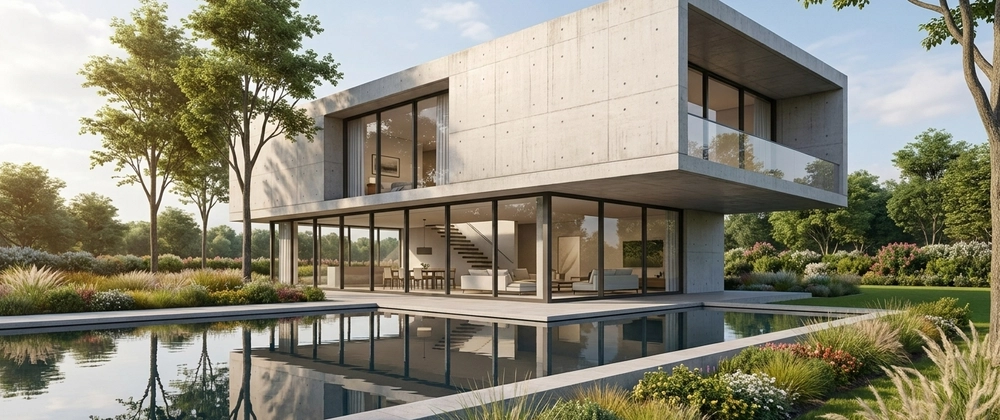

A few months ago, I started building QuickArchViz — a tool that turns 3D model screenshots into architectural visualizations in seconds.
The idea came from a very simple frustration I had in the past when I was still an architect:
My models were ready, but I still needed to make the visualizations for the client
Rendering takes time. It costs money. And every client meeting resets the whole process.
I wanted something faster. Something closer to how architects actually work.
So I started building it - now that I have over 10+ years of experience in programming.
What QuickArchViz does
You upload a screenshot from your 3D model (SketchUp, Revit, Archicad — whatever).
The system:
- keeps your geometry and camera
- enhances materials, lighting, environment
- generates a presentation-ready visual
No exports. No rendering settings. No waiting hours.
Just:
upload → choose style → generate
The stack
Nothing exotic. The interesting part is not the stack - it’s how the pieces work together.
Backend
- Laravel (API + orchestration)
- Postgres (multi-tenant, render tracking, token usage)
Frontend
- React + Inertia
- simple UI, focused on speed (upload → result)
AI generation
- image generation via external APIs (currently experimenting heavily)
- prompt engineering is doing most of the heavy lifting
Infra
- VPS (Laravel Forge)
- no overkill, trying to stay lean
The hard part: making AI behave like an architect
The biggest challenge wasn’t “generate a pretty image”.
It was:
don’t break the architecture
Most AI image tools will happily:
- change proportions
- move windows
- redesign the building
That makes them useless for real workflows.
So the core of the system is actually the prompt framework, not the model.
Core constraints (this took weeks to get right)
Every generation follows strict rules:
- preserve exact geometry
- preserve camera position
- preserve hard surfaces (paths, roads)
- do not redesign the building
Then only enhance:
- lighting
- materials
- environment
Styles are harder than they look
I thought styles would be easy.
They’re not.
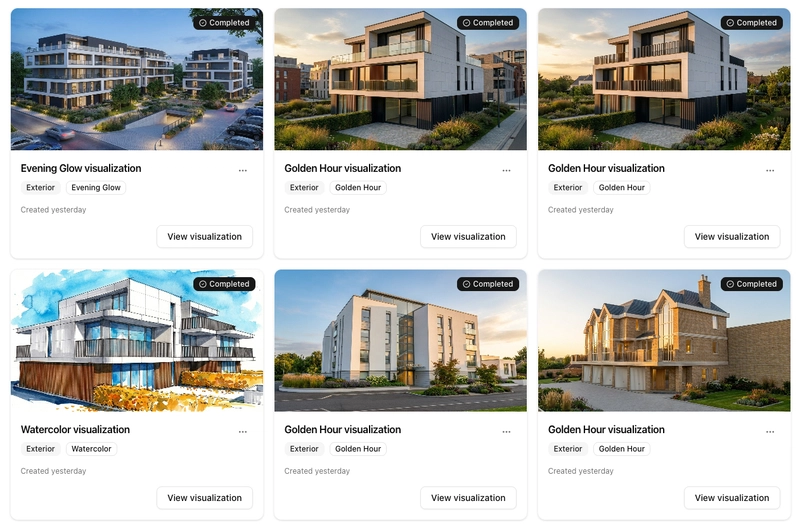
Example: Golden hour
Most models go straight into:
orange Instagram sunset in Bali
What I needed was:
subtle, European, architectural light
So styles became controlled systems, not just “vibes”.
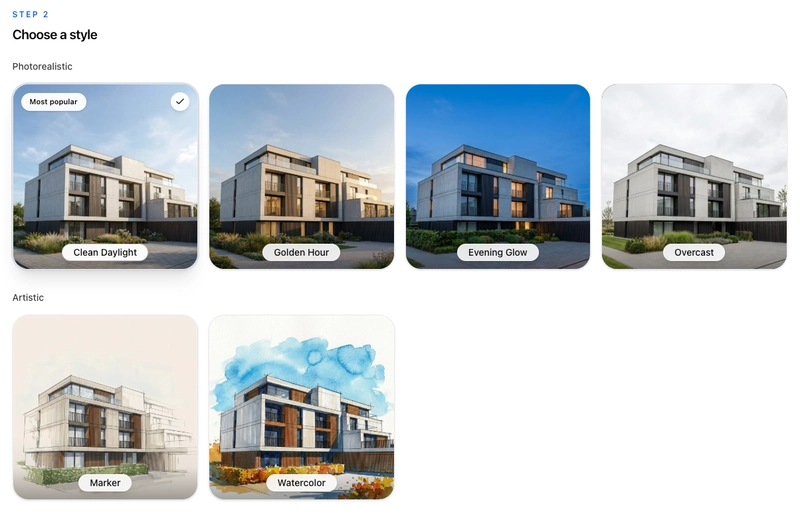
Current styles
- Clean daylight (default, most reliable)
- Golden hour (recently fixed, less saturated)
- Overcast / Nordic
- Evening / blue hour
- Artistic (marker, watercolor, concept)
Each one has its own prompt logic.
UX decisions (what actually matters)
I’m trying to remove every possible friction point.
Key decisions:
- no file exports required → screenshot is enough
- no settings → just styles
- no queue UI → simple “processing” state
- pay-as-you-go (no subscription)
What I’m working on now
- improving daylight realism (less “CGI”, more “photo”)
- refining golden hour (already toned down)
- adding more artistic styles
- improving landing page conversion
If you want to check it out:
Final thought
This is one of those products where:
- the tech is not the hardest part
- the UX is not the hardest part
The hardest part is:
making AI respect reality
Still working on that.
If you’re building something in this space or fighting similar issues (especially consistency / prompting / positioning), curious what worked for you 👇