









This article was originally written in Spanish on my personal blog: La Era del Disposable Software.
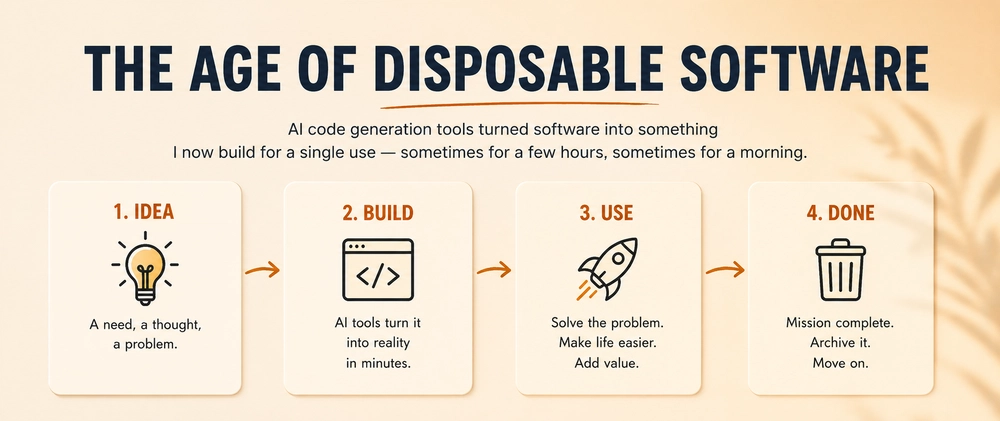
I don't know if anyone has already coined the term "Disposable Software" or "single-use software," but I find the idea fascinating.
Ever since the massive jump we saw starting in November 2025 in the code generation capabilities of Claude and OpenAI's models (with Claude Code and Codex, respectively), I think this phenomenon of disposable, single-use software is only going to take root.
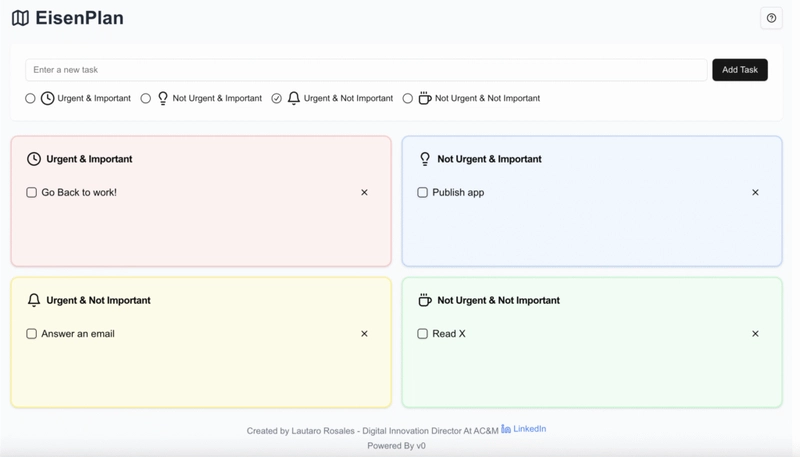
Back in 2023, I built EisenPlan, a very simple web app made with v0, one of the first solid implementations of app generation using AI models. EisenPlan was nothing more than an Eisenhower matrix that I put together for myself using local storage, and I've been using it ever since. I didn't build it with any commercial intent — I just had the need, a $20 subscription, and after two or three hours of back-and-forth with v0, I had it up and running.
Since then, this has become a practice for me. Every time I need something and would like a tool for it, I can now have a working web app in minutes. I want to be clear about something: I'm not talking about enterprise apps, or even production-ready apps in the sense of serving users. Just apps that I personally find useful, many of which could honestly have been a spreadsheet. But the simple fact that, in a couple of iterations, I have something I can pull up on my phone and play with is fascinating. And intellectually motivating.
The philosophical question shows up almost immediately, especially for someone like me who has built his entire career and economic well-being designing and coding websites and apps. Is it really something I created if I never touched a single line of code? It's tempting to say no. But when you add that this web app, mostly for personal use, wouldn't exist without my idea, my reviews and improvements, my testing, and even my token spend to bring it to life… the answer becomes less clear. In fact, I can value my own role in creating that app even more.
Put another way: when my role stopped being "programmer" and I moved on to leading teams, wasn't I co-creating the hundreds of websites we shipped over the last 10 years alongside my teams? Just because I didn't type the code, does that mean "I didn't make it"?
Anyway — setting aside the philosophical detours, I want to come back to disposable software.
Over the last few months, I've put together a dozen mini apps: some that I use daily or monthly, and others that were truly "single-use" — built to explore a topic, to show a vision to a client, to help me with something specific, and then archived.
Beyond EisenPlan, the ones that actually graduated from the "single-use" or "disposable software" stage were:
- A working app to log the maintenance of my truck.
- A fitness app that gives me 30-day programs using only the equipment I have at home.
- A web app to remind me of items I've saved on X/Twitter so I can revisit them.
- …and a few more.
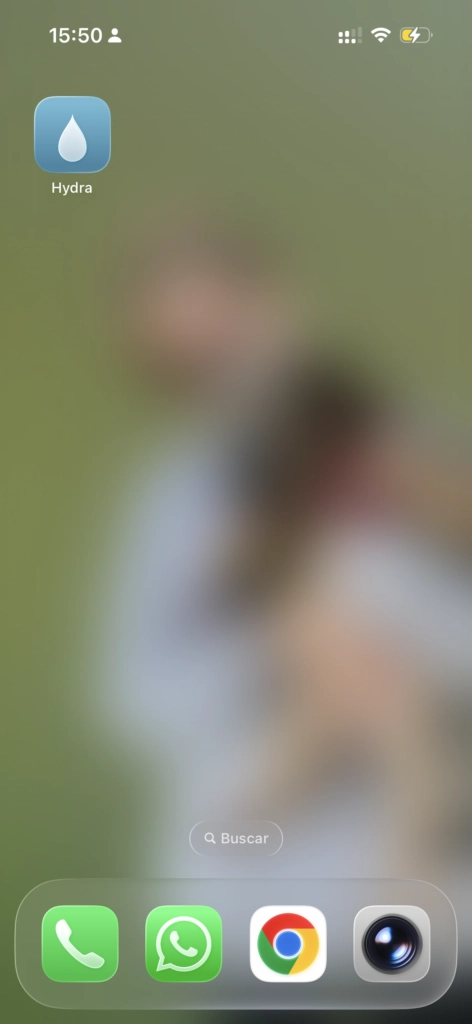
This very morning, my wife Florencia (who drinks very little water) asked me to recommend an app. To my surprise, most of them were paid and required a subscription. That was at 9 a.m.; by 9:15 I already had a web app running on lovable.dev. An hour later, I went to my desk and thought… what if I port it to Swift?
After a few conversations with Claude Code and a joint session of about 3+ hours, I had an app running in the iOS simulator. A few minutes later, I had it installed on my phone.
By 6 p.m. I had already submitted it for iOS review.
And that, I think, is what disposable software really is: not throwaway code, but the collapse of the distance between "I wish this existed" and "here it is, on my phone." For most of my career, that distance was measured in weeks, sprints, and budgets. Now it's measured in hours — sometimes minutes. The interesting part isn't that the code is disposable. It's that the idea no longer has to be.