



惯性聚合 高效追踪和阅读你感兴趣的博客、新闻、科技资讯
阅读原文 在惯性聚合中打开

推荐订阅源

The GitHub Blog
The GitHub Blog
A
About on SuperTechFans
The Cloudflare Blog
G
Google Developers Blog
博客园_首页
Martin Fowler
Martin Fowler
Apple Machine Learning Research
L
LangChain Blog
D
Docker
C
Check Point Blog
T
Tailwind CSS Blog
博客园 - 司徒正美
奇客Solidot–传递最新科技情报
奇客Solidot–传递最新科技情报
Hugging Face - Blog
Hugging Face - Blog
Microsoft Security Blog
V
V2EX
博客园 - 叶小钗
T
The Blog of Author Tim Ferriss
酷 壳 – CoolShell
酷 壳 – CoolShell
IT之家
IT之家
M
MIT News - Artificial intelligence
Microsoft Azure Blog
博客园 - 【当耐特】
GbyAI
GbyAI

DEV Community

Authentication Security Deep Dive: From Brute Force to Salted Hashing (With Java Examples) Why AI Systems Don’t Fail — They Drift Spilling beans for how i learn for exam😁"Reinforcement Learning Cheat Sheet" I Replaced Chrome with Safari for AI Browser Automation. Here's What Broke (and What Finally Worked) How Python Borrows Other People's Work The $40 Architecture: Processing 1 Billion API Requests with 99.99% Uptime Vibe Coding: A Workflow Guide (From Zero to SaaS) Most webhook security guides protect the wrong side. The scary part is delivery. Headless CMS for TanStack Start: Build a Blog with Cosmic EU Age Verification App "Hacked in 2 Minutes" — What Actually Happened Comfy Cloud’s delete function does not actually remove files Running AI Models on GPU Cloud Servers: A Beginner Guide Event-driven media intelligence with AWS Step Functions and Bedrock I scored 500 AI prompts across 8 quality dimensions — here's what broke How to Call Google Gemini API from Next.js (Free Tier, No Backend Needed) The Portal Protocol: Reclaiming Human Connection in the Age of AI How to Fix Your Team's Scattered Knowledge Problem With a Self-Hosted Forum Intro to tc Cloud Functors: A Graph-First Mental Model for the Modern Cloud Designing Multi-Tenant Backends With Both Ownership and Team Access I Built a Neumorphic CSS Library with 77+ Components — Here's What I Learned PostgreSQL Performance Optimization: Why Connection Pooling Is Critical at Scale Cómo construí un SaaS multi-rubro para gestionar expensas en Argentina con FastAPI + Vue 3 🚀 I Built an Ethical Hacking Scanner Tool – Open Source Project I Replaced /usage and /context in Claude Code With a Single Statusline A Pythonic Way to Handle Emails (IMAP/SMTP) with Auto-Discovery and AI-Ready Design I Collected 8.9 Million Polymarket Price Points — Here's What I Found About How Markets Really Move EcoTrack AI — Carbon Footprint Tracker & Dashboard Everyone's Using AI. No One Agrees How. 5 self-hosted ebook managers worth trying in 2026 Building Your First AI Agent with LangChain: From Chatbot to Autonomous Assistant
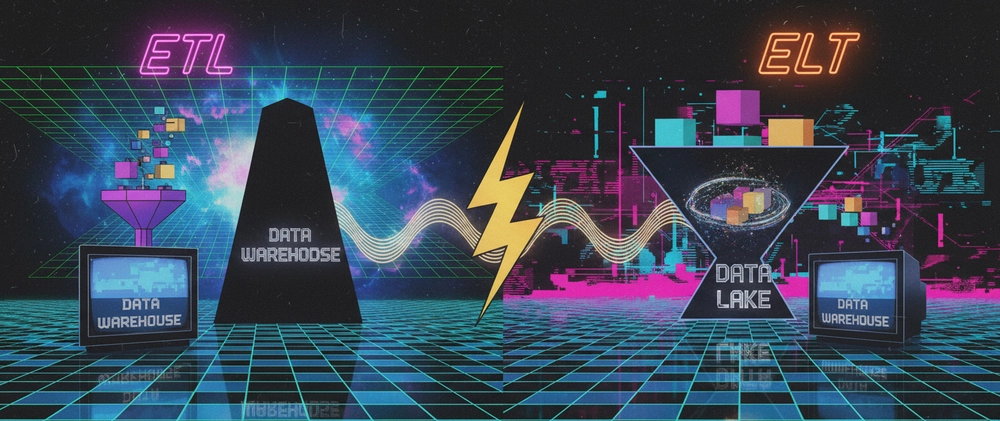
ETL vs ELT: Which One Should You Use and Why
Kuria · 2026-04-23 · via DEV Community

As a data engineer there is a myriad of tools to choose from in the quest to avail clear data for analysis. Clean data leads valuable insights and business decision. On the other hand unclean data results in bad business decisions and insight.

Among the tool utilized by data engineers is ETL and ELT. ETL is a vital data processing tool that is used to Extract, Transform and Load data from various sources and into a designated system.
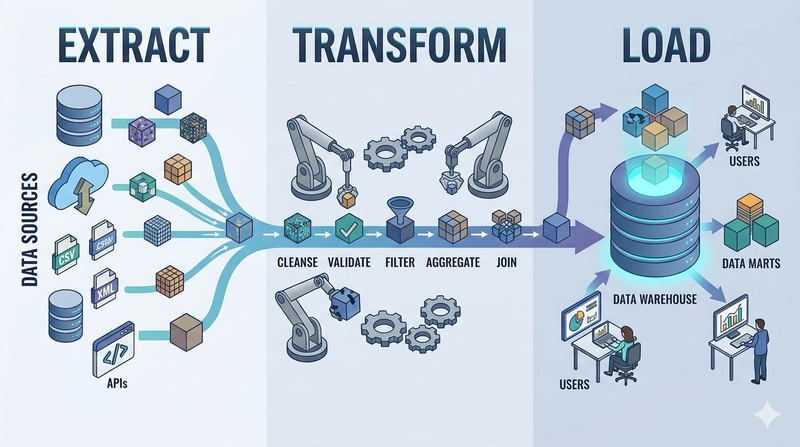
The ETL process commence by extraction of raw data from various sources such as the Database, CSV files, APIs Applications among other sources. The raw data undergoes transformation which entails cleaning, data type validation and converting the data into a proper format for analysis. Data is then loaded to a Database or Data warehouse ready for analysis.
ETL solutions enhance data quality by cleaning and preparing the data before it is loaded into a target repository.

On the other hand, ELT process data is extracted, loaded and later transformed. The key distinction between ETL and ELT (extract, load, transform) therefore lies in the order of steps. In ELT, data is extracted from source systems and loaded directly into the target repository in its raw form, rather than being first placed in a staging area for transformation. The transformation is then performed within the target system as required.
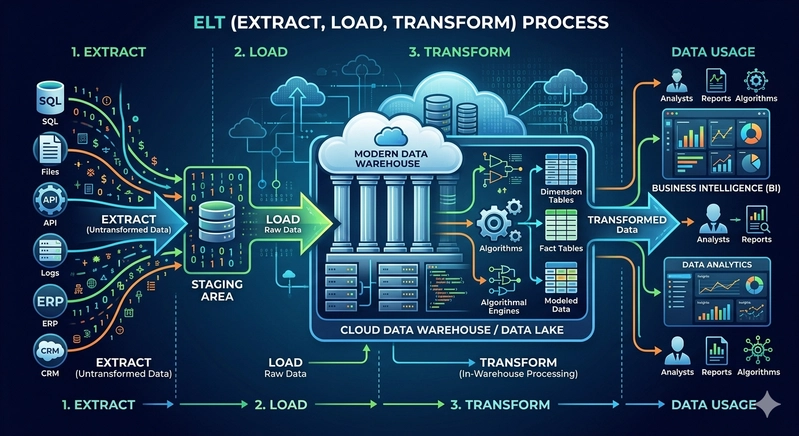
While both methods utilize data lakes and warehouses, they offer different trade-offs in terms of flexibility and preparation.

ELT (The High-Speed Approach)

This method is built for scale and speed. Because it loads data directly from the source without pre-processing, it is the preferred choice for massive, unstructured "Big Data" sets. You don't need a perfectly defined plan for storage or extraction before you start moving data, which makes it highly agile.

ETL (The Methodical Approach)

ETL requires significant upfront strategy. Before moving anything, you must identify specific data points, establish integration keys, and map out metadata. Furthermore, you have to build complex transformation rules based on exactly how the data will be analyzed later. This means the data is already summarized and "cleaned" by the time it reaches its destination.

summary

ELT is better suited for handling large volumes of big data, while ETL works best with smaller, structured datasets. ELT requires minimal upfront planning and performs transformations after the data is loaded into the warehouse, making it more flexible and adaptable for future use. In contrast, ETL involves more predefined rules and transforms data before loading, resulting in a more rigid process tailored to specific use cases.