







Have you ever used a Generative AI tool to finish a task in five minutes that once required five hours of deep, agonizing focus? As you watch the results flash across the screen, instead of a surge of pride, you might feel a creeping sense of dread. A tiny voice in your head whispers: “I didn’t actually do this. I’m a fraud.”
If this resonates with you, you are navigating a modern psychological glitch. Imposter syndrome — the persistent feeling of self-doubt despite evident success — is not a new phenomenon. However, the rapid integration of AI into our daily workflows is supercharging these anxieties, shifting our internal locus of control toward an algorithm. From software engineers to digital artists and healthcare professionals, workers are facing a profound crisis of professional identity.
This article explores the cognitive dissonance of the AI era: how these tools are reshaping our self-worth, why extreme efficiency can feel like “cheating,” and how both everyday workers and specialists can decouple their human value from the machines they operate to reclaim confidence in an algorithm-driven world.
Chapter 1: The AI Paradox
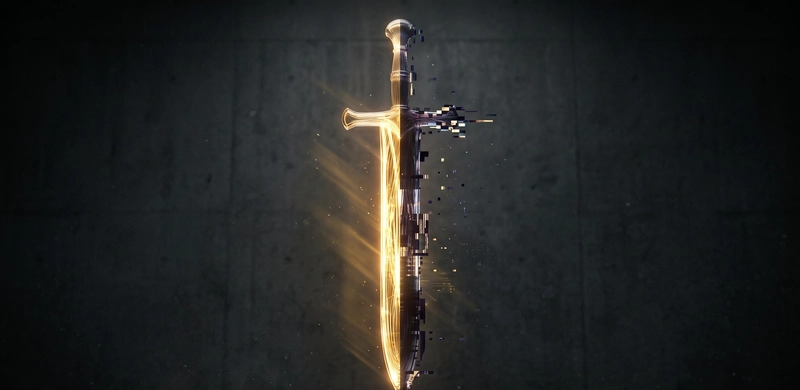
Tools like ChatGPT, Copilot, and Midjourney are not just assisting us; they are rewiring the way we brainstorm, communicate, and solve problems. While they act as potent catalysts for productivity, their psychological impact presents a fascinating — and troubling — paradox.
The Confidence Booster
On one hand, AI can be a massive engine for self-assurance. It lowers the barrier to entry for beginners, cures the dreaded “blank page syndrome,” and acts as a silent, judgment-free partner. The data supports this:
- 25% of workers feel more confident in their tasks thanks to AI.
- 50% of Gen Z employees report a significant boost in their day-to-day professional confidence (Source: EWU).
The Psychological Trap
However, this same technology can become a sophisticated psychological trap. Paradoxically, the EWU study revealed that daily AI users are the most likely (30%) to report frequent Imposter Syndrome. This stems from what psychologists call “Cognitive Offloading”. When the algorithm performs the intellectual heavy lifting, it creates an “illusion of expertise”. Our output outpaces our actual comprehension, leading to unsettling questions: _“Am I actually skilled, or am I just a prompt engineer? Is the AI doing the real work while I just follow along?” _By relying on AI for tasks we don’t fully master (a habit admitted by 11% of workers), we prime our psyche for a crash. We aren’t just using a tool; we are outsourcing our competence, laying the perfect groundwork for imposter syndrome to thrive.
Chapter 2: “Am I a Real Creator?”
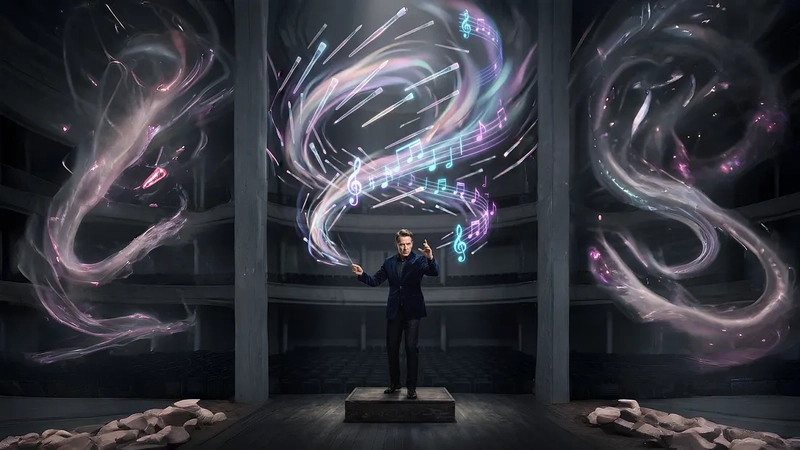
Nowhere is this crisis of self more visceral than in the creative and digital trenches. For writers, designers, and artists, originality and authorship are not just job descriptions — they are the very foundations of their professional soul.
Generative AI disrupts this by forcibly shifting the focus of creative work from execution to curation. In the past, bringing an idea to life required years of honing a specific craft — the physical rhythm of painting, the logic of code, or the mathematics of music. Today, the dominant AI narrative prioritizes “speed over soul”, urging creators to automate the manual struggle and focus purely on the concept.
While tech giants frame this as the “democratization of creativity,” many professionals experience it as a devaluation of their mastery. This shift triggers what researchers call “creative displacement anxiety” — a quiet fear that one’s unique creative voice will be diluted or drowned out by algorithmic perfection.
In the AI era, authorship is no longer about the labor of the hand, but the discernment of the mind.
However, a new generation of professionals is finding a way to cope through identity reframing. Instead of seeing themselves as displaced makers, they are adopting the role of “Creative Directors”. They no longer view themselves as solo ghostwriters but as supervisors of an AI-augmented team. In this new paradigm, they craft the prompts, audit the outputs for bias, and apply the essential human touch. Authorship has evolved: it is no longer about writing every single word, but about curation, ethical judgment, and creative direction.
Chapter 3: “Vibe Coding” and the Tech World’s Crisis

In the high-stakes realm of software engineering, the imposter syndrome epidemic has reached a fever pitch. Developers are under constant pressure to upskill, and AI assistants like GitHub Copilot or Cursor have morphed from “nice-to-have” perks into mandatory survival tools.
While these tools excel at vaporizing boilerplate code and syntax errors, they have birthed a polarizing new phenomenon: “Vibe Coding”.
What is Vibe Coding?
Informally coined on platforms like Reddit, “vibe coding” describes a shift where programmers rely on natural language prompts and “intuition” rather than manual syntax. You don’t write the logic; you describe the vibe of the solution and let the AI fill in the blanks.
The danger? Generative AI often prioritizes fluency over accuracy. It can produce code that is syntactically perfect but logically hollow — insecure, inefficient, or subtly flawed.
The “Last Mile” of Expertise
As industry analysts at Stack Overflow have noted, the AI era has widened the gap between the novice and the expert through what is known as the “Last Mile” of Integration.
The Expert uses AI as a Force Multiplier: They use it to accelerate what they already master, spotting hallucinations in milliseconds.
The Novice uses AI as a Cognitive Crutch: They use it to mask missing foundational knowledge, building their careers on “foundational sand”.
When the machine-generated query breaks, the developer who relied on “vibes” is left in the dark. This creates an agonizing internal monologue: “Are you a real coder, or just a sophisticated copy-paster”? In this world, the true source of imposter syndrome isn’t the AI — it’s the terrifying realization that your output has outrun your understanding.
Chapter 4: The Weight of Accountability — High-Stakes Pressure

The psychological toll of AI doesn’t just fall on digital screens; it stretches into the physical world, where the stakes are measured in human lives and daily livelihoods. In these sectors, AI doesn’t just create a “vibe” — it creates a crisis of accountability.
The Service Industry: The Threat of Deskilling
In the service world, the looming shadow of automation creates profound “AI Workplace Anxiety”. It’s not just about losing a job; it’s about the feeling that your skills are being “devalued” or “deskilled.” A study on service employees revealed that this persistent anxiety triggers a cascade of negative emotions — from depression to panic — severely impacting overall life satisfaction. When a machine can take an order or manage a schedule better than you, the “Imposter” voice whispers: “Are you even necessary”?
Healthcare: The “Authority Bias” and ICU Burnout
Nowhere is the pressure more suffocating than in the Intensive Care Unit (ICU). Here, nurses operate in an environment of extreme intensity and uncertainty. The imposter phenomenon is fueled by the “Authority Bias” — the crushing expectation to be as flawless as the advanced medical technologies they operate.
Even when AI assists in a diagnosis, the ultimate life-or-death responsibility rests on human shoulders. An algorithm cannot feel the weight of a patient’s hand; only a human can.
When a professional feels they cannot measure up to the robotic efficiency expected in a modern hospital, the result isn’t just self-doubt. It is Moral Injury and severe professional burnout. They aren’t just exhausted; they feel like frauds for being human in a system that demands machine-like perfection.
Chapter 5: A New Era of Social Comparison
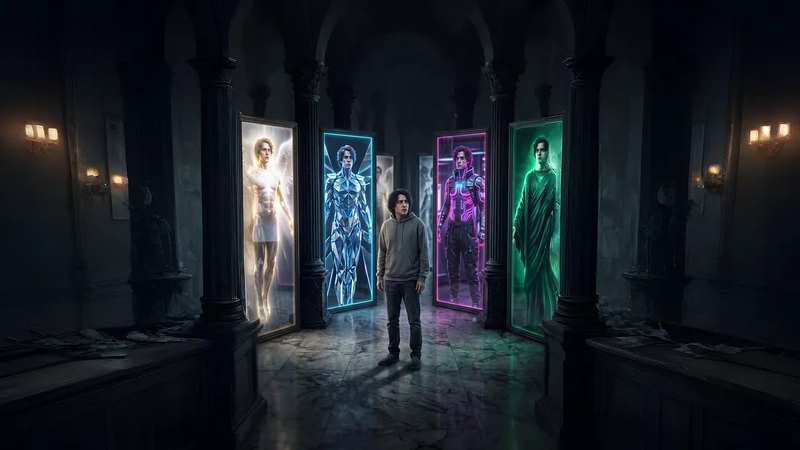
Todecode why AI feels like a personal attack on our competence, we must revisit Leon Festinger’s Social Comparison Theory. Formulated in 1954, the theory posits that humans have an innate drive to evaluate their own abilities by comparing themselves to others.
For decades, this “mirror” was human. We compared our skills to our peers, our mentors, or our competitors. But today, the mirror has become algorithmic.
The Rigged Race
We are now caught in a rigged race, comparing our messy, flawed, and slow human output to the instantaneous, “superhuman” efficiency of artificial intelligence. When social media is flooded with flawless AI art or “perfect” code generated in seconds, the psychological baseline shifts.
AI acts as a distorted mirror. It sets a new standard for productivity and quality that is physically and mentally impossible for an unassisted human to meet.
The Trap of Upward Comparison
In psychology, Upward Social Comparison occurs when we compare ourselves to those we perceive as superior. Usually, this can inspire growth. However, when the “other” is an algorithm that doesn’t experience fatigue, doubt, or burnout, the comparison becomes toxic.
We are measuring our internal ‘behind-the-scenes’ struggle against the AI’s polished final act.
This unprecedented gap breeds a deep sense of inferiority. It reinforces the imposter narrative by whispering that if you aren’t as fast or as perfect as the tool, you are somehow “lesser.” We aren’t just using AI; we are letting it redefine what “good enough” looks like, leaving the human element feeling like a bug in the system rather than the feature.
Chapter 6: The Human Advantage — Reclaiming Your Professional Identity

How do we survive and thrive in an environment that constantly challenges our competence? The answer lies in fundamentally redefining our relationship with technology.
AI is a sophisticated instrument, not a replacement. Much like a calculator for a mathematician or a precision oven for a chef, these tools amplify your capabilities without diminishing your expertise. To silence the “AI-induced” imposter voice, we can adopt Dr. Cornelia Walther’s “A-Frame” model to rebuild professional confidence:
Awareness (Adopt a Growth Mindset)
Regularly audit your relationship with technology. Instead of fearing the unknown, embrace the AI era as an opportunity to discover what makes you irreplaceable. Your value has migrated from manual execution to strategic oversight.Appreciation (Value Human Nuance)
Recognize the distinct “lanes” of intelligence. AI is an undisputed master of speed and data processing. However, it lacks context, lived experience, and empathy. Your ability to navigate the gray areas of a project is where your true worth resides.Acceptance (Reframe Your Internal Narrative)
When the inner critic says, “The AI did all the work”, challenge it. Accept that while the machine handled the “heavy lifting,” you provided the vision, the ethics, and the resonance. Without your direction, the output is just sterile data.Accountability (Seek Human Connection)
Take absolute ownership of your AI-assisted decisions. Research shows that social support is the most effective buffer against workplace anxiety. Talk to mentors, normalize your doubts with peers, and move from being a “passive user” to an active architect of your work.
Conclusion: The Human Advantage

The artificial intelligence revolution isn’t a narrative of replacement; it is a chronicle of human evolution.
If you feel the sting of imposter syndrome today, remember this: your self-doubt is not proof of inadequacy — it is proof of your humanity. It is a signal that you care deeply about authenticity, mastery, and the soul of your work.
The future of professional excellence will not belong to those who merely possess information that an algorithm can replicate in seconds. It will belong to the architects of meaning — those who can navigate uncertainty, exercise rigorous ethical judgment, and orchestrate complex AI systems with a distinctly human touch.
You are not an imposter. You are the Director. You are the Conductor. You are the Visionary.
Let the AI handle the rendering, the syntax, and the data. Your job is to supply the soul.