


Key Takeaways
- Start with clear product goals to guide your analytics strategy.
- Focus on meaningful metrics — avoid vanity metrics.
- Combine onchain and offchain analytics tools like Formo for a complete view of your product and users.
- Engage with users through surveys and feedback loops.
- Analytics is critical for growth and product-market fit (PMF).
Launching a Web3 startup can feel like navigating an uncharted path — exciting, but full of uncertainty. For many teams, understanding onchain user behavior is one of the biggest challenges, thanks to the complexity of blockchain data collection and analysis. Without the right analytics, it’s nearly impossible to measure the impact of new features, marketing campaigns, or community initiatives.
In this guide, we’ll break down how to leverage Web3 startup analytics, identify key metrics that matter, and turn blockchain data into actionable insights that fuel your startup’s growth.

Web3 startup analytics is a critical component of building successful onchain apps.
What is Web3 Startup Analytics?
Web3 Startup Analytics refers to the tools and methods used to collect and analyze data from decentralized applications (dApps) and blockchains. Onchain data helps teams:
- Make better product decisions.
- Understand onchain user behavior in the DeFi ecosystem.
- Achieve product-market fit faster without guesswork.
Startups thrive on testing, feedback, and constant improvement, and Web3 product analytics provide the most actionable insights. Unlike traditional analytics, which focus mainly on website sessions and clicks, Web3 analytics go deeper by highlighting onchain user behavior, market trends, and product performance. Analytics help identify what users value, and highlight features in need of attention or improvement.
Example: Instead of just tracking sign-ups, you can measure the number of active wallets, feature adoption, transaction volumes, and protocol fees earned — giving you a more accurate picture of user engagement.
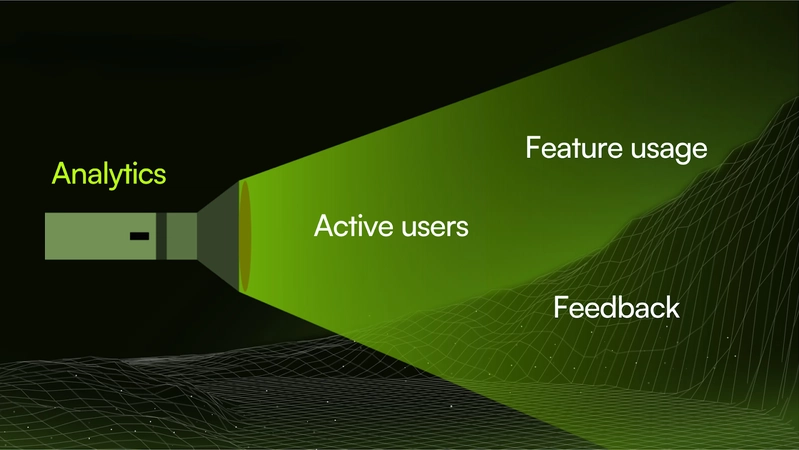
Web3 analytics highlight onchain user behavior, market trends, and product performance
Key Metrics for Web3 Startups
In addition to traditional product metrics, here are the key metrics that Web3 startups should focus on:
- Product Performance: Track feature adoption rate, activation rate, user experience (UX), and retention.
- Protocol Metrics: Monitor Total Value Locked (TVL), transaction volume, Daily Active Users/Monthly Active Users (DAU/MAU), utilization ratio, and fees to evaluate protocol performance, engagement, and liquidity.
- Monetization: Track CAC, ARPU, LTV, churn, retention, and total revenue.
- Mindshare: Measure social scores, social campaigns, and community sentiment to track engagement and acquisition funnels.
- Partnerships: Track major integrations and partnerships with the rest of the web3 ecosystem to assess growth potential and future drivers.
Why does Web3 Startup Analytics matter?
A data-driven approach gives your team clarity and confidence when making decisions. It helps you:
- Track goal progress and product performance.
- Identify product improvement opportunities.
- Understand user behavior and market demand.
- Optimize marketing and sales strategies.
- Progress toward product-market fit.
- Spot emerging trends before competitors.
Without reliable analytics, you’re essentially flying blind — risking wasted resources and missed opportunities
It’s best to start focusing on analytics as early as possible. Don’t wait until later or assume you’ll “grow into it.” Web3 analytics is a powerful tool to drive growth and help you avoid blind spots and costly mistakes. Look for an easy-to-use tool such as Formo to help make analytics accessible, even for those with limited expertise.
5 Steps to Make the Most of Web3 Startup Analytics
Web3 Analytics allows you to build a successful startup by focusing on creating a great product instead of obsessing over data. Here are 5 steps to make the most out of Web3 startup analytics in the shortest time:
5 steps to make the most out of Web3 startup analytics
1. Define Your Product Goals
Start with clear business objectives. For example, if launching on X or Product Hunt, track key touchpoints using funnel analytics to measure interest and activation. Choose metrics aligned with your growth stage (acquisition, activation, revenue) and adjust over time..
2. Set Up Analytics Tools
Start tracking basic metrics with Web2 tools such as Google Analytics or graduate to Web3 analytics tools such as Formo. Select tools that integrate well with your system and are easy to maintain. Formo offers a risk-free free plan perfect for early stage teams just starting out.
3. Build a Key Metrics Dashboard
Create a simple dashboard to track essential metrics such as DAU/MAU, wallet connections, transaction volume, and top referrers. Avoid jumping into overly complex frameworks like AARRR (Acquisition, Activation, Retention, Revenue, Referral). too early. Formo gives you instant dashboards for your core metrics from acquisition to retention and revenue out of the box.
4. Capture Feedback and Talk to Users
Numbers show patterns; conversations explain why they happen. Surveys, interviews, and feedback offers deeper insights into user intent and goals. Use Formo's Form Builder to gather both quantitative and qualitative feedback.
5. Track Key Actions and Adjust Strategy
Measure engagement-driven actions like sign-ups, feature usage, and onchain activity. Set alerts for key user actions and trigger personalized messaging to activate your high-intent users. Review and refine your analytics approach regularly based on new data. Monitor progress towards product goals and identify trends.
Top 3 Analytics Mistakes Web3 Startups Make
Top 3 startup analytics common mistakes
Tracking Everything – If you’re not using the data to make decisions, it’s not worth tracking. Focus on metrics that directly add value to your Web3 startup such as product feature prioritization or planning key tasks. Avoid wasting time on irrelevant data.
Focusing on Vanity Metrics – Vanity metrics, such as website visitors or impressions, may seem impressive but don’t reflect true product success. Instead, track metrics that show real performance, such as daily active users (DAU, to get a clearer picture of growth and impact.
Jumping to Conclusions Too Early – Avoid reacting impulsively to early signs of trouble in your Web3 analytics. Take time to evaluate trends and assess whether the change is significant enough to warrant action. Sometimes, a bad day in analytics is just that — nothing to panic about.
Data-driven insights serve as the foundation of your Web3 product and marketing strategy, guiding key decisions and fueling growth. Relying on Web3 startup analytics rather than gut instinct gives you a clearer understanding of your customers, your market, and your next steps. With this approach, Web3 startups confidently navigate toward success, powered by actionable onchain data.
How Formo Helps Onchain Teams Succeed
Starting with data analytics can be challenging for a Web3 startup. Formo makes Web3 analytics accessible for non-technical teams with:
- Unified Web2 and Web3 tracking.
- Wallet-level attribution.
- Custom dashboards and reports.
- Survey integration for richer insights.
Turn data into action with web3 analytics and attribution. Formo helps Web3 accelerate their growth and reach product-market fit faster without guesswork.
Read more:
- What is Zero-party Data? why does it matter for startups?
- Web3 Product Analytics: Best Practices and Benefits
- 8 Web3 Product Analytics Use Cases to Supercharge Your Growth
Follow us on LinkedIn and X, and join our community to learn how Formo turbocharges growth for leading teams across web3!
FAQs
1. What’s the difference between Web2 and Web3 analytics tools?
Web2 analytics tools track web activity such as pageviews, sessions, bounce rates, and form submissions. Web3 analytics tools also track onchain activity such as wallet connections, transaction volume, DeFi positions, onchain activity, and more across multiple blockchains.
The key difference: Web2 relies on centralized tracking (cookies, accounts), while Web3 uses blockchain data tied to wallet addresses and public blockchain data, making it more transparent and privacy-friendly.
2. How early should a Web3 startup start using analytics?
As early as possible — ideally before launch. Early analytics help:
- Validate product assumptions and market demand.
- Track user acquisition and community engagement.
- Identify which features drive adoption.
- Build investor confidence with verifiable data from day one.
3. Do I need a technical team to use Web3 analytics?
Not necessarily. While complex setups may require developer support, many no-code Web3 analytics platforms like Formo make it possible for non-technical teams to:
- Build dashboards.
- Track wallet-level activity.
- Analyze onchain events.
- Collect user feedback via integrated Web3 surveys.
Don’t just collect data—turn it into action and empower every data user to become a growth driver. Formo’s self-serve analytics makes it possible for everyone on your team to slice and dice data in one place and get real-time insights.
4. Can Web3 analytics help with investor reporting?
Absolutely. Investors value transparent, verifiable metrics. With Web3 analytics, you can show:
- DAU/MAU – Daily and monthly active wallet counts.
- Total Value Locked (TVL) – Assets held in your protocol.
- Transaction Volume – Activity level and liquidity.
- Runway and Revenue – Financial health indicators.
Presenting these in clear dashboards strengthens your fundraising narrative.
Save time and money from having to manage your own data infrastructure, set up privacy-friendly analytics, and build dashboards. Keep your data clean and secure so every report is solid and auditable.
5. How do I know if my analytics strategy is working?
Your analytics are effective if they help you:
- Make better product and marketing decisions.
- Identify and remove growth bottlenecks.
- Allocate resources to the highest-performing channels.
- Measure progress toward product-market fit.
Transform offchain and onchain data into actionable intelligence that informs strategic decision-making and growth planning with Formo. Track performance and easily share results with custom charts and dashboards at your fingertips.