







Hello dear readers, I'm going to explain a few basic concepts that will give meaning to this whole article, seeing it from my perspective as a Web Developer who is just taking his/her first steps in the world of Web3, Blockchain, Solana, etc.
Web3 is the next "phase" of the internet we know and use daily, adding the concept of "ownership." Think of these phases as similar to the Marvel movies: they started by introducing basic elements (characters and stories), which then become more complex and interconnected over time.
And this change isn't just happening to the internet, but also to money and how we deal with it. In the previous phase, money was managed, regulated, and controlled by central entities such as banks or private institutions. Now, in this new phase, the goal is to eliminate central entities (which can be manipulated, corrupted, or compromised) and instead create "decentralized" entities (thousands of connected computers) where anyone can have secure access and use their cash more conveniently. The very idea of ownership (exclusive personal possession) is what drives the technology called Blockchain.
On this "Web3 Ecosystem", or New Money Universe (if you prefer), there are different elements such as:
Blockchain -> general technology
Wallet -> personal storage
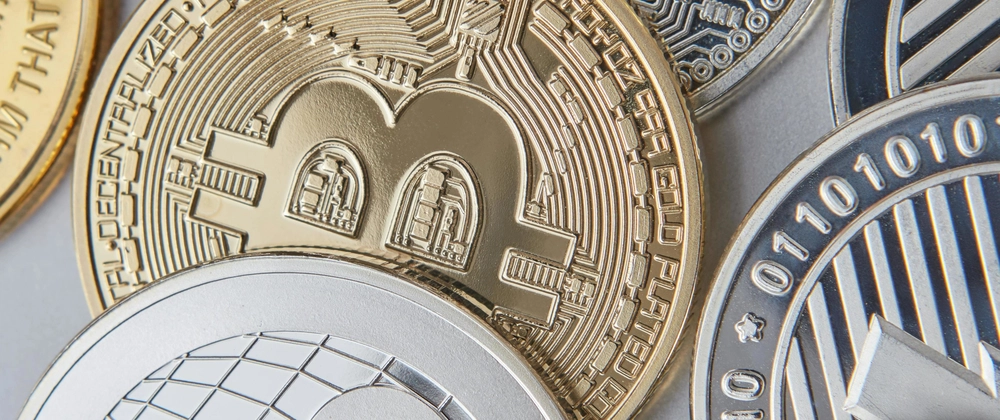
Cryptocurrencies -> primarily money
Solana is one of these cryptocurrencies, which allows us to do many more things. But for now, we'll just focus on the basics.
Identity refers to how we access our wallet, and therefore our cryptocurrencies. The personal master key is the “key pair”. This is a term any developer should be familiar with when working daily with SSH keys on GitHub. It's a combination of public and private keys, the private is the one you use and the public the one which is stored on the server. But in Web3 there is no single server, but a network of participants. This is intended to be used in the process of development (for developers work), where is known as a "CLI Wallet", when you can code and test. Internally it's used a 32-byte Ed25519 public key encoded in Base58 to avoid ambiguity.
For regular users, the keys are generated by a browser extension called "Browser Wallet" or a mobile extension called "Mobile Wallet," and they don't need to worry about their generation or functionality; once installed everything is handled behind the scenes. Accounts are created with a personal password that we choose, and within that account, we are given a group of words (12 or 24 for security) to recover or link our account to different devices (this is the most important part; without it, all access to our funds is lost).
The reason for the security and trust is that everything is encrypted and runs across the network (the idea of decentralization), so there's no single point of vulnerability. And if we add fingerprint and facial recognition to mobile devices, we add another layer of protection.
That's the future of money, which is getting closer and closer to us even if we don’t notice.