







Yeah, the one running your phone, laptop, PC, Steam Deck, Raspberry Pi, smartwatch, car's infotainment system, smart-toilet and basically every human-interacted device that hasn't been reduced to a brick.
What Is an OS?
An OS is the middleman between you and the machine. It's system software that manages hardware resources and gives applications a sane environment to run in. It allocates memory, spawns processes, creates threads, forks new processes, juggles CPU time, handles file management, and talks to hardware so your programs don't have to speak binary to a stick of RAM.
You open Chrome.
The OS allocates RAM, spawns the renderer process, creates network threads, and maps the executable into memory.
Then you open Excel.
The OS does it again, but this time it's also making sure Chrome doesn't hog every single resource.
It swaps memory pages smartly, prioritizing the app you're actively using while reclaiming resources from background tabs.
That cool alt-tab responsiveness?
That's weeks of engineering and scheduling algorithms working in milliseconds.
Let's Go Back in Time
Picture this: it's the 1950s. Computers are the size of living rooms, programmed with punch cards, and maintained by people literally walking inside them to swap vacuum tubes.
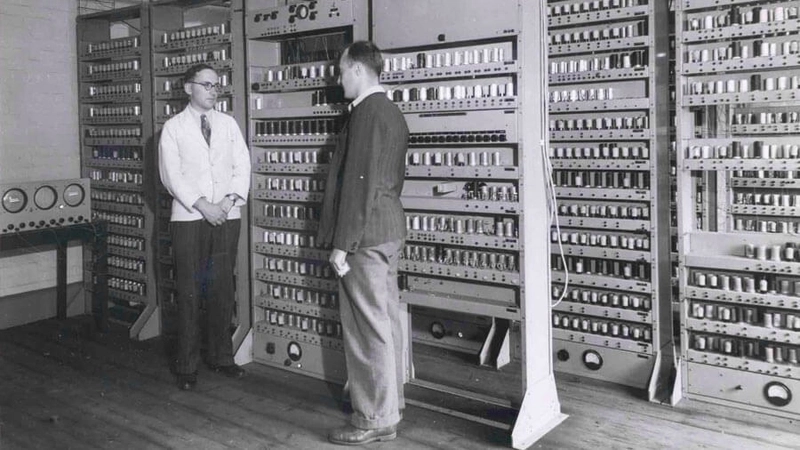
There was no operating system. You booked time, typed your program on paper, translated it to punch cards by hand, and if you made one typo, you found out hours later after the machine spat out garbage.
Then batch processing dropped in the late '50s.
Instead of babysitting the machine, you dumped your job into a queue, and a resident monitor ran programs sequentially.
No multitasking. No interactivity. Just a digital conveyor belt.
The real revolution was time-sharing in the 1960s.
Computers got fast enough to switch between users so rapidly that everyone at their terminal felt like they had the whole machine.
This birthed MULTICS, and later UNIX at Bell Labs by Ken Thompson and Dennis Ritchie.
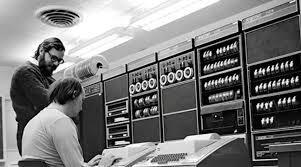
UNIX became the godfather of modern operating systems.
macOS? UNIX-based. Linux? UNIX-like. iOS? BSD heritage. PlayStation? Yep. Your router? Probably running some embedded descendant.
The 1980s brought GUIs into the mainstream. Apple dropped the Macintosh in 1984. Microsoft showed up with Windows in 1985. No more memorizing esoteric commands just to open a folder—unless you wanted to, in which case MS-DOS and the terminal were waiting.
The 2000s shrank everything. iOS and Android put full multitasking operating systems in your pocket. Now we're in the cloud and IoT era.
Your fridge runs Linux.
Your thermostat is a computer.
Someone has definitely compiled a kernel for their toaster.
We went from room-sized calculators to invisible kernels orchestrating global infrastructure in microseconds.
Let's Clear Up the Linux Thing
Now, hear me out: Linux is not an OS.
It's a kernel written by Linus Torvalds in 1991.
What you actually run is a distro—Ubuntu, Fedora, Arch, Debian—which packages the Linux kernel with GNU utilities, a display server, a desktop environment, and a package manager.
The community involvement was and still is immense. Without the GNU Project, volunteer maintainers, and thousands of developers contributing patches, we'd just have a very good monolithic kernel with nothing around it.
Today we have hundreds of distros catering to different users, workflows, and vibes. Each with its own identity, package system, and community flavor.
How It Actually Fits Together
        YOU (probably memeing)
         |
         v
  +------------------+
  |   APPS & STUFF   |  Spotify, Chrome, 50 tabs,
  |                  |  Discord, Excel, that one
  |                  |  Python script you forgot
  +--------+---------+
           |
  +--------v---------+
  |  OPERATING SYSTEM|
  |                  |
  |  [  Kernel   ]   |  Process scheduler
  |  [ System    ]   |  Memory manager
  |  [ Services  ]   |  File system, drivers
  +--------+---------+
           |
  +--------v---------+
  |     HARDWARE     |
  |  [CPU]  [RAM]    |  The silicon doing
  |  [SSD]  [GPU]    |  the actual work
  |  [NIC]  [USB]    |
  +------------------+
You live in userland.
The OS lives in kernel space.
Hardware just executes instructions.
That's the stack.
Now Let's Actually Get Nerdy
Synchronization
Modern CPUs throw down billions of instructions across multiple cores. When two threads try to read and write shared data concurrently, you get race conditions—the outcome literally depends on which thread wins the sprint. The OS provides synchronization primitives to stop the chaos.
Mutexes let one thread lock a resource while others block and wait their turn. Semaphores act as counters with atomic operations, useful when you want to limit access to a pool of resources. Condition variables let threads sleep until a specific state becomes true, avoiding busy-wasting cycles. Read-write locks optimize for scenarios where many readers can coexist but writers need exclusive access. Without these, your data gets corrupted and your program becomes a beautiful disaster of nondeterministic bugs.
Deadlocks
Sometimes processes get too clingy.
Process A holds Resource 1 and waits for Resource 2, while Process B holds Resource 2 and waits for Resource 1. Congrats, you've created a deadlock, a digital staring contest where nobody moves.
Coffman outlined four necessary conditions: mutual exclusion, hold-and-wait, no preemption, and circular wait. Break any one, and you prevent the deadlock. OS textbooks teach you three strategies:
prevention (design the system so deadlocks can't happen),
avoidance (the Banker's Algorithm analyzes resource allocation states before granting requests), and
detection and recovery (let it happen, detect the cycle, then kill a process like a digital grim reaper).
Process Management
Every running program is a process. The OS creates them via fork() (or equivalent mechanisms), assigns a unique Process ID (PID), and tracks everything in the Process Control Block (PCB). The PCB stores register states, program counters, memory maps, open file descriptors, and scheduling info.
When the OS pauses Chrome to let your music player run, that's a context switch. It's computationally expensive because the CPU has to save the entire execution state to RAM and load another one. Good OS design minimizes unnecessary switching.
Scheduling algorithms decide who gets the CPU:
- First-Come-First-Served: Simple queue. Can lead to convoy effects.
- Shortest Job Next: Theoretical optimum for throughput but requires knowing the future.
- Round Robin: Gives each process a fixed time quantum. Fair but can hurt responsiveness.
- Priority Scheduling: Important tasks cut in line. Risk: starvation of low-priority processes.
- Multilevel Feedback Queues: The OS adapts. Interactive tasks get high priority and short quantums; CPU-bound batch jobs sink to lower queues. Windows, Linux, and macOS all use variations of this.
Memory Management
RAM is finite but applications are greedy. The OS uses virtual memory to give each process the illusion of owning a massive, contiguous address space. The Memory Management Unit (MMU) translates virtual addresses to physical ones using page tables.
Physical memory gets divided into fixed-size pages (typically 4KB). When RAM fills up, the OS pages out less-recently-used memory to disk swap space. If your system starts thrashing—constantly swapping pages in and out because everything is needed—performance dies. That's why opening 200 Chrome tabs on 8GB of RAM turns your laptop into a jet engine with a slideshow attached.
Modern OSes also use memory-mapped files, copy-on-write (used heavily during fork()), and demand paging to load only what's necessary. Protection mechanisms ensure Process A can't just snoop on Process B's memory like a digital stalker.
File Systems
At some point, data needs to survive reboots. File systems organize raw disk blocks into something humans understand: directories and files. But underneath, it's all bitmaps, inodes, and block allocation strategies.
FAT32, NTFS, APFS, ext4, ZFS, Btrfs—each makes different tradeoffs around journaling, checksums, compression, and copy-on-write behavior. Modern file systems use journaling (logging metadata changes before committing them) to prevent corruption when power dies mid-write. Inodes store metadata: permissions, ownership, size, and pointers to data blocks. B-trees and extents keep lookups fast even on multi-terabyte drives.
Device Management
Your OS doesn't natively speak USB-C or NVMe. It speaks drivers—specialized translator modules that convert generic OS requests into device-specific commands. The OS handles Interrupt Requests (IRQs) when hardware needs attention, manages Direct Memory Access (DMA) so devices can transfer data without CPU babysitting every byte, and maintains a device stack that registers, enumerates, and configures peripherals dynamically.
Plug in a random gadget and watch the OS identify the vendor ID, load the appropriate driver, create a device node, and expose it to userland applications—all before you finish blinking.
System Calls and Protection Rings
Here's the fundamental boundary: user mode versus kernel mode. Your apps run in user mode with restricted privileges. If Chrome crashes, the OS survives.
When an application needs something privileged—allocating memory, reading a file, creating a socket, accessing hardware—it executes a system call. The CPU traps into kernel mode via a software interrupt or dedicated syscall instruction, the OS validates the request, executes it, and returns control to userland. This separation, enforced by the CPU's protection rings, is why one buggy app doesn't immediately bring down your entire system.
If You Made It Till Here
Thanks for reading.
Everyone obsesses over frameworks and languages, but at the end of the day, none of that runs without the kernel scheduling processes, the MMU mapping memory, and the file system persisting bytes.
Hope you enjoyed, and bfl!