







A practical architecture pattern for systems where one user can own, join, and operate multiple organizations.
// The shape that changed how I think about multi-tenancy
User
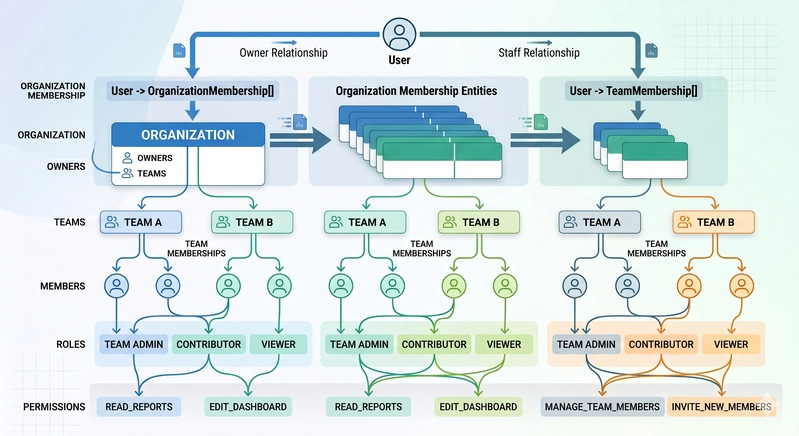
  -> OrganizationOwner[]
  -> TeamMembership[]

Organization
  -> owners
  -> team members
  -> roles
  -> permissions
Most multi-tenant backend examples stop too early.
They show a tenantId column, maybe a middleware that reads it from the request, and call it multi-tenancy.
That is enough for data partitioning. It is not enough for real products.
Real systems usually need all of this:
Once those rules show up, a plain tenantId model starts to crack.
The better mental model is this: model tenancy around ownership, membership, and scoped permissions, not just row filtering.
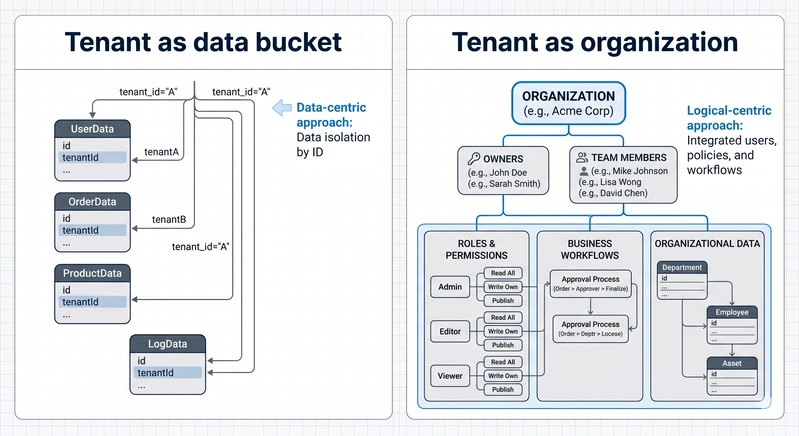
A lot of systems start with something like this:
model Project {
  id       String @id
  tenantId String
  name     String
}

model User {
  id    String @id
  email String @unique
}
Then every query becomes:
await db.project.findMany({
  where: { tenantId: currentTenantId },
});
That part is fine.
The problem is what happens next.
Who is allowed to access that tenant?
Is the current user the owner?
Are they part of the tenant team?
Can they manage billing?
Can they invite staff?
Can they edit content but not touch payouts?
Can they belong to three tenants at the same time?
Those are not edge cases. They are normal cases in SaaS, marketplaces, agencies, clinics, schools, franchise systems, and internal business software.
So the real unit is not just tenant data.
The real unit is an organization with internal people, roles, and operating boundaries.
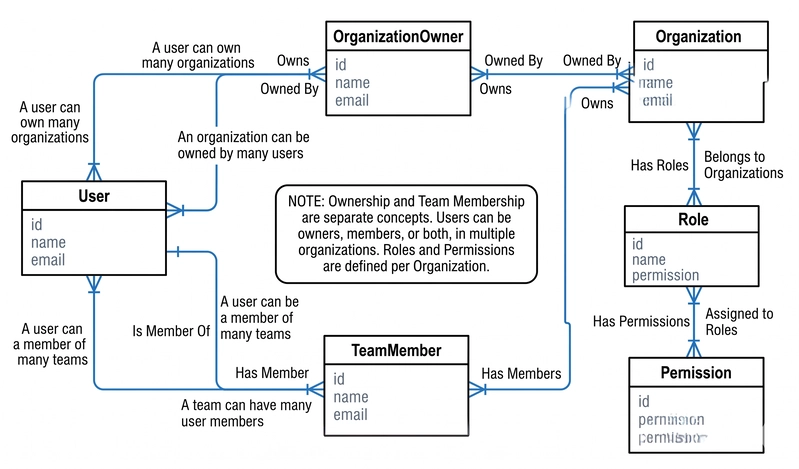
I like to separate three ideas:
User
One person with one identity in the system.
Organization
The tenant boundary. This could be a store, workspace, clinic, school, client account, or business unit.
Membership
The relationship between a user and an organization.
Then I split membership into two business concepts:
Owner relationshipTeam relationshipThat distinction matters because ownership usually carries special meaning that normal staff membership should not inherit automatically.
A simplified model looks like this:
type MembershipStatus = 'pending' | 'active' | 'suspended' | 'removed';

interface User {
  id: string;
  email: string;
}

interface Organization {
  id: string;
  name: string;
}

interface OrganizationOwner {
  userId: string;
  organizationId: string;
  role: 'owner';
}

interface TeamMember {
  userId: string;
  organizationId: string;
  roleId: string;
  status: MembershipStatus;
}
This gives you room for the rules most systems actually need:
That is much easier to reason about than stuffing everything into one users.organizationId column.
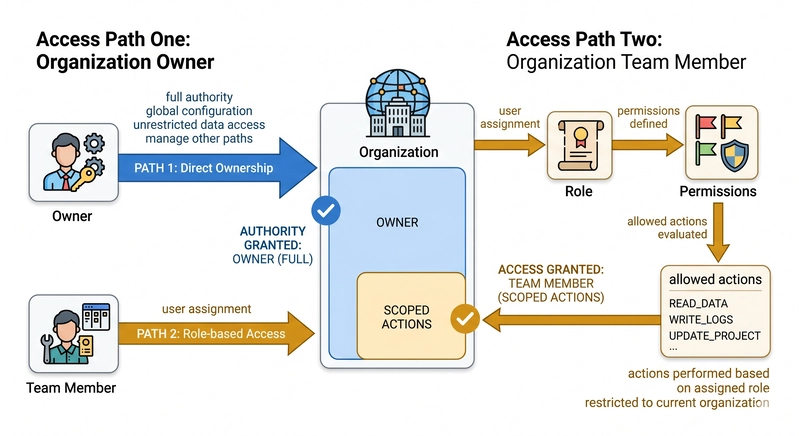
I used to think owner was just another role.
I do not think that anymore.
Owners are different because they usually have platform-level significance:
That makes ownership closer to a structural relationship than a normal permission bundle.
So instead of modeling the owner exactly like every other staff role, I prefer to keep a direct ownership link and then layer team roles on top.
A simplified ownership check can look like this:
async function isOrganizationOwner(userId: string, organizationId: string) {
  const membership = await db.organizationOwner.findUnique({
    where: {
      userId_organizationId: { userId, organizationId },
    },
  });

  return membership?.role === 'owner';
}
Then team permissions stay independent:
async function getTeamPermissions(userId: string, organizationId: string) {
  const membership = await db.teamMember.findUnique({
    where: {
      userId_organizationId: { userId, organizationId },
    },
    include: {
      role: {
        include: {
          permissions: true,
        },
      },
    },
  });

  if (!membership || membership.status !== 'active') {
    return [];
  }

  return membership.role.permissions.map((p) => p.name);
}
That split makes later decisions cleaner:
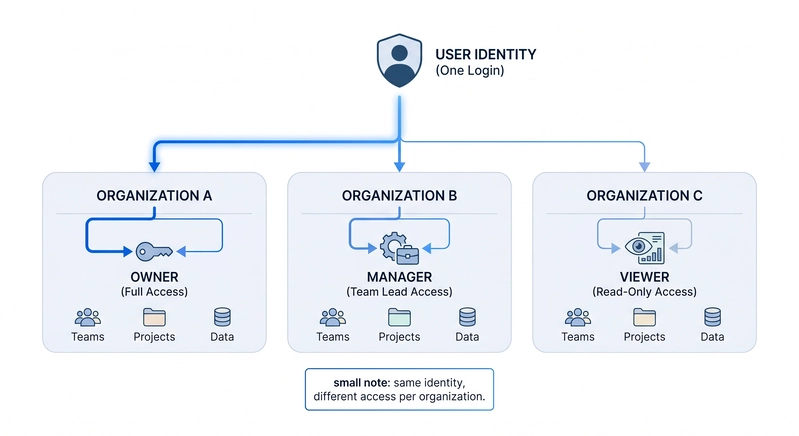
This is where weak multi-tenant designs usually break.
If your first schema assumes one user belongs to one tenant, you will eventually have to undo it.
In practice, users often need to do all of these:
That means the relationship is many-to-many.
Not this:
interface User {
  id: string;
  organizationId: string;
}
But this:
interface User {
  id: string;
}

interface OrganizationMembership {
  userId: string;
  organizationId: string;
  type: 'owner' | 'staff';
}
Once you accept that model, the request lifecycle gets cleaner too.
Instead of assuming "the user has one tenant," you ask:
That is a much better fit for real systems.
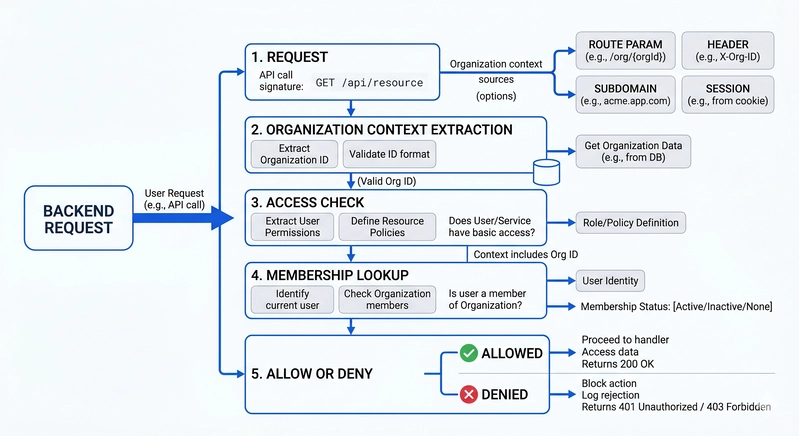
If a user can operate multiple organizations, the backend needs an explicit organization context per request.
That context can come from:
I like explicit request-level context because it keeps authorization honest.
A small extraction helper looks like this:
function extractOrganizationId(request: any): string | undefined {
  return (
    request.params.organizationId ||
    request.headers['x-organization-id'] ||
    request.body?.organizationId
  );
}
Then every protected handler resolves access against that organization, not against some vague "current account" idea.
For example:
async function assertOrganizationAccess(userId: string, organizationId: string) {
  const isOwner = await isOrganizationOwner(userId, organizationId);
  if (isOwner) return true;

  const membership = await db.teamMember.findUnique({
    where: {
      userId_organizationId: { userId, organizationId },
    },
  });

  if (!membership || membership.status !== 'active') {
    throw new ForbiddenError('You do not have access to this organization');
  }

  return true;
}
This pattern generalizes well across systems:
The names change. The access model does not.
Once a user can belong to multiple organizations, global roles stop being enough.
admin is too vague.
Admin of what?
The platform?
One organization?
Billing?
Orders?
Content?
Reporting?
I prefer permission names that describe both the resource and the action:
type Permission =
  | 'products.view'
  | 'products.create'
  | 'products.edit'
  | 'orders.view'
  | 'orders.process'
  | 'team.manage'
  | 'billing.view';
Then evaluate them inside one organization boundary:
async function userHasPermissions(
  userId: string,
  organizationId: string,
  required: string[],
) {
  const isOwner = await isOrganizationOwner(userId, organizationId);
  if (isOwner) return true;

  const permissions = await getTeamPermissions(userId, organizationId);

  return required.every((permission) => {
    if (permissions.includes(permission)) return true;

    const [resource] = permission.split('.');
    return permissions.includes(`${resource}.*`);
  });
}
A few details make this model practical:
That last point is the important one.
A user is not just "an admin."
A user is "an admin in organization A, but a viewer in organization B."
That is the level where multi-tenant authorization starts to become useful.
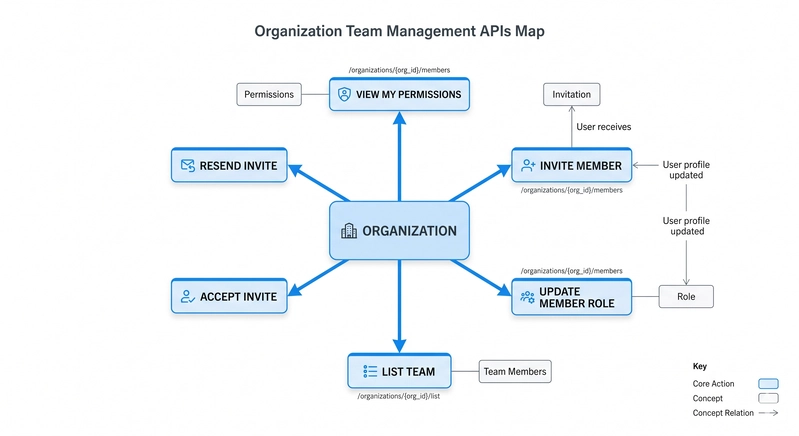
If your product supports organization-based work, team operations should be first-class backend flows.
That means treating these as core resources:
A small REST shape might look like this:
GET    /v1/organizations/:organizationId/team
POST   /v1/organizations/:organizationId/team
GET    /v1/organizations/:organizationId/team/invites
POST   /v1/organizations/:organizationId/team/invites/:userId/resend
PUT    /v1/organizations/:organizationId/team/me/accept
GET    /v1/organizations/:organizationId/team/me/permissions
PUT    /v1/organizations/:organizationId/team/:userId/role
That API shape tells you something important about the architecture:
This is the point where multi-tenancy stops being just database design and becomes product architecture.
The biggest benefit is not elegance. It is fewer rewrites later.
This model gives you a path for:
It also helps your codebase stay honest.
Instead of hiding access logic in random service methods, you can center everything around one question:
What can this user do inside this organization right now?
That question stays useful across many kinds of systems.
It feels simpler until the first operator, consultant, or agency user needs access to two organizations.
It can work, but ownership usually carries different platform semantics and deserves explicit modeling.
A single global admin or manager role quickly becomes ambiguous in multi-organization systems.
If a request can affect organization-scoped data, the organization context should be explicit and verifiable.
Authorization becomes easier to reason about when ownership, membership, and permission resolution are centralized.
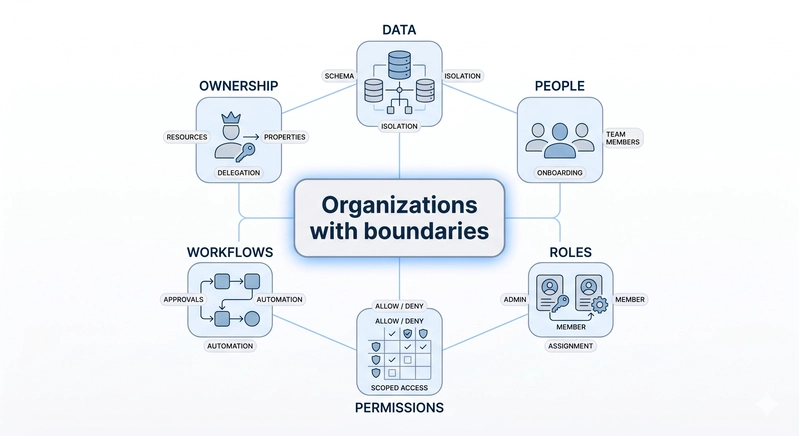
The simplest useful shift is this:
Do not model tenants as buckets of data.
Model them as organizations with boundaries.
Those boundaries include:
Once you do that, the rest of the backend design gets clearer.
You stop asking, "How do I attach tenantId to this table?"
You start asking better questions:
That is where multi-tenant architecture starts to look like the real world.
And that is usually where the backend gets much better.
此内容由惯性聚合(RSS阅读器)自动聚合整理,仅供阅读参考。 原文来自 — 版权归原作者所有。