





Key Takeaways
- Web3 product analytics tracks onchain + offchain user behavior in dApps.
- It gives privacy-friendly insights into wallet interactions and product usage.
- Teams can understand user journeys, feature adoption, and retention patterns.
- Enables data-driven decisions, like optimizing onboarding or segmenting power users.
- Supports cross-chain analytics to get a unified view across Ethereum, Base, and more.
Web3 product analytics is a game-changing tool for Web3 builders, offering deep insights into onchain user behavior while preserving user privacy. By leveraging analytics tailored to decentralized environments, teams can evaluate user journeys, optimize product performance, and identify friction points in the customer experience. Web3 analytics also enables teams to correlate user activity with long-term value (LTV), helping drive smarter decisions across growth, retention, and engagement. In this article, we’ll explore what Web3 product analytics is, how it works, and why it’s essential for building successful Web3 products.
Web3 product analytics helps product and marketing teams understand Web3 user activity in dApps.
What is Web3 Product Analytics?
Web3 Product Analytics helps you track user activity and analyze how onchain users engage with a dapp. Unlike traditional web analytics, which only supports offchain activity, Web3 marketing analytics also supports wallet data and onchain activity.
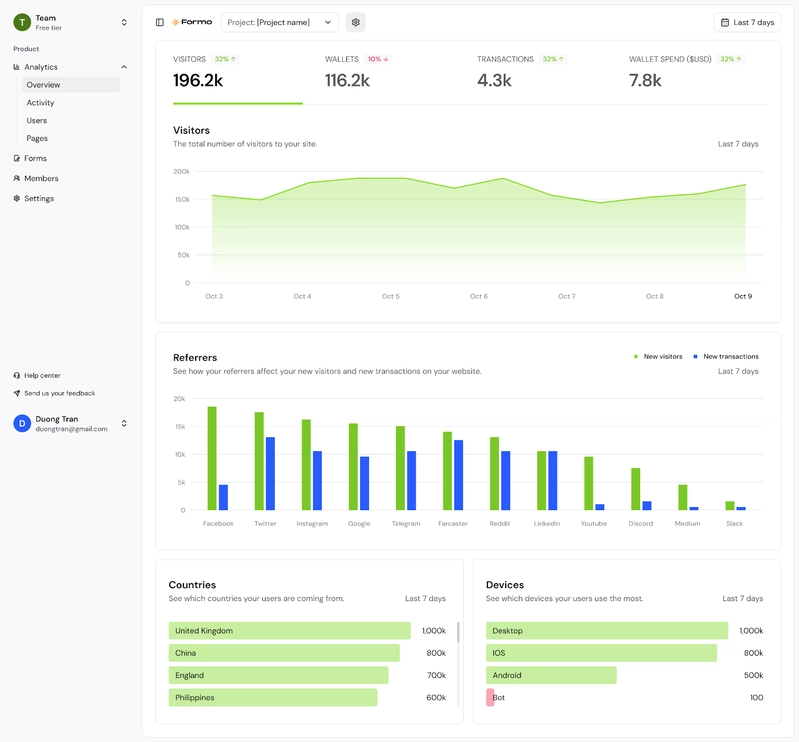
Formo’s Web3 product analytics interfaces | Formo.so
Web3 product analytics helps you find out:
- User growth over time
- Top acquisition channels
- Most frequently used product features
- How long users spend completing a specific task
- User journeys throughout the dapp
Web3 Product Analytics vs. Digital Experience Analytics vs. Web Analytics
Understanding the distinctions between these analytics types is critical for choosing the right tool.
Web3 Product Analytics vs. Digital Experience Analytics vs. Web Analytics
How do Web3 Product Analytics work?
Web3 Product Analytics tracks and analyzes Web3 user interactions on decentralized applications (dApps), utilizing onchain data along with traditional product analytics methods. Here’s a breakdown of how they function:
1. Collect data
The Web3 data collection process focuses on capturing both onchain and offchain interactions.
Onchain Data: This refers to data that exists on the blockchain. Web3 analytics track user activity from decentralized networks. Examples include:
- Smart contract interactions: Monitoring how users engage with smart contracts, such as staking, minting NFTs, or executing governance votes.
- Wallet activity: Observing the actions tied to specific wallets (e.g., number of transactions, amount of assets held, or engagement with certain features).
- Dapps used: Tracking similar dapps the user has used in the past, such as decentralized exchanges, prediction markets, and others.
OffChain Data: Offchain data are linked to user behavior outside the blockchain (such as website visits, devices, countries, and social media interactions).
2. Refine Data into Metrics
Web3 data analytics capture each step of the user journey, similar to traditional product analytics, but with an emphasis on onchain events:
- Dapp interactions: Users interact with a Web3 product by navigating the dapp website, connecting their wallet, and making transactions onchain.
- Onchain activity tracking: Tracking specific actions such as NFT purchases, DeFi yield farming, token swaps, or dApp interactions.
The raw data from dapp interactions and onchain activities is refined into critical Web3 product metrics such as:
- Active Wallets: The number of unique wallet addresses interacting with your product.
- Transaction Volume: How much value is exchanged, including token transfers or NFT sales.
- Adoption Rate: How many users are adopting new features such as staking and governance
- Retention & Engagement: How often users return to the app, and the depth of their interaction (e.g., multiple wallet interactions, frequent feature use).
3. Build Metrics into Reports
Metrics are then transformed into reports that provide valuable product insights, including:
- Segmentation: Segmenting users based on onchain activity (e.g., how often they interact with the product, how much they stake, which tokens they hold, etc.).
- Behavioral Trends: Identifying patterns from token holders and active users to inform product and marketing teams.
- Funnel Analysis: Just as in Web2 analytics, understanding where users drop off in the funnel (from connecting a wallet to making their first transaction) can help improve the product.
4. Take Action
With detailed insights from reports, Web3 teams can take actionable steps to optimize user engagement and product performance. Identifying pain points in the user journey to improve user experience, such as where users abandon transactions or struggle with onboarding, helps you to refine the UI/UX and streamline interactions. Web3 analytics empowers you to understand which features are most used and guide further development. For instance, if a staking feature is popular, you might further enhance it with additional rewards or ease of use.
Benefits of Web3 Product Analytics
Implementing Web3 product analytics offers many advantages, especially for Web3 startups, decentralized autonomous organizations (DAOs), and blockchain-enabled brands.
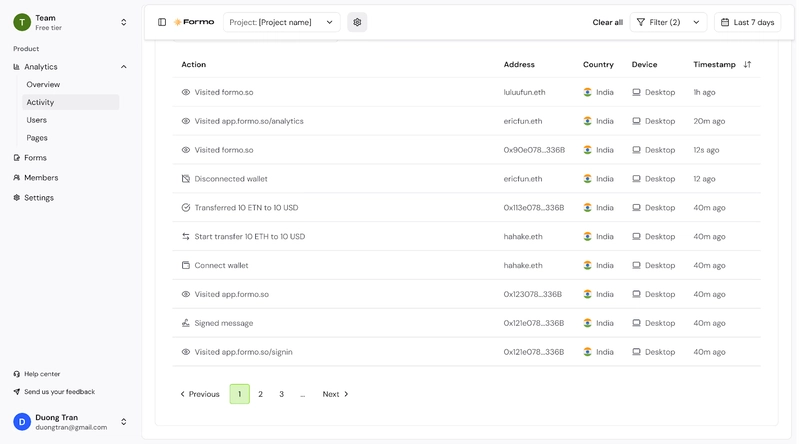
Formo’s Web3 product analytics interfaces | Formo.so
User Insights and ROI
Analyzing user interactions in dApps helps teams optimize the customer experience and build the product that users truly need. Unlike web analytics, Dapp analytics utilizes onchain activity for deeper insights, including user interactions such as staking, governance participation (voting on proposals), and NFT activities (minting or transferring). This approach provides granular data relevant to the core functionality of Web3 platforms.
Boost Engagement and Retention
Wallet analytics detect where users drop off during multistep processes such as wallet onboarding, token swaps, or NFT purchases. Highlight friction points in transaction approval or gas fee estimation, enabling developers to simplify processes. Monitor how effectively dApps retain users over time, helping you design better experiences to encourage long-term engagement.
Growth and Experimentation
Monitoring how users engage with new functionalities helps refine offerings and drive adoption. Web3 analytics provides a clear view of which features succeed and where adjustments are needed. By analyzing onchain data, you identify user activity, assess airdrop campaign performance, and optimize Web3 growth strategies.
Data-Driven Product Decisions
Web3 product analytics empower Web3 teams to make data-driven decisions, identify high-value users based on real wallet activity, and refine their product offerings. Examples include:
- Identifying high-value users who frequently engage with the dapp.
- Grouping wallets based on granular data to design tiered rewards or airdrop programs.
- Retargeting dormant wallets with personalized re-engagement campaigns or exclusive offers.
This precise targeting enhances user loyalty and drives greater participation.
Cross-Chain Compatibility
A robust Web3 analytics framework supports tracking wallet behavior across chains such as Ethereum, Base, Optimism, Polygon, and more. By aggregating data from multiple blockchains into a single dashboard, you can see the big picture, identify cross-chain user patterns, and optimize your dapp effectively.
Web3 product and marketing teams need tools that capture and interpret onchain data, user interactions with smart contracts, wallet activity, and decentralized identity. If you’re ready to enhance your Web3 strategy, Formo provides cutting-edge solutions to bridge the gap between Web2 and Web3 analytics. Formo empowers you to understand who your users are and what they do. Go beyond surface-level insights and answer any questions about your Web3 users to achieve product-market fit.
Web3 product analytics is more than a tool - it's a bridge to understanding your users and building products users want. By utilizing product analytics and following best practices, you can unlock valuable product insights and drive meaningful growth.
Follow us on LinkedIn and X, and join our community to learn how Formo turbocharges growth for leading teams across web3!
Further source:
- Web3 Startup Analytics: How data drives startup success
- What is Web3 User Analytics? Benefits, Metrics, and Tools
- Top Web3 Growth Analytics Tools
FAQs
1. How is Web3 product analytics different from blockchain explorers like Etherscan?
Blockchain explorers such as Etherscan provide raw transaction data, but they don’t explain why users behave the way they do. Web3 product analytics platforms go beyond transaction lists by showing:
- User behavior flows (sign-ups, swaps, mints, staking)
- Funnels and drop-offs
- Engagement and retention metrics
- Cohort analysis for onchain users
This context helps product and growth teams make data-driven decisions, rather than just reading wallet activity.
2. Do I need user consent to track wallet activity in Web3?
Wallet addresses are public by default and do not contain personally identifiable information (PII). For this reason, explicit consent is generally not required. However, it’s a best practice to include a clear privacy policy or terms of use that explain how wallet data is analyzed. This builds user trust and transparency.
3. Can I use Web3 analytics without writing code?
Yes. Many Web3 analytics platforms such as Formo offer no-code dashboards and plug-and-play integrations. Non-technical teams like marketers, product managers, and community leads can easily:
- Monitor wallet activity
- Track growth campaigns
- Analyze retention and user journeys
without writing a single line of code.
4. What if my dApp runs across multiple blockchains?
Modern Web3 analytics tools support cross-chain tracking, giving you a unified view of wallet behavior across ecosystems such as:
- Ethereum
- Polygon
- Arbitrum
- Base
- BNB Chain
…and more. Instead of fragmenting insights per chain, you can see holistic user journeys across your entire product.
5. How can Web3 analytics help with airdrops or loyalty programs?
Web3 analytics makes airdrop and loyalty program design smarter by helping you:
- Identify active wallets and high-value users
- Segment audiences based on onchain engagement
- Track participation over time
- Reward meaningful behavior (staking, repeat usage, referrals) instead of just wallet age or one-off actions
This ensures airdrops and rewards drive long-term retention and loyalty, not just opportunistic farming.