









Introduction
Imagine checking through a cluttered backpack to grab just your keys, wallet, and phone; tedious, right? That's how grabbing data from arrays or objects feels without destructuring.
Destructuring is JavaScript's elegant shortcut for unpacking values into variables. Since ES6, it revolutionized how we handle data, slashing boilerplate and boosting readability. In this post, we'll break it down step-by-step, with real-world examples showing before-and-after magic.
What Destructuring Means
Destructuring lets you extract values from arrays or objects directly into distinct variables in one line. It's like assigning multiple variables at once, pulling specific pieces without the usual dot-notation, square-braces-notation husstle or index-based access.
Destructuring Arrays: Position-Based Extraction
Arrays destructure by position. Match variables to array indices from left to right.
Before (repetitive):
const scores = [85, 92, 78];
const first = scores[0];
const second = scores[1];
const third = scores[2];
After (clean):
const [first, second, third] = [85, 92, 78];
console.log(first); // 85
Skip elements with commas, or grab the rest with ...:
const [first, , third, ...rest] = [85, 92, 78, 100];
console.log(first, third, rest); // 85, 78, [100]
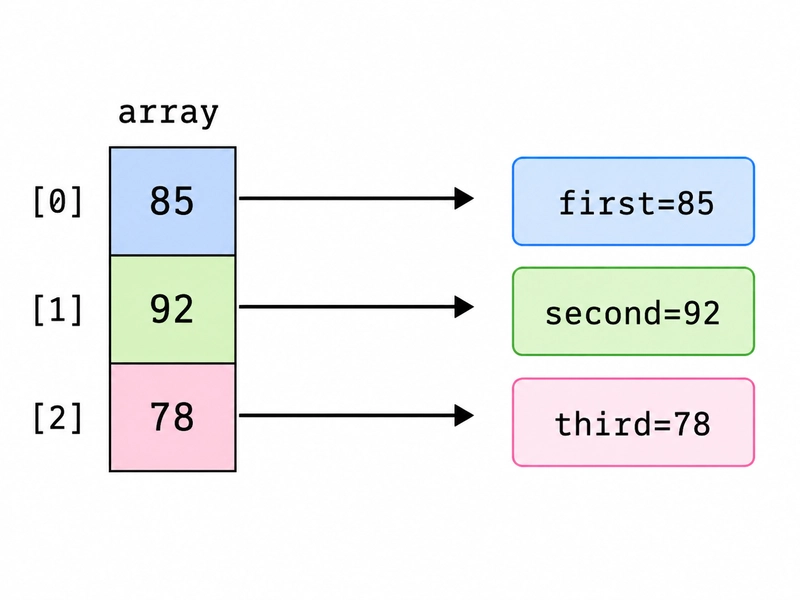
Use case: Processing function arguments or API response of array-type, maybe like extracting lat/long from coordinates.
Destructuring Objects: Key-Based Extraction
Objects use curly braces {} and match by property names. Order doesn't matter—it's key-driven.
Before (verbose):
const user = { name: 'Ritam', age: 20, city: 'Kolkata' };
const name = user.name;
const age = user.age;
const city = user.city;
After (elegant):
const user = { name: 'Ritam', age: 20, city: 'Kolkata' };
const { name, age, city } = user;

console.log(name) // Ritam
console.log(age) // 20
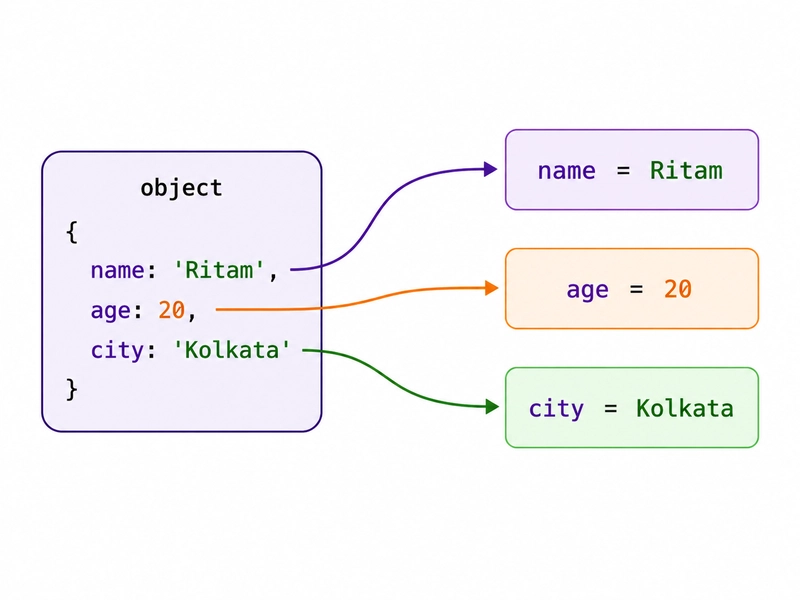
You can also rename on the fly: { oldName: newName }.
Use case: Handling JSON response from APIs after parsing, like pulling
idandtitlefrom fetched posts.
Default Values: Handling Optional/Missing Data
What if a property is not defined or passed? Defaults steps in seamlessly.
const config = { theme: 'dark' };
const { theme = 'light', fontSize = 16 } = config;
console.log(theme, fontSize); // 'dark', 16
Use case: API responses with optional fields, preventing errors in your Node.js backend. Some times while we make standardized API-Response or API-Error handler, this feels gold-mine!!
Benefits of Destructuring and Use Cases
Destructuring shines by cutting repetition - swap 5+ lines for 1. It's helpful for functions, nested-friendly, and readable.
Before vs. After in a Function:
// Before
function greet(user) {
  console.log(`Hi, ${user.name}! You're ${user.age} from ${user.city}.`);
}
greet({ name: 'Ritam', age: 20, city: 'Kolkata' });

// After
function greet({ name, age, city }) {
  console.log(`Hi, ${name}! You're ${age} from ${city}.`);
}
Benefits List:
-
Reduces boilerplate: No more
user.nameeverywhere. - Improves readability: Variables mirror data structure.
- Safer with defaults: Graceful fallbacks.
-
Use cases: React props (
const { title, body } = post), Node.js req.body parsing, or nested API data likeconst { user: { email } } = response.
Wrap Up: Level Up Your Code Standard
Destructuring isn't just syntax sugar—it's a mindset shift toward cleaner, more maintainable code. Next time you're wrestling with objects in your Java/Node projects, reach for it. Practice on a small GitHub repo, and watch your pull requests glow. What's your favorite destructuring trick? Drop it in the comments!