惯性聚合 高效追踪和阅读你感兴趣的博客、新闻、科技资讯
阅读原文 在惯性聚合中打开

推荐订阅源

IT之家
IT之家
A
About on SuperTechFans
OSCHINA 社区最新新闻
OSCHINA 社区最新新闻
N
Netflix TechBlog - Medium
Microsoft Security Blog
钛媒体:引领未来商业与生活新知
钛媒体:引领未来商业与生活新知
博客园 - 三生石上(FineUI控件)
博客园 - 聂微东
博客园 - Franky
D
Docker
Martin Fowler
Martin Fowler
Engineering at Meta
Engineering at Meta
The Cloudflare Blog
人人都是产品经理
人人都是产品经理
Last Week in AI
Last Week in AI
U
Unit 42
F
Fortinet All Blogs
H
Help Net Security
Blog — PlanetScale
Blog — PlanetScale
Microsoft Azure Blog
罗磊的独立博客
P
Proofpoint News Feed
月光博客
月光博客
G
Google Developers Blog

DEV Community

Authentication Security Deep Dive: From Brute Force to Salted Hashing (With Java Examples) Why AI Systems Don’t Fail — They Drift Spilling beans for how i learn for exam😁"Reinforcement Learning Cheat Sheet" I Replaced Chrome with Safari for AI Browser Automation. Here's What Broke (and What Finally Worked) How Python Borrows Other People's Work The $40 Architecture: Processing 1 Billion API Requests with 99.99% Uptime Vibe Coding: A Workflow Guide (From Zero to SaaS) Most webhook security guides protect the wrong side. The scary part is delivery. Headless CMS for TanStack Start: Build a Blog with Cosmic EU Age Verification App "Hacked in 2 Minutes" — What Actually Happened Comfy Cloud’s delete function does not actually remove files Running AI Models on GPU Cloud Servers: A Beginner Guide Event-driven media intelligence with AWS Step Functions and Bedrock I scored 500 AI prompts across 8 quality dimensions — here's what broke How to Call Google Gemini API from Next.js (Free Tier, No Backend Needed) The Portal Protocol: Reclaiming Human Connection in the Age of AI How to Fix Your Team's Scattered Knowledge Problem With a Self-Hosted Forum Intro to tc Cloud Functors: A Graph-First Mental Model for the Modern Cloud Designing Multi-Tenant Backends With Both Ownership and Team Access I Built a Neumorphic CSS Library with 77+ Components — Here's What I Learned PostgreSQL Performance Optimization: Why Connection Pooling Is Critical at Scale Cómo construí un SaaS multi-rubro para gestionar expensas en Argentina con FastAPI + Vue 3 🚀 I Built an Ethical Hacking Scanner Tool – Open Source Project I Replaced /usage and /context in Claude Code With a Single Statusline A Pythonic Way to Handle Emails (IMAP/SMTP) with Auto-Discovery and AI-Ready Design I Collected 8.9 Million Polymarket Price Points — Here's What I Found About How Markets Really Move EcoTrack AI — Carbon Footprint Tracker & Dashboard Everyone's Using AI. No One Agrees How. 5 self-hosted ebook managers worth trying in 2026 Building Your First AI Agent with LangChain: From Chatbot to Autonomous Assistant
WP-Next Editor: Visual WordPress Website Builder with Dra...
rnaga · 2026-04-28 · via DEV Community

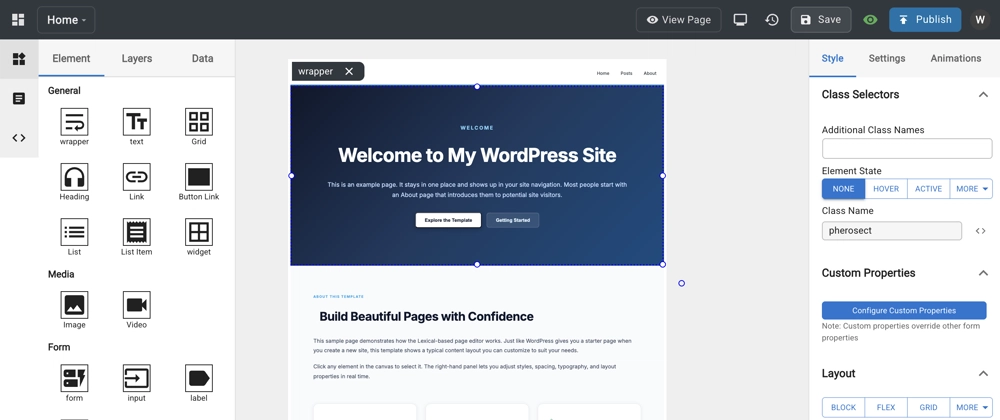
WP Next Editor is an open source visual WordPress website builder, built with TypeScript and Next.js as part of the wp-next project, with no PHP required.

If you have used builders like Webflow or Framer, the drag-and-drop workflow will feel familiar. It works as a visual website builder, while still covering the page builder workflow most users expect.

It also has AI support built in. Because every template is stored as structured JSON, you can use an agent skill to generate or modify templates from natural-language prompts — without touching the canvas at all.

This article is a quick feature tour. If you want to try the project, visit the GitHub repo, click star, and use the repo to get to the full documentation:

⭐ Star the repo on GitHub: https://github.com/rnaga/wp-next


1. Drag-and-drop canvas

Build pages visually by dragging, dropping, nesting, resizing, and moving elements on the canvas.

This is the main editing experience, and it feels close to the style of modern visual web builders.

WP Next Editor drag and drop canvas


2. Pan mode and scroll mode

Move around the canvas in pan mode, or switch to regular scroll mode.

Pan mode makes it easier to work on larger layouts, and it feels similar to how panning works in Framer and Figma.

WP Next Editor pan and scroll mode


3. Responsive design

Switch between desktop, tablet, and mobile, then set styles per device.

The editor generates the responsive CSS for you.

WP Next Editor responsive breakpoints


4. Animations

Add preset animations, custom keyframes, and interaction-based motion.

You can use this for hover effects, click effects, and more advanced motion.

WP Next Editor click animation example
WP Next Editor hover animation example


5. Templates and widgets

Create templates, group them into collections, and reuse templates as widgets for headers, footers, and shared sections.

This is useful when you want reusable building blocks across multiple pages.
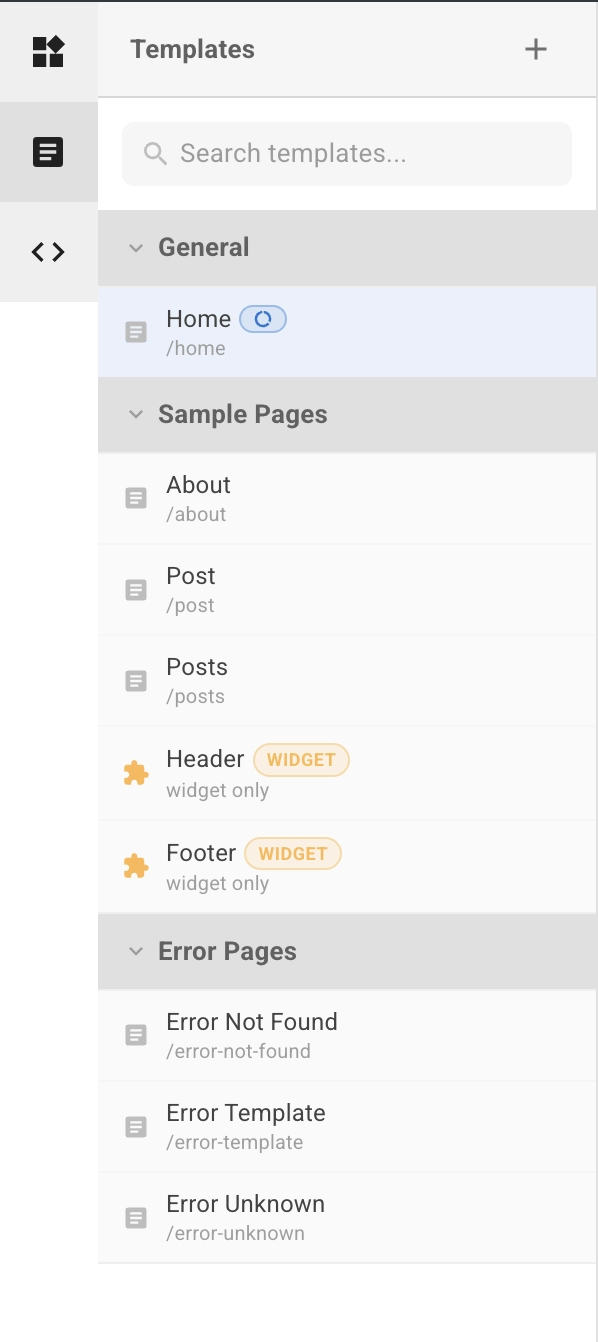
WP Next Editor templates and widgets


6. CSS Variables

Create reusable CSS variables and apply them from the Styles panel.

This helps when you want consistent colors, spacing, and design tokens across a template.

WP Next Editor CSS variables


7. Custom code

Add custom HTML, CSS, or JavaScript to the page head or footer.

This is useful for analytics, custom styling, embeds, or external libraries.
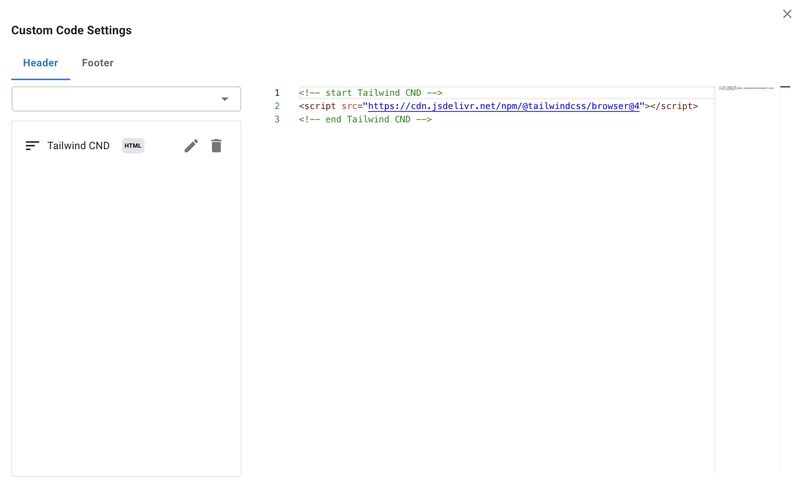
WP Next Editor custom code


8. Dynamic WordPress data

Bind posts, users, taxonomies, and other WordPress data to your page content.

This is useful for post lists, archive pages, and dynamic templates.
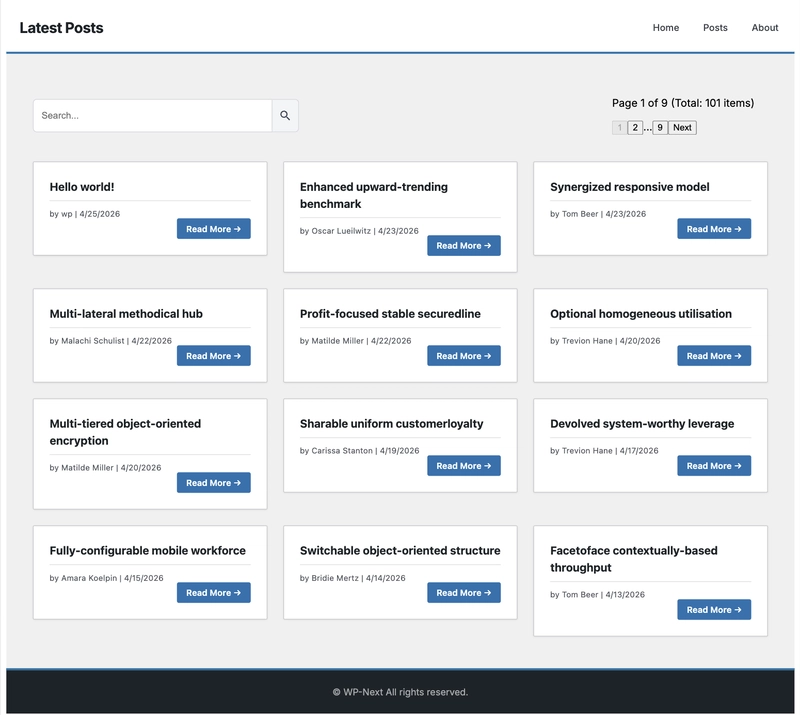
WP Next Editor latest posts dynamic data example


9. More than a visual builder

WP Next Editor also includes:

  • JSON editor for direct template editing
  • save history and preview flow
  • publish and visibility controls
  • widget variants
  • path and query mapping for dynamic routes
  • AI template generation — an agent skill that scaffolds or modifies templates from natural-language prompts

If you want the full setup guide, feature details, and usage docs, go to the GitHub repo first. You can star the project there and open the full documentation from the repo.

⭐ GitHub repo: https://github.com/rnaga/wp-next