Compensation management is the discipline and process for determining employees' appropriate pay, incentives, rewards, bonuses and benefits.
Proper and transparent compensation management plays a vital role in helping an organization attract and retain talent, so CHROs must ensure their organization is carrying out compensation management in the proper way to ensure a good employee experience.
Objectives of compensation management
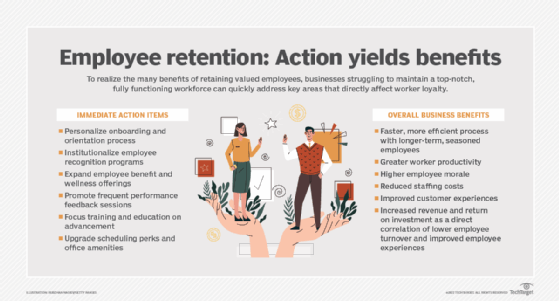
A critical element in talent management and of employee retention strategies, a compensation management program uses both monetary and nonmonetary benefits to attract candidates, spur employee performance, boost employee engagement and reduce turnover.
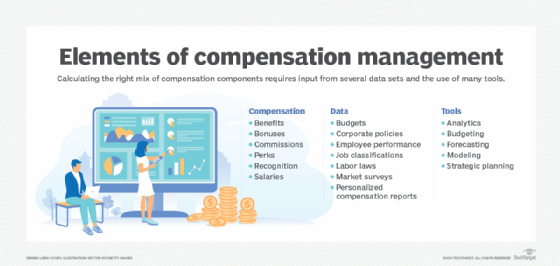
The human resources (HR) professionals on a CHRO's team typically develop and execute compensation management strategies. They're responsible for ensuring that salaries and bonuses remain competitive vis-à-vis industry baselines and market demands, and that benefits keep up with the needs of the workforce. At the same time, compensation must align with the organization's objectives and budget. A proper strategy can help HR professionals and their teams achieve those objectives.
HR personnel in compensation management roles gather and analyze internal and external salary figures, demographic and economic statistics, and other relevant information to determine the "right" compensation for each employee. They also try to understand the complexities of benefits administration and cost of living calculations, and consider factors like an employee's position, role and responsibilities, skills and experience while calculating compensation. Ultimately, the aim is to ensure that everyone gets paid a fair salary in exchange for contributing to the company's business goals.
Breaking down the main types of compensation
In most industries and companies, an employee's total compensation can generally be divided into two categories: direct compensation and indirect compensation.
Direct compensation. Direct compensation refers to monetary earnings tied to the value of the work the employee brings to the organization. It is usually the main or major part of an employee's overall earnings.
There are four main types of direct compensation:
- Salary. Full-time employees typically get an annual salary that's paid weekly, biweekly or monthly. These employees tend to be skilled workers or managers. They're usually people that an organization has an interest in investing in a long-term relationship. Most professional and specialist roles are salaried positions, such as teachers and healthcare professionals. When determining an employee's salary, HR staff usually consider the person's skills and experience and the average pay for the position in the industry. For low-salaried individuals, the local minimum wage (if applicable) is also considered.
- Hourly. Part-time and contract workers are often paid on an hourly basis. Hourly wages are also associated with temporary and gig jobs. These employees are often eligible for overtime pay when they work beyond a contracted number of hours. They can also be subject to minimum wage requirements. Workers in construction, retail, food and hospitality are often compensated hourly. Freelance workers in the tech industry or in marketing positions might also be paid hourly.
- Bonuses. A bonus can be given to employees for a particular reason, such as good work on a specific project. They can also be given out universally across an organization, often just before an upcoming holiday period or when the company has achieved good end-of-the-year results. Bonuses are sometimes paid based on the number of years a person is employed at the organization or as merit pay for meeting a specific goal or target. Bonuses are usually not specific to any type of role, though they are often part of compensation packages for upper-level managers and executives, including those in the C-suite.
- Commission. People employed in sales roles are often paid on a straight commission basis or a salary plus commission. Commissions are usually tied to an employee meeting (or exceeding) a certain target or it might be a percentage of revenue or profit that the employee was instrumental in generating.
Indirect compensation. Indirect compensation refers to ancillary compensation that has financial value but is a smaller part of an employee's total compensation. This type of compensation is often divided into monetary or nonmonetary categories:
- Monetary. Monetary forms of indirect compensation include benefits such as health, dental, vision, life and disability insurance. Employee stock options (ESOPs), employee discounts, a savings plan like 401k (U.S.) and retirement benefit plans like pensions are also examples of indirect monetary compensation.
- Nonmonetary. This type of indirect compensation includes paid time off, sick leave, parental leave, bereavement leave, childcare assistance, training, upskilling, mentoring and company-provided cars, phones, laptops and meals.
Why is compensation management important?
CHROs should prioritize compensation management for several reasons:
- Salaries are typically a business's biggest expense. Executives need a solid compensation management strategy plus good data to prepare and monitor budgets, and make consistent and fair decisions that correctly compensate employees for their contributions to the company.
- Compensation management also enables companies to save money. HR personnel can perform market research to understand average salary trends for various roles. Comparing this information with the company's salary structure can highlight whether the company is overpaying or underpaying for certain roles.
- Compensation management and talent management go hand-in-hand. By considering various factors such as employee skills, experience, cost of living, market trends, etc., HR teams can identify opportunities for awarding bonuses and other motivational activities. This can improve the motivation and satisfaction of existing employees, and also attract new talent to the company.
- Employers face new pay equity laws that require them to report employee wages along with data on gender, race, ethnicity and occupational role. U.S. states that have adopted these laws use this data to identify wage patterns that might suggest discrimination. On the federal level, the U.S. Securities and Exchange Commission (SEC) also requires companies to report human capital metrics, including pay equity. A compensation management program can aid in ensuring compliance with these laws and requirements.
- Employers are giving pay equity issues more attention as part of their diversity, equity and inclusion (DEI) efforts. With pay equity, i.e., comparable compensation for employees in similar roles, regardless of their gender, race or other characteristics, organizations can attract the right talent while ensuring that the business remains competitive.
- Employees who move from high-wage regions might see their pay reduced to local prevailing wages. Ensuring competitive compensation packages in an era of flexible and hybrid work is becoming more complicated. Compensation management can help ease these complexities while minimizing the potential for pay inequity and employee dissatisfaction.
Benefits of compensation management
Compensation management will bring various benefits to an organization when done effectively. Some examples of benefits include the following:
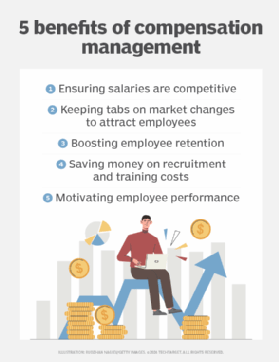
- Competitive monetary compensation. Ensuring salaries are competitive is the main benefit of compensation management. Up-to-date market data gives hiring managers critical information they need when making offers to top talent. The same applies to raises and bonuses for employees, who typically find ways to learn about their peers' salaries and benefits. An effective compensation management system is alert to changes in the market, which can help with attracting and retaining the best talent.
- Employee morale. Compensation management tools can help motivate employees, boost retention and reduce turnover. Those impacts, in turn, save money on operational expenditures, such as recruitment and training costs.
- Productivity and performance. More broadly, the right mix of compensation can improve employee performance, productivity and creativity.
- Increasing profit. The improvements listed above can often boost the organization's revenue and profitability.
Challenges of compensation management
Despite the benefits of effective compensation management, there are also obstacles involved with these efforts, including the following:
- Budget constraints. Compensation packages can quickly eat up a company's budget, impeding business leaders from offering everything they want to employees.
- Knowing what to include in plans. Knowing what to include in compensation plans can be a challenge. In some cases, industry-wide data is available to benchmark data. However, this information can be hard to obtain, and business leaders might have to use their own best judgment.
- Communication. Organizations must explain all plans and packages to employees and other stakeholders, especially new hires. This can take time and effort.
- Comprehensiveness. Organizations must ensure their compensation policies are fair to all employees and accommodate special needs. This, too, takes more time and effort.
- Continuous monitoring of success. Continuously assessing how compensation plans are faring over time using various metrics can be time-consuming and arduous. To simplify the effort, this task is often outsourced to third-party service providers.
How to implement a compensation management strategy
Compensation philosophies and compensation management strategies vary from company to company, but the steps to implement them generally apply to organizations across the board. They include:
- Policies with vision. CHROs should work with other leaders to craft policies that tie compensation to the scope and vision of the various roles they're hiring for. Additionally, they should clearly communicate the role scope and vision to every new hire to provide clarity about expectations and compensation. Leaders should also be transparent about the organization's compensation policies, structure, methodology and calculations.
- Broad input. Determining ways to improve existing compensation plans, as well as looking to other sources and organizations for insights, is a good way to shape (or reshape) a comprehensive and fair compensation plan.
- Compliance. Compliance with local, state and federal laws concerning compensation and benefits must be considered when fleshing out the details of the plan. This will prevent non-compliance issues later on, which may result in fines or legal action against the company.
- Finalizing the plan. Once all these factors are carefully considered, business leaders must finalize plan details.
- Communication. The full plan must be explained to all employees and stakeholders. If possible, stakeholders' feedback should be collected and incorporated to improve the plan before it goes into effect.
- Reassessing and improving. Once put into effect, the compensation plan should be reviewed to see how well it works for employees and to improve it, if necessary, to facilitate consistent pay equity and legal compliance. Regular pay equity audits are a good way to assess whether compensation is fair, equitable and competitive, and if certain compensation packages need to be revised.
Compensation management software: benefits
Compensation management software is a standard component in human capital management (HCM) platforms and talent management suites. Its primary purpose is to give executives, hiring managers, recruiters and HR personnel information about the budget for employee salaries and industrywide compensation rates for similar positions. The tools also store updated data about employee salaries and tenures.
This type of software also acts as a centralized system for managing every type of compensation relevant to the organization. This includes monetary compensation, such as bonuses and performance incentives, as well as nonmonetary compensation, such as extra time off, flexible work hours, public recognition and wellness programs.
Compensation management software also provides tools for calculating and communicating the total rewards provided to each employee. This is a personalized statement of the value of each compensation package, including employee benefits like health insurance and retirement accounts. Features for equity allocation might also be included.
Like other HR applications, compensation management software increasingly relies on machine learning to spot disparities in data and ensure salary rates are competitive with the overall industry or market. Platform vendors have also been adding data analytics features and providing access to cloud-based anonymized data to make it easier for employers to benchmark pay rates against other firms in their industry.
Compensation managers can use the software to gather salary data by industry, company size, job role and geography. Other sources of wage information include government data, information from publicly available sites that collect user-reported salary data and data purchased from third-party firms that conduct ongoing salary and benefit surveys.
Another trend affecting compensation management software is the adoption of on-demand pay, also known as earned-wage access. It gives employees the option to receive pay for hours as they're worked instead of waiting for a check that's regularly scheduled every week or two. Numerous niche vendors specialize in developing compensation management software for managing earned-wage access that's delivered using the software-as-a-service (SaaS) model.
What to look for in compensation management software
While compensation software platforms are meant to add value and efficiency to HR departments, organizations must examine which features and components are included in each platform. These features should be considered:
- A configurable, drag-and-drop dashboard to help executives understand compensation trends and costs.
- Automated, customizable reporting.
- Data visualization tools for creating charts and graphs that will also look good in presentations.
- Analytical tools that give human resources management the ability to analyze compensation data easily.
- The ability to run comparisons of wages by industry and geography.
- Support for third-party add-on tools.
Some of the other key features to consider in compensation management software include the following:
- Built-in decision support tools and data modeling tools for smart compensation planning.
- Historical employee data to inform compensation-related decisions for each employee.
- Role-based access permissions and user visibility rules to customize who can see what kind of data in the platform.
- Real-time analytics and reporting to facilitate compliance with regulatory requirements and labor laws.
- Budgeting and forecasting capabilities to design compensation aligned with employee roles and skills, and organizational budget and goals.
- Task automation, including salary calculations and bonus payments, to streamline the compensation process and make it more transparent.
Compensation management software: Limitations and challenges
The benefits notwithstanding, compensation management systems also have some limitations and challenges.
For one thing, they might not be good at connecting pay to employee potential. This is because compensation analysis is usually based on an employee's historical value, rather than on their potential to add future value. This can result in unfair compensation or pay inequity, which can lead to employee dissatisfaction.
Some companies prepare intricate compensation plans or have unique requirements. Out-of-the-box software might not fully address these needs, and companies might be required to make certain adjustments or customizations, which can be time-consuming or expensive.
Lack of scalability and integration can also be roadblocks to successful adoption. Some products are not designed to scale along with growing organizations or to accommodate complex, dynamic compensation structures. Others might not fully integrate with other software, such as human resources information systems (HRIS) or payroll. This drawback can create inefficiencies that affect HR productivity. It can also make the compensation process less transparent, which might negatively affect employee morale and retention.
Another common challenge is software complexity and implementation cost. Some HR personnel and company leaders might need time to learn how to effectively use the software. They might also require additional training, which can increase costs and interrupt their regular work.
Finally, compensation software could lead to errors that result in noncompliance with labor laws or pay equity regulations. This can make the organization vulnerable to fines and legal issues.
Compensation management software market and vendors
As explained above, compensation management software assists HR professionals and managers in designing optimal compensation strategies. These platforms help streamline compensation management processes, including salary reviews, bonus calculations and allocations, and sales incentives calculations. Through a centralized system, HR teams can access relevant data to perform compensation analyses and inform compensation-related decisions.
Gartner has identified some of the leading providers of compensation management software, including the following:
- Aeqium.
- Barley.
- CaptivateIQ.
- Deel.
- MorganHR.
- Pave.
- Pequity.
- Salary.com.
The future of compensation management and benefits
Compensation management is having to adjust to rapidly changing workforce priorities. HR departments are increasing their use of analytical software to meet their DEI goals. They're analyzing compensation management data for wage disparities by gender and race, from entry-level positions to senior management.
Before the COVID-19 pandemic, wellness incentive programs had a significant effect on employee compensation packages, and this effect has only grown in the post-COVID era and its increasing focus on optimizing employees' mental wellness. Financial support for the home office setups of remote and hybrid workers is also becoming part of compensation management. Remote work has also increased compliance issues as employees are increasingly located in multiple states and internationally. Compensation management software has evolved to incorporate compliance features and features for internal currency management.
Benefits are an important part of a business's compensation program; compensation management software needs the flexibility to handle new types of benefits and changes to existing ones. For example, some corporate wellness technology programs offer activity-tracking smartwatches, such as the Apple Watch, to employees at no charge if they meet fitness goals. The watch's data, such as the number of steps taken per day, is collected. If an employee doesn't meet the goal, they might have to pay the full cost of the watch.
There are also benefit packages that offer employer-subsidized DNA testing, as well as flexible work options, phased return to work for new parents and reimbursement for adoption and eldercare expenses.
CHROs need to carefully assess these specific compensation requirements and complexities. Internal analysis can inform their assessment and comparison of various compensation management software, enabling them to select the product that is most likely to meet the organization's and employees' compensation needs.