
The way buyers make purchase decisions has changed significantly, and so has the map businesses use to understand them. Buyers now encounter brands across more channels, in more formats, and at more stages of the decision-making process than ever before. While traditional search engine use is still strong, a growing share of that initial research is happening through generative AI tools like ChatGPT and Perplexity rather than the company's website or a sales rep's outreach.
That research kicks off the buyer's journey, represented as a series of touchpoints that span from initial awareness to post-purchase engagement. Each one is a moment of contact between customers and a brand, and each one shapes whether that relationship deepens or stalls.
These touchpoints are crucial moments that directly influence customer experience. Understanding, optimizing and tracking them is essential for businesses seeking to build strong customer relationships, improve satisfaction and drive sustainable growth.
What is a customer touchpoint?
A customer touchpoint is a critical point of interaction between a customer and a business throughout the customer journey. It encompasses every instance where a customer engages with a brand, product or service. These touchpoints can occur through various channels, including:
- Websites.
- Phone calls.
- Email.
- Social media.
- Physical stores.
- Customer service interactions.
- Advertisements.
- AI chatbots and virtual assistants.
At each touchpoint, customers form impressions, gather information and make decisions that influence their satisfaction, loyalty and purchase intent. Successful businesses recognize the importance of delivering consistent, seamless and valuable experiences across these touchpoints, ensuring customers feel engaged, valued and supported throughout their journey.
How do customer touchpoints work?
Customer touchpoints are the individual interactions that move a buyer from initial awareness to a purchase decision and beyond. Each one is an opportunity for a business to engage, inform or influence. Increasingly, AI-driven personalization is shaping which touchpoints get served to which customers, and when. The sequencing and timing of these moments matters as much as the interactions themselves.
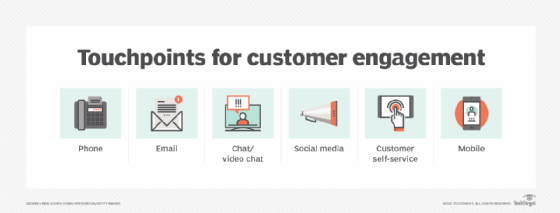
Effective customer touchpoints align with customer expectations and provide seamless transitions between stages of the journey. They should deliver relevant and valuable information, address customer pain points and offer a consistent brand experience. By orchestrating touchpoints, businesses can nurture customer relationships, build trust and create positive associations with their brand.
A well-executed touchpoint can create a memorable experience, leaving a lasting impression that encourages customers to return and recommend the business to others. In contrast, poor or inconsistent touchpoints can lead to customer dissatisfaction, trust erosion and potential business loss. Therefore, businesses must carefully manage and optimize each touchpoint to ensure a cohesive and memorable customer experience.
The importance of customer touchpoints
These interactions are significant for businesses, as they play a central role in shaping the customer experience. Customer touchpoints are important for several reasons, including the following:
- Influence perception. Touchpoints can directly affect how a customer perceives a brand, product or service. Positive touchpoints create trust, credibility and a favorable image of the business.
- Build relationships. Touchpoints are crucial for building and nurturing relationships with customers. Each interaction provides an opportunity to engage with customers, understand their needs and deliver personalized experiences. Businesses can foster trust, loyalty and advocacy by providing exceptional touchpoints, leading to repeat purchases and positive word-of-mouth.
- Foster customer satisfaction. Well-designed touchpoints address customer pain points, provide seamless experiences and offer relevant information. Meeting and exceeding expectations at each touchpoint drives satisfaction. Satisfied customers are more likely to remain loyal, make repeat purchases and become brand advocates.
- Drive revenue growth. Optimized touchpoints contribute to increased sales and revenue growth. By delivering exceptional experiences, businesses can differentiate themselves from competitors and attract more customers. Positive touchpoints can lead to higher conversion rates, larger average order values and increased customer lifetime value.
- Enhance customer loyalty. Consistent and positive touchpoints build customer loyalty. When customers have positive experiences throughout their journey, they are more likely to remain loyal to a brand, resist switching to competitors and become advocates. Loyal customers make repeat purchases and refer new customers, amplifying the business's growth.
- Improve customer retention. Touchpoints play a crucial role in retaining existing customers. By continually engaging and delivering value at each touchpoint, businesses can reduce customer churn and increase customer lifetime value. Keeping customers is more cost-effective than acquiring new ones, making touchpoints before, during and after a sale an essential element of customer retention strategies.
- Gather customer insight. Every touchpoint generates data. And now AI-powered analytics tools and large language models connected to data sources can synthesize that data across the customer journey in real time. Sentiment analysis, behavioral pattern recognition and predictive modeling enable businesses to surface what customers need before they explicitly say it. These insights feed directly into product development, messaging strategy and experience improvements.
- Customer-centric approach. Understanding touchpoints helps businesses become more customer-centric. Businesses can align their touchpoints with customer needs and preferences by analyzing customer interactions.
How to identify and track customer touchpoints
Understanding customer touchpoints is crucial for businesses to design effective strategies that enhance customer experiences. By identifying and optimizing touchpoints, organizations can create personalized interactions, address customer needs and exceed expectations.
- Map the customer journey. Begin by mapping the customer journey, documenting each stage and touchpoint that customers encounter. This process helps visualize the entire customer experience and identify potential gaps or areas for improvement.
- Utilize analytics tools for data collection. Use analytics tools, such as web analytics platforms, marketing automation tools or a CRM database to track customer interactions on digital channels. These tools provide data on website visits, page views, click-through rates and conversion rates to help identify key touchpoints. AI-powered revenue intelligence and analytics platforms can layer on top of these systems to identify patterns across touchpoints that manual analysis would miss.
- Monitor social media. Monitor social media platforms to identify customer interactions, mentions and external sentiment toward a brand. Social listening tools can help track and analyze conversations related to the business, highlighting touchpoints where customers engage and express their opinions.
- Implement customer feedback vehicles. Seek customer feedback at different touchpoints through surveys, feedback forms or follow-up emails. This allows customers to express their experiences and opinions, providing valuable insights into touchpoints that need refinement or enhancement.
- Review sales and conversion funnels. Evaluate data from sales and conversion funnels to identify touchpoints where customers drop off or convert. Understanding these touchpoints helps optimize them to facilitate smooth progression through the customer journey.
- Collaborate across departments. Establish cross-functional collaboration within an organization. Engage marketing, sales, customer service and product development teams to identify and track touchpoints. Their diverse perspectives and insights can contribute to a more comprehensive understanding of customer interactions.
Customer journey touchpoint examples
Since customer touchpoints happen throughout the buyer's journey, there are endless examples of where and how these interactions occur. The following are example touchpoints that occur pre-purchase, during and post-purchase.
Pre-purchase touchpoints
- Online research. Buyers increasingly begin their research through generative AI tools. By querying ChatGPT or Perplexity and perusing Google AI overviews of searched results, buyers can evaluate products before visiting a website. Company websites, product review platforms and comparison sites still remain important touchpoints, but they are often reached later in the research process.
- Social media engagement. Customers may interact with a brand's social media posts, ask questions or seek recommendations from their social network.
- Email marketing. Businesses can use targeted email campaigns to provide product information, offers and incentives to potential customers.
- Advertising. Customers may encounter advertisements through various channels -- such as search engines, social media platforms or display ads -- that generate awareness and interest in a product or service. AI-driven targeting and personalization have made these touchpoints more precise, serving relevant messages based on behavioral signals rather than broad demographic assumptions.
- In-store visits. For brick-and-mortar businesses, customers may visit physical stores to browse products, ask questions and seek assistance from sales representatives.
Purchase touchpoints
- Website or app checkout. Customers go through the checkout process on a website or mobile app to complete their purchase, including adding items to the cart, entering payment information and confirming the order.
- Point-of-sale (POS) interaction. In a physical retail environment, customers interact with the POS system to finalize their purchase, make payment and receive their product.
- Customer service support. Customers may contact customer service representatives for help during the purchase process to clarify product details, confirm availability or resolve any issues.
Post-purchase touchpoints
- Order confirmation and delivery updates. Customers receive order confirmation emails or notifications with details about their purchase and updates on the delivery status of their product.
- Customer onboarding. For certain products or services, businesses may provide onboarding materials or tutorials to guide customers on how to best use and maximize the benefits of their purchase. AI-powered onboarding tools -- including interactive walkthroughs, chatbot-guided setup and personalized in-app prompts triggered by user behavior -- have made this touchpoint more adaptive and less reliant on static documentation.
- Customer surveys. Companies may send post-purchase surveys to gather feedback on the experience, product satisfaction and any areas for improvement. AI sentiment analysis tools can complement or replace traditional surveys, processing feedback signals from support tickets, reviews and product usage data to surface patterns at a scale that manual review cannot match.
The customer journey has never been a straight line, and the number of touchpoints buyers encounter before and after a purchase continues to grow. Businesses that map, measure and actively optimize these interactions are most likely to build customer relationships that compound over time.
Griffin LaFleur is a RevOps and GTM Engineering leader at Granite GTM, where he works with B2B technology companies on go-to-market strategy, systems architecture and revenue operations.