






Contact centers and their agents are a critical part of customer service. They're the ambassadors of the organization, responding to large call volumes daily, interacting with customers and collecting feedback to pass on to the business.
Modern contact center platforms increasingly use AI-driven analytics, speech recognition and sentiment analysis tools to monitor interactions in real time and identify opportunities to improve both agent performance and customer experience (CX).
A contact center monitoring program can help businesses transition the contact center from an expense center to a strategic asset by ensuring representatives effectively resolve customer issues along with capturing valuable customer feedback. Many companies have a basic QA monitoring program but often struggle with transitioning to a more advanced one. Businesses should identify the benefits of an advanced quality monitoring program and implement key best practices to ensure the program's success.
What is a contact center monitoring program?
A basic contact center quality monitoring program consists of listening to phone calls between customers and contact center agents and providing feedback to improve agent performance.
An advanced QA monitoring program adds three key elements:
- Provides insight into why customers call and facilitates action plans to address the root cause of customer inquiries.
- Identifies customers who are frustrated with the company and might decide to do business with a competitor.
- Analyzes the tools that agents use and implements enhancements to those tools that improve the agent experience and provide more accurate and timely responses to customers.
Many organizations now augment traditional QA monitoring programs with AI-driven analytics tools that automatically analyze call transcripts and customer sentiment.
What are the benefits of contact center monitoring?
A contact center is the place where the voice of the customer is heard. It's the one place in the organization where a large number of customers reach out and, in most cases, provide unsolicited feedback to the company. A well-designed contact center monitoring program provides a valuable opportunity to identify customer pain points and gather intelligence with the goal of improving products, services and overall CX.
Retaining existing customers is typically less expensive than acquiring new ones, so it's critical to identify areas for improvement in the current customer base to increase retention and reduce costs. Contact center monitoring also provides real-time information at a much more granular level than either customer satisfaction or Net Promoter Score surveys, which are performed after the fact and have some level of bias, depending on who does or doesn't respond to a survey request.
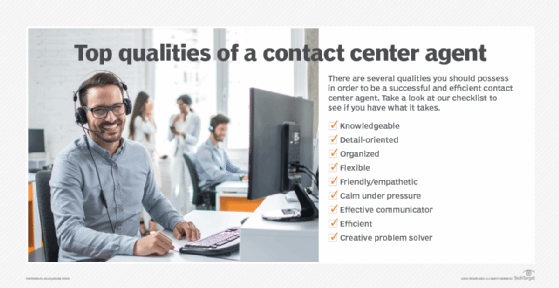
How to start a contact center monitoring program
Starting and developing a contact center monitoring program require several steps, including the following:
- Identify the criteria that is monitored and scored, such as greeting, tone, call documentation and adherence to procedures.
- Develop a scorecard that measures the items to be monitored.
- Determine who performs the monitoring, such as a supervisor or QA analyst.
- Set the frequency of monitoring per agent and when the monitoring occurs.
- Develop a process to provide feedback to agents.
- Let the agents know the purpose of the monitoring program and how it works.
- Test the quality monitoring process end to end.
Contact center monitoring best practices
Successful quality monitoring programs typically include the following best practices.
1. Define quality and the ideal customer interaction
Contact center agents can't provide the proper service to customers if they don't know what the company expects of them. So, it's important for contact center management to train employees on what to say and do during a customer interaction before beginning the monitoring process. Scripts for agents are sometimes a contact center practice and other times a legal requirement, but they can help agents start off on the right foot by giving them a roadmap of what to say and how an interaction should be done. When scripts aren't a legal requirement, it's often beneficial to modify and use them as a guideline and make them less robotic-sounding to better serve customers.
2. Decide what customer service metrics are most important
Businesses shouldn't try to measure everything. Contact center managers need to decide what metrics they value the most and communicate them to their teams before beginning the quality monitoring process. Some metrics include first-contact resolution (FCR), average handle time (AHT), average speed to answer, repeat call rate, calls answered per hour and agent utilization rate. If a contact center, for example, strives for FCR but also expects low AHT, it might be disappointed. The goal of FCR is to resolve customer issues with one phone call, eliminating the need for repeat calls and increasing customer satisfaction. But AHT might be longer as agents work to address the problem.
3. Provide feedback to agents on 100% of monitored calls
For calls that businesses monitor via analytics, a scorecard, which measures customer service and agent performance, should be sufficient. However, companies should provide agents with timely feedback and coaching on monitored calls instead of waiting for a monthly review. It's also important for companies to provide agents direct feedback from customers. Companies need to offer agents feedback and coaching in areas of strength and opportunity. Some contact center platforms now use AI-driven coaching tools that automatically identify performance trends and recommend targeted training opportunities for agents.
4. Enable agents to listen to and score their own phone calls
In many cases, agents are the toughest critics of their own work. They should have the opportunity to hear how they sound and interact with customers.
5. Include side-by-side monitoring
Side-by-side monitoring enables analysts and supervisors to interact with agents and ask questions immediately following a phone call. Contact center management can then gather additional valuable insight into specific actions during the customer interaction, including any gaps in the tools agents use.

6. Use a different quality form for each customer service channel
Contact centers interact with customers across multiple channels, including phone, email, mobile apps, chat and social media. It's necessary to create different QA forms for each channel to gather appropriate insights. On a QA monitoring form for phone calls, for example, one question might be about an agent's active listening skills. While that question is appropriate for a phone call, it might not provide any value for an email interaction.
7. Save examples of excellent customer interactions
Contact center managers monitoring agent performance inevitably come across some examples of excellent service and support that should be saved for later review and shared during training sessions. Contact centers can use these gold-standard examples as training tools for new agents and agents who need to brush up on their skills by highlighting the language and techniques that helped create outstanding CX.
Technologies to support advanced contact center monitoring
A basic contact center monitoring program requires a technical foundation of quality monitoring software, which is included in many contact center-as-a-service platforms and provided as a standalone tool by many vendors. This technology enables a team to listen to a sample of recorded phone calls and score each one using an electronic form.
The first step in enhancing a monitoring program is to add the capability of capturing contact center agents' computer screens when recording a call. Screen captures enable analysts to do the following:
- Observe how agents interact with desktop tools.
- Identify areas where agents can improve a process or transaction.
- Determine how businesses can improve desktop systems and tools to streamline processes and improve CX.
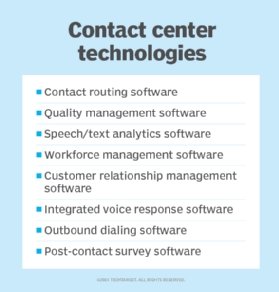
The next step is to use speech analytics software to increase the number of calls monitored without requiring more staff to perform the function. Speech analytics can help increase the volume of quality monitors, especially at the agent level, and automate the call scoring process. With an increased number of monitors, patterns showing where an agent may be struggling with a specific type of inquiry can be more easily identified.
Speech analytics provides several benefits beyond the ability to monitor a higher volume of calls. It can be used to identify the root cause of phone calls, which is more effective than analyzing disposition codes entered by an agent. Businesses can run a query, for example, that provides 100 calls in which customers have similar issues with a product. Analysts can listen to those calls, identify the root cause of a problem with a product or service, and resolve it.
Speech analytics can also analyze phone calls for specific words, phrases, patterns and tones and provide reports. A word cloud, for example, is a collection of words depicting the frequency they appear in calls so companies can better identify customer expectations and sentiment communicated during calls. In more advanced real-time speech analytics, AI analytical capabilities are used in real time to identify calls in which the agent or customer is becoming frustrated and notify a supervisor to assist in handling the call.
Many modern contact center platforms also incorporate real-time agent assist tools that analyze conversations during live calls and recommend next best actions.
As contact center technology evolves, monitoring programs are becoming more data-driven and automated. Organizations that combine traditional monitoring practices with modern analytics tools can gain deeper insight into customer behavior and service gaps.
Editor's note: This article was updated to reflect the latest developments in contact center monitoring tools, techniques and practices.
Scott Sachs is president and founder of SJS Solutions, a consultancy that specializes in contact center strategy assessments and technology selection.