The harder part of citizen AI is not letting business users build. (They are already going to build -- or, at least, try.) The harder part is deciding where local autonomy ends and enterprise oversight begins.
A small tool that summarizes notes or drafts an internal update is one thing. A tool that touches customer records, changes account data, updates a financial workflow, sends information to an outside model or triggers a business process is something else.
The closer AI tools move to the work, the more important it becomes to define what kind of autonomy they actually have.
That is where citizen AI needs more than excitement, training and good intentions. It needs boundaries.
That may sound contradictory on the surface. But in the enterprise AI world, freedom and restriction are not opposites; they are complementary. AI tools need enough room to do useful work, but not so much room that they quietly reach into systems, data or workflows the business never intended them to touch.
That is the idea behind a phrase that should probably be plastered across almost every enterprise AI use case: bounded autonomy. The concept is simple: AI can have agency, but that agency needs limits.
That applies to citizen AI just as much as it applies to sophisticated AI tools supported by IT inside ERP, finance, HR, customer service and other enterprise software platforms. The level of control will vary by use case, but the need for control does not go away.
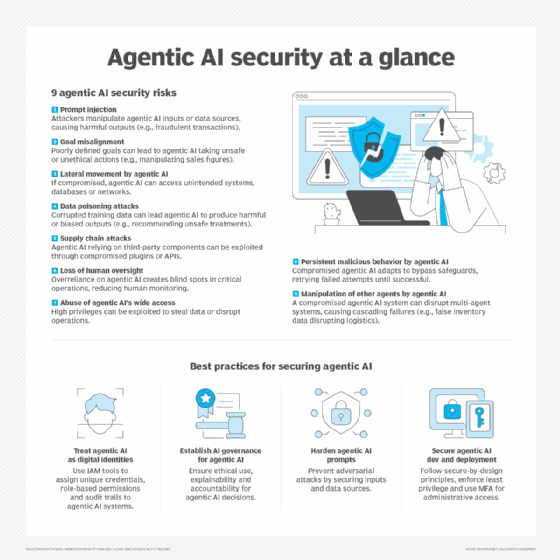
Citizen-built AI tools need clearly defined access to data, clear limits on the actions they can take and clear rules for when human review is required. They also need to account for customer impact, financial impact, compliance risk and whether the tool is touching systems the business depends on.
Human oversight matters, but it is not enough by itself. A person being "in the loop" does not help much if the tool has already been given broad access to the wrong data or the ability to take actions no one reviewed.
AI tools -- especially those created by business users -- should not be able to quietly gain access to systems, data or actions that the enterprise would never approve if IT, security or compliance had reviewed them first.
That is bounded autonomy.
Citizen-built AI tools need room to do useful work, but enterprises still need guardrails around data access, permissions, actions, monitoring and ownership.
Bounded autonomy needs context, too
But bounded autonomy might need one more word: context.
Citizen AI tools do not just need limits on what they can access and what actions they can take. They also need enough business context to understand what the data means, which system is authoritative, where the data came from and which rules apply before the tool acts.
So maybe the fuller idea is bounded contextual autonomy.
That means autonomous AI usage is bounded by governance and guided by context. A citizen-built tool should not only be prevented from touching the wrong data; it should also be kept from using the right data in the wrong way.
That matters because raw data access is not the same as business understanding.
A tool might see a customer record, an employee profile, a supplier status or a finance workflow and still miss the meaning around it. Is the customer active or on hold? Is the supplier approved in one region but restricted in another? Is the employee record current? Is the finance action allowed without review?
For citizen developers, that means the guardrails cannot stop at permissions. The enterprise also needs shared definitions, source-of-truth rules, policy constraints and escalation paths so local AI tools do not act on data stripped of its business meaning.
Low-risk tools can stay close to the business
None of this means every small tool needs a full enterprise software review. It does mean the company needs a risk-based model.
Low-risk tools can stay close to the business. Higher-risk tools need review, monitoring, access limits and human approval. Critical tools need IT ownership.
This is the difference between empowerment and anarchy. The enterprise needs a controlled place for business users to build, test and improve local AI tools without letting those tools quietly drift into production systems no one owns. A local AI tool should not become enterprise software by accident.
A local AI tool should not become enterprise software by accident.
That controlled space should be wide enough for business users to solve real problems. But it also has to be clear enough that everyone knows when a tool has outgrown it. That line will not always be obvious.
A small automation might start as a personal productivity helper. Then a team starts using it. Then it touches shared data. Then it becomes part of a real workflow. At some point, it stops being a useful shortcut and becomes something the business depends on.
That is when ownership has to change.
Local AI tools need an enterprise path
The enterprise needs a path for those tools.
Some can stay local. Some should be retired. Some should be reviewed and improved. Some should be rebuilt by IT and supported as real enterprise software.
That is especially important because citizen-built tools can spread in ways the enterprise does not always see right away. A tool that starts in one department might get copied by another. A workflow that was supposed to support one task might become part of a larger process. A low-risk use case might become higher risk once it connects to new data, new users or new systems.
That is why IT, security and compliance need a practical way to see what exists without turning every business-user idea into a six-month review.
The goal is not to create a bureaucracy that kills citizen development, but to define what kind of tool can stay local, what kind needs a review and what kind now belongs in the enterprise software portfolio.
This is where the relationship between business users and IT matters most.
Business users bring the problem knowledge. They know the workarounds, bottlenecks, approval delays and small tasks that central IT might never have time to prioritize. IT brings architecture, security, integration and support discipline. Governance defines the boundaries. Context keeps the tool from using data blindly.
The business decides when a local experiment has become important enough to own.
The sandbox is the strategy
A citizen AI sandbox is not just a playground; it is the operating model.
It should define which platforms are approved, which data is available, what kinds of actions are allowed, which workflows require human approval and when a tool needs IT review. It should also define what happens when a local tool succeeds.
If business users build something useful, the enterprise needs a way to capture the value without pretending the tool is still just a small experiment. Some successful tools should be hardened, integrated, documented and supported. Others should stay local with clear limits. Some should be shut down.
Citizen AI should not be fully open or fully locked down. It needs a middle ground.
The promise is that more of the people closest to the work can help improve it. The risk is that they create tools no one can see, govern or support. A sandbox does not eliminate that risk, but it gives the enterprise a place to manage it.
Give citizen developers room to build. Just make sure the enterprise can see, govern and own what matters.
James Alan Miller is a veteran technology editor and writer who leads Informa TechTarget's Enterprise Software group. He oversees coverage of ERP & Supply Chain, HR Software, Customer Experience, Communications & Collaboration and End-User Computing topics.