惯性聚合 高效追踪和阅读你感兴趣的博客、新闻、科技资讯
阅读原文 在惯性聚合中打开

推荐订阅源

博客园 - 聂微东
Threat Intelligence Blog | Flashpoint
L
LangChain Blog
钛媒体:引领未来商业与生活新知
钛媒体:引领未来商业与生活新知
博客园 - 司徒正美
WordPress大学
WordPress大学
T
The Blog of Author Tim Ferriss
Blog — PlanetScale
Blog — PlanetScale
J
Java Code Geeks
Y
Y Combinator Blog
H
Hackread – Cybersecurity News, Data Breaches, AI and More
GbyAI
GbyAI
Vercel News
Vercel News
大猫的无限游戏
大猫的无限游戏
T
Tailwind CSS Blog
Jina AI
Jina AI
B
Blog
Recorded Future
Recorded Future
MyScale Blog
MyScale Blog
I
InfoQ
aimingoo的专栏
aimingoo的专栏
博客园_首页
OSCHINA 社区最新新闻
OSCHINA 社区最新新闻
The Cloudflare Blog
雷峰网
雷峰网
奇客Solidot–传递最新科技情报
奇客Solidot–传递最新科技情报
腾讯CDC
爱范儿
爱范儿
Last Week in AI
Last Week in AI
博客园 - 三生石上(FineUI控件)
博客园 - Franky
Schneier on Security
V
V2EX
TaoSecurity Blog
TaoSecurity Blog
H
Hacker News: Front Page
Cloudbric
Cloudbric
D
DataBreaches.Net
B
Blog RSS Feed
P
Palo Alto Networks Blog
云风的 BLOG
云风的 BLOG
NISL@THU
NISL@THU
I
Intezer
Recent Commits to openclaw:main
Cyberwarzone
Cyberwarzone
F
Fortinet All Blogs
D
Darknet – Hacking Tools, Hacker News & Cyber Security
C
Cybersecurity and Infrastructure Security Agency CISA
C
Cisco Blogs
K
Kaspersky official blog
Forbes - Security
Forbes - Security

WhatIs

Strategic IT outlook: Tech conferences and events calendar | TechTarget 8 AI use cases in manufacturing Enterprises are making an AI native transformation Zero trust in the IT ops stack: Securing hybrid workloads How algorithmic value sets enhance clinical decision-making Top methods for collecting customer feedback Build a data governance team that delivers results How to calculate the total cost of ownership of ERP software Communities call for transparency in AI data center deals Scalable IT infrastructure: Balancing speed with stability How health systems are tackling 'Kill the Clipboard' obstacles Understanding the science behind AI-based hiring assessments Tape's strategic role in modern data protection How to choose an HR software system in 2026: A complete guide The UC stack gets the policy job Top zero-trust use cases in the enterprise 13 top IT infrastructure conferences in 2026 SNMP vs. CMIP: What's the difference? 3 essential network analytics use cases AI Security Risks Force CIOs to Rethink Strategy Red Hat Summit 2026 news and conference guide | TechTarget What is HR technology (human resources tech)? Understand, optimize and track customer journey touchpoints Should IT use Apple Business Manager without MDM? Build and organize an effective machine learning team The storage modernization imperative in a fast-changing IT landscape Procurement automation use cases for CSCOs to consider 3 steps for health system leaders to drive patient safety culture What is DevOps? Meaning, methodology and guide Enterprises Face New Storage Bottlenecks as AI Grows A guide to Intune Suite licensing for endpoint management Epic controls 42% of the US EHR market. Does that help or hurt interoperability? SAP Sapphire 2026 news, trends and analysis | TechTarget How to develop a data governance strategy: 7 key steps 12 generative AI tools for marketing and sales teams Top 9 smart contract platforms to consider in 2026 Top 8 e-signature software providers for 2026 Rise with SAP vs. S/4HANA Cloud: What are the differences? How businesses use KPIs to measure AI's performance 5 clues your network has shadow AI How do digital signatures work? Collaboration security and governance must be proactive Compare SAP greenfield vs. brownfield approach for S/4HANA Merck, Home Depot tap Gemini Enterprise for AI agent development Rural challenges may dampen digital healthcare's potential Build an ethical AI framework: 12 top resources The great workload reshuffle: Choices for AI and analytics How to remove a device from Intune enrollment Cisco unveils quantum network advancements 3 BYOD security risks and how to prevent them 10 of the top carbon accounting software 8 trends powering machine learning's dynamic new roles Network engineers must take the lead to push DDI to the cloud How does Microsoft 365 Copilot pricing and licensing work? ONC highlights behavioral health EHR adoption trends, data exchange barriers LLMs struggle with clinical reasoning, study finds Democratizing AI in business: The good, bad and ugly What can organizations do to address BYOD privacy concerns? Fix the service path before you optimize it with AI How AI reshapes upselling in customer experience platforms When collaboration starts becoming operational drag Balancing health AI management with growing vendor sprawl Career cure for AI phobia: Be a beekeeper, not a worker bee 16 top applicant tracking systems for 2026 How a rural community hospital deploys AI to detect heart disease 8 examples of document version control Guide to 30+ sustainability certifications for professionals AI agents are only as smart as the data that feeds them AI could earn trust in transactional work first How to fix keyboard connection issues on a remote desktop How to add and enroll devices to Microsoft Intune 11 DevSecOps best practices to prioritize in 2026 6 key components of a successful data strategy How to enable Copilot in Microsoft 365: A step-by-step guide What CIOs need to know about Meta's proposed CEO AI agent Top AI recruiting tools and software of 2026 How contact centers detect and prevent fraud 10 essential skills for modern contact center agents Beyond the chatbot: Engineering the agentic enterprise AI in business intelligence: How to manage it effectively Why legacy networks are a growing liability Failure is an option as an IT leadership tool How HR can create a successful change management strategy HR AI is becoming a change management story Digital transformation: Balancing speed and governance RSAC 2026 Conference: Key news and industry analysis | TechTarget 8 best practices for a bulletproof IAM strategy 5 customer journey phases businesses should understand 12 top HR software and tool options to consider in 2025 6 contact center trends shaping the future of customer service Contact center monitoring best practices for CX leaders Cloud vs. local backup: Which is right for your organization? 6 steps for when remote desktop credentials are not working How governance maturity affects M&A integration outcomes Inside the push to turn AI agents into suite functionality How should contact centers use AI today? Accenture global health lead on scaling AI in healthcare with governance and intent 10 best free DevOps certifications and training courses in 2026 What is compensation management? What CIOs must know about bossware strategy
IBM execs: AI storage and common implementation oversights | TechTarget
Alexander S. Gillis · 2026-06-18 · via WhatIs

IBM storage leaders Sam Werner and Christopher Vollmar share insights on AI implementation oversights, including data governance, vector database vulnerabilities and zero trust.

Alexander S. Gillis

By

Published: 18 Jun 2026

AI is actively reshaping how organizations confront storage. Onstage at IBM Think in May, two IBM storage executives prominently focused on the topic of AI.

Sam Werner is the general manager of IBM Storage and is responsible for IBM's end-to-end portfolio, directly managing the product management development teams. Christopher Vollmar, meanwhile, is the global product architect of operational resiliency and enterprise storage and IBM Master Inventor and is responsible for identifying opportunities to drive storage innovation based on market or client challenges and for solving them.

IBM Think 2026
The Stage at IBM Think 2026

In this combined Q&A, TechTarget spoke with these two IBM storage experts to gauge their thoughts on how AI workloads affect storage security. Be sure to read part one of this interview, focused on storage security and resiliency.

Editor's note: The following was edited for length and clarity. Werner and Vollmar were interviewed separately. 

Is there anything in storage that IT organizations fail to consider when implementing AI?

Sam Werner:

Yes, I think a lot of people tell a really good story about storage for AI, but there are things missing. A lot of the stories people tell about storage require you to re-platform all of your data, which is totally unrealistic.

I think a lot of people tell a really good story about storage for AI, but there are things missing.
Sam Wernergeneral manager of IBM Storage

Imagine if you copy a bunch of files over, so you can vectorize that data to use for RAG. That data that's been copied over is completely disconnected from the source. If the source data changes, that doesn't ripple through. And there's no way to keep track of that. But even worse, if the source data permissions change -- maybe somebody identifies PII, or you're no longer allowed to have access to it or somebody tries to delete it for data governance reasons -- it hits a data retention policy where data gets deleted from the source, but there's still a vector database that's completely searchable and completely discoverable through RAG.

People oversimplify. … Either way, you run into challenges that don't really work, so I think it takes a more comprehensive approach.

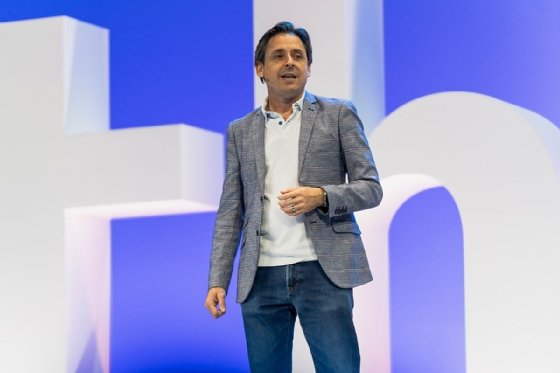
Sam Werner at IBM Think 2026
Sam Werner

Christopher Vollmar:

When implementing AI, IT organizations need to consider a couple of things. First, the need for data to be ready for AI that has implications for storage. There are four dimensions, but people often overlook some or all of them:

1) Distributed data that needs to be abstracted into AI systems.

2) Diverse data that needs to be accessed using multi-protocol -- file, object -- or format -- vector, API.

3) Dynamic data that needs to be vertically accelerated from source to AI system memories.

4) Dark data that needs to be classified, governed and cataloged for awareness by AI systems.

The four dimensions are now an emerging standard for an AI data plane.

To go a step further, I would also suggest that storage has a role when implementing valuable AI -- the value increases when accurate and timely corporate data is combined with the intelligence coming from inferencing AI reasoning models. Storage can help to catalog the metadata and to manage the semantics of the data (we call it content-aware storage), helping to automate vectorization of corporate information for similarity searches. 

How does the increase in more complicated AI workloads change attack surfaces from a storage security standpoint?

Werner:

Let's start with where most people are. They just copy a bunch of data around to do AI. ... That is a huge issue because there's nobody protecting them. They're copying data to servers [and then] they're putting it into a vector database. And that's very risky.

When you deploy storage infrastructure, you start bringing in some of the discipline and security behind managing data and protecting it with encryption. Encryption of data in flight, and at least encryption of data at rest, to make sure that data is only accessible to those who have the proper permission … keeping that data under the foundation of data governance of an enterprise storage array, where we constantly keep track of the access rights and controls on the data.

Vollmar:

As AI workloads become increasingly more complicated, we need to be even more diligent in doing the foundational work that supports the operation of the business. This means, for one, instituting zero trust principles all the way through the compute and storage stack, down through to the backup and archive layers. Things like multi-factor authentication, two-person integrity, a re-evaluation of what roles people have in accessing and administering the supporting infrastructure, and yes, building immutable copies that can be used for rapid recovery and proactive validation all the way through the data and storage lifecycle.  

Christopher Vollmar
Christopher Vollmar

Alexander Gillis is a Technical Writer and Editor at Informa TechTarget, with more than 8 years of experience writing about technology. 

Dig Deeper on Flash memory and storage