Context is key: The limits of experience analytics software
Rahul Awati·2026-05-28·via WhatIs
Experience analytics can show behavior, journeys and sentiment, but without operational, cultural, service and workflow context, organizations risk optimizing the wrong things.
In 2024, the size of the market for experience analytics software was estimated at $12.6 billion. The market grew to $14.43 billion in 2025. It is projected to grow even further to $55.99 billion, at a compound annual growth rate (CAGR) of 14.52%, between 2025 and 2035.
Experience analytics platforms are rich with customer data, so it's not surprising that enterprises are investing heavily in them. These systems capture information about customer behaviors and sentiments to help cross-functional teams like sales, marketing and customer support to better understand customers' needs and pain points. These customer-facing teams can then proactively implement data-driven changes to enhance customer experience (CX). In doing so, they can enhance customer loyalty and customer lifetime value (CLV), reduce customer churn and boost profitability.
That said, experience data alone is insufficient for companies to understand what's actually wrong CX-wise or what they need to fix first. Considering these insights in isolation rather than within the context of service, support, logistics and onboarding workflows can cause tunnel vision, resulting in firms misdiagnosing the root causes of customer behavior and optimizing the wrong aspects of CX.
The missing context -- and why it can be problematic
CX analytics unpacks the story behind every customer's experience. However, this story is often incomplete because traditional experience analytics platforms fail to consider three crucial types of business context:
Operational. This includes aspects like service delivery times, logistics performance, product quality, checkout times and product messaging.
Cultural. This refers to regional or demographic differences in customer expectations, values, beliefs, behaviors and preferred communication styles.
Workflow. This encompasses internal processes like customer onboarding, account management, issue resolution and returns handling.
Ignoring contextual cues can be problematic. The following examples illustrate why.
Example 1: Retail
A retail company analyzes customer journey data to optimize website navigation, eliminate checkout friction and deliver hyper-personalized shopping experiences. These aspects can help to enhance CX. However, CX does not depend on these aspects alone. Many other factors can also drive CX quality, including shipping timelines, product quality, pricing, return policies and support resolution timelines.
When pursuing CX optimization, the firm must consider all these factors, rather than depending on insights derived from experience analytics alone. If teams ignore these factors and rely solely on customer journey data, they might, for example, waste limited enterprise resources on website navigation improvements instead of addressing shipping delays. Instead of making meaningful CX improvements, these actions might fail to address the main source of customer frustration, invite negative publicity and weaken the company's competitive posture.
Example 2: SaaS provider
A SaaS provider performs sentiment analysis with an experience analytics platform. The goal: improve customer onboarding and help customers achieve their business goals with the SaaS product. While its teams invest resources in the improvement of onboarding emails, they ignore workflow bottlenecks that typically hinder product setup and cause frequent downtime. By misplacing its resources, the SaaS provider might make little to no progress in restoring customer trust or decreasing customer churn -- and potentially erode its customer base as negative reviews mount.
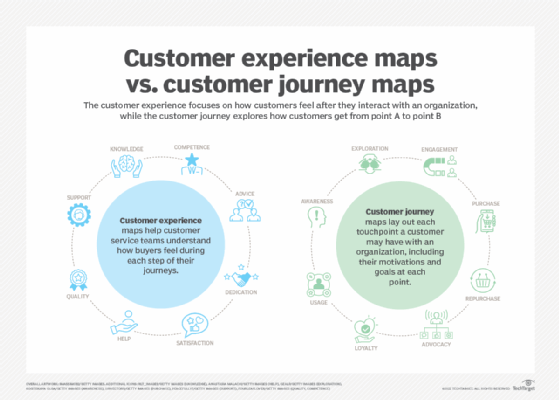
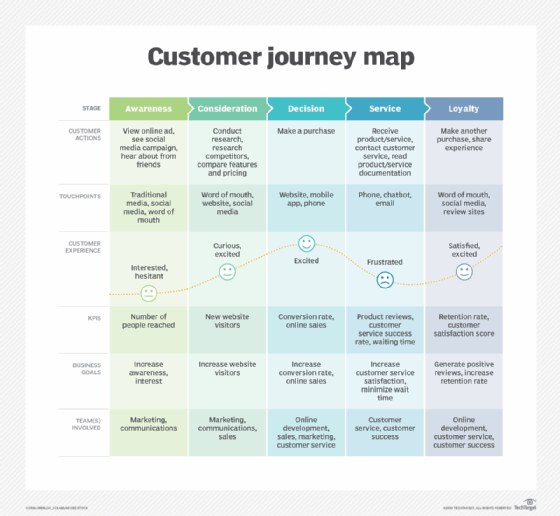
Customer journey maps capture more than just sentiment, but they can still lack important operational, cultural and workflow context that explain customer behavior.
Benefits of integrating experience analytics with enterprise systems
Companies can close the gap between experience analytics and contextual factors to meet customer expectations and improve CX. The key is to integrate experience analytics with operational systems, including ERP, CRM, IT service management, workflow automation and data warehouses.
Integrating experience analytics with other platforms can help provide a holistic view of customer journeys and spotlight the operational, cultural or workflow-related issues that might be negatively affecting those journeys. It ensures that all customer-facing teams view a single, all-encompassing analysis. This could minimize costly errors and redundancies; enhance the speed, accuracy and consistency of business planning and decision-making; and enable proactive issue resolution. Ultimately, well-planned, thoughtfully designed integrations help transform businesses into successful, customer-centric organizations.
Needless to say, cross-functional collaboration between CX leaders, software teams and operational managers is critical to ensure seamless integration between CX platforms and other business systems. Close coordination between these stakeholders ensures alignment between technical rollouts and actual business needs. It also helps to streamline workflows, foster buy-in and adoption, and accelerate time to value for the integrated ecosystem.
To create an all-encompassing analysis of customer behavior, data from customer journey maps, like the example presented here, should be integrated with other business systems, including ERP and workflow automation platforms.
Real lessons from the field
Several real companies have successfully aligned experience analytics with operational context to enhance CX and customer satisfaction.
Delta Air Lines
One example is Delta Air Lines' award-winning Connected Onboard Platform (CoP). By connecting operational, connectivity and CX data, this multinational airline managed to deliver seamless, connected onboard experiences to flyers. Glenn Latta, Delta's managing director of in-flight entertainment and connectivity, believes that combining experience analytics with other kinds of business data is critical to breaking down silos across CX teams and enabling smarter service delivery across the organization. "This achievement is a testament to the engineers, operators and partners who made CoP possible, breaking down silos across the customer and employee experience to design something truly one-of-a-kind that fits the needs of our business."
Combining experience analytics with other kinds of business data is critical to breaking down silos across CX teams and enabling smarter service delivery across the organization.
University of Chicago Medicine
Like Delta, University of Chicago Medicine also uses contextual analytics to minimize workflow inefficiencies. This healthcare provider has deployed Salesforce's customer analytics platform to automate and streamline multiple patient-facing processes, including appointment scheduling and FAQ assistance.
Andrew Chang, the organization's chief marketing officer, believes it's not lack of information but rather lack of integration that is responsible for antiquated customer experiences in the healthcare sector. Chang also believes that collecting "every touchpoint and behavioral signal, and then making them actionable," is the key to personalizing customer journeys and enhancing patient experiences.
UPS
Multinational shipping company UPS uses journey and delivery data, such as missed delivery patterns and support interactions, alongside operational metrics like route efficiency and on-time delivery rates. This enables the company to reroute deliveries as needed and improve delivery transparency, which then reduces failed deliveries and helps optimize delivery experiences for customers.
Takeaways
These real-world examples present several useful lessons for companies that have not yet integrated experience analytics with operational context:
Use analytics to identify root causes of issues, not just surface-level trends.
Use real-time insights to proactively resolve issues before they escalate.
Focus on journey-level analytics instead of isolated touchpoints to identify and address cumulative friction throughout the customer journey.
Invest in data integration and interoperability between CX platforms and enterprise systems to unify customer and operational data into a single view.
Create a unified data environment to facilitate cross-functional collaboration and decision-making between all customer-facing teams.
Tie customer interactions to operational events to facilitate faster root-cause analyses and more accurate decision-making.
Use AI to analyze data faster and augment human decision-making -- while maintaining human oversight to eliminate bias, discrimination and hallucinations.
Tie CX metrics directly to measurable operational and financial KPIs, such as customer retention and CLV, to justify investments in experience analytics and drive meaningful business improvements.
Foster a culture of collaboration between CX, IT and operations teams to ensure shared visibility into customer journeys and to prevent fragmented decision-making.
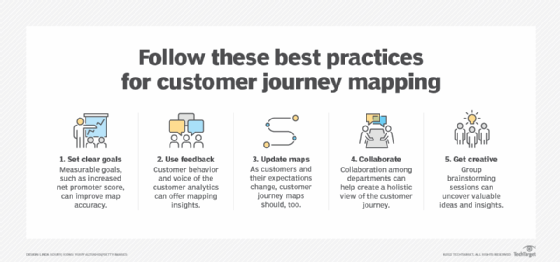
Cross-team collaboration and periodic review and updating of customer journey data can help companies unlock new insights for improving customer engagement.
The evolving landscape of experience analytics
Many leading CX platforms are evolving beyond traditional customer feedback and journey analytics to incorporate operational and workflow data.
One example is Salesforce's Agentforce Contact Center, an AI-first customer service platform for tracking and streamlining customer interactions. Rooted in organizational data, this unified system combines CRM, digital channels, voice and AI to help firms deliver intelligent, integrated services and meet customer demands across every business touchpoint.
Like Salesforce, several other experience analytics systems now integrate with operational systems, workflow orchestration and other platforms. These include the following:
Adobe CX Enterprise.
Contentsquare Experience Analytics.
Crescendo.ai.
Qualtrics Digital Experience Analytics (DXA).
Qualtrics XM.
Quantum Metric.
Integrated platforms enable organizations to act on both customer and operational signals in real time, and tie CX improvements to measurable business impact.
Some experience platforms are also adding AI capabilities. Agentic AI technology connects data about customer behaviors with the operational, cultural and workflow context in which those experiences occur. It also generates contextual insights that help customer-facing teams to proactively interpret customer sentiment, analyze customer journeys and predict potential customer friction. Teams can also access real-time recommendations within agentic AI experience analytics systems to prioritize and remediate incidents, as well as deliver personalized experiences at scale.
Context is key to successful enterprise CX
Experience analytics is a powerful way to analyze customer behaviors and optimize customer journeys. But as we have seen, analytics without detailed and up-to-date operational, cultural and workflow context can lead organizations astray. To anticipate, understand and meet evolving customer needs, companies need to treat experience analytics as a holistic matter that requires seamless integration with business platforms as well as cross-functional collaboration across teams.
Rahul Awati is a PMP-certified project manager with IT infrastructure experience spanning storage, compute and enterprise networking.