


Software projects can hit every implementation milestone and still fail to change how work gets done.
The system is live. Users have access. Training might have happened. The vendor checklist might be complete. But employees might still rely on side spreadsheets, managers might still work around the platform, and business leaders might still not know whether the software solved the problem it was bought to fix.
That is usually where the project starts to wobble: after rollout, when the company has to prove the software actually changed the work.
The application may be running fine. The harder questions are around it: Who owns the new process? Did training continue once real use started? Are user complaints reaching someone who can fix the workflow? And can leaders point to evidence that the work is better than it was before?
That is why change management matters in enterprise software projects. It connects a technology rollout to the organization's goals, processes and everyday work.
Whether the system is HR software, ERP, customer experience management, communications and collaboration, or end-user computing, employees need more than access. They need the training, support, workflow changes and management reinforcement required to use the system well.
Software change is not complete when the platform goes live. It is complete only when the organization has changed enough around the system for the investment to matter.
Deployment is not adoption
Deployment of a new software system does not equal adoption -- a mistake many organizations still make.
Take ERP as an example. The platform might be live, configured and technically available, but that does not mean employees have built the habits, skills, operational procedures and workflows required to use it well. New company technology often requires employees to acquire new skills, and a lack of training can hinder the adoption of new systems or processes.
That transition requires management support and a clear understanding of the human side of turning a software rollout into an actual change in everyday work. Frequent communication, training, employee buy-in, worker feedback and coordination among stakeholders such as operations, legal and IT personnel all matter. Those groups often play different roles in researching, buying, deploying, implementing and eventually running the new software system.
Even so, adoption can still stall if communication, training, ownership, process redesign and feedback are treated as rollout support rather than part of the change itself. Change has to be supported after launch, not simply introduced and left to stand on its own.
Training, for example, should not be a one-time post-launch activity; it should be an ongoing part of adoption. Users need time and support to adjust to new workflows, edge cases, responsibilities and expectations.
IT is not usually the only group involved in selecting and implementing a new enterprise software system for a reason. IT has the technical expertise to deploy the platform and keep it running, but the expertise on how the platform should support the work often comes from the business stakeholders who lead the departments using it.
That is where change management has to extend beyond IT. Business leaders, HR and managers need to know whether people are using the new platform as intended and whether the organization has the training, documentation and support structures in place to make the transition as smooth as possible.
No corporate change is without friction, whether it involves software, structure, policy or process. The point is not to eliminate every issue before launch; it is to recognize that launch is only the beginning of the adoption process.
ERP is not finished at go-live
ERP platforms are a useful example because they are big, cross-functional and disruptive by design. They often require significant forethought, budget, technical expertise and executive support to select and deploy. But choosing the right platform and completing the implementation are only part of what determines whether the investment succeeds.
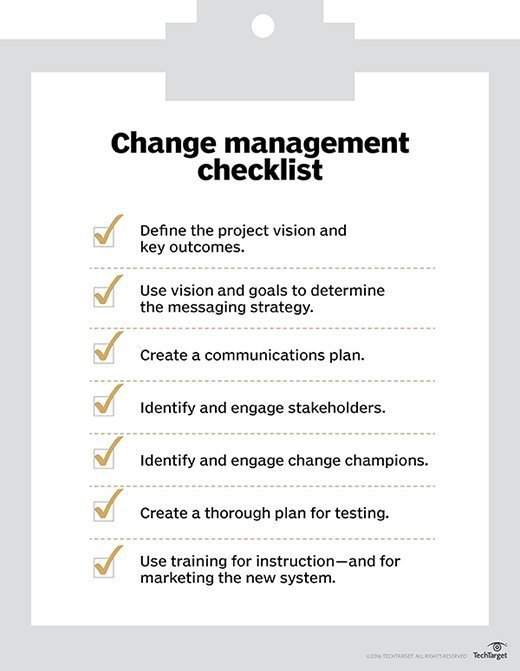
ERP success also depends on whether employees, managers and line-of-business leaders actually change how work gets done after rollout. The system might be live, but the business still has to adjust processes, clarify roles, train users, address employee concerns and reinforce new ways of working. That is where software change can get stuck.
This is why change management is so central to ERP adoption. ERP touches finance, operations, supply chain, procurement, HR and other functions, so the work cannot be owned by IT alone. IT can deploy and maintain the platform, but line-of-business leaders understand how the work should change, managers reinforce new behaviors, and HR can help support training, communication and employee adjustment.
ERP offers major business advantages, but only if the system is widely adopted. ERP implementation success depends heavily on whether employees use the system to its full potential.
ERP is a reminder that software implementation can be technically complete and still operationally unfinished.
UC changes everyday work
Unlike ERP, communications and collaboration software tends to be deployed broadly across an organization. But even everyday software, such as unified communications -- whether on premises, UCaaS or hybrid -- does not create value simply because employees have access to it.
A UC rollout is increasingly a business transformation initiative, especially as generative AI, agents and copilots become embedded in communications platforms. These tools can summarize meetings, transcribe conversations, surface action items and create data from everyday collaboration that leaders can analyze. That means UC is no longer only about calls, meetings and messages. It can now affect how work is coordinated, how decisions move, how employees collaborate and how organizations understand communication patterns.
That makes change management essential. A strong UC adoption training strategy should account for workflow alignment, feedback loops, targeted training and meaningful adoption metrics.
If deployment is treated as an end in itself -- as can also happen with ERP, though for different reasons -- the initiative can get stuck. The platform might be available, but the organization might not get the full value from it. In some cases, a poorly adopted platform can add confusion, tool sprawl, notification fatigue or new forms of inefficiency.
There is a difference between giving employees access to a UC platform and helping them use it in a way that actually improves how work gets done. A company can roll out chat, meetings, calling, transcription and AI summaries, but that does not mean employees will automatically collaborate better or make decisions faster.
That is why UC adoption cannot be judged only by whether people log in or whether licenses are active. Leaders also need to look at whether the platform fits actual workflows, whether training helped people use the right tool for the right situation, whether feedback is being collected and whether communication is improving in measurable ways. That might include fewer unnecessary meetings, less context switching, faster response times, better handoffs or clearer service coordination.
UC is a strong example because it crosses the company from top to bottom. It touches executives, managers, distributed teams, frontline workers, sales, operations, service desks and hybrid employees. A change in how people communicate can become a change in how the company operates. A change management strategy has to account for that.
HR tech can stall before launch
As with UC, HR software touches every corner of the enterprise, regardless of what department people work in or where they sit in the corporate hierarchy. In some ways, HR technology is especially exposed to adoption risk because it affects basic employee and manager tasks such as onboarding, benefits, performance management, training, self-service and workforce administration.
That means HR technology can get stuck in the middle before it even goes live: between the business reason it was bought and the everyday work it was supposed to change. The platform might satisfy leadership goals or administrative requirements, but if it does not reflect how employees and managers actually work, poor or partial adoption becomes more likely after launch.
Adoption can also suffer if organizations fail to solicit feedback after deployment and adjust the system, training or workflows based on what users experience. Selecting HR technology without user input can lead to poor adoption, while involving end users early can help confirm the software aligns with broader needs and strengthen buy-in.
A strong change management strategy should involve the people expected to use the HR system early enough to shape the project. User input can help determine whether the software aligns with daily routines, whether workflows make sense and whether employees will have the support they need to adopt the system.
In that sense, the middle starts earlier than many organizations think. It does not begin only after launch, when employees resist the system or fail to use it fully. It begins during selection and planning, when user needs, workflow fit, training, feedback and adoption support should already be part of the project.
The middle layer needs owners
Software change gets stuck when companies treat technology, process and people as separate tracks instead of one connected transition.
IT deploys the system. Business leaders expect better outcomes. HR or managers might be asked to help with communication, training and employee adjustment. But unless those pieces are connected, the software could end up sitting between the reason it was bought and the actual work it was supposed to improve.
That is the middle layer where software change can stall. The system might work, and employees might have access to it, but the company has not really changed around it yet. The workflows might still be awkward. Training might have stopped too soon. Ownership might be split between IT, HR, managers and business leaders. User feedback might never reach the people who can fix the process. And the business might assume the software is creating value before it has measured whether the work actually changed.
This is also why software change requires shared ownership. CIOs and IT leaders can make sure systems are selected, deployed, integrated and supported. CHROs can help account for the employee side of change, including communication, training, resistance and adjustment. Line-of-business leaders can define how the work should change. Managers can reinforce new behaviors. Employees can surface the friction that leaders may not see.
None of those roles can carry the change alone. But without clear ownership across them, software change can become a handoff problem. The system is live, but the organization is still waiting for the new way of working to take hold.
Software change does not become real when the system goes live. It becomes real when employees understand the new process, managers reinforce it, workflows adjust, ownership is clear, and the organization keeps supporting the change after launch.
That is why the middle layer deserves more attention from CIOs, CHROs, line-of-business leaders and managers. The success of the software depends not only on whether the system works, but also on whether the organization has changed enough around the system for the investment to matter.
James Alan Miller is a veteran technology editor and writer who leads Informa TechTarget's Enterprise Software group. He oversees coverage of ERP & Supply Chain, HR Software, Customer Experience, Communications & Collaboration and End-User Computing topics.