


惯性聚合 高效追踪和阅读你感兴趣的博客、新闻、科技资讯
阅读原文 在惯性聚合中打开

推荐订阅源

P
Privacy International News Feed
I
Intezer
T
Tenable Blog
S
Schneier on Security
Project Zero
Project Zero
G
GRAHAM CLULEY
酷 壳 – CoolShell
酷 壳 – CoolShell
小众软件
小众软件
Know Your Adversary
Know Your Adversary
博客园 - 司徒正美
The Cloudflare Blog
Recent Commits to openclaw:main
freeCodeCamp Programming Tutorials: Python, JavaScript, Git & More
N
News and Events Feed by Topic
博客园 - 叶小钗
宝玉的分享
宝玉的分享
L
LINUX DO - 热门话题
aimingoo的专栏
aimingoo的专栏
S
Secure Thoughts
Forbes - Security
Forbes - Security
T
The Exploit Database - CXSecurity.com
D
Darknet – Hacking Tools, Hacker News & Cyber Security
OSCHINA 社区最新新闻
OSCHINA 社区最新新闻
博客园 - 【当耐特】
罗磊的独立博客
IT之家
IT之家
H
Hacker News: Front Page
I
InfoQ
云风的 BLOG
云风的 BLOG
S
Security Affairs
M
MIT News - Artificial intelligence
GbyAI
GbyAI
Jina AI
Jina AI
Help Net Security
Help Net Security
Engineering at Meta
Engineering at Meta
大猫的无限游戏
大猫的无限游戏
Webroot Blog
Webroot Blog
L
Lohrmann on Cybersecurity
A
About on SuperTechFans
Attack and Defense Labs
The Register - Security
V
V2EX
G
Google Developers Blog
D
DataBreaches.Net
Apple Machine Learning Research
C
Cybersecurity and Infrastructure Security Agency CISA
J
Java Code Geeks
W
WeLiveSecurity
Cloudbric
Cloudbric
T
Tor Project blog

The Eclectic Light Company

Hero or hooligan: Theseus’ later years BSD flags are incompatible with iCloud Drive Apple has released macOS Tahoe 26.5.1 In memoriam Mary Cassatt: 1, 1868-1880 Solutions to Saturday Mac riddles 362 What Location Services do in macOS Eclectic paintings of Joseph Stella: 2 European myths Last Week on My Mac: Razzle and dazzle Eclectic paintings of Joseph Stella: 1 American landscapes Saturday Mac riddles 362 Protect files with the Locked or Immutable flag Reading Visual Art: 252 Dragonfly What happens in the log when an app crashes as it starts up? Portraits of trees: Introduction On Reflection: Conclusions and contents Which tasks require mains power? Medium and message: Vast canvases Online reference to external displays for Apple silicon Macs What’s in that phishing email? Hero or hooligan: Theseus and Ariadne Solutions to Saturday Mac riddles 361 How to search document versions Rubens’ Consequences of War Rubens’ Peace and War Saturday Mac riddles 361 How to search Time Machine backups? Naturalists: Contents and artists On Reflection: Extending the image Tackle QuickLook problems Medium and message: Pottery Hero or hooligan: Theseus and the sandals How QuickLook provides thumbnails and previews Last Week on My Mac: Syncing metadata in iCloud Drive Paintings of visits to India 1778-1877 Saturday Mac riddles 360 Naturalists: Sorolla and Zorn On Reflection: Pierre Bonnard 1909-1946 SpotTest 1.2 can display Spotlight metadata directly On Reflection: Pierre Bonnard 1899-1908 How to preserve versions, and how to create versioned PDFs Medium and message: Sculpture What gets synced in iCloud Drive? Hero or hooligan: Perseus 2 Solutions to Saturday Mac riddles 359 Last Week on My Mac: snapshots, the elephant in APFS Paintings of Beatrice Portinari: to 1862 Saturday Mac riddles 359 Naturalists: Into the 20th century How to check whether Spotlight is getting the right metadata On Reflection: Mirror play Hero or hooligan: Perseus 1 The bicentenary of Frederic Edwin Church: 1857-77 Solutions to Saturday Mac riddles 358 macOS virtual machines and audio-video syncing A walk in the parks of Rome, Vienna, Manhattan and Brooklyn Saturday Mac riddles 358 Naturalists: Photography Use Finder tags for categories Control what gets written to the log Medium and message: Tapestry Virtualisation on Apple silicon Macs is different Jerusalem Delivered: Overview and contents The bicentenary of Frederic Edwin Church: 1849-57 Solutions to Saturday Mac riddles 357 Painting Pandora and her box: 1883-1919 Painting Pandora and her box: 1550-1882 Saturday Mac riddles 357 Reading Visual Art: 250 Winged sandals The secret life of the xattr The macOS Natural Language framework and Nalaprop Medium and Message: Stained glass The MACL extended attribute Jerusalem Delivered: 13 Leading characters Solutions to Saturday Mac riddles 356 Privacy: How locations are protected Painting Spring blossom 2 Last Week on My Mac: Don’t be a victim of fraud Painting Spring blossom 1 Saturday Mac riddles 356 Explainer: Recovery Reading Visual Art: 249 Mask Naturalists: Urban poverty On Reflection: Cézanne Privacy: Which folders are protected in Tahoe? Medium and Message: Mosaic Jerusalem Delivered: 12 Delivery Solutions to Saturday Mac riddles 355 Centaurs 2: Revenge Centaurs 1: Fights Saturday Mac riddles 355 Explainer: sandboxes Naturalists: The modern meal Why you can’t trust Privacy & Security Apple has just released an update to macOS Tahoe, to version 26.4.1 On Reflection: Divisionism Please help update CPU frequencies for Apple silicon Macs Commemorating the centenary of the death of John Ferguson Weir Privacy: Files & Folders or Full Disk Access? Jerusalem Delivered: 11 Into Jerusalem Privacy: protected folders
Brushstrokes: From El Greco to Rembrandt
hoakley · 2026-06-25 · via The Eclectic Light Company

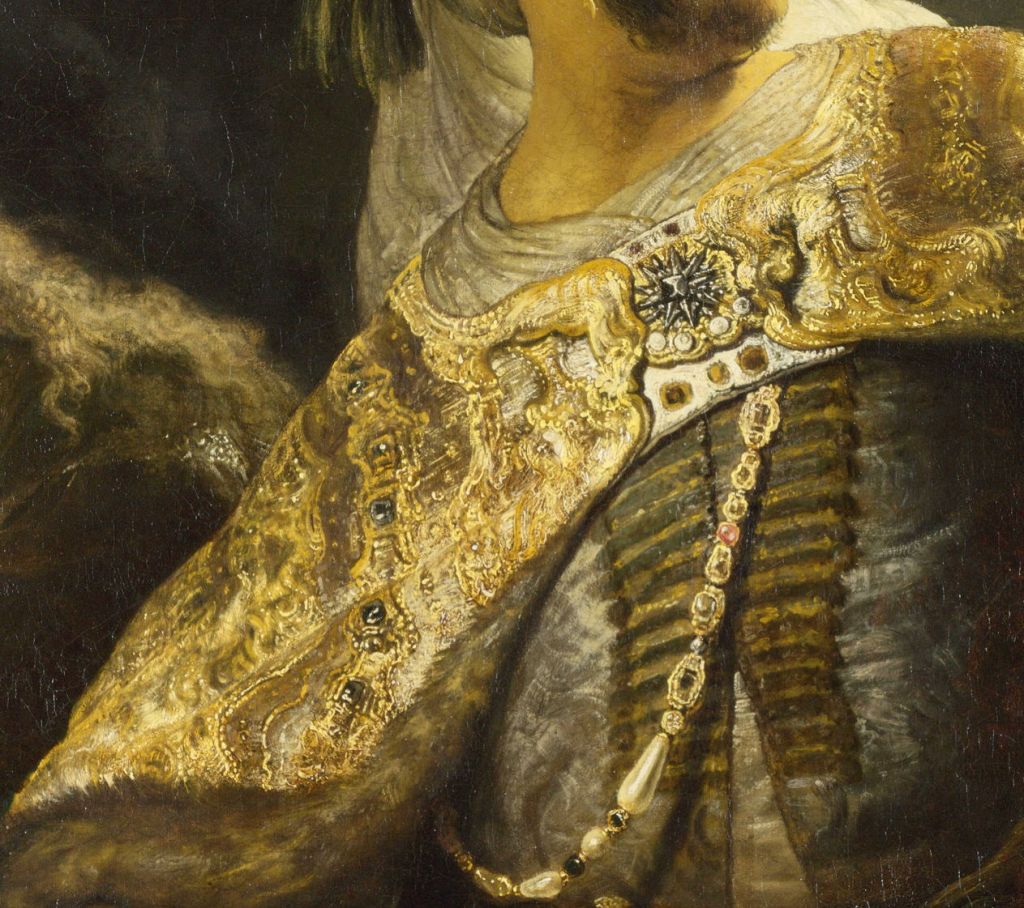
Rembrandt Harmenszoon van Rijn (1606-1669), Belshazzar's Feast (detail) (c 1635-1638), oil on canvas, 167.6 x 209.2 cm, The National Gallery, London. Wikimedia Commons.

By the late sixteenth century, well-known painters were showing their brushstrokes in textures of fabrics and hair, but flesh and most other details continued to be rendered precisely. This was to change again in the early seventeenth century, in the paintings of El Greco, Rubens and Rembrandt.

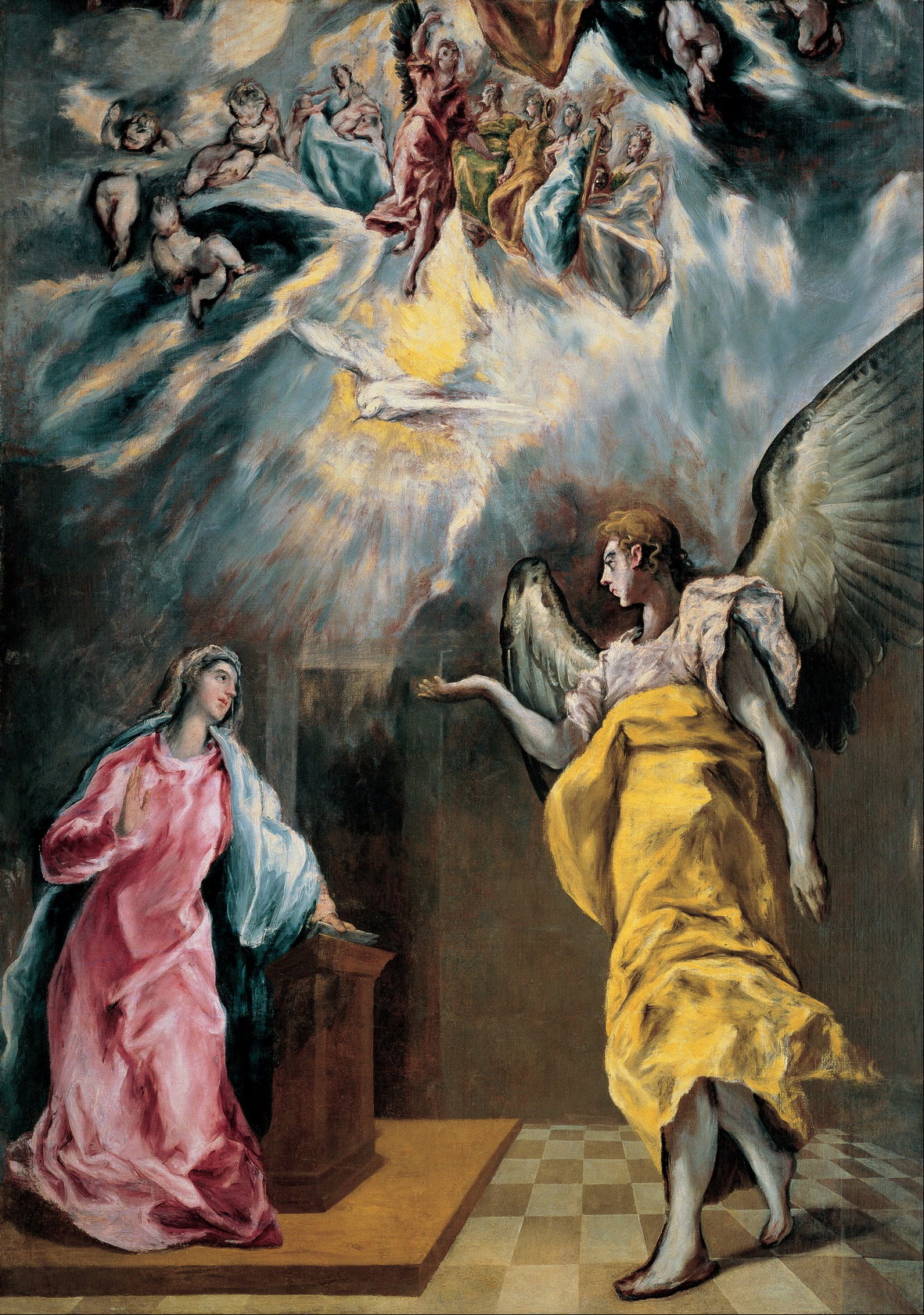
El Greco was originally Greek, and his real name was Doménikos Theotokópoulos (Δομήνικος Θεοτοκόπουλος), but he was born on the island of Crete when it was a Venetian colony. He trained in post-Byzantine art there, and travelled to Venice in about 1567. In 1570 he moved to Rome, and finally settled in Toledo, Spain, in 1577, when he was 36. Thus his tendency towards colorito rather than disegno may be the result of his Venetian training.
elgrecoannunciation
El Greco (Doménikos Theotokópoulos) (1541–1614), The Annunciation (1614), oil on canvas, 294 x 209 cm, Fundación Banco Santander, Madrid. Wikimedia Commons.

El Greco’s Annunciation (1614) is obviously rich in visible brushstrokes, particularly in its fabrics, and the heavenly host above.

elgrecoannunciationdet
El Greco (Doménikos Theotokópoulos) (1541–1614), The Annunciation (detail) (1614), oil on canvas, 294 x 209 cm, Fundación Banco Santander, Madrid. Wikimedia Commons.

More detailed examination of those figures in the heavens shows how sketchy they are, with an abundance of visible marks.

elgrecovisionsaintjohn
El Greco (Doménikos Theotokópoulos) (1541–1614), The Vision of Saint John, or The Opening of the Fifth Seal (1608-14), oil on canvas, 222.3 x 193 cm, Metropolitan Museum of Art, New York, NY. Wikimedia Commons.

Another of his late works, The Vision of Saint John (1608-14) is quite unlike anything being painted by others at the time, and bears obvious marks in several passages, particularly those depicting fabrics.

elgrecovisionsaintjohndet
El Greco (Doménikos Theotokópoulos) (1541–1614), The Vision of Saint John, or The Opening of the Fifth Seal (detail) (1608-14), oil on canvas, 222.3 x 193 cm, Metropolitan Museum of Art, New York, NY. Wikimedia Commons.

This detail shows the rich brushstrokes in fabrics, and in the sky.

Peter Paul Rubens is at his most painterly in the many oil sketches he left as evidence of his much looser style.

rubenssleepingchildren
Peter Paul Rubens (1577–1640), Two Sleeping Children (c 1612-3), oil on panel, 50.5 x 65.5 cm, National Museum of Western Art, Tokyo. Wikimedia Commons.

This breathtaking study of Two Sleeping Children (c 1612-13) looks much later and looser than his finished works. Looking at the detail of the bedclothes below, there are abundant marks visible. In textiles and fabrics his marks give a natural feel to the material.

rubenssleepingchildrendet
Peter Paul Rubens (1577–1640), Two Sleeping Children (detail) (c 1612-3), oil on panel, 50.5 x 65.5 cm, National Museum of Western Art, Tokyo. Wikimedia Commons.

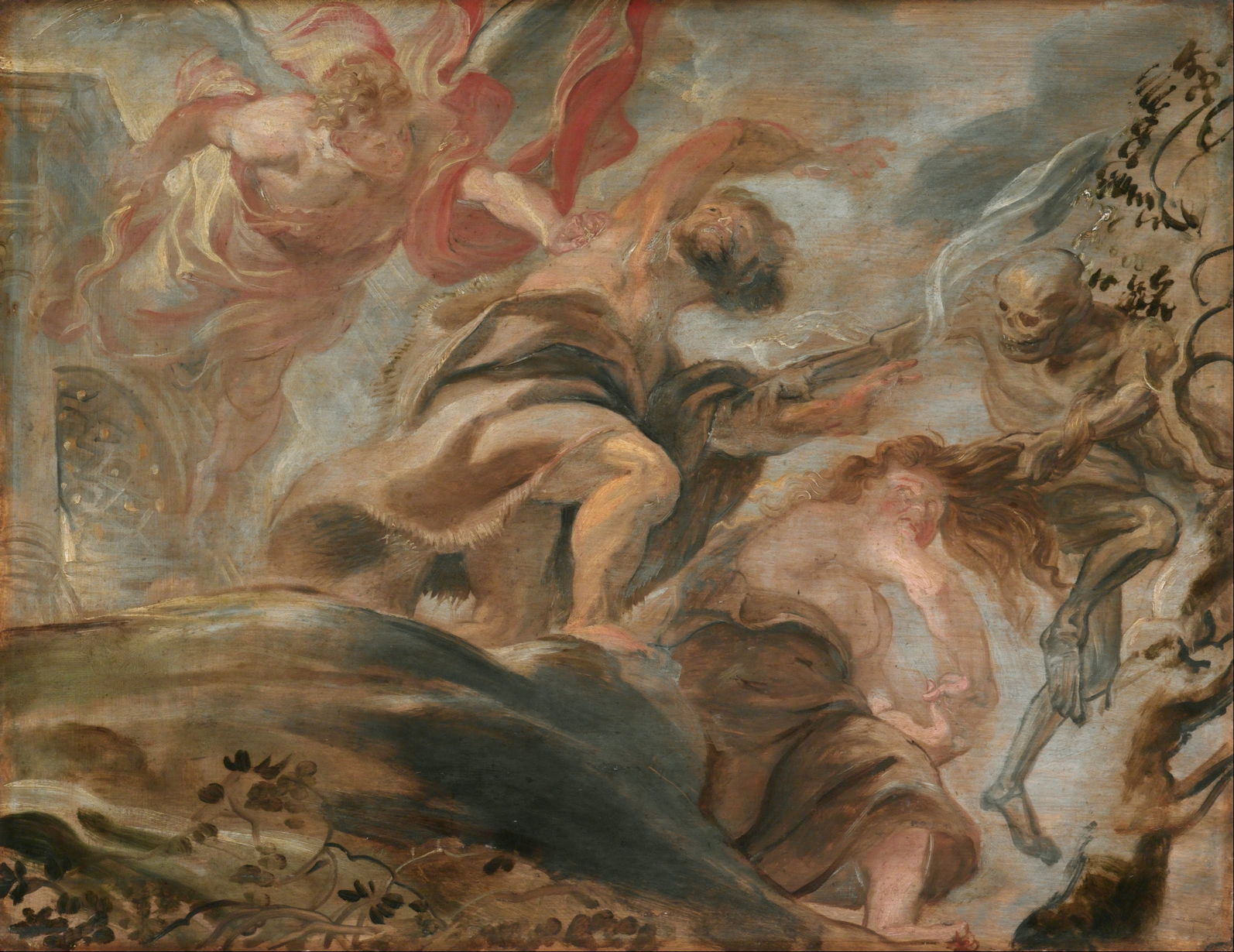
A further example is in Rubens’ study showing the Expulsion from the Garden of Eden (1620), where we don’t even need to look at details to see his marks.
rubensexpulsiongardeneden
Peter Paul Rubens (1577–1640), Expulsion from the Garden of Eden (1620), oil, dimensions not known, National Gallery in Prague, Prague. Wikimedia Commons.

My final painting from Rubens is an oil sketch, or modello, that he made of Aurora abducting Cephalus (c 1636), for one of a series of works commissioned by Philip the Fourth of Spain to decorate his hunting lodge just outside Madrid.

rubensauroraabdcephalus
Peter Paul Rubens (1577–1640), Aurora abducting Cephalus (c 1636), oil on oak panel, 30.8 x 48.5 cm, The National Gallery, London. Wikimedia Commons.

His marks are even more obvious in the detail view below, where they’re most prominent in fabrics.

rubensauroraabdcephalusdet
Peter Paul Rubens (1577–1640), Aurora abducting Cephalus (detail) (c 1636), oil on oak panel, 30.8 x 48.5 cm, The National Gallery, London. Wikimedia Commons.

The other Master whose work shows brushstrokes like no other until the nineteenth century is Rembrandt. Best-known for his large and highly-finished paintings, a unique exhibition of his late works in Europe in 2014-15 showed how radical were his changes in style.
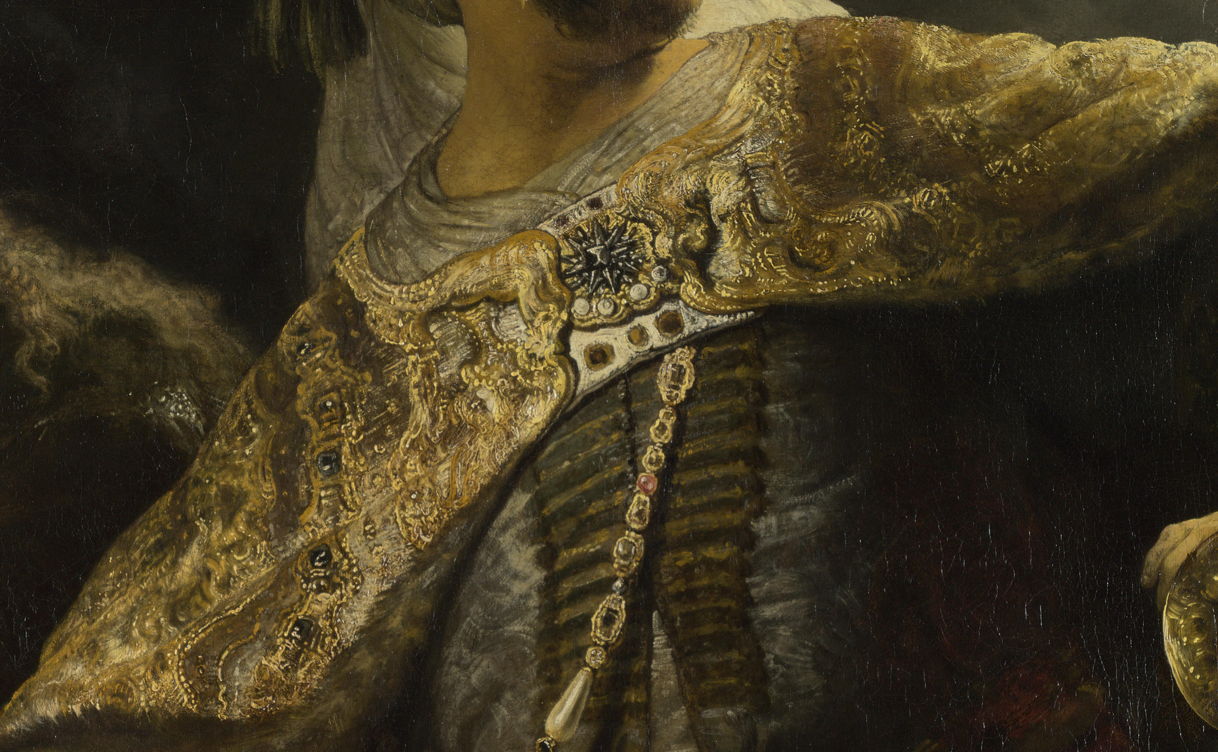
Rembrandt Harmenszoon van Rijn (1606-69), Belshazzar's Feast (detail) (c 1635-8), oil on canvas, 167.6 x 209.2 cm, The National Gallery, London. Courtesy of the National Gallery, via Wikimedia Commons.
Rembrandt Harmenszoon van Rijn (1606-69), Belshazzar’s Feast (detail) (c 1635-8), oil on canvas, 167.6 x 209.2 cm, The National Gallery, London. Courtesy of the National Gallery, via Wikimedia Commons.

These started when he was still enjoying commercial success, during his marriage to Saskia, as shown in this detail of some of the fabric of clothing in Belshazzar’s Feast (c 1635-8).

Rembrandt Harmenszoon van Rijn, The Jewish Bride (c 1667), oil on canvas, 121.5 x 166.5 cm, Rijksmuseum, Amsterdam. Wikimedia Commons.
Rembrandt Harmenszoon van Rijn (1606-69), The Jewish Bride (c 1667), oil on canvas, 121.5 x 166.5 cm, Rijksmuseum, Amsterdam. Wikimedia Commons.

His mark-making increased, both in the passages in which he left visible marks, and in the surfaces which he marked, right up to his death. It appears in the hands of the elderly, the glint of a knife, but above all in fabrics, as shown in the detail below of The Jewish Bride of about 1667.
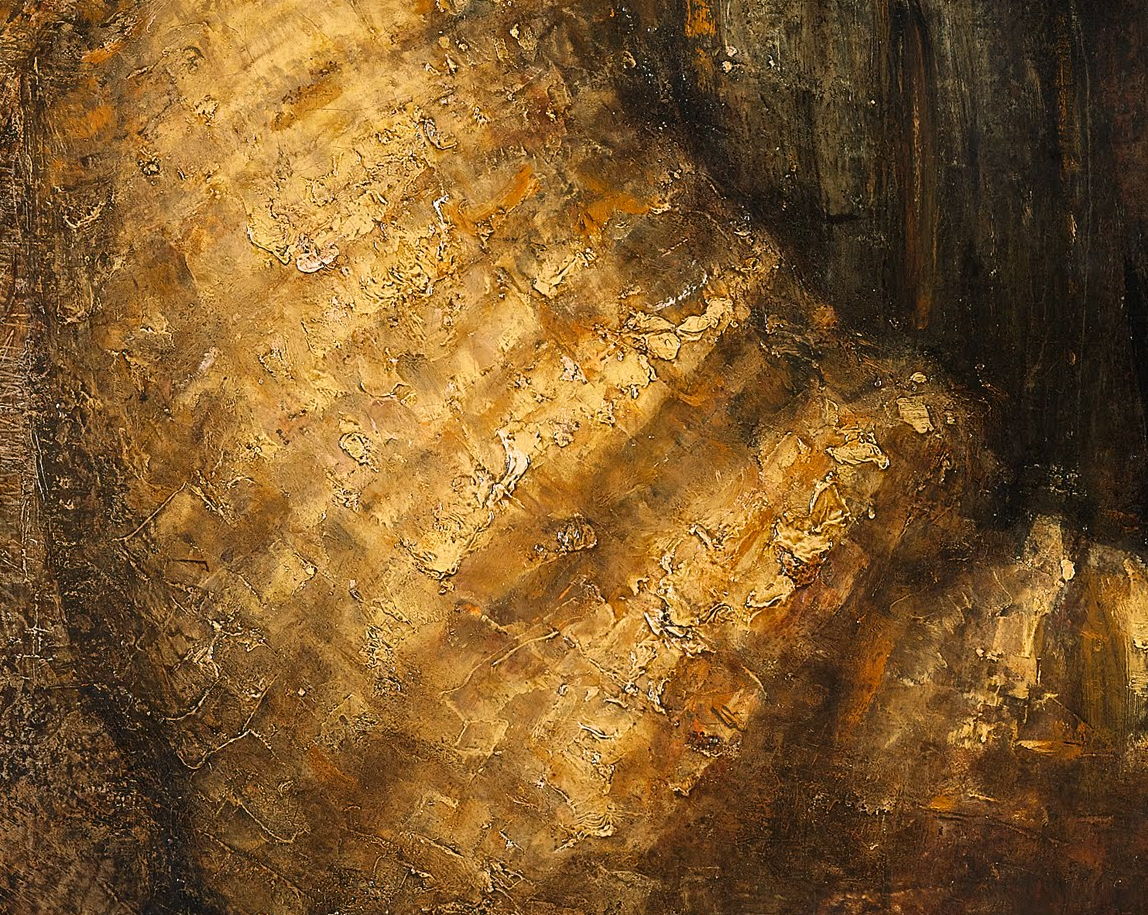
Rembrandt Harmenszoon van Rijn, The Jewish Bride (detail) (c 1667), oil on canvas, 121.5 x 166.5 cm, Rijksmuseum, Amsterdam. Wikimedia Commons.
Rembrandt Harmenszoon van Rijn (1606-69), The Jewish Bride (detail) (c 1667), oil on canvas, 121.5 x 166.5 cm, Rijksmuseum, Amsterdam. Wikimedia Commons.

Inevitably, this led to criticism for making his paintings ‘so coarse’, just as was going to happen two centuries later to Monet and his colleagues. For, as far as I can tell, Rembrandt was the first major artist to intentionally leave prominent passages in finished paintings with obvious brushstrokes and other marks. Their visual effect is stunning.

References

Bikker J & Weber GJM et al. (2014) Rembrandt, the Late Works, Yale UP. ISBN 978 18 5709 557 9.
Sutton P, Wieseman ME, van Hout N (2004) Drawn by the Brush, Oil Sketches by Peter Paul Rubens, Yale UP. ISBN 978 0 300 106268.
Sohm PL (1991) Pittoresco: Marco Boschini, his Critics, and their Critiques of Painterly Brushwork in Seventeenth- and Eighteenth-Century Italy, Cambridge UP. ISBN 978 0 5213 8256 4.