


惯性聚合 高效追踪和阅读你感兴趣的博客、新闻、科技资讯
阅读原文 在惯性聚合中打开

推荐订阅源

Application and Cybersecurity Blog
A
About on SuperTechFans
S
SegmentFault 最新的问题
奇客Solidot–传递最新科技情报
奇客Solidot–传递最新科技情报
Help Net Security
Help Net Security
有赞技术团队
有赞技术团队
博客园 - 【当耐特】
O
OpenAI News
美团技术团队
月光博客
月光博客
Apple Machine Learning Research
Schneier on Security
Webroot Blog
Webroot Blog
Cyberwarzone
Cyberwarzone
Hacker News - Newest:
Hacker News - Newest: "LLM"
Google Online Security Blog
T
Tenable Blog
S
Security Affairs
博客园_首页
S
Schneier on Security
Security Latest
Security Latest
T
Threat Research - Cisco Blogs
T
Tailwind CSS Blog
大猫的无限游戏
大猫的无限游戏
Spread Privacy
Spread Privacy
量子位
让小产品的独立变现更简单 - ezindie.com
K
Kaspersky official blog
Hugging Face - Blog
Hugging Face - Blog
TaoSecurity Blog
TaoSecurity Blog
博客园 - 聂微东
Vercel News
Vercel News
M
MIT News - Artificial intelligence
T
Troy Hunt's Blog
B
Blog
MongoDB | Blog
MongoDB | Blog
Martin Fowler
Martin Fowler
Attack and Defense Labs
L
LINUX DO - 最新话题
D
DataBreaches.Net
cs.CV updates on arXiv.org
Stack Overflow Blog
Stack Overflow Blog
cs.AI updates on arXiv.org
博客园 - Franky
W
WeLiveSecurity
Threat Intelligence Blog | Flashpoint
F
Fortinet All Blogs
www.infosecurity-magazine.com
C
Check Point Blog
H
Hacker News: Front Page

The Eclectic Light Company

Hero or hooligan: Theseus’ later years BSD flags are incompatible with iCloud Drive Apple has released macOS Tahoe 26.5.1 In memoriam Mary Cassatt: 1, 1868-1880 Solutions to Saturday Mac riddles 362 What Location Services do in macOS Eclectic paintings of Joseph Stella: 2 European myths Last Week on My Mac: Razzle and dazzle Eclectic paintings of Joseph Stella: 1 American landscapes Saturday Mac riddles 362 Protect files with the Locked or Immutable flag Reading Visual Art: 252 Dragonfly What happens in the log when an app crashes as it starts up? Portraits of trees: Introduction On Reflection: Conclusions and contents Which tasks require mains power? Medium and message: Vast canvases Online reference to external displays for Apple silicon Macs What’s in that phishing email? Hero or hooligan: Theseus and Ariadne Solutions to Saturday Mac riddles 361 How to search document versions Rubens’ Consequences of War Rubens’ Peace and War Saturday Mac riddles 361 How to search Time Machine backups? Naturalists: Contents and artists On Reflection: Extending the image Tackle QuickLook problems Medium and message: Pottery Hero or hooligan: Theseus and the sandals How QuickLook provides thumbnails and previews Last Week on My Mac: Syncing metadata in iCloud Drive Paintings of visits to India 1778-1877 Saturday Mac riddles 360 Naturalists: Sorolla and Zorn On Reflection: Pierre Bonnard 1909-1946 SpotTest 1.2 can display Spotlight metadata directly On Reflection: Pierre Bonnard 1899-1908 How to preserve versions, and how to create versioned PDFs Medium and message: Sculpture What gets synced in iCloud Drive? Hero or hooligan: Perseus 2 Solutions to Saturday Mac riddles 359 Last Week on My Mac: snapshots, the elephant in APFS Paintings of Beatrice Portinari: to 1862 Saturday Mac riddles 359 Naturalists: Into the 20th century How to check whether Spotlight is getting the right metadata On Reflection: Mirror play Hero or hooligan: Perseus 1 The bicentenary of Frederic Edwin Church: 1857-77 Solutions to Saturday Mac riddles 358 macOS virtual machines and audio-video syncing A walk in the parks of Rome, Vienna, Manhattan and Brooklyn Saturday Mac riddles 358 Naturalists: Photography Use Finder tags for categories Control what gets written to the log Medium and message: Tapestry Virtualisation on Apple silicon Macs is different Jerusalem Delivered: Overview and contents The bicentenary of Frederic Edwin Church: 1849-57 Solutions to Saturday Mac riddles 357 Painting Pandora and her box: 1883-1919 Painting Pandora and her box: 1550-1882 Saturday Mac riddles 357 Reading Visual Art: 250 Winged sandals The secret life of the xattr The macOS Natural Language framework and Nalaprop Medium and Message: Stained glass The MACL extended attribute Jerusalem Delivered: 13 Leading characters Solutions to Saturday Mac riddles 356 Privacy: How locations are protected Painting Spring blossom 2 Last Week on My Mac: Don’t be a victim of fraud Painting Spring blossom 1 Saturday Mac riddles 356 Explainer: Recovery Reading Visual Art: 249 Mask Naturalists: Urban poverty On Reflection: Cézanne Privacy: Which folders are protected in Tahoe? Medium and Message: Mosaic Jerusalem Delivered: 12 Delivery Solutions to Saturday Mac riddles 355 Centaurs 2: Revenge Centaurs 1: Fights Saturday Mac riddles 355 Explainer: sandboxes Naturalists: The modern meal Why you can’t trust Privacy & Security Apple has just released an update to macOS Tahoe, to version 26.4.1 On Reflection: Divisionism Please help update CPU frequencies for Apple silicon Macs Commemorating the centenary of the death of John Ferguson Weir Privacy: Files & Folders or Full Disk Access? Jerusalem Delivered: 11 Into Jerusalem Privacy: protected folders
Hero or hooligan: Jason and Medea
hoakley · 2026-06-15 · via The Eclectic Light Company

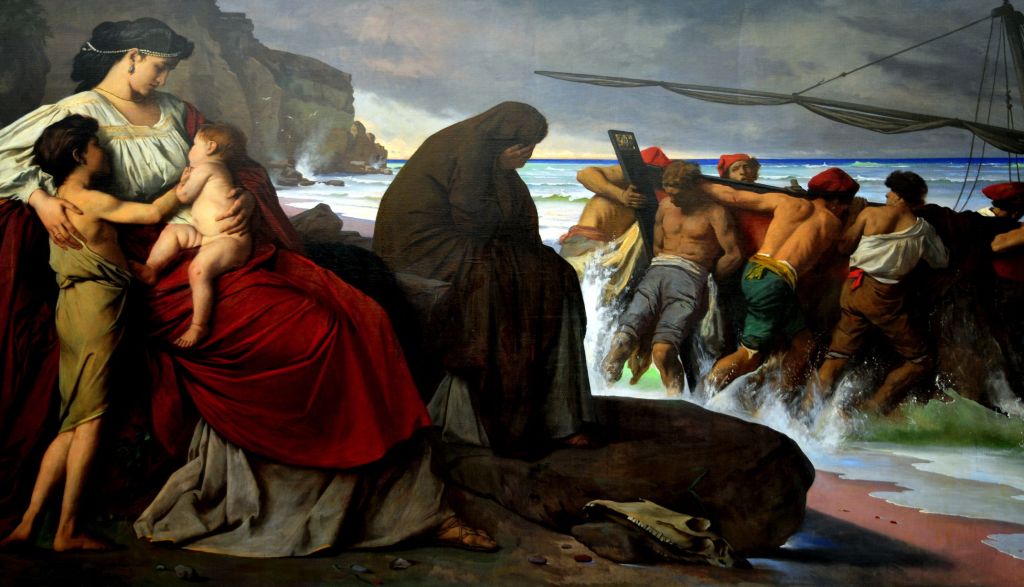
Anselm Feuerbach (1829–1880), Medea (1870), oil on canvas, 198 × 396 cm, Neue Pinakothek, Munich, Germany. Wikimedia Commons.

After he had abandoned his first wife, Hypsipyle, with their twin infants, Jason sailed on with his Argonauts to Colchis. In return for his promise of marriage, the king’s daughter Medea used her powers of sorcery to enable Jason to accomplish the three tasks set by her father. Jason was now in a position to return to his home in Iolcos and claim its throne from the usurper Pelias.

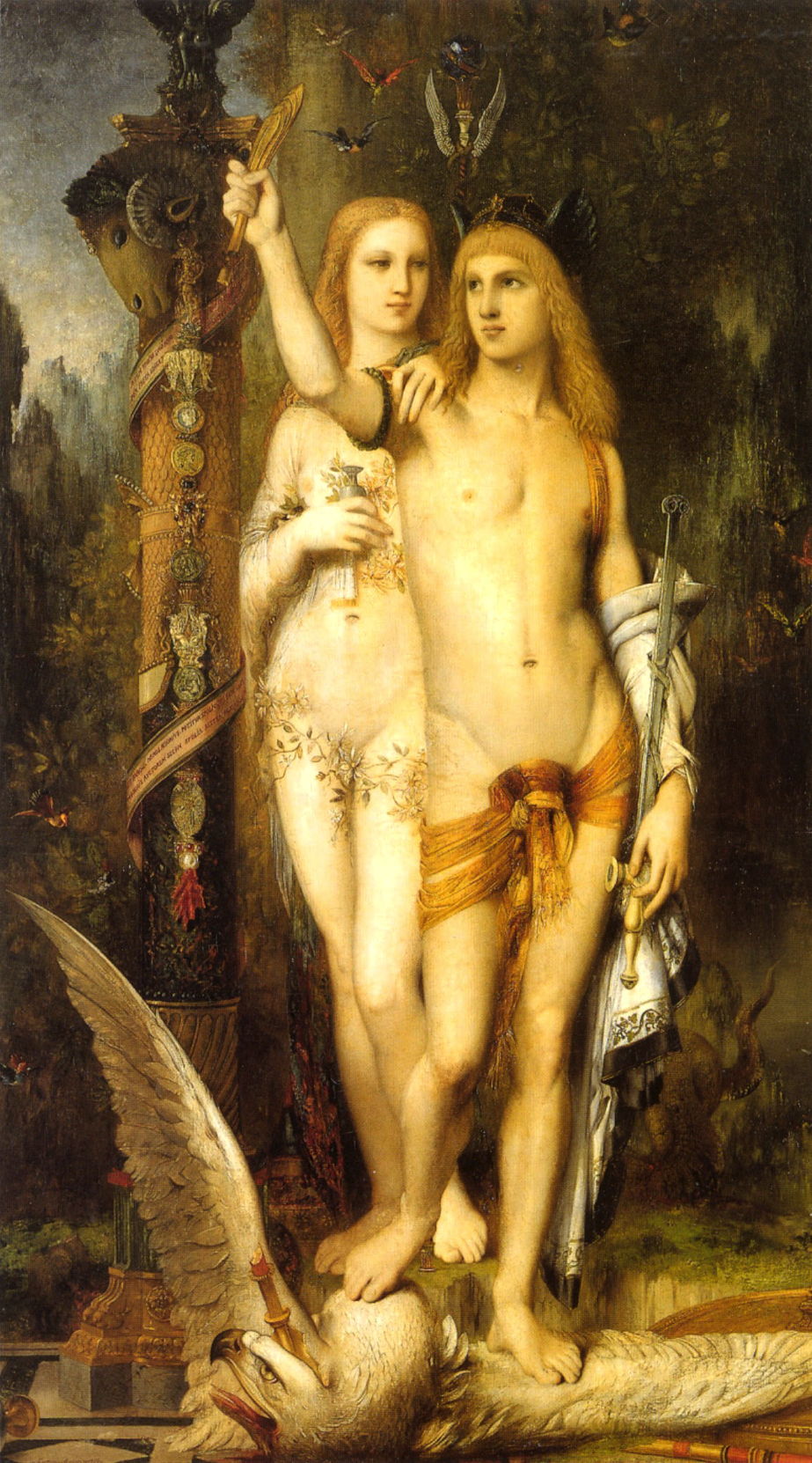
This is the situation painted by Gustave Moreau in Jason (1865).
moreaujason
Gustave Moreau (1826–1898), Jason (1865), oil on canvas, 204 × 115 cm, Musée d’Orsay, Paris. Wikimedia Commons.

In spite of her odd omission from the title of the painting, the almost naked woman behind Jason is Medea. The ram’s head at the top of the pillar on the left signifies the Golden Fleece, and the dragon which guarded it is shown as the eagle on which Jason is standing, with the broken tip of his javelin embedded in it. This is the more confusing, as in the original story the dragon was put to sleep by one of Medea’s potions, rather than being killed with a javelin.

Yet Medea holds a vial in her right hand, and her body is swathed with the poisonous hellebore plant, one of the standard tools of witchcraft. These may allude to Jason’s future rejection of Medea and her poisoning of his replacement bride, but there is a lot of story between this moment and that later episode.

Moreau provided some clues to his intentions in this painting, in the almost illegible inscriptions on the two phylacteries wound around the column. These bear the Latin:
nempe tenens quod amo gremioque in Iasonis haerens
per freta longa ferar; nihil illum amplexa timebo

(Nay, holding that which I love, and resting in Jason’s arms, I shall travel over the long reaches of the sea; in his safe embrace I will fear nothing)
et auro heros Aesonius potitur spolioque superbus
muneris auctorem secum spolia altera portans

(And the heroic son of Aeson [i.e. Jason] gained the Golden Fleece. Proud of this spoil and bearing with him the giver of his prize, another spoil)
(Cooke.)

These could be interpreted as suggesting that the painting should be read in terms of the conflict between Jason and Medea: Medea expresses her subjugate trust in him, while Jason considers her to be just another spoil won alongside the Golden Fleece.

Still more puzzling is the spattering of other details, of hummingbirds, the sphinx on top of the pillar, medals decorating the shaft of that pillar, and more. Some appear to be merely decorative, but drawing the line between the decorative and the symbolic is impossible.

King Aeëtes clearly hadn’t expected Jason’s success, and decided he wanted to repossess the Golden Fleece and stop his daughter eloping. As the couple sailed away in the Argo, he gave pursuit.

Draper, Herbert James, 1864-1920; The Golden Fleece
Herbert James Draper (1863–1920), The Golden Fleece (1904), oil on canvas, 155 x 272.5 cm, Bradford Museums, Bradford, England. Wikimedia Commons.

Herbert James Draper shows one account of the tactics employed in The Golden Fleece (1904): Medea throws her brother into the sea, forcing her father to stop to recover him, so allowing the Argo to escape.

The journey of the Argo back to Iolcos was also eventful, with a series of storms taking them to be purified with Circe, an encounter with sirens whose songs are drowned out by the music of Orpheus, one of the Argonauts, and an encounter with the bronze giant Talos on Crete.
daddflightmedeajason
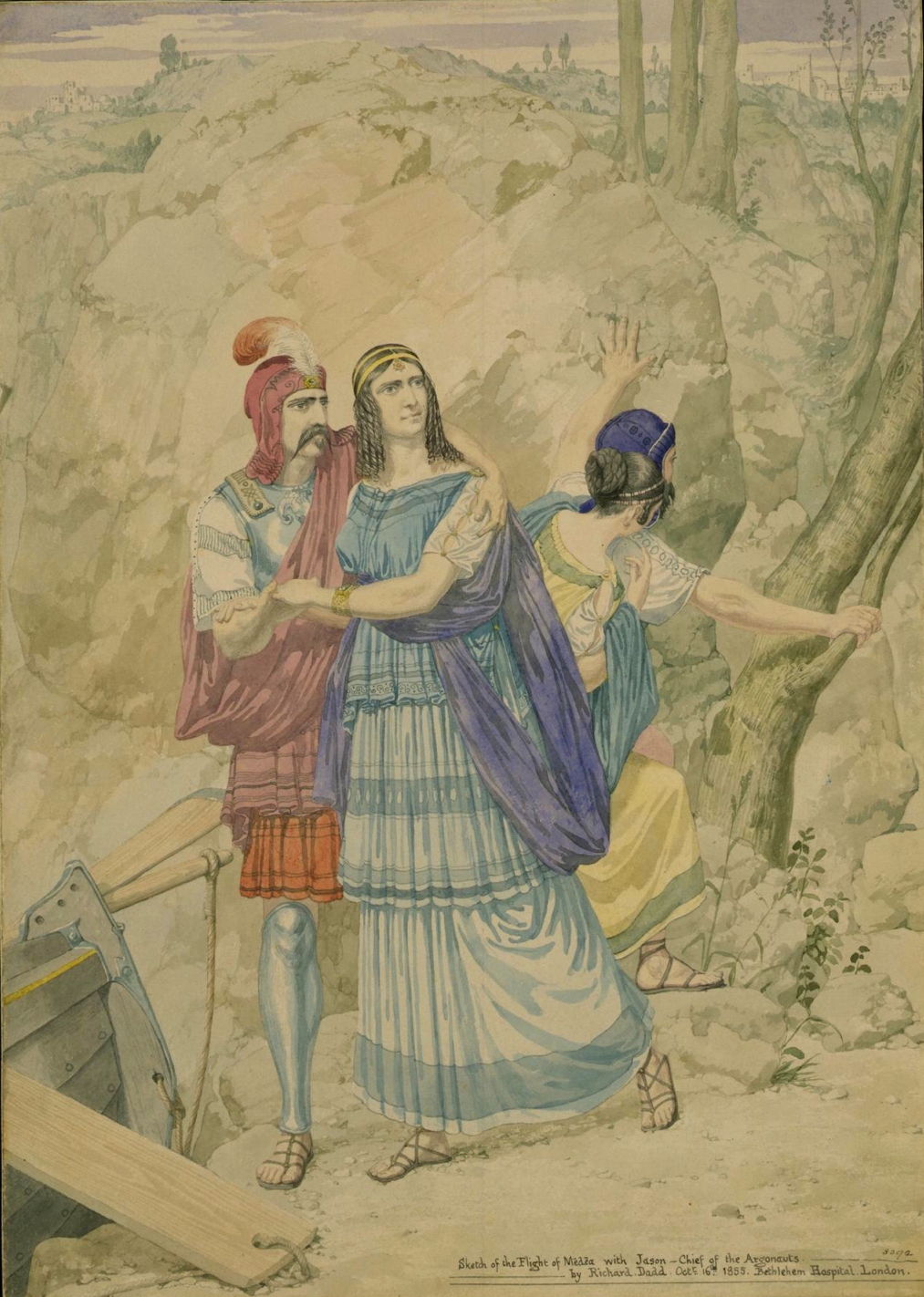
Richard Dadd (1817–1886), Jason and Medea (1855), watercolour on paper, dimensions not known, The Victoria and Albert Museum, London. Image courtesy of and © Victoria and Albert Museum, London.

Richard Dadd’s watercolour of Jason and Medea, or The Flight of Medea with Jason – Chief of the Argonauts, which he dated 16 October 1855, refers to a subsequent myth. When the couple returned to Iolcos, Pelias was still king, so Medea used her sorcery to persuade the king’s daughters to kill him, and boil his dismembered body with ‘magic’ herbs, in the hope that this would turn him into a young man again. Medea then fled with Jason, to live in Corinth.

Dadd’s painting shows Iolcos in the distance, and Medea’s maid watching to see if they’re being pursued. Medea’s masculine appearance results from the artist’s inability to obtain female models while he was in Bethlem.

According to Euripides’ play Medea, she had two children by Jason, Mermeros and Pheres. Later Creon, King of Corinth, offered Jason his daughter Glauce in marriage. When Jason left Medea for Glauce, Medea avenged his betrayal by killing their two children.

feuerbachmedea
Anselm Feuerbach (1829–1880), Medea (1870), oil on canvas, 198 × 396 cm, Neue Pinakothek, Munich, Germany. Wikimedia Commons.

Anselm Feuerbach shows Medea with their two young children, watching as Jason and his crew push their boat back into the surf to depart. Presumably the woman in black is mother or mother-in-law. Medea appears an archetypal mother, a Madonna and infant plus one, not even looking at the departing boat. She is no sorceress, and the merest suggestion that she could ever kill those children in vengeance seems absurd.
bordisillusionedmedea
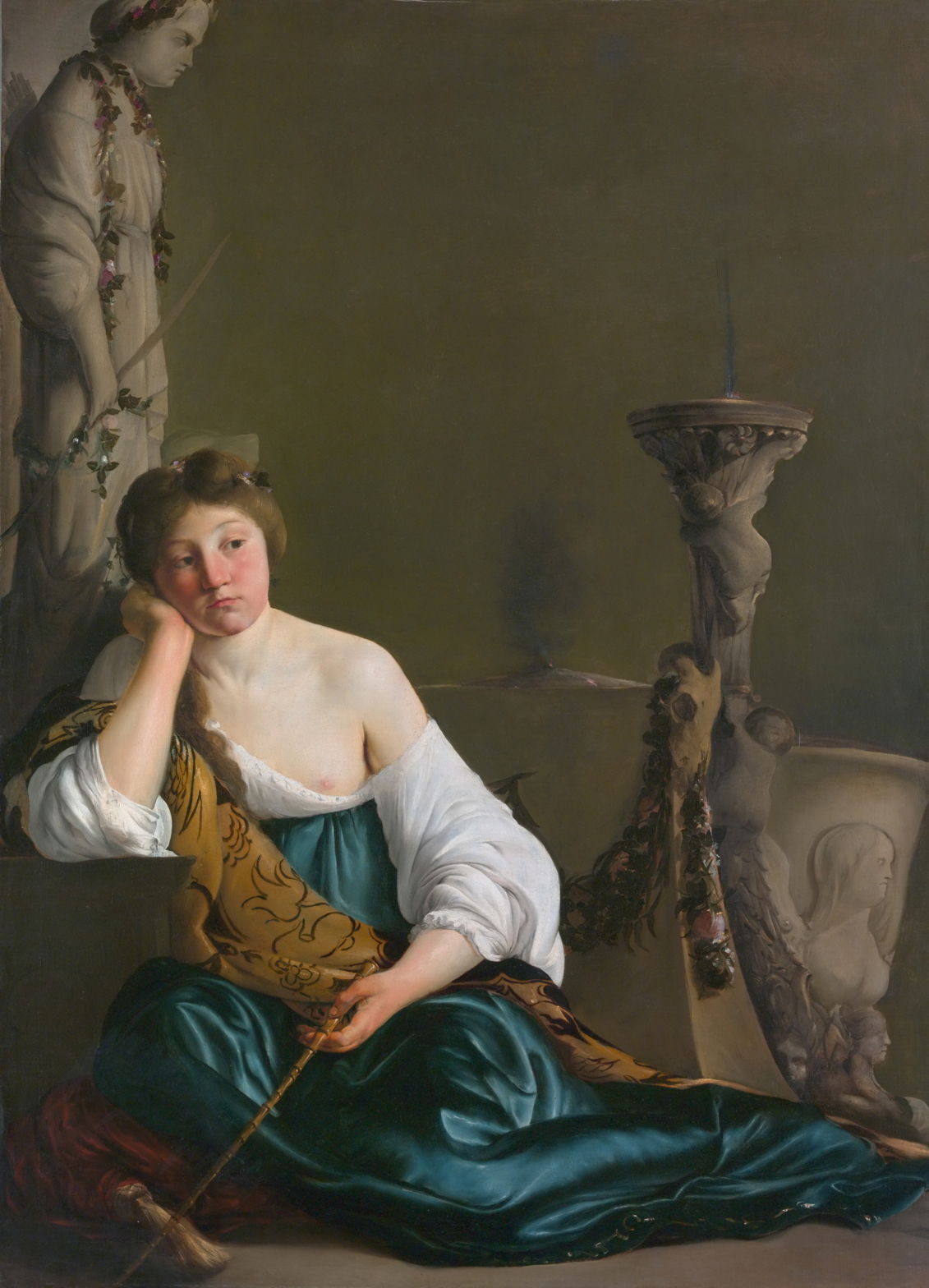
Paulus Bor (c 1601–1669), The Disillusioned Medea (The Enchantress) (c 1640), oil on canvas, 155.6 x 112.4 cm, The Metropolitan Museum of Art, New York, NY. Wikimedia Commons.

Paulus Bor’s The Disillusioned Medea (The Enchantress) (c 1640) appears unique among the images of the sorceress. She sits, her face flushed, resting her head on the heel of her right hand. In her left, she holds a wand made from bamboo or rattan. The wand appears poised, ready for use as soon as she has worked out what to do next. Behind her is a small altar, and Walter Liedtke has identified the statue at the left as Diana.

Medea sent Glauce a poisoned wedding dress that killed her and her father horribly. She then killed her two children, and fled to Athens, where she had a child by King Aegeus. Ovid includes an imaginary letter from her to Jason in his Heroides (letter 12).
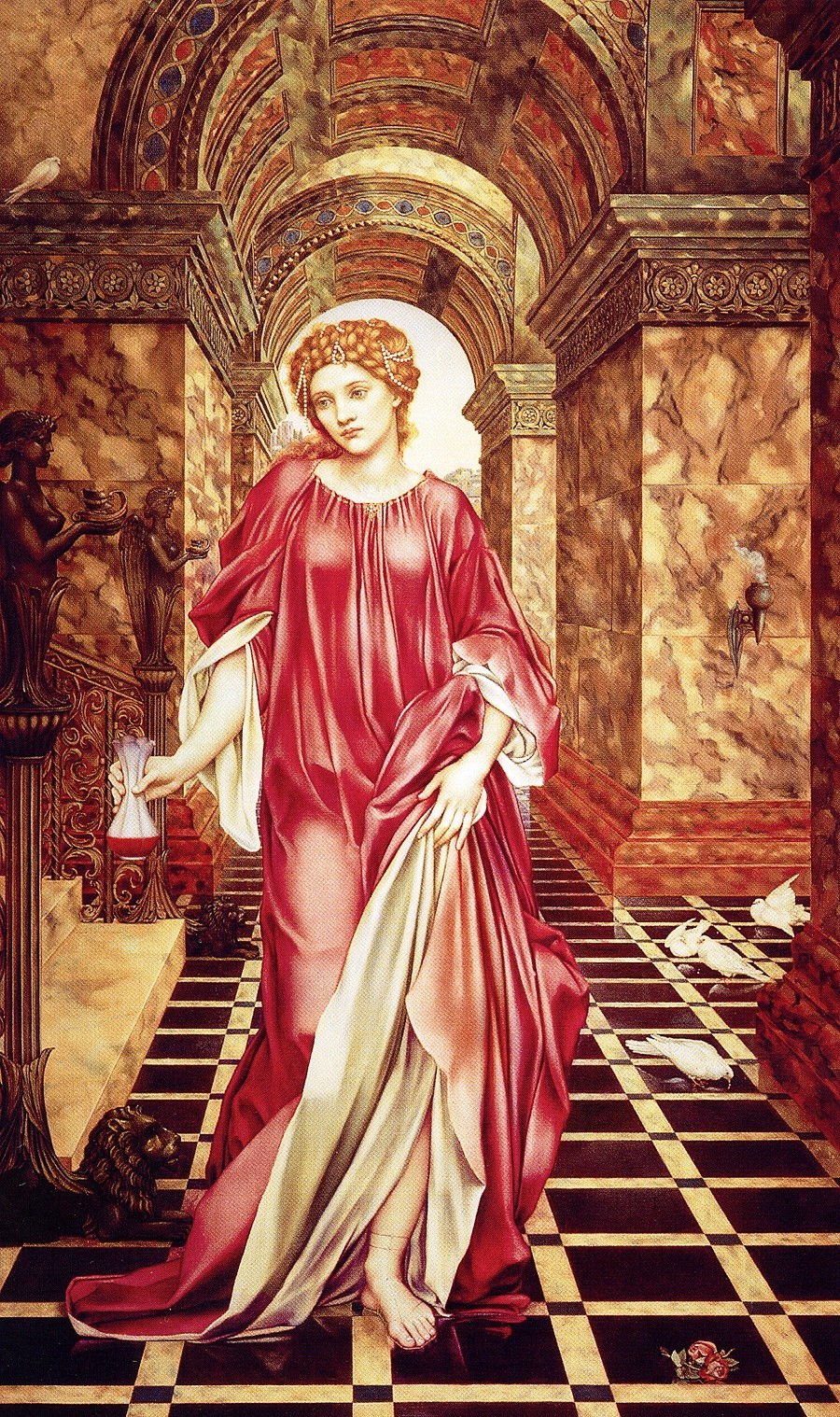
demorganmedea
Evelyn De Morgan (1855–1919), Medea (1886), oil on canvas, 148 x 88 cm, Williamson Art Gallery & Museum, Birkenhead, England. The Athenaeum.

Evelyn De Morgan’s Medea (1886) shows her abandoned, staring wistfully as she walks along the polished stone floor of her palace. She holds a vial of potion in her right hand: might this be the substance she used to impregnate the wedding dress she sent Glauce?
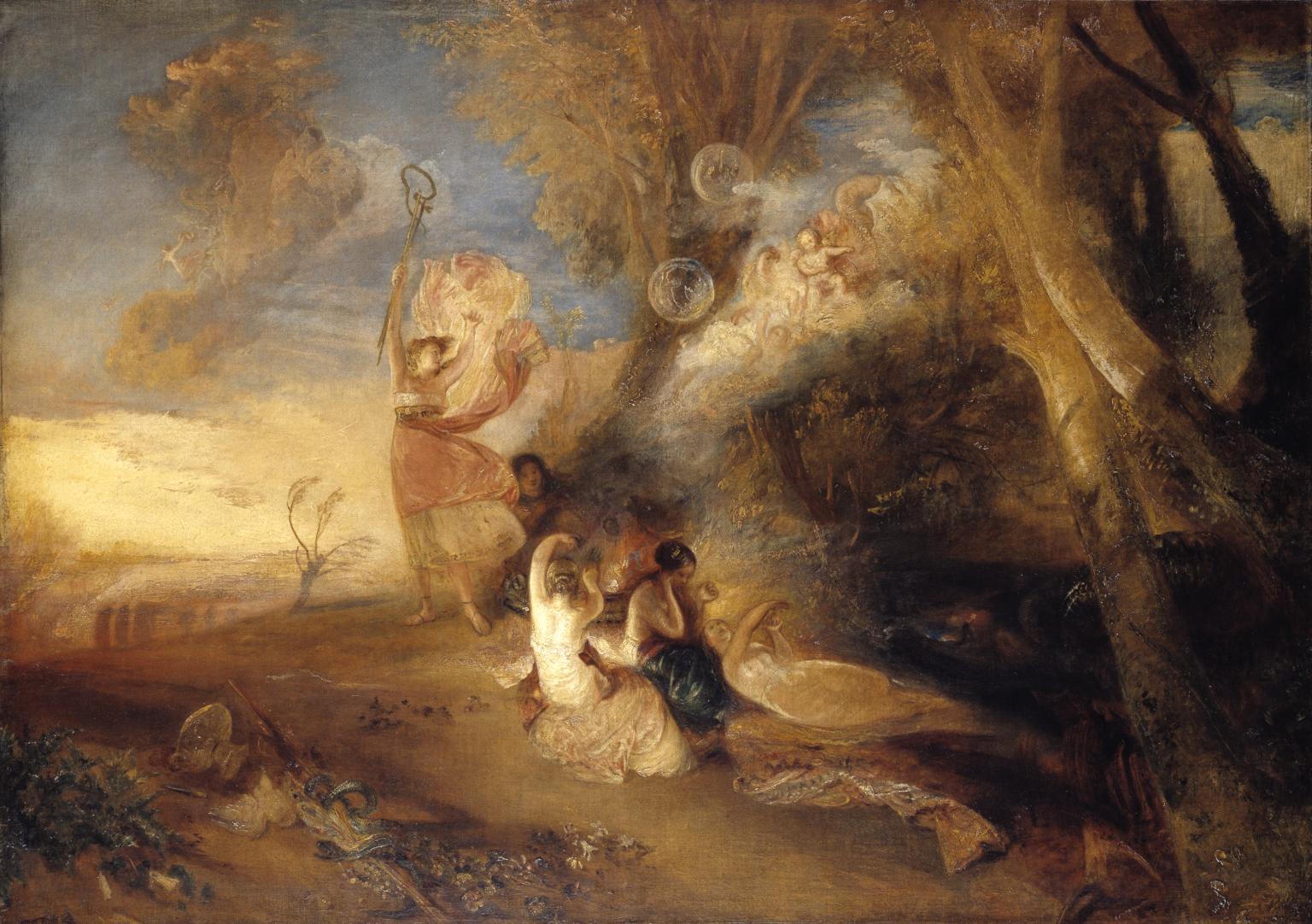
Vision of Medea 1828 by Joseph Mallord William Turner 1775-1851
Joseph Mallord William Turner (1775–1851), Vision of Medea (1828), oil on canvas, 173.7 x 248.9 cm, The Tate Gallery (Accepted by the nation as part of the Turner Bequest 1856), London. Image © and courtesy of The Tate Gallery, http://www.tate.org.uk/art/artworks/turner-vision-of-medea-n00513

JMW Turner’s Vision of Medea (1828) is the first in a series of more modern attempts to tell Medea’s story, and one of Turner’s few uses of multiplex narrative.

In the middle of the canvas, Medea is stood in the midst of her incantation to force Jason’s return. In the foreground are the materials she is using to cast her spell: flowers, snakes, and other supplies of a sorceress. Seated by her are the Fates. In the upper right, Medea is shown again in a flash-forward to her fleeing Corinth in a chariot drawn by dragons, the bodies of her children thrown down after their deaths.

Jason spent his remaining years living rough on board his beached ship Argo, until he was killed when part of the rotting hulk crushed him. Each of his three marriages ended in disaster, but no one knows what became of the Golden Fleece.