



惯性聚合 高效追踪和阅读你感兴趣的博客、新闻、科技资讯
阅读原文 在惯性聚合中打开

推荐订阅源

L
LangChain Blog
月光博客
月光博客
S
SegmentFault 最新的问题
博客园 - 三生石上(FineUI控件)
Last Week in AI
Last Week in AI
J
Java Code Geeks
酷 壳 – CoolShell
酷 壳 – CoolShell
TaoSecurity Blog
TaoSecurity Blog
V
Visual Studio Blog
博客园 - 叶小钗
Threat Intelligence Blog | Flashpoint
T
Threat Research - Cisco Blogs
罗磊的独立博客
雷峰网
雷峰网
T
Tor Project blog
L
LINUX DO - 最新话题
钛媒体:引领未来商业与生活新知
钛媒体:引领未来商业与生活新知
博客园 - 司徒正美
Apple Machine Learning Research
Scott Helme
Scott Helme
Spread Privacy
Spread Privacy
C
CERT Recently Published Vulnerability Notes
腾讯CDC
Cloudbric
Cloudbric
WordPress大学
WordPress大学
Security Archives - TechRepublic
V
V2EX
OSCHINA 社区最新新闻
OSCHINA 社区最新新闻
N
News and Events Feed by Topic
T
Troy Hunt's Blog
T
Threatpost
C
Check Point Blog
Vercel News
Vercel News
I
Intezer
Engineering at Meta
Engineering at Meta
C
Cybersecurity and Infrastructure Security Agency CISA
D
DataBreaches.Net
SecWiki News
SecWiki News
Help Net Security
Help Net Security
Microsoft Azure Blog
Google DeepMind News
S
Secure Thoughts
T
The Blog of Author Tim Ferriss
The GitHub Blog
The GitHub Blog
Hacker News: Ask HN
Hacker News: Ask HN
AI
AI
N
News and Events Feed by Topic
阮一峰的网络日志
阮一峰的网络日志
B
Blog RSS Feed
Attack and Defense Labs

Sanity.io

A Board Game agent built using Sanity Context and Vercel's AI SDK | Sanity Build a prototype with Claude Code that your whole team can edit | Sanity What’s New - May 2026 | Sanity I built a London pub guide with v0 and the Sanity MCP in six hours. Here's what I learned. | Sanity Build a conference concierge with Agent Context and Anthropic | Sanity Build a content-aware Telegram agent with Vercel AI SDK and Chat SDK | Sanity How I used Agent API to generate photos for my family’s recipes | Sanity What’s New April - 2026 | Sanity Better context, better matches: An AI love story (for dogs) | Sanity How to write for an agent | Sanity Content Agent, meet Slack: AI content operations in your workflow | Sanity Structure powers intelligence | Sanity Your agent needs better content. Here's how to give it. | Sanity How to serve content to agents (a field guide) | Sanity Sanity TypeGen GA: Automatic TypeScript types for content and GROQ | Sanity Sanity is now available on the Vercel Marketplace | Sanity The logo soup problem (and how to solve it) | Sanity Content Releases: From scattered updates to coordinated publishing | Sanity What's New - February 2026 | Sanity How we solved the agent memory problem | Sanity v0 Builder Challenge: The winners | Sanity Introducing: Sanity Agent Skills | Sanity Content Agent: Days of work in one conversation | Sanity Our Sanity Values | Sanity Open Source Pledge 2025: Stepping up when it matters | Sanity v0 builder challenge: $3000 in prizes | Sanity Why AI Breaks Without Structured Content Operations | Sanity What’s New January - 2026 | Sanity BFCM 2025: What teams built when infrastructure stopped being the problem | Sanity How AI shaped holiday shopping and what it means for content in 2026 | Sanity Sanity Studio v5: Embracing React 19 | Sanity You’ll need a CMS eventually. Let your agent set it up. | Sanity “You should never build a CMS” | Sanity AI Content Operations: A 30-Day Implementation Guide | Sanity What’s New December - 2025 | Sanity Scheduled Drafts: Stop manually publishing content at midnight | Sanity What’s New November - 2025 | Sanity Everything *[NYC] 2025 recap: A day of AI, Content Operations, and Culture | Sanity Clankers and content operations | Sanity Content Agent: AI that understands your structured content is here | Sanity Why design-driven content modeling creates technical debt, not velocity | Sanity What's New October - 2025 | Sanity From studio to inbox: How Kevin Green eliminated email campaign friction | Sanity The content editor's guide to content operations [E-commerce edition] | Sanity styled-components maintenance mode: A 40% faster fork | Sanity From zero code to a live website in 7 hours (thanks, Cursor!) | Sanity First attempt will be 95% garbage: A staff engineer's 6-week journey with Claude Code | Sanity Internationalization is more than translating words | Sanity What's New - September 2025 | Sanity We just deleted our 35k-member community Slack | Sanity What's New - August 2025 | Sanity The engineer's guide to content operations [E-commerce edition] | Sanity SEO for AI: Evolving from Web Pages to the Content Lake | Sanity What's New - July 2025 | Sanity Sanity Studio v4: A major version bump for a minor reason | Sanity What's New - June 2025 | Sanity Dashboard and Insights: Your New Content HQ | Sanity Canvas: AI-accelerated, context-aware, freeform authoring | Sanity Agent Actions: AI building blocks for structured content | Sanity Functions: Life beyond pressing publish | Sanity A new era for content applications with Sanity App SDK | Sanity The end of CMS era and our $85M Series C. | Sanity What's New – May 2025 | Sanity Introducing the Sanity Model Context Protocol (MCP) server | Sanity What's New – April 2025 | Sanity Pushing all the envelopes with ambitious content | Sanity Self-hosting is only free if your time is worth nothing | Sanity Content that lasts: Scaling beyond your frontend | Sanity The Live Content API is now Generally Available | Sanity The future beyond AI chat bots | Sanity Learning the new skill of working with AI | Sanity What's New - March 2025 | Sanity Give it in plain text: Making your content AI-Ready | Sanity No More 'DO NOT PUBLISH': Introducing Content Releases | Sanity React in 2025, what's next? | Sanity The final boss of front-end: block editors | Sanity Introducing Sanity for Startups | Sanity A block content editor that loves you back | Sanity A Black Friday Snooze Fest: Massive Traffic, No Drama | Sanity How to make a recipe site that scales well | Sanity The Sanity Winter Release 2024 | Sanity AVIF Arrives, Sanity’s Promise Fulfilled | Sanity Sanity joins the Open Source Pledge | Sanity Your content is now Live by default | Sanity Begin Team to Join Sanity | Sanity Sanity Digest - September '24 Edition | Sanity Sanity partners with Google. Now live on the Google Cloud Marketplace. | Sanity Sanity Digest - August ‘24 Edition | Sanity Now playing: the latest Mux Video Input plugin for Sanity | Sanity Community Digest - June ‘24 Edition | Sanity Community Digest - May ‘24 Edition | Sanity Guide to Sanity's newest product announcements | Sanity AI and Content Creation: A Leader's Guide | Sanity Of course, you should be able to type your content quickly! | Sanity New to AI Assist: translation, reference suggestions, image generation | Sanity Speak the language of your editors: Sanity Studio UI localization | Sanity Introducing the new Sanity Growth plan to serve collaborative teams | Sanity Presentation: Work faster than ever with structured content | Sanity Goodbye Feedback Frenzy, Hello Sanity Studio Comments! | Sanity Easing into the App Router with the Sanity Toolkit for Next.js | Sanity
Sanity UI: A composable, accessible, beautiful React component library | Sanity
Bryan Robinson · 2020-12-18 · via Sanity.io

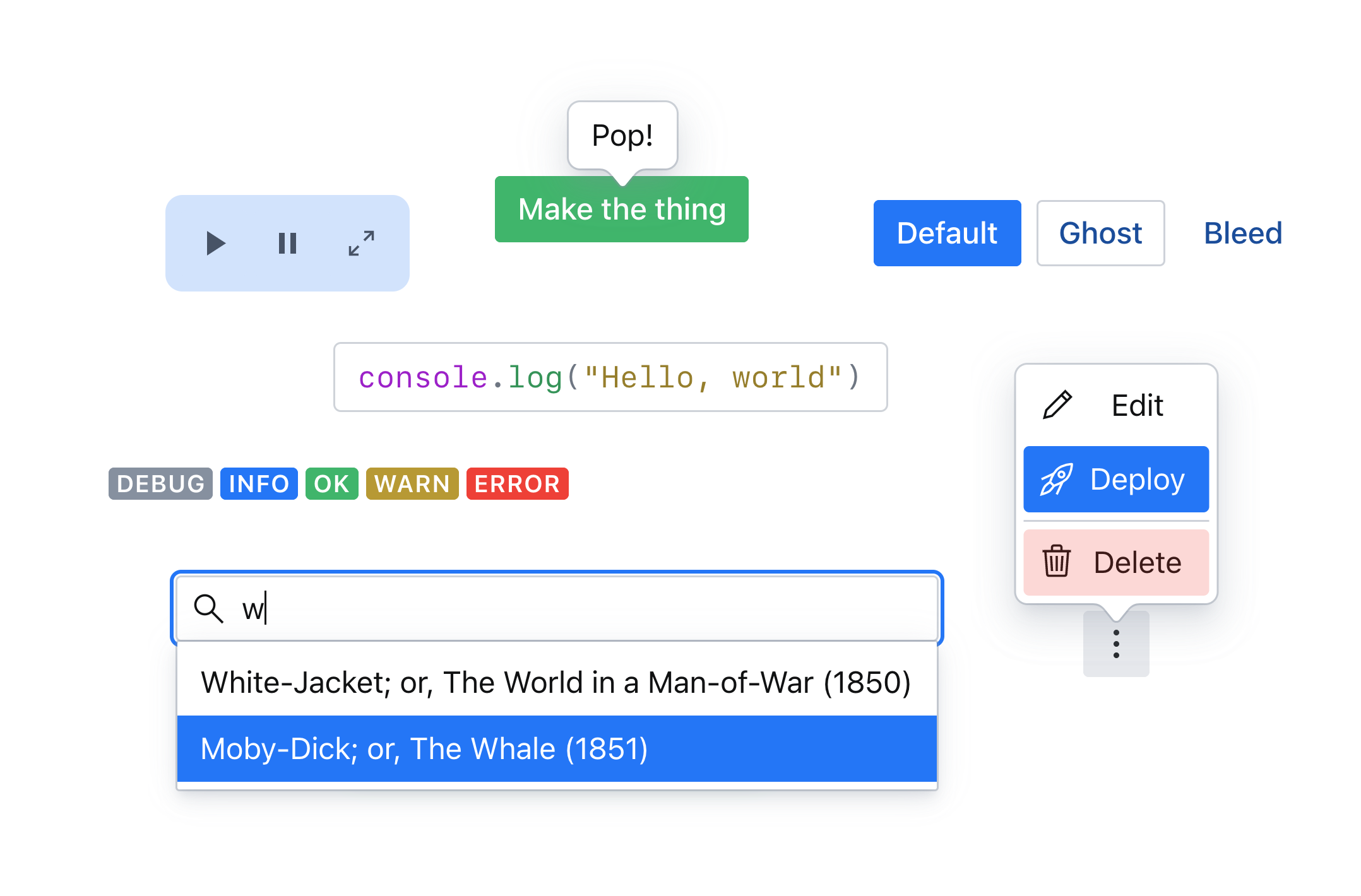
Building consistent user interfaces is hard. Sanity UI is a component library built with React for use in composing useful, beautiful, and accessible user interfaces. We're excited to announce early access to Sanity UI. For developers and designers, this means it has now become easier to craft custom inputs and tools that are consistent with Sanity Studio.

You can start with Sanity UI with the latest version of the studio. Go to the documentation site to learn more about its components and usage.

Sanity UI can be used outside of the Studio too. We used it ourselves to accelerate the full rewrite of the project and team dashboards (out in beta).
Why we built our own component library

Design systems enable teams of designers and developers to move quickly from prototyping in design tools to creating interactive interfaces for validation, testing, and use. They allow a team to encode UI choices into code and stay on the same page. Design systems also help keep things consistent and create great efficiencies when working on new features.

That’s the case for all design systems and component libraries. Why did we decide to build our own?

Every design system comes with the opinions of its creators. Making a system like this requires making choices as to what is most important. So, instead of relying on a third-party system to power our products and sites, we struck out to write one that codified our design thoughts.

Sanity UI is structured and composable

Like with content, the more you think through how your system is structured, the more flexible it becomes. With constraints come freedom. Structured content is at the heart of Sanity, so it only makes sense that the heart of our design system should be of highly composable, structured components.

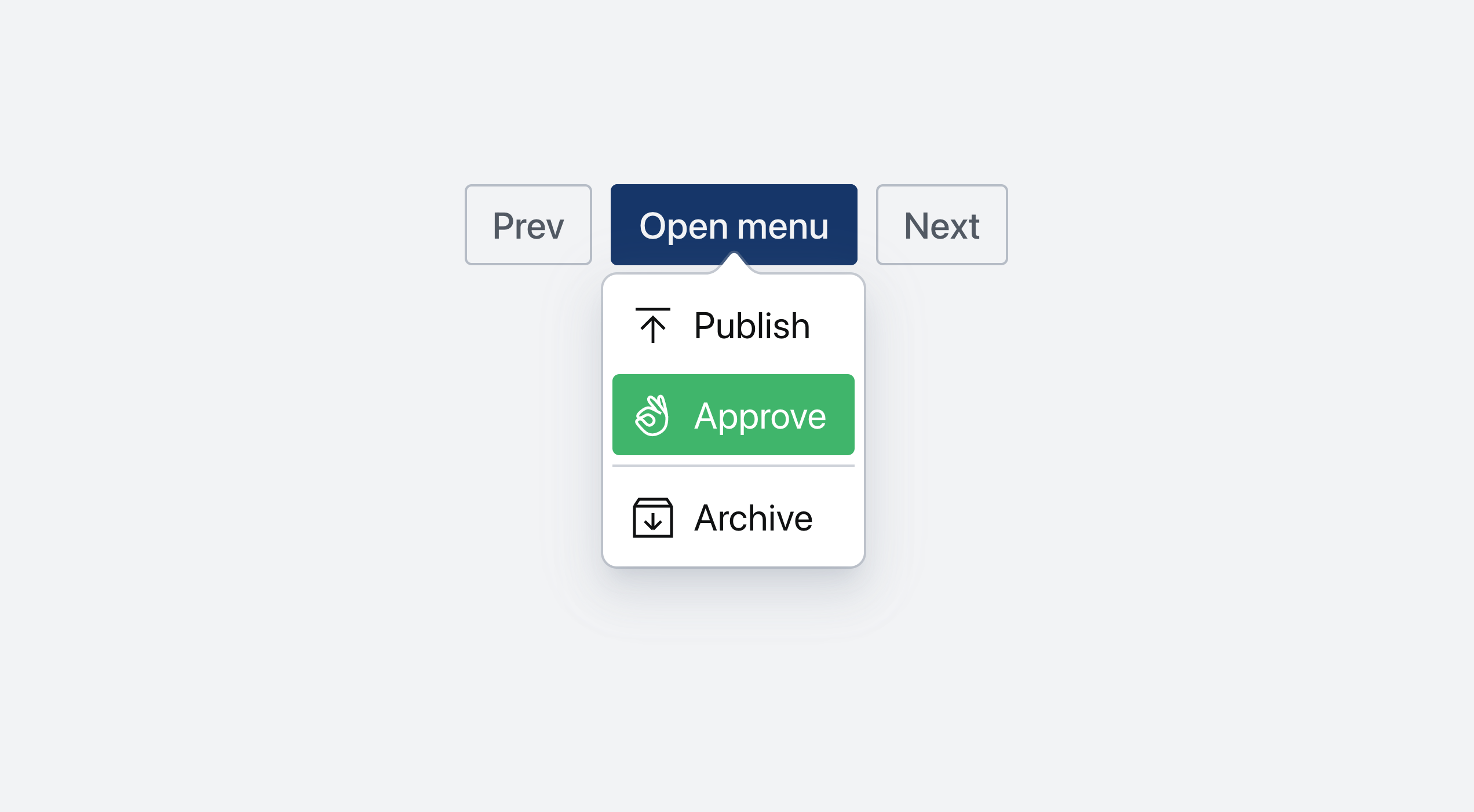
These UI primitives allow for a high level of composition. Each primitive only brings exactly the props it needs to function and do its job. When you combine them, you can find unexpected and powerful patterns.
Sanity UI is accessibility-focused

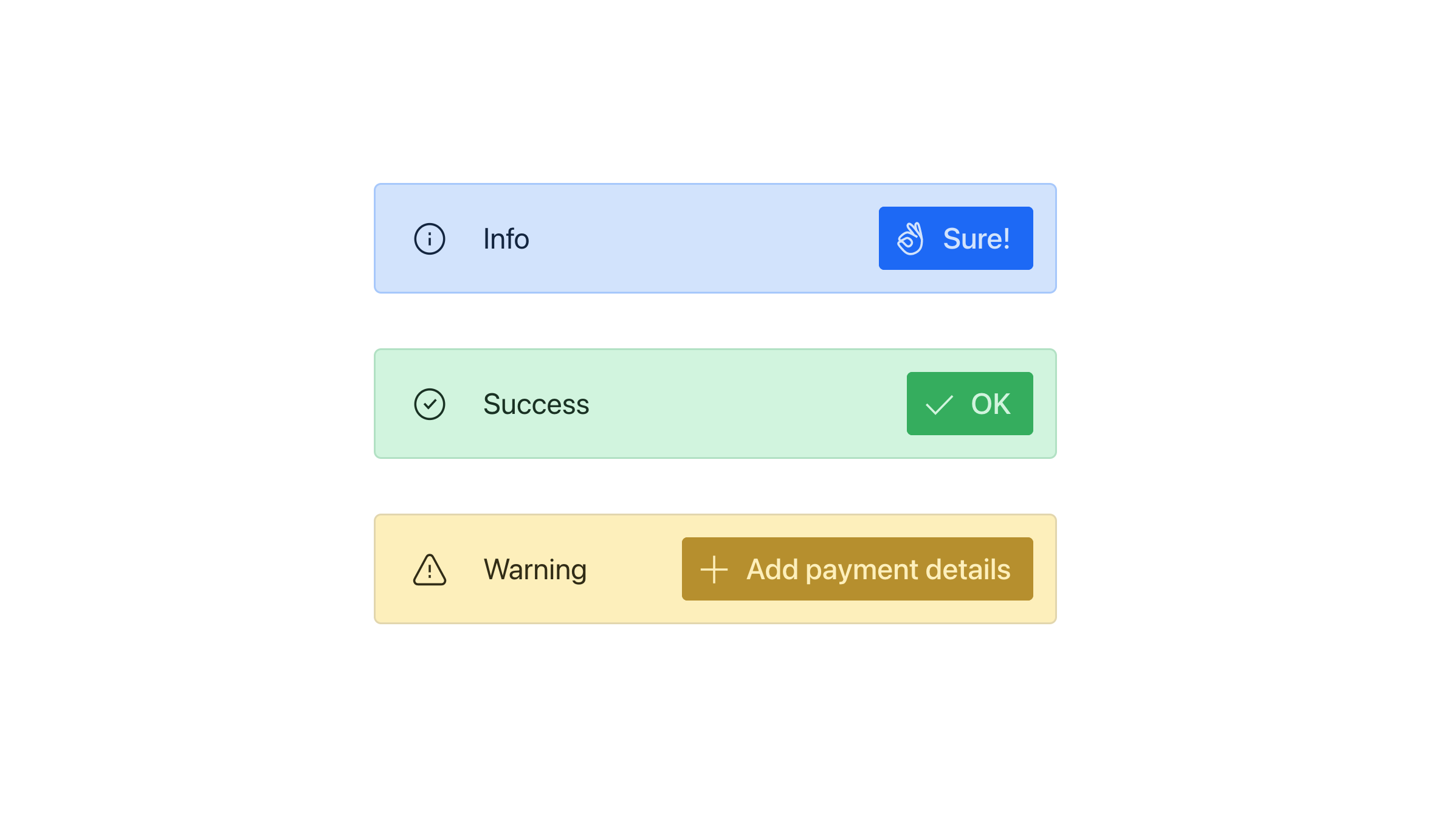
In our research, it felt like many design systems were focused on making things look their best and then focusing on accessibility. For Sanity UI, we wanted to make sure we treated accessibility as a key feature and constraint for our designs. From default color schemes to carefully designed focus rings and states, accessibility is baked in.

Not every interaction comes with browser-defined accessibility. For interactive components, like dialogs, buttons, and autocomplete, we worked directly from the WAI-ARIA guidelines and patterns and tested each one using screen readers.
Sanity UI is themeable

Creating custom interfaces makes Sanity Studio powerful for teams to define out new workflows or ways of managing data. Borrowing from the JavaScript approach to content modeling in the Studio, the theming Sanity UI will work the same way. The interface is completely defined in JavaScript, including theming and CSS.

A common language

Design and development teams can often feel like they’re speaking different languages. When language differs, miscommunication can often be the outcome. At Sanity, we believe the best products and sites are created by the intersection of disciplines.

Sanity UI is built by both designers-who-code, as well as engineers that take great pride in a solid user experience. The UI primitives, components, and properties have all been named extremely carefully. The goal is to create a system where components are named to evoke terms designers understand at use, while giving logical aspects that are familiar to developers.

With a common language, common components, and a common goal, we think all things are possible.

Get started with early access

Sanity UI is a work in progress, but is already making feature development easier at Sanity. Our new team and project dashboard was written using it, and the entire Sanity Studio is currently being rewritten to take full advantage of Sanity UI. With all the benefits, we don't want to keep it to ourselves.

Starting today, we're providing early access. We've built a full documentation site, complete with interactive code playground, reference docs, and guides for getting started. We're also building new pattens and integrations to make amazing things possible inside and outside of Sanity Studio. We'd love to get any and all feedback. Join the Slack community and post in our #beta channel if you need help or want to provide insight into how you're using Sanity UI.

The next few months will be exciting times as we release new features around Sanity UI, including many new data bindings, components, patterns, and more.
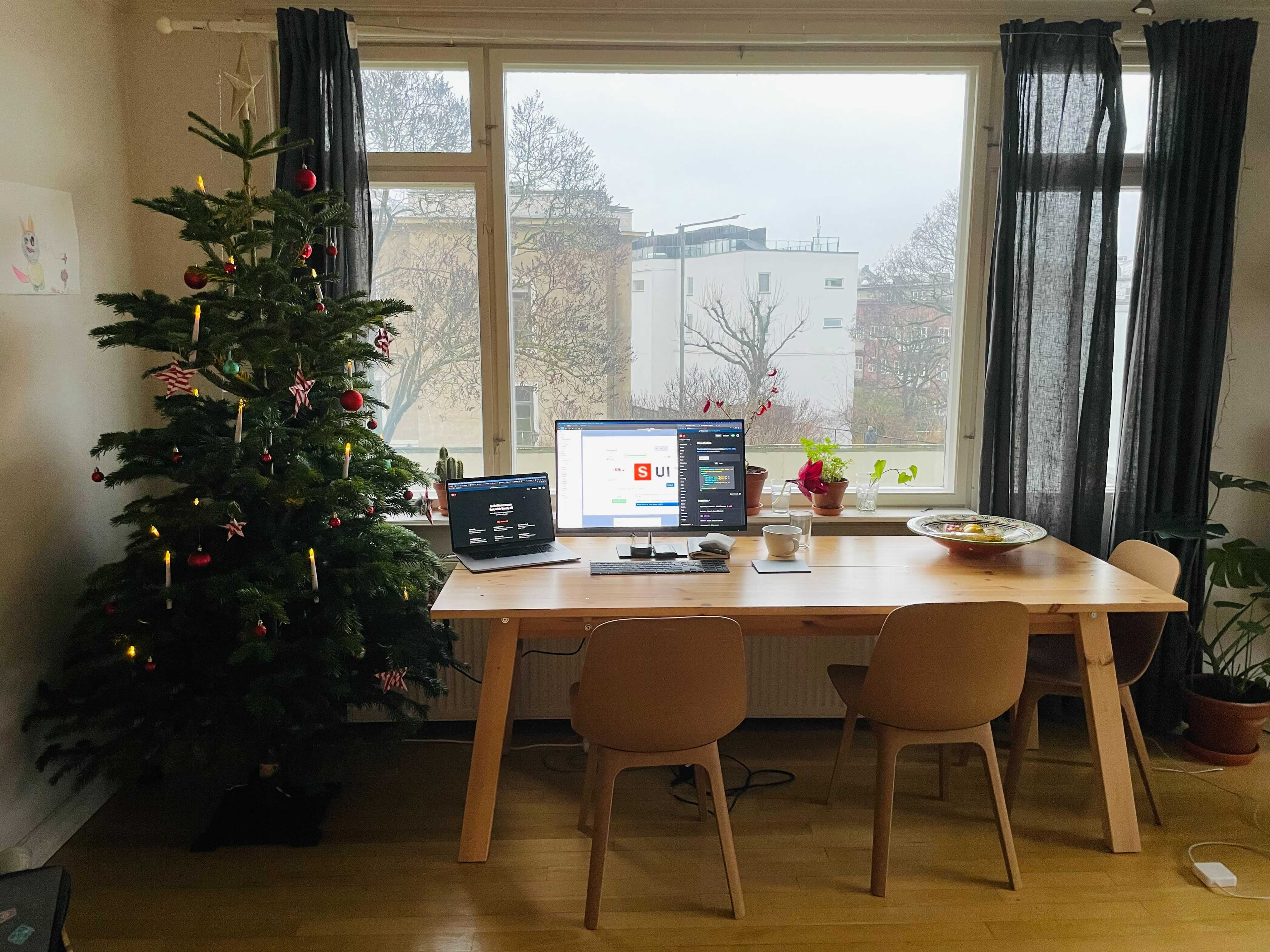
The lair of digital product designer Mariud Lundgård. The architect behind Sanity UI.